




JWHI-grantee Clive receives Gender Just Climate Solutions Award
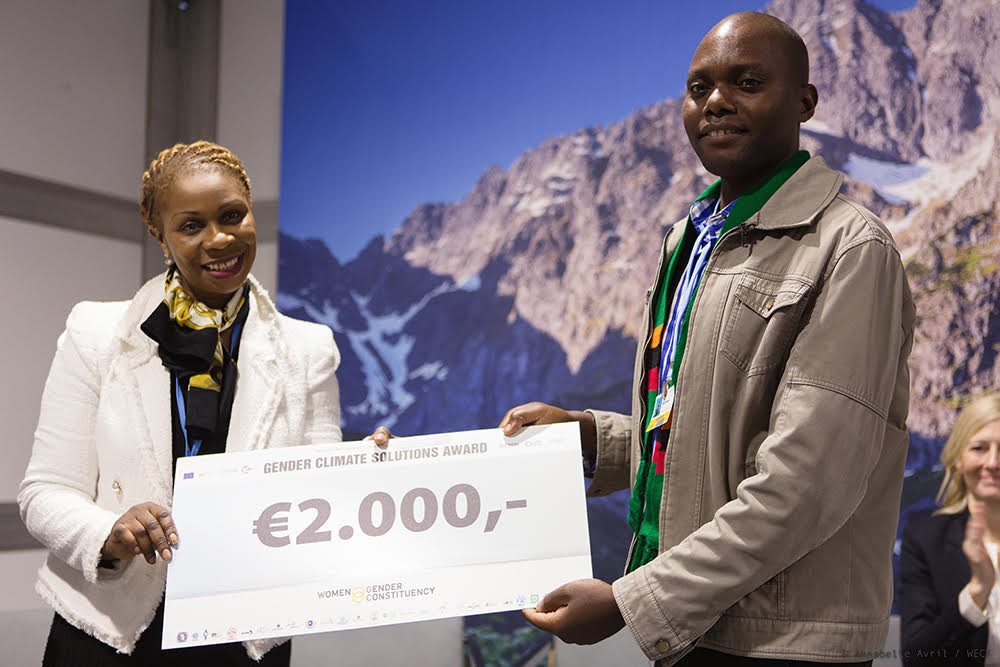
Clive Chibule from Zambia won the Gender Just Climate Solutions Award at the climate conference in Katowice, Poland. His project "Community strategies for climate-resilient livelihoods" aims at training rural women on leadership and climate resilience. A very important project, as Zambia is already feeling the effects of climate change, and rural women are affected most.
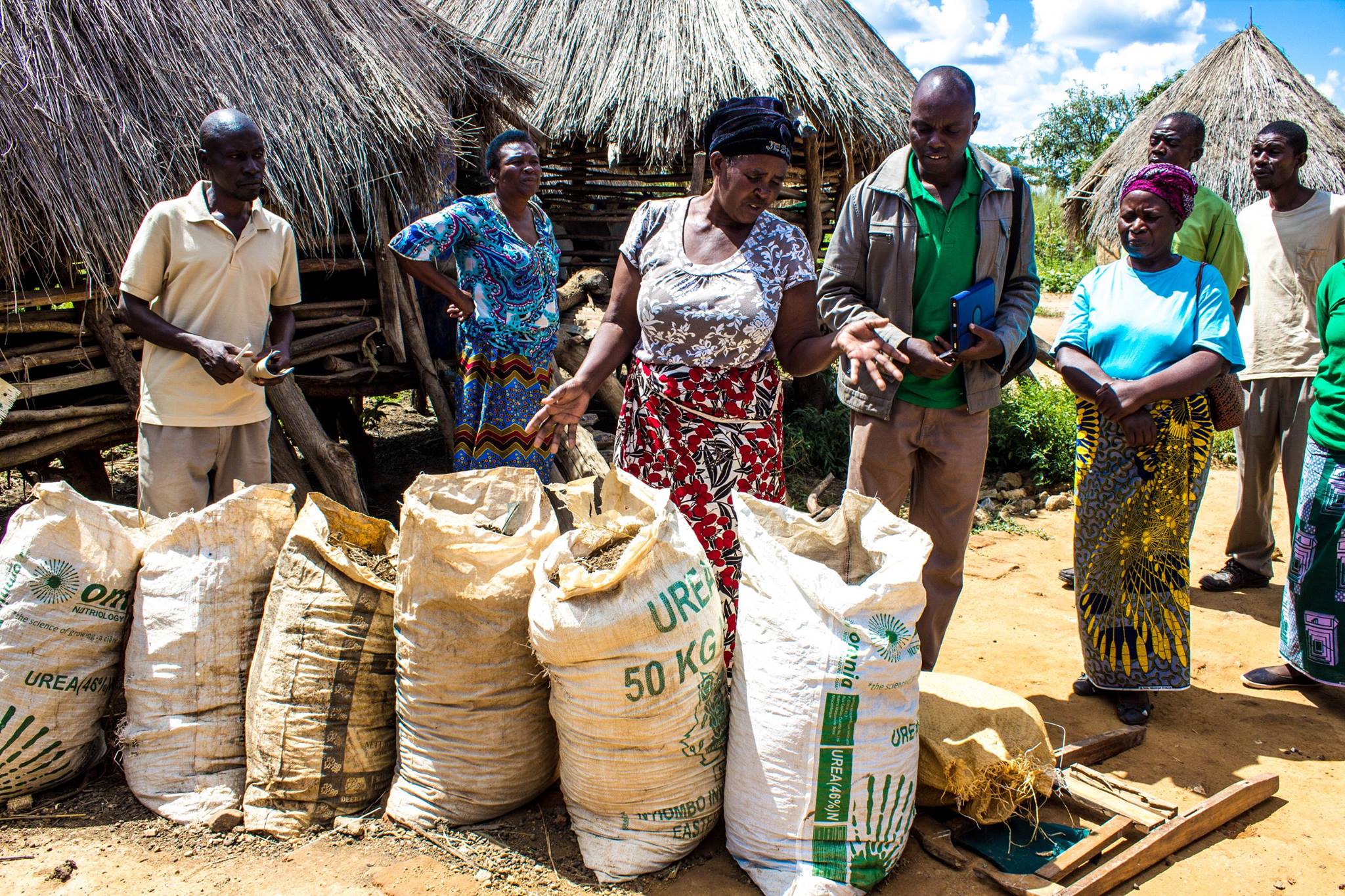
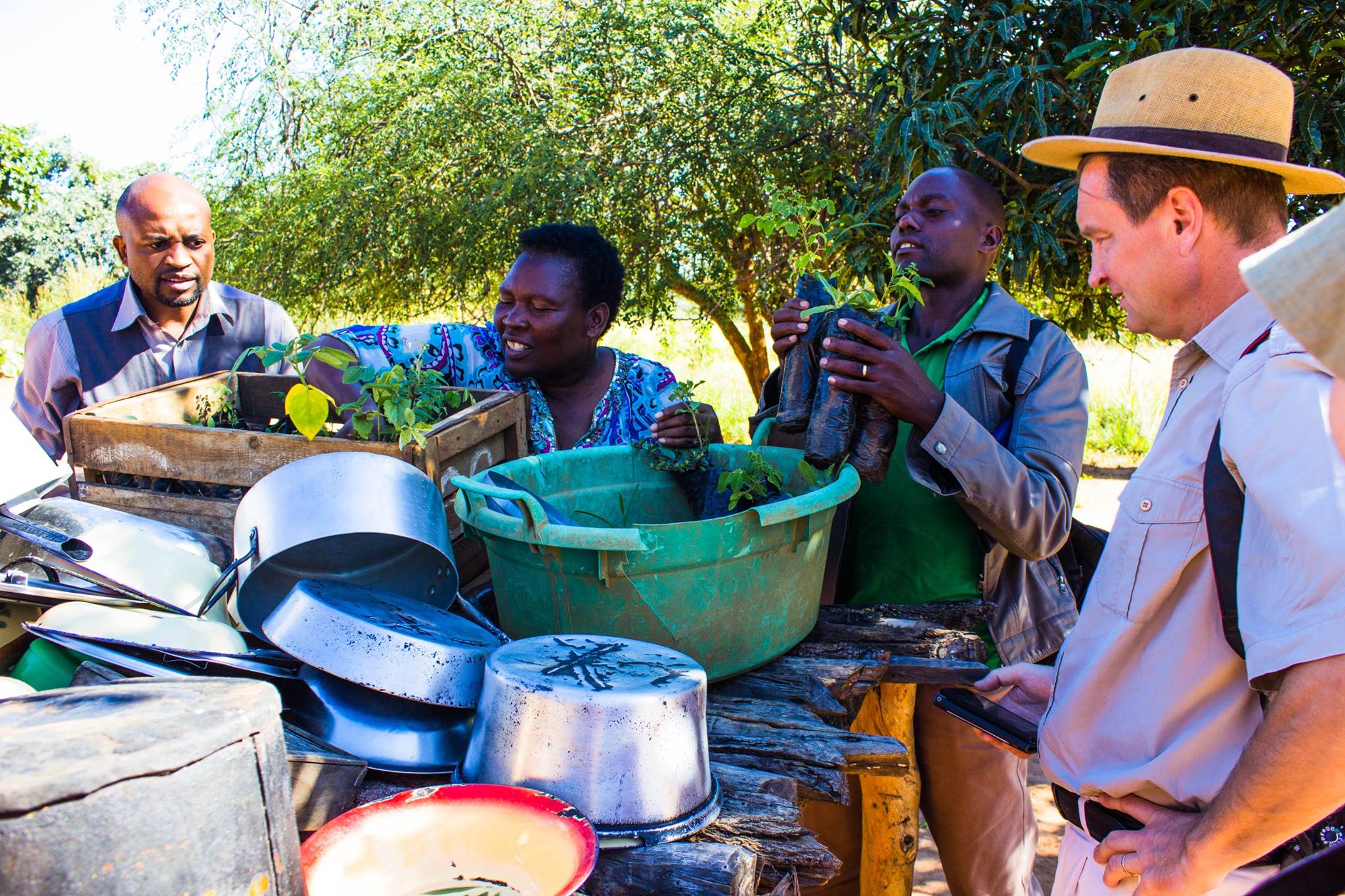
According to the Women and Gender Constituency, who handed out the award, Clive and his NGO Green Living Movement from Zambia have "trained 537 women on leadership in project management and climate resilience. In a region stricken by climate-shocks, it has become necessary to support women farmers in diversifying their income, and making them less dependent on rain-fed harvests. Women farmers, with the support of the award winner, reproduce their own seeds, have planted over 35,000 trees, and created 250 vegetable gardens."
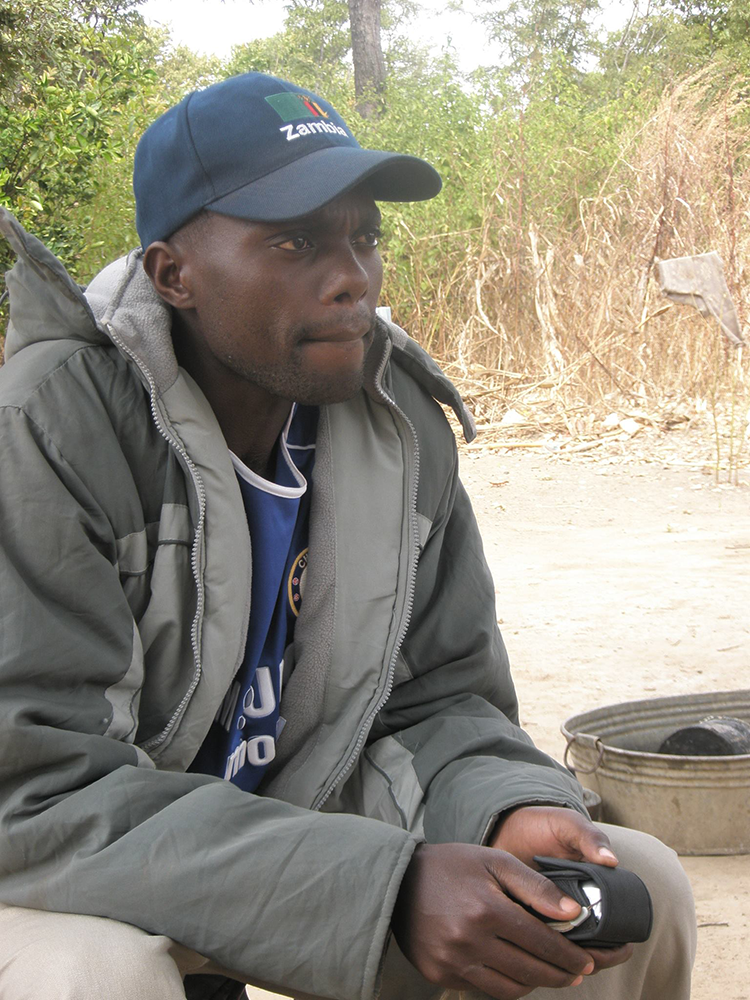
Both ENDS knows Clive since he received a JWHI-grant in 2011 to study Advocacy in Canada. We asked him about his award-winnig project.
Why did you start the project "Community strategies for climate-resilient livelihoods"?
"Rural communities, especially the women and youths, whose livelihoods primarily depend on agriculture and natural resources are very vulnerable to the effects of climate change, such as shortened rain season, extreme high and low temperatures as well as more frequent droughts and floods. Although many farmers have reported to have observed variations in the climate over the past years, they don't know how to cope with the changes. This project addresses these issues by supporting the development of strategies for climate change adaptation in four communities in Luanshya, Monze and Mumbwa districts. We aim to build community resilience to climate shocks through increased awareness and enhanced adaptive capacity in the project communities."
What were the main results so far?
"The main beneficiaries of this project are 250 households or over 1500 small scale farmers (mainly women, youths and people living with disability). The project is promoting sustainable innovations and climate-smart practices that are being identified in cooperation with the communities as the most appropriate in each context such as agroforestry, organic gardening, beekeeping and small livestock production. These activities have helped in diversification and increase of income and facilitate a community-driven response to climate change. The project has also strengthened the advocacy skills of the community members in order to promote and safeguard their right to food, land, rural employment and safe environment as well as climate justice. The aim is that the communities will be able to contribute to evidence-based advocacy on climate-related issues at the national and global level."
Why did you focus on gender aspects in your project?
"Climate change is not gender neutral; women are affected more. So we increased the adaptive capacities of women by introducing alternative food sources. This has resulted in increased resilience to climatic shocks, e.g diversification of income sources other than dependence on rain fed agriculture. Indiscriminate cutting of trees in the project areas has also reduced and as a result there is an improvement in the forest cover and improved yields. There is a substantial increase in household income levels, especially for women headed households.
Furthermore, women now have more time available to attend to household chores and personal needs. As a result of various capacities built, women have now developed the confidence to contest various leadership position in their respective communities including that of a Village head person, a position that previously was always held by men and also having access to land."
How do you feel after winning this international award?
"I really feel more energized and determined to empower women and youths in order to enhance their resilience to climate related shocks and continue to advocate for rights-based and gender responsive development that promotes food security while respecting local communities' rights and traditional knowledge.
My next focus is to upscale and replicate the project to all the provinces of the country by facilitating and supporting women-led climate adaptation activities. This will also help me to explore and incorporate women's indigenous knowledge in climate change adaptation and try to interface indigenous knowledge with science. This will in turn result in resilient livelihoods and improved food security in the face of climate change. Ultimately, this will enhance women's participation in development as stipulated in the Sustainable Development Goals (SDGs) and Zambia's National Development Plans."
The Gender Just Climate Solutions Awards were handed out on Monday December 10th, the 70th anniversary of the Universal Declaration of Human Rights, by the Women and Gender Constituency at the climate negotiations in Katowice, Poland. The Awards celebrate gender-just solutions - aiming to support and scale up innovative initiatives that put equity and sustainability at heart.
For more information

Read more about this subject
-
 Dossier /
The JWH Initiative: supporting young environmental leaders
The JWH Initiative aims to stimulate leadership of young people in environmental organisations by giving small grants to individuals to expand their knowledge, experience and training.
-
 Dossier /
Global Alliance for Green and Gender Action (GAGGA)
GAGGA rallies the collective power of the women's rights and environmental justice movements to realize a world where women can and do access their rights to water, food security, and a clean, healthy and safe environment.
-
 News / 2 februari 2026
Response to the D66-VVD-CDA coalition agreement
Coalition: Repair the damage and dare to go further
At Both ENDS, we see a number of cautious steps in the right direction in this coalition agreement. There is a slight emphasis on green issues, renewed attention to women's rights, recognition of the importance of civil society, and discussion of trade agreements with a focus on mutual interests. However, without structural change in how we trade, invest, and cooperate, fine words remain empty shells.
-
 Dossier /
Agua Zarca: indigenous fight against dam costs lives
Indigenous Hondurans are resisting the construction of the Agua Zarca hydrodam. Their fight has cost several lives, including that of Berta Cáceres. After considerable public pressure, Dutch development bank FMO withdrew from the project.
-
 Dossier /
Gas in Mozambique
In 2011 one of the world’s largest gas reserves was found in the coastal province of Cabo Delgado, in the north of Mozambique. A total of 35 billion dollars has been invested to extract the gas. Dozens of multinationals and financiers are involved in these rapid developments. It is very difficult for the people living in Cabo Delgado to exert influence on the plans and activities, while they experience the negative consequences. With the arrival of these companies, they are losing their land.
-
Publication / 27 november 2025
-
 Environmentally Just Practice /
A Negotiated Approach for Inclusive Water Governance
A Negotiated Approach envisages the meaningful and long-term participation of communities in all aspects of managing the water and other natural resources on which their lives depend. It seeks to achieve healthy ecosystems and equitable sharing of benefits among all stakeholders within a river basin. This inclusive way of working is an essential precondition for the Transformative Practices that are promoted by Both ENDS and partners.
-
 News / 27 november 2025
Communities and International Consortium Present Community-Led Plan for Nature-Based Adaptation to Sea-Level Rise in Coastal Bangladesh
Local communities in the southwestern coastal region of Bangladesh—together with an international consortium including Uttaran, CEGIS, and Both ENDS—have presented a community-led plan to confront climate change and accelerating sea-level rise through nature-based adaptation. The People’s Plan for Upscaling Ecosystem-Based Adaptation outlines a scalable strategy rooted in local ownership and generations of lived experience. At its centre is Community-Based Tidal River Management (CBTRM), a proven approach that reduces waterlogging, raises land elevation, and restores ecological balance by working with natural tidal and sediment dynamics.
-
 Dossier /
Wetlands without Borders
With our Wetlands without Borders program, we work towards environmentally sustainable and socially responsible governance of the wetlands system of the La Plata Basin in South America.
-
 Environmentally Just Practice /
Non-Timber Forest Products (NTFPs)
About one in every six people, particularly women, directly rely on forests for their lives and livelihoods, especially for food. This shows how important non-timber forest products (NTFPs) and forests are to ensure community resilience. Not only as a source of food, water and income, but also because of their cultural and spiritual meaning.
-
 Dossier /
Communities Regreen the Sahel
In various countries in the Sahel, vast tracts of land have been restored by the local population by nurturing what spontaneously springs from the soil and protecting the sprouts from cattle and hazards.
-
 News / 5 november 2025
Interview: Both ENDS at COP30 for Climate Justice and Systemic Change
Both ENDS is present at COP30 to advocate for genuine access to climate finance for locally led, gender-just climate solutions and the mechanisms that facilitate this, including those for farmer-led restoration. Furthermore, the organisation participates to ensure the crucial connection between the climate negotiations and the trade and investment frameworks that shape them.
Learn more about the Both ENDS team at COP30 below, and find all the activities and side-events in which Both ENDS will participate.
-
 News / 5 november 2025
Overview of Both ENDS events at COP30 in Belem, Brazil
Both ENDS is present at COP30 to advocate for genuine access to climate finance for locally led, gender-just climate solutions, and for the mechanisms that make these possible, including those supporting farmer-led restoration. The organisation also engages to highlight the crucial connection between climate negotiations and the trade and investment frameworks that shape them.
Below is an overview of the Both ENDS team at COP30 and a detailed look at the activities and side-events in which Both ENDS will participate.
-
 News / 14 oktober 2025
Communities regreening the Sahel: strengthening resilience from the ground up
How can communities in the Sahel strengthen their food systems in the face of climate change and other shocks? Through the ARFSA Programme, Both ENDS and its partners SPONG (Burkina Faso), CRESA/INRAN (Niger) and IED Afrique (Senegal) are working together to show that locally led landscape restoration works. -
Publication / 9 oktober 2025
-
 Dossier /
International trade and investment with respect for people and planet
The network of international trade and investment treaties is large and complex. The Netherlands alone has signed more than 70 bilateral investment treaties (BITs) and is party to the trade and investment agreements concluded by the EU, like the EU-Mercosur and EU-Indonesia trade deals.
-
 Dossier /
Amplifying environmentally just practices
Because of the close relationship with their living environment, local communities often have the best ideas for the sustainable and equitable use and governance of land, water and forests. These environmentally just practices and processes successfully protect and restore ecosystems and address climate change. They are essential in the light of the multiple crises the world faces, but are in dire need of financial and policy support.
-
 News / 6 oktober 2025
From Entebbe to Accra: civil society is rewriting the rules of investment
By Fernando Hernández Espino and Bart-Jaap Verbeek
Almost a year after African civil society gathered in Uganda to adopt the Entebbe Declaration, the call to transform international investment governance continues to gain strength. From the 6th to the 9th of October, over 50 civil society organisations from across West Africa, including from Ghana, Senegal, Nigeria, Côte d’Ivoire, Cameroon, Gambia, Sierra Leone, as well as from Kenya and Latin America, are convening in Accra to deepen and operationalise the Declaration’s vision.
-
Publication / 2 oktober 2025
-
 News / 23 september 2025
With the undemocratic splitting of the EU-Mercosur deal, Europe is missing the chance to lead on fair trade
Recently, many newspapers have written about Brussels’ rush to finalize the trade agreement between the EU and the South American Mercosur countries. According to the European Commission, national parliaments do not need to approve it because the trade part and the “political” part have been separated. This “splitting” means that the trade part can be approved as an EU-only decision by the European Council and the European Parliament, while national parliaments are sidelined and the political-cooperation part is postponed. Both ENDS and its partners are deeply concerned and are calling on the Dutch government to vote against this outdated agreement.



