


International Forests Day: the importance of forests for livelihoods and a healthy environment
Today is International Day of Forests. An ever more important day, as the amount of forest and forested area's on this globe is shrinking at a fast pace. One the main causes is our ever increasing demand for products such as soy and palm oil from area's that have been deforested for their cultivation. The current proposed EU-deforestation law to prevent this, is not strict enough and does not include the protection of other crucial natural areas such as grasslands, savannas and swamps, as well as the human rights of the millions of people living in these area's. During these past few weeks we therefore participated in the campaign #Together4Forests, calling on citizens to send a letter to their own responsible ministers. The campaign paid off: almost 54,000 letters were sent to European ministers across the European Union, demanding a strict forest law that guarantees the import of only deforestation-free products in Europe.
To celebrate this International Day of Forests, we would like to emphasise the great value of forests and other natural areas, directly or indirectly, for the livelihoods of at least 2 billion people. Below, we selected some examples that show how, throughout the world, local communities use many different ways to collect and produce food and other natural products in a sustainable way, while protecting and restoring the forests and forested area's they are so dependent upon.
Analog Forestry
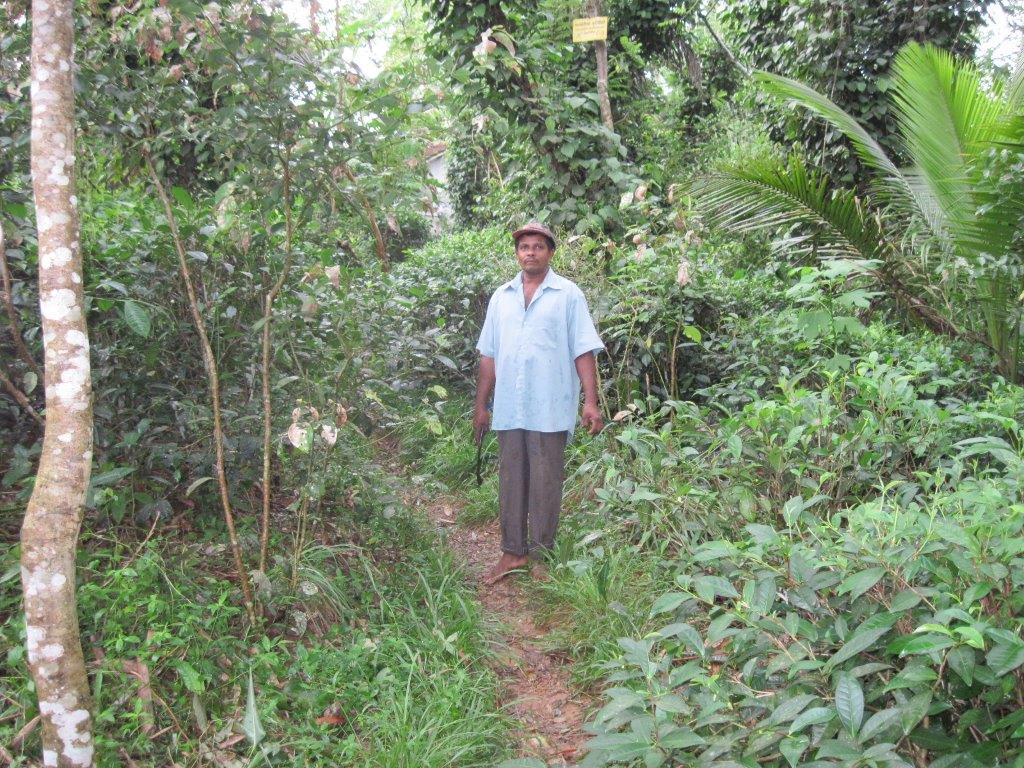
Analog Forestry promotes a sustainable and future-proof production system and supports, among other things, the transformation of degraded land into food forests. Forests are crucial to the livelihoods of many people in developing countries, to pick fruits, nuts and berries, harvest honey and resin, gather herbs used as medicine, find construction materials for their houses and collect firewood. The International Analog Forestry Network, of which Both ENDS is a member, has been successful in transforming degraded lands into productive food forests (Analog Forests)
See in this video for yourself.
Non-Timber Forest Products
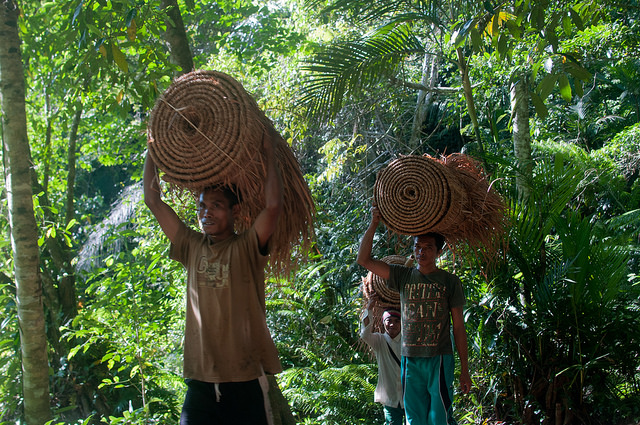
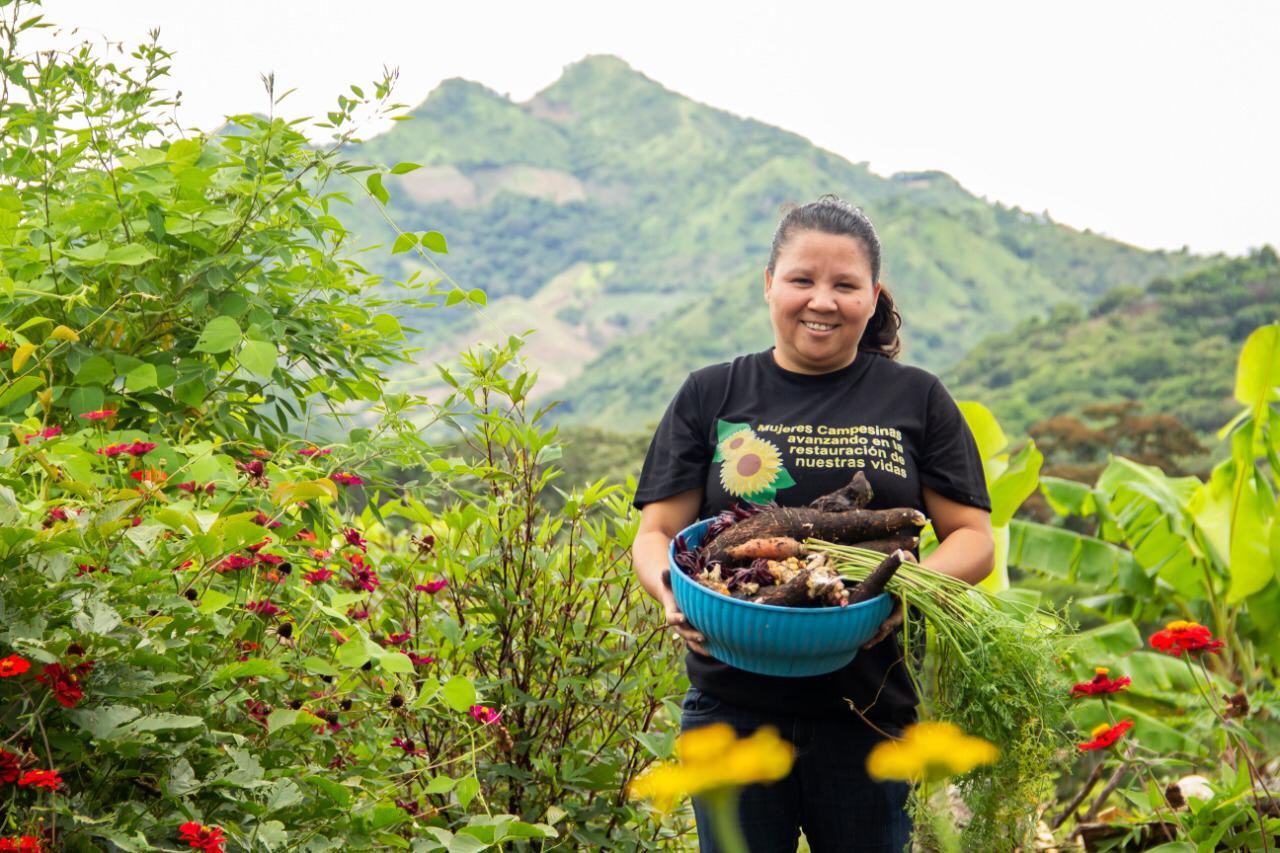
About one in every six people, particularly women, directly rely on forests for their lives and livelihoods, especially for food. This shows how important non-timber forest products (NTFPs) and forests are, especially for women, to ensure their own and their community's resilience. Forest products are not only derived from trees, but from all plants, fungi and animals for which the forest ecosystem provides habitat. Examples of NTFPs are wild honey, fruits, edible leaves and roots, medicinal plants, spices, gum, fuel wood and rattan. The NTFP-Exchange Programme, an international network supported among others by Both ENDS supports, promotes the cultivation and harvesting of non-timber forest products.
Agroecology and agroforestry: the example of Kenya
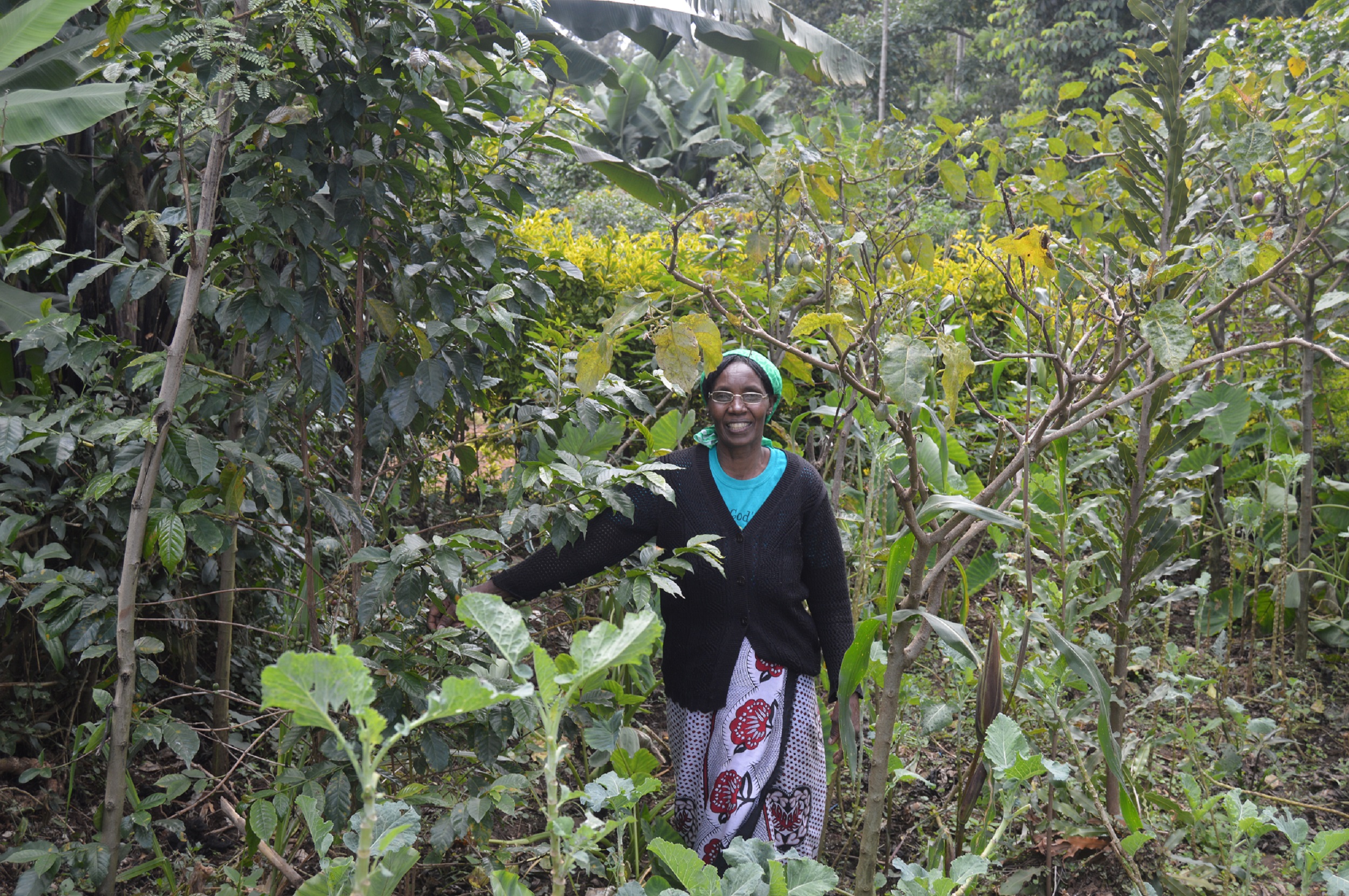
Agroecology is a collective term used for agricultural practices that aim to reconcile agriculture and local communities with natural processes for the common benefit of nature and livelihoods. Agroecological practices provide a sustainable solution for family farms. In Kenya, agroecology is also a way to fight against water pollution while securing food production. In addition agroforestry in Kenya has been helping in the recuperation and multiplication of indigenous seeds varieties (mainly of traditional food crops) in central and eastern Kenya.
Community-based restoration
As seen in the examples above, although they can be very different, community-based restoration and land use initiatives have important common features that might explain their success, be it on a large or a smaller scale. Firstly and most importantly – they are community-based. This means that they have to be grounded within the community itself and be adopted and implemented by its members – with or without support from others. When people feel ownership and see their needs met in both the short and the long run, they are more inclined to use a certain method as analternative way. Another important feature is inclusiveness: all people that might be positively or negatively affected by sustainable land use or restoration activities (herders, farmers, women, youth and water users, amongst others), should be involved in the decision making and implementation of these initiatives. A good example of how this can be achieved is the 'Communities regreen the Sahel' - programme, designed and executed together with over twenty partner orginisations in Sengal, Niger and Burkina Faso.
More information:
The above examples are just a few of the many, many initiatives, methods and approaches that people across the globe are starting, using and optimising in order to protect biodiversity and ecosystems while at the same time maintaining their families and communities. Below, you can find more related content.
For more information
Read more about this subject
-
 Dossier /
The merits of community-based restoration
Globally, the area that is suffering desertification and land degradation is ever expanding. Unsustainable and often large-scale agricultural practices, including the copious use of pesticides and fertilisers, are a major driver of land degradation, aprocess that is further exacerbated by climate change, causing more erratic rainfall patterns, longer periods of drought and unpredictable growing seasons. This is very problematic not only for the hundreds of millions of people who directly depend on land and water for their livelihoods, but also for life on earth as a whole. It is clear that this process must be stopped and reversed, better sooner than later. But how to go about it?
-
 Dossier /
Amplifying environmentally just practices
Because of the close relationship with their living environment, local communities often have the best ideas for the sustainable and equitable use and governance of land, water and forests. These environmentally just practices and processes successfully protect and restore ecosystems and address climate change. They are essential in the light of the multiple crises the world faces, but are in dire need of financial and policy support.
-
 Dossier /
Communities Regreen the Sahel
In various countries in the Sahel, vast tracts of land have been restored by the local population by nurturing what spontaneously springs from the soil and protecting the sprouts from cattle and hazards.
-
 News / 3 September 2026
Restoring Land, Restoring Hope: Both ENDS at UNCCD COP17 in Mongolia
From 17 to 28 August, governments gathered in Ulaanbaatar, Mongolia, for COP17 of the UN Convention to Combat Desertification (UNCCD). At stake was more than how the world responds to land degradation and drought. It was also a question of who gets to shape land restoration, whose knowledge counts, and where the money goes.
-
Publication / 3 July 2026
-
 News / 2 July 2026
Land restoration can help mitigate and resolve conflict - but only if everyone has a seat at the table
Can restoring degraded land also help reduce conflict? According to experts from Niger, Ghana, the Netherlands and other regions, the answer is yes - but only when restoration is rooted in inclusive land governance, local ownership and social cohesion.
-
 Dossier /
Finance for agroecology
The lion's share of public budgets for climate, agriculture and development still goes to conventional agroindustrial projects that contribute to the current climate, food and biodiversity crises. Both ENDS and our partners are calling for a transition to agroecological practices that are people- and environment-friendly.
-
Publication / 18 June 2026
-
Publication / 12 May 2026
-
 News / 24 March 2026
Statement: Invest in local leadership for tropical forest management and local economies
IUCN-NL, Both ENDS, and 16 other Dutch and international civil society organizations (CSOs), networks, and expert groups are calling on the Dutch government to invest more strongly in locally led forest management and forest-based economies. This should be done within the framework of Dutch international cooperation and its associated policy instruments.
-
 Dossier /
Wetlands without Borders
With our Wetlands without Borders program, we work towards environmentally sustainable and socially responsible governance of the wetlands system of the La Plata Basin in South America.
-
Publication / 17 November 2025
-
 Environmentally Just Practice /
Non-Timber Forest Products (NTFPs)
About one in every six people, particularly women, directly rely on forests for their lives and livelihoods, especially for food. This shows how important non-timber forest products (NTFPs) and forests are to ensure community resilience. Not only as a source of food, water and income, but also because of their cultural and spiritual meaning.
-
Letter / 14 November 2025
Letter: TPAC’s report “Final Judgement Detailed Research MTCS’’
A coalition of Malaysian and international NGOs has released a memorandum in response to the recent TPAC report on the Malaysian Timber Certification Scheme (MTCS). The organisations express serious concerns about the independence, quality, and credibility of the assessment carried out by the Timber Procurement Assessment Committee (TPAC).
-
 Press release / 13 November 2025
Global Alliance Urges Dutch Government to Reconsider Endorsement of Controversial Timber Certification Scheme
A coalition of Malaysian and international NGOs has released a memorandum in response to the recent TPAC report on the Malaysian Timber Certification Scheme (MTCS). The organizations express serious concerns about the independence, quality, and credibility of the assessment carried out by the Timber Procurement Assessment Committee (TPAC).
-
 News / 5 November 2025
Interview: Both ENDS at COP30 for Climate Justice and Systemic Change
Both ENDS is present at COP30 to advocate for genuine access to climate finance for locally led, gender-just climate solutions and the mechanisms that facilitate this, including those for farmer-led restoration. Furthermore, the organisation participates to ensure the crucial connection between the climate negotiations and the trade and investment frameworks that shape them.
Learn more about the Both ENDS team at COP30 below, and find all the activities and side-events in which Both ENDS will participate.
-
 News / 5 November 2025
Overview of Both ENDS events at COP30 in Belem, Brazil
Both ENDS is present at COP30 to advocate for genuine access to climate finance for locally led, gender-just climate solutions, and for the mechanisms that make these possible, including those supporting farmer-led restoration. The organisation also engages to highlight the crucial connection between climate negotiations and the trade and investment frameworks that shape them.
Below is an overview of the Both ENDS team at COP30 and a detailed look at the activities and side-events in which Both ENDS will participate.
-
 News / 14 October 2025
Communities regreening the Sahel: strengthening resilience from the ground up
How can communities in the Sahel strengthen their food systems in the face of climate change and other shocks? Through the ARFSA Programme, Both ENDS and its partners SPONG (Burkina Faso), CRESA/INRAN (Niger) and IED Afrique (Senegal) are working together to show that locally led landscape restoration works. -
Publication / 9 October 2025
-
 Dossier /
International trade and investment with respect for people and planet
The network of international trade and investment treaties is large and complex. The Netherlands alone has signed more than 70 bilateral investment treaties (BITs) and is party to the trade and investment agreements concluded by the EU, like the EU-Mercosur and EU-Indonesia trade deals.




