




In conversation with the Ngäbe-Bugle community in Panama, after five years of Barro Blanco-dam
In April 2021, the Dutch development bank FMO announced that it is no longer involved in the Barro Blanco project, a controversial dam in Panama. GENISA, the Panamanian company that built the dam, unexpectedly paid off the multi-million dollar loan early. The question is to what extent, now that the bank is no longer actively financing the project, FMO can still be held responsible for the damage and suffering that was caused when this was still the case.
M10, the local movement that defends the rights of the indigenous Ngäbe-Bugle people traditionally living in the area and who have suffered major damage from the dam, filed a complaint in 2014 with the independent complaints mechanism of the FMO and DEG, the European financiers of the project. A second complaint that the organisation was preparing, about the damage suffered, can no longer be considered. Nick Middeldorp of Both ENDS talks* to Manolo Miranda of M10 about these developments, and about all the misery that the dam has caused in the life of the Ngäbe-Bugle, which Manolo himself is a part of.
Can you tell us how your life has changed since the dam was commissioned in 2016 and the reservoir flooded much of your area? For example, I understood that the rock paintings of your ancestors are now under water.
"For us this is a very important river, because this is where our ancestors lived. Tabasará was the chief who ruled almost all of Panama and he lived in this area. And here is also the rock carving that tells the history of the existence of our ancestors, the thousands of years that we have lived here. People from all over the area used to come here and pay their respects once a year or more often, but the rock carving is now under water, in the reservoir, so none of us can go there anymore. It has hurt us deeply on a spiritual level. Our children, who are now teenagers, ask us when they can see the rock carving they have heard so much about. It is difficult to answer that question. It hurts a lot. And it hurts because it touches the history of our ancestors, our culture"
"The river was also rich in all kinds of fish. From 2018 onward, the fish started to die. Today it is mainly tilapia, a dominant species that is not native, but has been released into the reservoir by the company without any notice to anyone. The amount of tilapia is growing at the expense of other fish species, which means that our communities no longer have a diverse diet and no income from the sale of different fish species. And also outside the river we see a lot of changes: in the past you could see rabbits along the river, all kinds of animals, even deer."
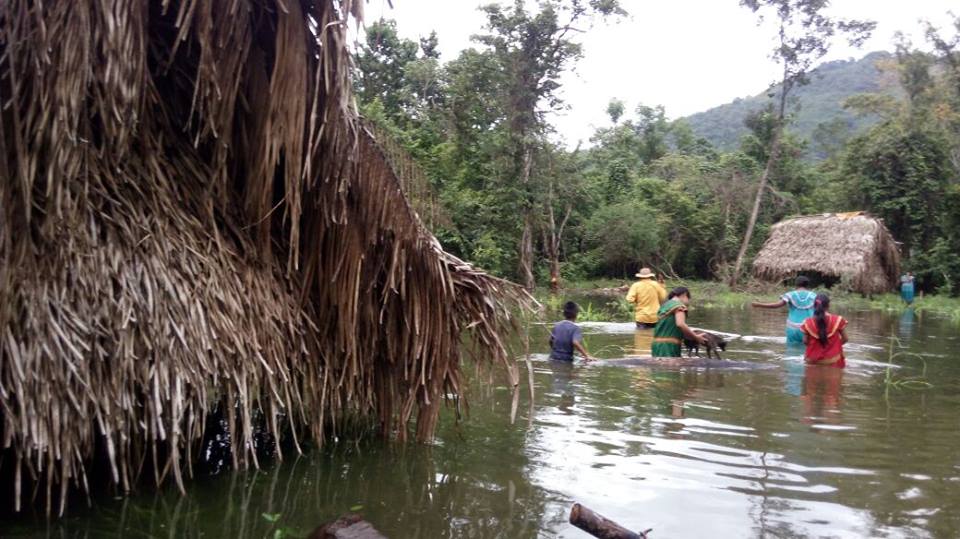
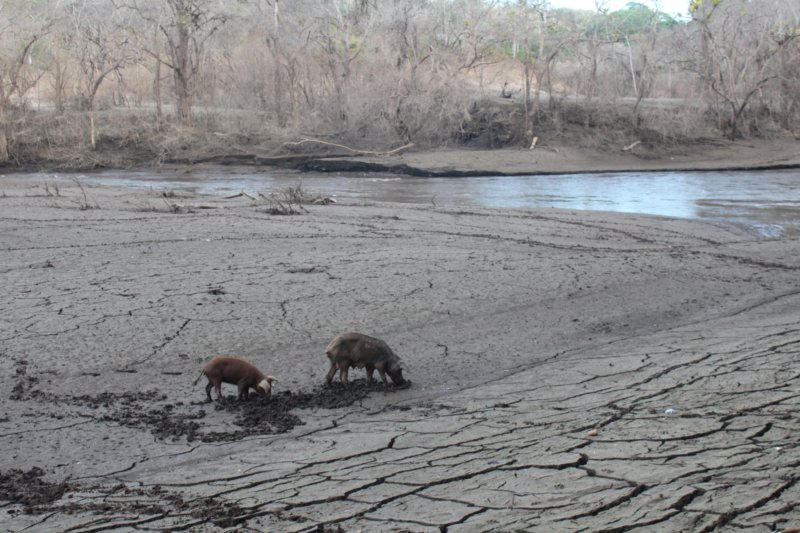
"Another problem is the reservoir itself: the children can no longer bathe in this water. We already had three cases where the children were close to drowning. The parents cannot leave their child alone there. The water level rises and falls, which causes sediment: the villages of Kiad and Palomar, when the water has gone down, have to deal with mud that is full of all kinds of garbage, all kinds of dead animals and the smell of decomposition. And as it's stagnant water, it causes allergies that we have to treat with both botanical medicine and medicine we brought from the outside.
In 2016, a delegation from FMO, together with Both ENDS and SOMO, visited the area to see for themselves what was going on. What was that visit like and what was the result?
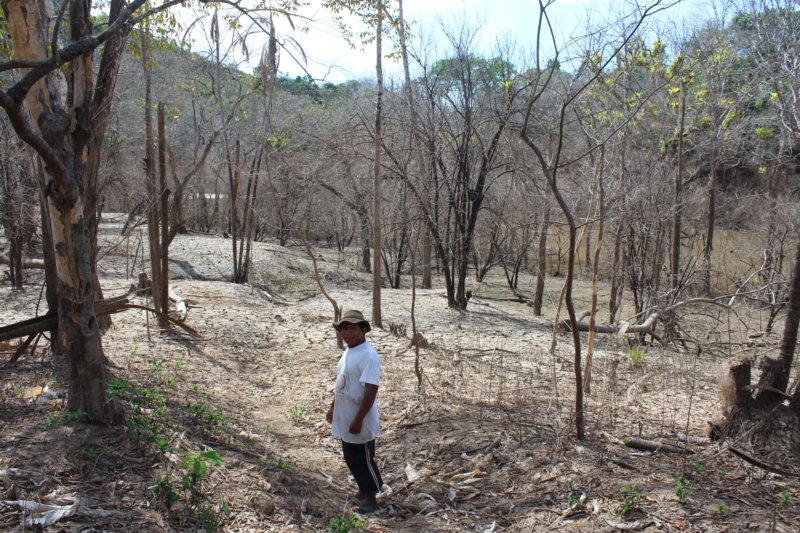
"We remember that Mr. ---- from the bank (FMO - ed.) told us in one of the visits he paid: 'Get used to living with the bad'. That is an insult to us. The community can't forget those words. There was land, you could grow crops, and the next generations could grow too. Where will the next generations live if economic life is more difficult every day? Now we have no more land: 6 hectares of flat, fertile ground has been flooded. The most fertile and productive pieces of land, precisely the pieces of land in the valley, have been lost. No banana grows like it does on that flat earth. That has also led to conflict, because the people who do not have land anymore, must now make use of land that was already in use by others in the community."
"We also feel the social impacts. The different communities (five villages – ed.) lived in solidarity, they visited each other. Now to get from one community to the other you have to take a lot of detours and over the hill, because the lake is in between. Or you have to take a rowboat, and take hours. Or make the crossing in a motorized boat, but you have to pay for that."
What actually happens to the electricity generated in the Barro Blanco power station?
"That energy is for sale and the company and the government don't even think about letting our communities benefit from the proceeds of using nature's land. The government has not offered any help to the victims, does not want to listen to the community. The government, the company, the banks - they have done absolutely nothing to solve this problem. What they have done: leave damage to the communities. Right now there are people in the community who have nothing to eat, and that's why we want them to take responsibility for the harm that has been done to the community, because we've given up our resources to generate this energy."
A new visit to the area by the independent complaints mechanism of FMO (and DEG, ed.) is planned for this fall, still in the context of the first complaint you submitted. What do you expect from that visit?
"We in the community have high hopes for the visit of the panel of the banks' complaints mechanism, to tell them what has happened since the dam was built. Because here in Panama people deny a lot of the impacts that the community is experiencing. We would like to say to the independent panel, and to the bank, that we are human beings too."
According to M10, what should FMO do?
"We have asked the bank to please take responsibility. If it really has policies that respect human rights, let's put things on the table. If a company gets legal security, where is the human security for the population? We are not looking for a short-term solution. If it weren't for this dam, we'd have enough species of fish to survive as a community for 50 years, 100 years, 200 years, 300 years after our generation. But we no longer get this service that nature gave us. We lived from nature, that was the livelihood of the community. So we don't see short-term compensation as a way to solve a social problem. We live in a different century now: they can no longer deceive the population."
"It is important to us that the bank says to the Panamanian nation, to the world, 'we recognize that M10 is not a terrorist organization' - as GENISA labeled us - 'but rightly fought against the violation of the rights of the community'. Because despite this, FMO financed this project, which is why it has not been easy for the community to say "we are going to negotiate." The bank must ask forgiveness from the community to whom it has harmed, and work to permanently repair the damage. For FMO to say this publicly, that would be an exemplary exit from the bank for us."
More information:
* For the sake of readability, the quotes in this article have been paraphrased while respecting the content. Here is the entire, original interview (translated from Spanish)
Following the news that FMO is no longer actively financing the Barro Blanco project due to an accelerated repayment of the loan, M10 wrote a statement on June 4 in which it calls on FMO to nevertheless take responsibility for the damage suffered.
Background info:
In April 2011, FMO decided to finance the construction of the Barro Blanco dam on the Tabasará River in Panama. The project was very controversial from the start because the dam was built without the permission of the Ngäbe-Bugle people, while it - and especially the reservoir that would be created - would have enormous consequences for the local communities. In 2011, the Ngäbe-Bugle, led by M10, the local movement that stands up for the rights of the affected communities, started their peaceful protests. In 2012, the army was deployed against the protests. Two people were killed, 40 people were injured and more than 100 people were arrested.
In the Netherlands, Both ENDS and SOMO pointed out to the FMO at the time that the Barro Blanco project was accompanied by gross human rights violations. In 2014, M10, with the help of Both ENDS and SOMO, filed a complaint with the FMO and DEG complaints mechanism, which was declared admissible in June of that year. The Compliance Review report released in 2015 highlighted several instances of non-compliance with the banks' social and environmental standards. However, FMO did not withdraw the funding. The dam was built anyway and the concerns of the communities were not heard. In 2016, the dam's reservoir was filled, severely affecting local communities. Both ENDS and SOMO hope that the latest visit of the ICM complaints mechanism and the opening of a dialogue between M10 and FMO can contribute to finding a sustainable solution for the affected communities.
For more information
Read more about this subject
-
 Dossier /
Indigenous communities threatened by Barro Blanco dam in Panama
The Barro Blanco dam project in Panama, which has Dutch financial support, is causing indigenous lands to disappear under water. Both ENDS is working to protect the rights of indigenous communities living near the dam.
-
 Dossier /
Global Alliance for Green and Gender Action (GAGGA)
GAGGA rallies the collective power of the women's rights and environmental justice movements to realize a world where women can and do access their rights to water, food security, and a clean, healthy and safe environment.
-
 News / 17 February 2026
Civic space at the frontlines: "Build strong coalitions and counter repressive regimes"
Today, we look back on an inspiring event Civic space at the frontlines -
Environmental Defenders and the Role of International Trade and Investment Policy. The panel exist of Michel Forst, UN Special Rapporteur Environmental Defenders under the Aarhus Convention, Suzanne Kröger, Member of Parliament for GroenLinks–PvdA, Dr. Margit van Wessel, Associate Professor at Wageningen University, Anne de Jonghe, policy advisor at Both ENDS, and Jonila Castro, national spokesperson for Kalikasan People's Network for the Environment. With an audience of CSO experts, academics, accountability experts and students we discussed the effects of Dutch economic activity on Environmental Defenders, and what we all can do to support those on the front lines of the fight for the environment and human rights. -
 Event / 26 January 2026
Civic space at the frontlines
Environmental Defenders and the Role of International Trade and Investment Policy
Both ENDS invites you to an interactive dialogue with experts from the UN, policy, academia, and civil society on environmental defenders and international trade. Together, we will explore how citizens, policymakers, academics, and activists can defend civic space and support those on the frontlines of environmental and human rights struggles. With a focus on the Netherlands’ role in international trade and investment policy, and drawing on the experiences of activists from the Philippines, the event aims to foster solidarity and identify strategic priorities to better protect environmental defenders amid the global crackdown on civic space
-
 Dossier /
Agua Zarca: indigenous fight against dam costs lives
Indigenous Hondurans are resisting the construction of the Agua Zarca hydrodam. Their fight has cost several lives, including that of Berta Cáceres. After considerable public pressure, Dutch development bank FMO withdrew from the project.
-
 Press release / 13 January 2026
Investigation: FMO failed to exercise adequate control over project linked to the murder of Berta Cáceres
TEGUCIGALPA/UTRECHT, January 12, 2026 – The murder of indigenous environmental activist Berta Cáceres, which took place almost 10 years ago in Honduras, appears to be the result of an organized criminal operation, in which funds from the Dutch Development Bank FMO were misappropriated to finance illegal activities. This is the conclusion of the investigation report published today by the independent commission set up by the Inter-American Commission on Human Rights, the Honduran state, and the relatives of Berta Cáceres.
For years, FMO was a major financier of the Agua Zarca project. Berta Cáceres, an indigenous leader, fought against this controversial dam and was murdered for that reason in March 2016.
-
 Dossier /
Gas in Mozambique
In 2011 one of the world’s largest gas reserves was found in the coastal province of Cabo Delgado, in the north of Mozambique. A total of 35 billion dollars has been invested to extract the gas. Dozens of multinationals and financiers are involved in these rapid developments. It is very difficult for the people living in Cabo Delgado to exert influence on the plans and activities, while they experience the negative consequences. With the arrival of these companies, they are losing their land.
-
 Blog / 11 December 2025
Reflections on working on Dutch finance for Mozambique LNG
Last Tuesday, I received a short text message with big news: the minister had just announced that the financing policy for the Mozambique LNG project was stopped. It was a decision that I – along with so many others – have fought for for years. Only now, more than a week later, it is slowly sinking in that we have really won. The years of perseverance, frustration, discussions and investigations have finally led to this result. It still feels a bit surreal.
-
 Dossier /
Export Credit Agencies: Who pays the price?
Both ENDS calls on the government only to provide export credit insurance to sustainable projects that cause no social and/or environmental damage in the countries where they take place.
-
 Press release / 2 December 2025
End of Dutch involvement in controversial gas project in Mozambique in sight after TotalEnergies withdraws from Dutch insurance
THE HAGUE/CABO DELGADO, December 1, 2025 - Today, Minister of Finance Eelco Heinen announced that TotalEnergies is withdrawing from a $640 million Dutch export credit insurance policy for a controversial gas project in Mozambique. Although the Dutch government has been avoiding this decision for years, this move has finally ended part of the Dutch involvement in this disastrous project.
-
 Blog / 1 December 2025
The Long Road to Justice for the Ngäbe of Kiad
In October 2025 I travelled to Kiad, the Indigenous Ngäbe community that led the struggle against the FMO-financed Barro Blanco dam, for one last time. I went there to say my goodbyes, both personally and on behalf of Both ENDS, and to catch a first glimpse on how a community program financed by FMO and DEG – the result of a dialogue process that took several years – is giving a new impulse to the dam-affected communities. But how did we get here?
-
 News / 27 November 2025
Communities and International Consortium Present Community-Led Plan for Nature-Based Adaptation to Sea-Level Rise in Coastal Bangladesh
Local communities in the southwestern coastal region of Bangladesh—together with an international consortium including Uttaran, CEGIS, and Both ENDS—have presented a community-led plan to confront climate change and accelerating sea-level rise through nature-based adaptation. The People’s Plan for Upscaling Ecosystem-Based Adaptation outlines a scalable strategy rooted in local ownership and generations of lived experience. At its centre is Community-Based Tidal River Management (CBTRM), a proven approach that reduces waterlogging, raises land elevation, and restores ecological balance by working with natural tidal and sediment dynamics.
-
 Dossier /
Wetlands without Borders
With our Wetlands without Borders program, we work towards environmentally sustainable and socially responsible governance of the wetlands system of the La Plata Basin in South America.
-
Publication / 17 November 2025
-
Letter / 14 November 2025
Letter: TPAC’s report “Final Judgement Detailed Research MTCS’’
A coalition of Malaysian and international NGOs has released a memorandum in response to the recent TPAC report on the Malaysian Timber Certification Scheme (MTCS). The organisations express serious concerns about the independence, quality, and credibility of the assessment carried out by the Timber Procurement Assessment Committee (TPAC).
-
 Press release / 13 November 2025
Global Alliance Urges Dutch Government to Reconsider Endorsement of Controversial Timber Certification Scheme
A coalition of Malaysian and international NGOs has released a memorandum in response to the recent TPAC report on the Malaysian Timber Certification Scheme (MTCS). The organizations express serious concerns about the independence, quality, and credibility of the assessment carried out by the Timber Procurement Assessment Committee (TPAC).
-
 News / 27 October 2025
New Step in FMO’s Complaint Policy – Civil Society Organizations Call for Further Strengthening
The updated complaint mechanism of the development banks FMO, DEG, and Proparco marks an important step forward. Organizations that participated in the consultation acknowledge the efforts to improve the mechanism. At the same time, they emphasize that much still needs to be done to make the policy truly effective, transparent, and independent.
-
Publication / 16 October 2025
-
Publication / 16 October 2025
-
Publication / 9 October 2025




