


How the mangroves in Suape are growing back
"The mangroves were choking, gasping for air. When the dam was partially opened, they could finally breathe again. It was the breath that the animals, the fish in the rivers, the crabs, shrimps and oysters had all been craving."
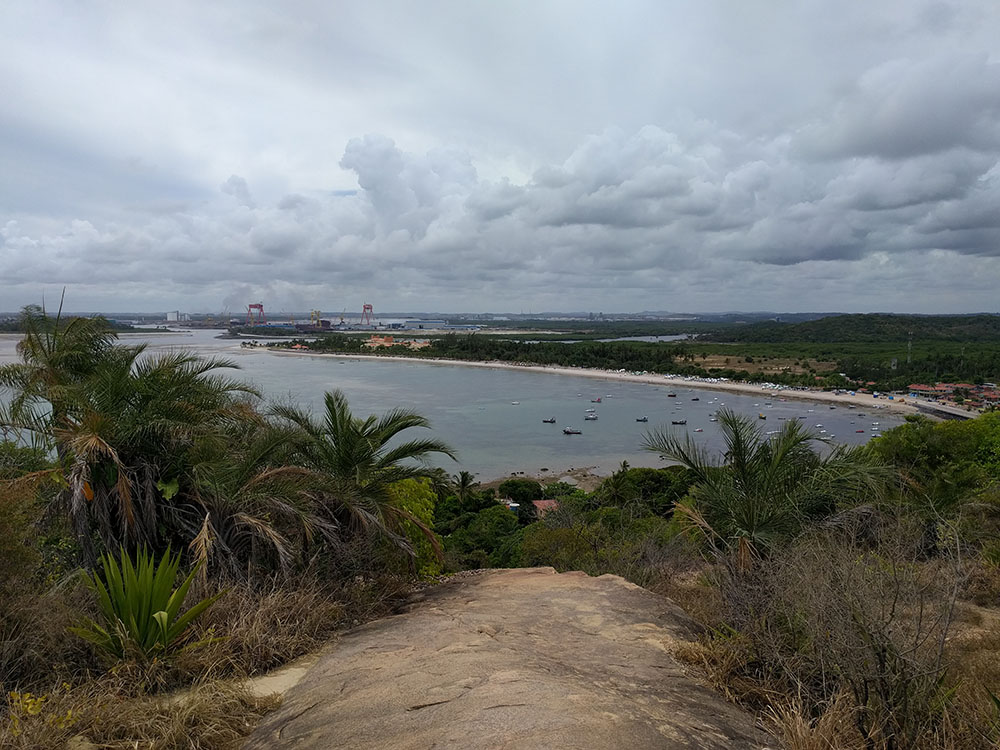
On the northeast coast of Brazil, activities have been underway since 2007 to develop and extend the port of Suape. The port is being developed partly to support oil drilling along the Brazilian coast. The project is controversial because of the disastrous impact it is having on the natural environment, the rivers, the mangroves, marine life and the people who have lived in the region for many generations. Together with Fórum Suape, specially set up to combat the development of the port, Both Ends has been working for almost ten years to protect the rights of local communities in and around Suape. Now there has been a breakthrough – literally. In August of last year, a controversial dam in the Rio Tatuoca that was destroying the mangroves and the aquatic life in the area was partially dismantled. We spoke to Mariana Vidal,* project coordinator at Fórum Suape, about how that came about and what changes have taken place in the area since.
"It is essential for the mangrove forests that the river and sea water can flow in and out," Mariana tells us. "The dam prevented this, meaning that the forest was almost permanently under fresh water. The dam put a stop to the natural cycle of ebb and flow, required for healthy flora en fauna, for many years. When part of the dam was eventually removed, the water could once again flow back and forth. With spectacular results: an environment that had been in intensive care for many years is now coming back to life."
Official complaint already lodged in 2008
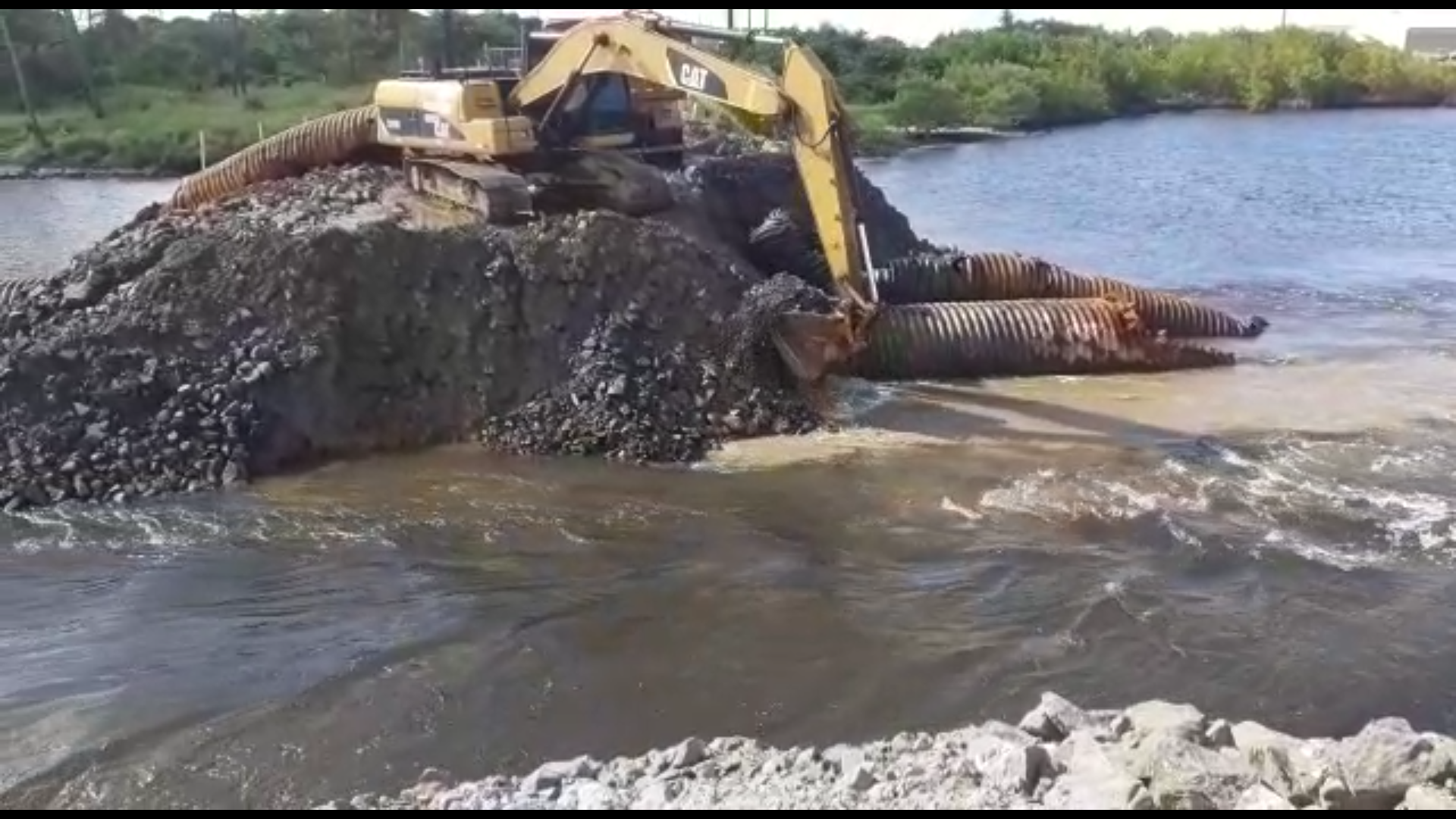
The dam was built in 2007 as a kind of access road for the construction of a large shipyard. The Quilombola community in the village of Mercés, who are descended from former slaves, already lodged an official complaint against the dam in 2008 because of the impact it was having on their living environment. Unfortunately, for many years, the public prosecutor's office did nothing with the complaint. That has however changed in the past two years.
That is first and foremost because Fórum Suape increased public pressure and the visibility of the case and took action together with the Mercés community. Also of decisive importance was that a new official at the public prosecutor's office who was given responsibility for the Suape dossier proved willing to take up the case. "That meant we were able to get help from inside the public prosecutor's office," says Mariana. One of the actions taken by Fórum Suape was to submit a 'TAC' (Termo de Ajustamento de Conduta), a legal instrument with which companies can be compelled to take certain measures. "Once the SUAPE port company (Governor Eraldo Gueiros Industrial Port Complex) realised that Fórum Suape had the law on its side, they finally promised to remove part of the dam. And they kept their word. Doing it themselves meant they could retain control."
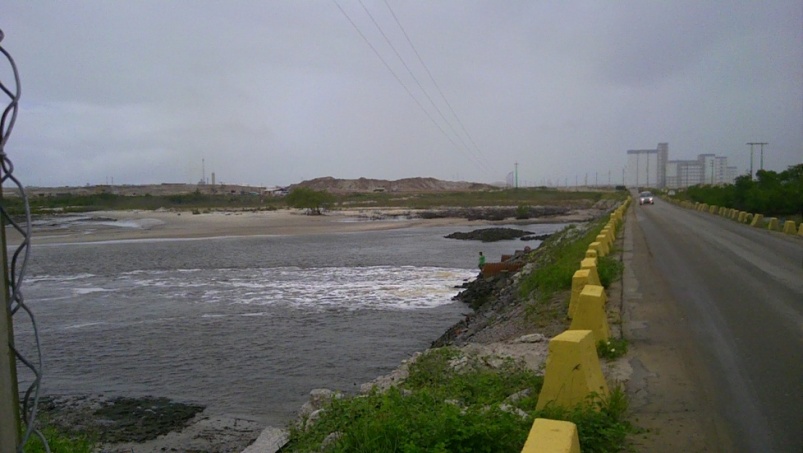
"On 9 August 2021, some 35 metres were removed from the 170-metre-long dam. This partial opening is however not yet sufficient to allow the natural environment to recover completely. We are conducting ecological research to show that this is the case: we are monitoring the effect of the partial opening and working out what impact full removal of the dam would have. The port company is arguing that removing the dam completely is too expensive. But that is not the full story: they originally agreed that the dam would be temporary. It is now fifteen years later. So they have not complied at all with the agreements made at the beginning."
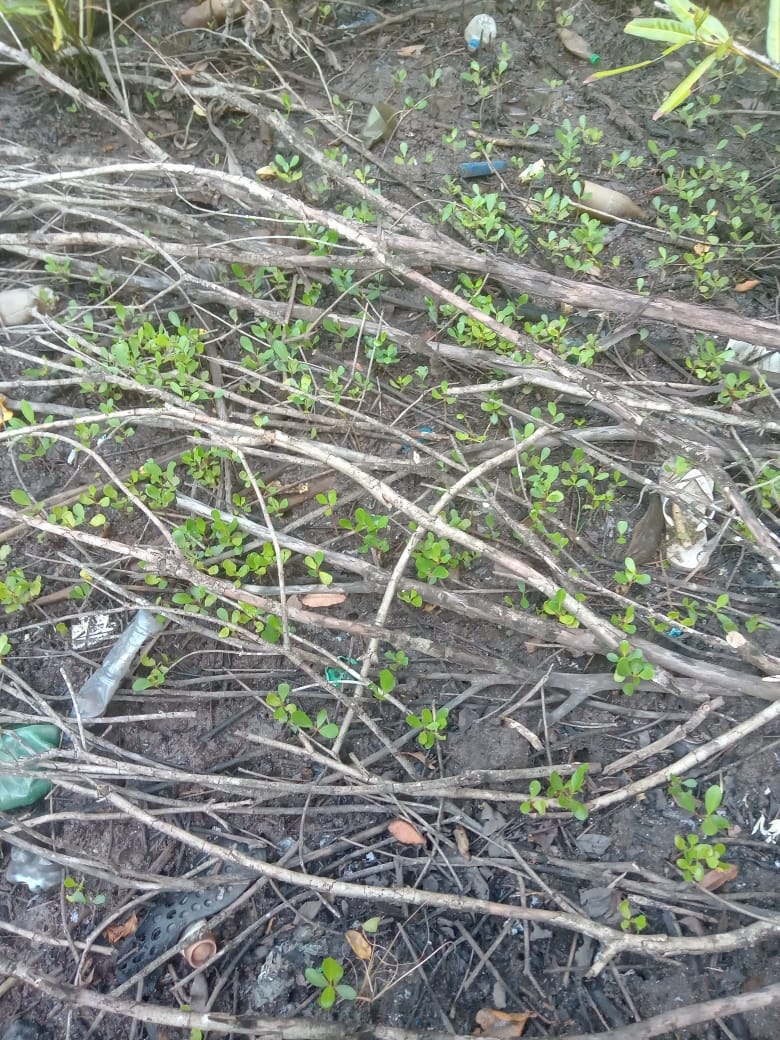
The ecosystem is recovering slowly, step by step. The greater the flow of water in and out, the greater the recovery. The ecosystem is becoming increasingly diverse and biodiversity will become richer. As a result of this partial opening alone, Mariana and her colleagues are seeing new mangroves growing and that will gradually increase. Fórum Suape therefore continues to apply pressure by using public resources. They have recently submitted a damage claim to the courts. Mariana explains that "the public prosecutor should actually have done that, but now we are doing it ourselves. Through the claim we holding the port company liable for the damage caused by the dam, as they have direct responsibility and commissioned its construction. So it is now up to them to remove it."
Intentional
There was long an alternative route to the shipyard and yet the port company refused to remove the dam. "There was another reason for that," says Mariana. "The port company wanted to make it as difficult as possible for the people of Mercés to continue to live in the area. It was hard for them to survive there. They couldn't plant any crops, the mangrove forest was sick and people became ill, too. It is easier to get people to move away if they are ill."
According to Mariana, the course on agro-ecology given to the women in the community with the support of Both ENDS' GAGGA programme also had a great positive effect. "It has cheered the women up and they are happy to start farming again. It had all been forgotten, because everything they used to plant was destroyed and removed by the port company, which claims the 'official land rights' top the area. Now they are planting their crops again and hope that the port company will not destroy them."
Despite the dam being only partially removed, the development is very significant for the Mercés community. "It was incredible," Mariana says. "Even more so with a biased legal system that very often decides in favour of the port company. It is clearly very possible to win if people join forces."
Both ENDS' role
"Both ENDS has supported Fórum Suape from the very beginning in combatting many problems relating to the extension of the port in Suape, including the damming of the Rio Tutuoca. In 2015, together with local fishers, a formal complaints procedure was initiated under the OECD Guidelines for Multinational Enterprises against the Suape port company, Dutch dredging company Van Oord and Dutch export credit insurer ADSB, which also put the impact of the dam on the agenda. Recently, Both ENDS supported Fórum Suape in making a documentary on the history of the Rio Tatuoca and the community that depends on it. We set up a campaign (Rios Livres, Mangues Vivos!) with podcasts and videos. We also contracted a biologist to draw up a technical report on the local ecosystem, and called in a lawyer to help draft our damage claim. Without the help of Both ENDS, none of that would have been possible."
As a young environmental activist, Mariana received a grant from Both ENDS' Joke Waller Hunter initiative (JWHi). "I used that to follow a course in Costa Rica on how to manage wetlands in the light of climate change. That helped to acquire a clear overview of the whole process and the action that was needed. And, as you can see, that has borne fruit!"
For more information
Read more about this subject
-
 Dossier /
Suape: port expansion threatens paradise
Two projects insured by Atradius DSB in the Brazilian port of Suape have caused serious social problems and environmental damage. Both ENDS is helping the local people to obtain justice.
-
 News / 3 September 2026
Restoring Land, Restoring Hope: Both ENDS at UNCCD COP17 in Mongolia
From 17 to 28 August, governments gathered in Ulaanbaatar, Mongolia, for COP17 of the UN Convention to Combat Desertification (UNCCD). At stake was more than how the world responds to land degradation and drought. It was also a question of who gets to shape land restoration, whose knowledge counts, and where the money goes.
-
Publication / 3 July 2026
-
 Dossier /
Gas in Mozambique
In 2011 one of the world’s largest gas reserves was found in the coastal province of Cabo Delgado, in the north of Mozambique. A total of 35 billion dollars has been invested to extract the gas. Dozens of multinationals and financiers are involved in these rapid developments. It is very difficult for the people living in Cabo Delgado to exert influence on the plans and activities, while they experience the negative consequences. With the arrival of these companies, they are losing their land.
-
Publication / 18 June 2026
-
Publication / 12 May 2026
-
 Press release / 12 May 2026
UN report warns of a growing sand crisis - The Dutch dredging sector plays a key role in global sand extraction
GENEVA/UTRECHT, 12 May 2026 – A new report by the United Nations Environment Programme (UNEP), Sand and Sustainability: An Essential Resource for Nature and Development, warns that global demand for sand is exceeding ecological limits. Large-scale extraction of sand from marine and coastal ecosystems is leading to biodiversity loss, damage to coastal communities and increasing risks in an era of climate change. Dutch dredging companies play a prominent role in this as global market leaders in large-scale sand extraction and land reclamation. “Our analyses show that the dredging sector operates globally within a system in which ecological damage and the consequences for coastal communities are systematically underestimated, whilst transparency and effective oversight are often lacking,” says the Dutch environmental and human rights organisation Both ENDS, which contributed to the report.
-
Publication / 14 April 2026
-
Publication / 10 April 2026
-
 Dossier /
Global Alliance for Green and Gender Action (GAGGA)
GAGGA rallies the collective power of the women's rights and environmental justice movements to realize a world where women can and do access their rights to water, food security, and a clean, healthy and safe environment.
-
 News / 17 February 2026
Civic space at the frontlines: "Build strong coalitions and counter repressive regimes"
Today, we look back on an inspiring event Civic space at the frontlines -
Environmental Defenders and the Role of International Trade and Investment Policy. The panel exist of Michel Forst, UN Special Rapporteur Environmental Defenders under the Aarhus Convention, Suzanne Kröger, Member of Parliament for GroenLinks–PvdA, Dr. Margit van Wessel, Associate Professor at Wageningen University, Anne de Jonghe, policy advisor at Both ENDS, and Jonila Castro, national spokesperson for Kalikasan People's Network for the Environment. With an audience of CSO experts, academics, accountability experts and students we discussed the effects of Dutch economic activity on Environmental Defenders, and what we all can do to support those on the front lines of the fight for the environment and human rights. -
 Dossier /
Seeking justice for the affected communities of Vale’s mining disasters in Mariana and Brumadinho
In 2015 and 2019, the Brazilian state of Minas Gerais experienced two severe mining tragedies in Mariana and Brumadinho, due to the same mining company: Vale. Since then, the affected communities have been seeking justice, via the criminal punishment of the responsible parties, and a fair compensation for the loss of their loved ones, their homes and their livelihoods. Both ENDS supports local CSOs by amplifying their quest for justice within an international audience and, more specifically, by raising awareness amongst Dutch investors in Vale about the high risks this company’s activities pose for people and the environment.
-
 News / 2 February 2026
Seven years after Brumadinho: impunity allows Vale’s disasters to continue
Seven years ago, the dam owned by mining company Vale collapsed in Brumadinho, Brazil, killing 272 people and severely polluting the surrounding area. While the relatives of the victims commemorate them and fight for justice, the pollution continues.
-
 Event / 26 January 2026
Civic space at the frontlines
Environmental Defenders and the Role of International Trade and Investment Policy
Both ENDS invites you to an interactive dialogue with experts from the UN, policy, academia, and civil society on environmental defenders and international trade. Together, we will explore how citizens, policymakers, academics, and activists can defend civic space and support those on the frontlines of environmental and human rights struggles. With a focus on the Netherlands’ role in international trade and investment policy, and drawing on the experiences of activists from the Philippines, the event aims to foster solidarity and identify strategic priorities to better protect environmental defenders amid the global crackdown on civic space
-
 Dossier /
Agua Zarca: indigenous fight against dam costs lives
Indigenous Hondurans are resisting the construction of the Agua Zarca hydrodam. Their fight has cost several lives, including that of Berta Cáceres. After considerable public pressure, Dutch development bank FMO withdrew from the project.
-
 Dossier /
Export Credit Agencies: Who pays the price?
Both ENDS calls on the government only to provide export credit insurance to sustainable projects that cause no social and/or environmental damage in the countries where they take place.
-
 Press release / 2 December 2025
End of Dutch involvement in controversial gas project in Mozambique in sight after TotalEnergies withdraws from Dutch insurance
THE HAGUE/CABO DELGADO, December 1, 2025 - Today, Minister of Finance Eelco Heinen announced that TotalEnergies is withdrawing from a $640 million Dutch export credit insurance policy for a controversial gas project in Mozambique. Although the Dutch government has been avoiding this decision for years, this move has finally ended part of the Dutch involvement in this disastrous project.
-
 Dossier /
Indigenous communities threatened by Barro Blanco dam in Panama
The Barro Blanco dam project in Panama, which has Dutch financial support, is causing indigenous lands to disappear under water. Both ENDS is working to protect the rights of indigenous communities living near the dam.
-
 News / 27 November 2025
Communities and International Consortium Present Community-Led Plan for Nature-Based Adaptation to Sea-Level Rise in Coastal Bangladesh
Local communities in the southwestern coastal region of Bangladesh—together with an international consortium including Uttaran, CEGIS, and Both ENDS—have presented a community-led plan to confront climate change and accelerating sea-level rise through nature-based adaptation. The People’s Plan for Upscaling Ecosystem-Based Adaptation outlines a scalable strategy rooted in local ownership and generations of lived experience. At its centre is Community-Based Tidal River Management (CBTRM), a proven approach that reduces waterlogging, raises land elevation, and restores ecological balance by working with natural tidal and sediment dynamics.
-
 Blog / 25 November 2025
COP30 shows why dismantling ISDS is essential for real climate action
Standing in Belém during COP30, I felt the weight of the moment. We came to the Amazon hoping for decisive progress on phasing out fossil fuels, yet the final outcome fell far short of the ambition science and justice demand. The agreement brought welcome commitments on adaptation finance and global indicators, but it refused to confront the structural forces that make climate action so difficult.




