




Food sovereignty in the polders of Southwest Bangladesh
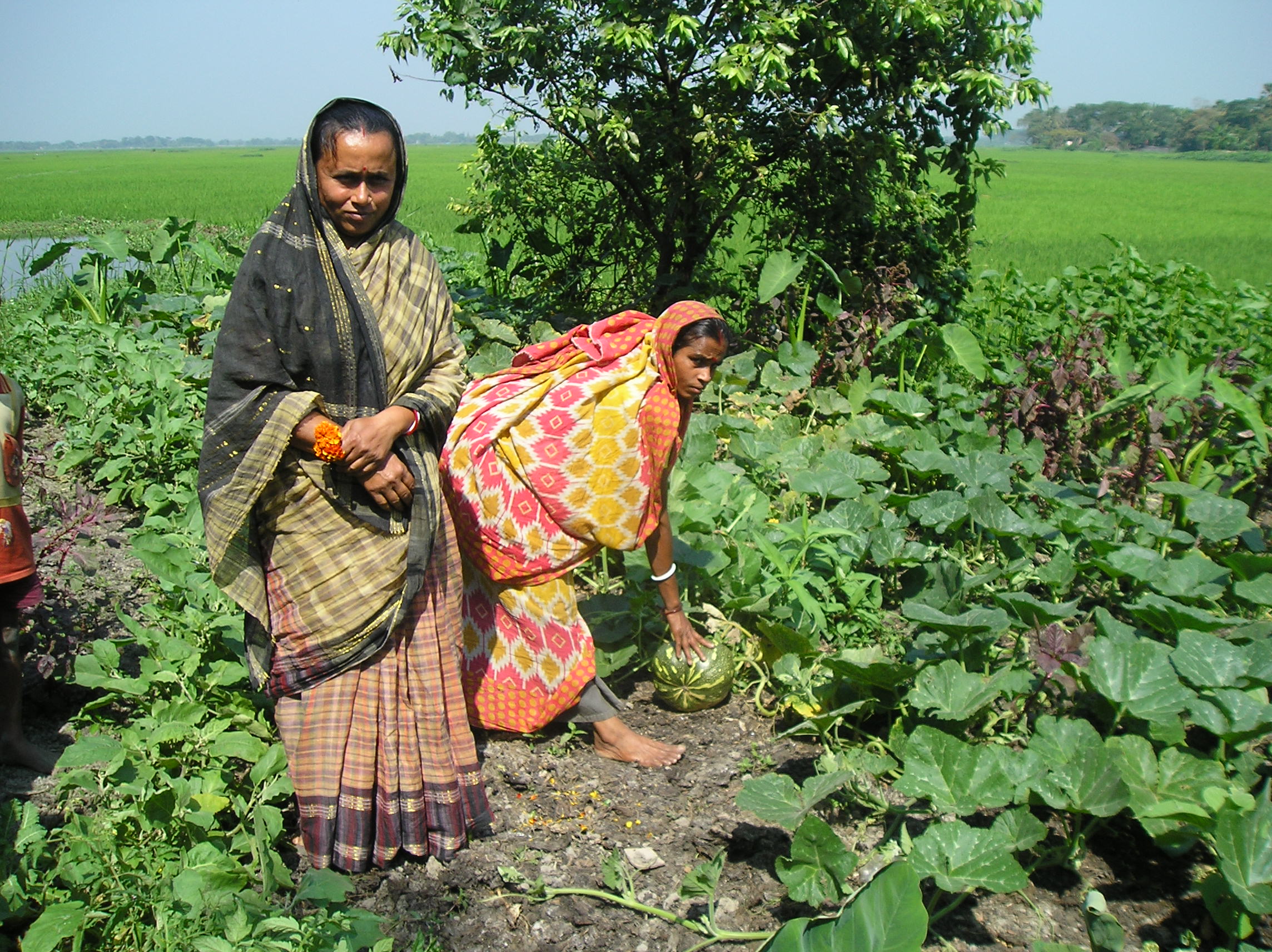
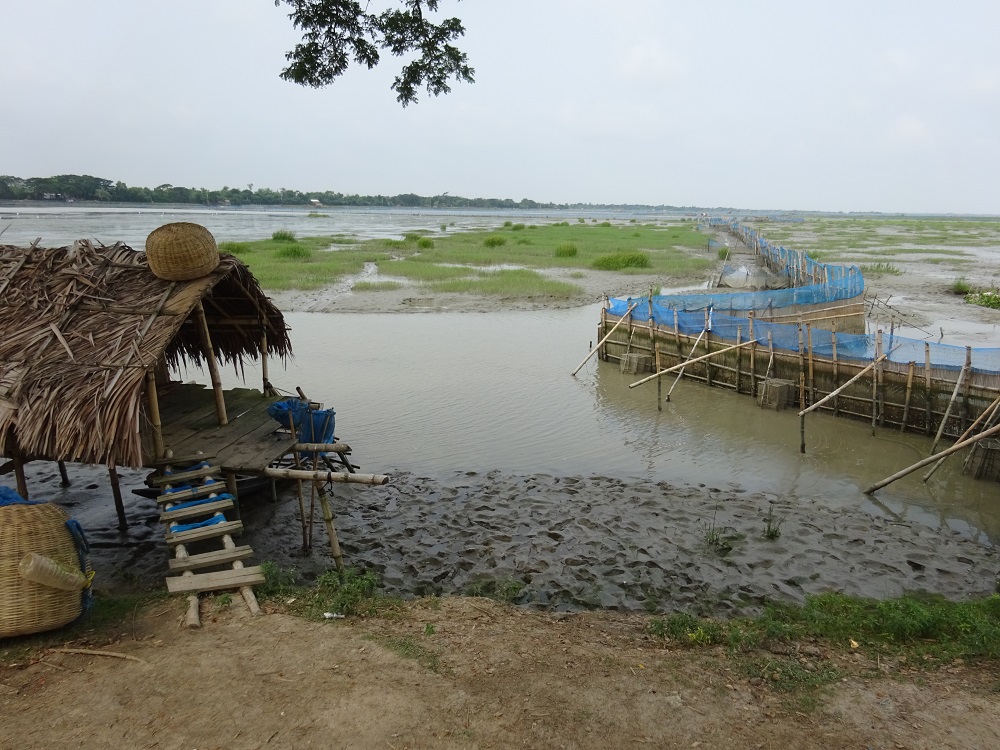
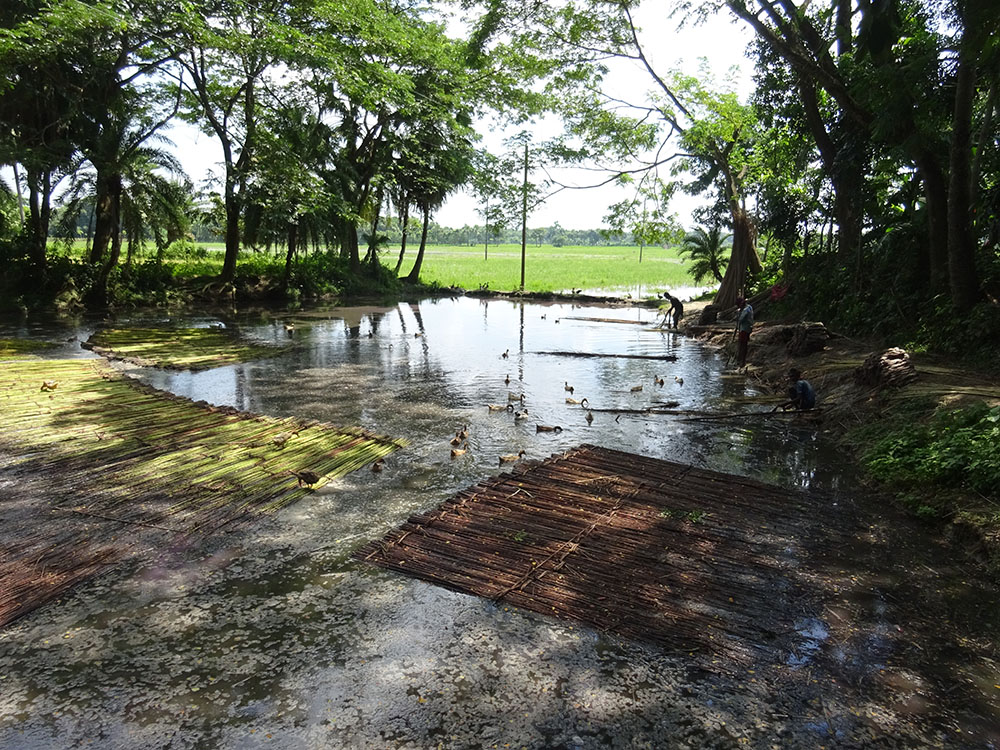
The situation in the southwest delta of Bangladesh is critical. Because of sea level rise, floods are increasing and the area is about to become uninhabitable, despite Dutch-style dikes and polders built in the previous century. Partner organisation Uttaran works with local communities on climate-friendly solutions that restore the living environment and give the inhabitants a say about their future and food production.
The southwest of Bangladesh is a low-lying delta. It is naturally fertile because of the frequent floods during which sediments are deposited on the agricultural land. However, after heavy floods during the 1950s, a large part of the area was empoldered, with the help of Dutch expertise.
How the past influences contemporary food sovereignty
The current generation of coastal people increasingly has to deal with the negative consequences of the decisions made over half a century ago. The river sediment has nowhere to go, raising the river water level above that of the polders. For most of the year, the water is trapped within the dikes and no fertile sediment is deposited. This is why the surface area of the agricultural land is not only becoming smaller, but also less fertile. As a result, harvests have been decreasing for decades.
Because the inhabitants of the delta were not involved sufficiently in the decision-making at the time, the food sovereignty of the current inhabitants is now under pressure. Many communities are becoming less and less self-sufficient and more and more dependent on uncertain and temporary jobs in the cities for their income.
Restoring the balance of power
Both ENDS' partner organisation Uttaran is devoted to restoring the historically skewed power relations. They advocate tirelessly for the adoption of a traditional way of Tidal River Management in the Bangladesh Delta Plan (BDP2100) and the inclusion of local communities in its design and implementation.
It is up to the Bangladeshi government, but also to their Dutch partners – the Dutch water sector is still closely involved in water management in Bangladesh – to respond to the demands of the local communities from southwest Bangladesh with whom Uttaran has been working for decades. Especially in the face of climate change and rising sea levels, this is a matter of absolute urgency.
World Water Week Session "The politics of water and the choices we can make"
Jahin Shams Sakkhar of Uttaran is one of the speakers at the World Water Week session which will be led by Both ENDS on 23 August. Among other things, this session is about the importance of power relations in water management, with examples from Bangladesh, Kenya, Canada and Nepal.
For more information
Read more about this subject
-
 Environmentally Just Practice /
A Negotiated Approach for Inclusive Water Governance
A Negotiated Approach envisages the meaningful and long-term participation of communities in all aspects of managing the water and other natural resources on which their lives depend. It seeks to achieve healthy ecosystems and equitable sharing of benefits among all stakeholders within a river basin. This inclusive way of working is an essential precondition for the Transformative Practices that are promoted by Both ENDS and partners.
-
Publication / 27 November 2025
-
 News / 27 November 2025
Communities and International Consortium Present Community-Led Plan for Nature-Based Adaptation to Sea-Level Rise in Coastal Bangladesh
Local communities in the southwestern coastal region of Bangladesh—together with an international consortium including Uttaran, CEGIS, and Both ENDS—have presented a community-led plan to confront climate change and accelerating sea-level rise through nature-based adaptation. The People’s Plan for Upscaling Ecosystem-Based Adaptation outlines a scalable strategy rooted in local ownership and generations of lived experience. At its centre is Community-Based Tidal River Management (CBTRM), a proven approach that reduces waterlogging, raises land elevation, and restores ecological balance by working with natural tidal and sediment dynamics.
-
 Dossier /
Wetlands without Borders
With our Wetlands without Borders program, we work towards environmentally sustainable and socially responsible governance of the wetlands system of the La Plata Basin in South America.
-
Letter / 14 November 2025
Letter: TPAC’s report “Final Judgement Detailed Research MTCS’’
A coalition of Malaysian and international NGOs has released a memorandum in response to the recent TPAC report on the Malaysian Timber Certification Scheme (MTCS). The organisations express serious concerns about the independence, quality, and credibility of the assessment carried out by the Timber Procurement Assessment Committee (TPAC).
-
 Dossier /
Communities Regreen the Sahel
In various countries in the Sahel, vast tracts of land have been restored by the local population by nurturing what spontaneously springs from the soil and protecting the sprouts from cattle and hazards.
-
 Dossier /
Global Alliance for Green and Gender Action (GAGGA)
GAGGA rallies the collective power of the women's rights and environmental justice movements to realize a world where women can and do access their rights to water, food security, and a clean, healthy and safe environment.
-
Publication / 9 October 2025
-
 Dossier /
Amplifying environmentally just practices
Because of the close relationship with their living environment, local communities often have the best ideas for the sustainable and equitable use and governance of land, water and forests. These environmentally just practices and processes successfully protect and restore ecosystems and address climate change. They are essential in the light of the multiple crises the world faces, but are in dire need of financial and policy support.
-
Publication / 1 July 2025
-
 News / 23 June 2025
Who benefits from better protection of our oceans?
The ocean emerged strengthened from the UN Ocean Conference in Nice. More countries are supporting a ban on deep-sea mining, more marine protected areas are being established, and more pledges are being made to fight pollution. The question now is whether countries will follow through on their commitments. Because the ocean movement faces a camp of powerful interests.
This article was originally posted in Dutch on MO*Magazine.
-
 Dossier /
Inclusive ways to sustainable and healthy food for all
All around the world small-scale farmers are using sustainable and inclusive methods to produce food. Working together with nature and each other, they provide their families and communities with sufficient and healthy food. But their production methods are under pressure from large-scale agriculture and the globally dominant system of industrial food production. Together with our partners, Both ENDS is trying to turn the tide in favour of sustainable, local practices that are mostly known as 'agro-ecological' or 'nature-inclusive'. Why are we focusing on these methods? Agro-ecological practices are climate-proof and inclusive and increase the opportunities for communities around the world to produce their food sustainably.
-
 Blog / 31 March 2025
International cooperation and solidarity are in the interest of both the Netherlands and Africa
Traditional development aid keeps Africa in a state of aid dependency, but development cooperation is essential to break this post-colonial dependency, argues Melvin van der Veen in response to an interview in NRC Handelsblad with the Cameroonian economist Célestin Monga. By breaking off this cooperation on the basis of equality, we are actually stifling the voices of African civil society organisations, indigenous communities, youth and women's movements and human rights defenders, and we are not solving global problems.
-
 News / 21 March 2025
Dutch Royal couple visits Thogoto Forest: a green oasis on the outskirts of Nairobi
This week, King Willem-Alexander and Queen Máxima visited Thogoto Forest as part of their state visit to Kenya. They were able to see the impact of the work of our partner MCDI in the area: a restored forest, clean water and farmers who can earn a living by selling their agro-ecological products.
-
Publication / 16 January 2025
-
 Event / 12 December 2024, 13:00 - 14:30
Exploring new avenues of CSO participation in UNCCD processes
Enhancing inclusivity within UNCCD processes and its implementation by strengthening the involvement of civil society organizations (CSOs) and Indigenous Peoples.
-
 Event / 11 December 2024, 13:00 - 14:30
Making strategic impact: Shifting resources and power to women-led initiatives for Land Degradation Neutrality (LDN)
How donors, foundations and other funders can better support women-led initiatives in achieving Land Degradation Neutrality (LDN), focusing on challenges, collaboration, and opportunities for improved matchmaking.
-
 Pathway /
Supporting a powerful civil society
Our goal is that civil society can work openly and safely, make their voices heard and influence decision-making on ecosystem challenges and matters of environmental justice and human rights. A strong civil society is indispensable to a healthy society. It checks the power of both state and corporate actors, holds decision-makers accountable, and defends the rights of those marginalised from positions of influence. A strong and independent civil society can advocate for fair and ecologically responsible policies as well as challenge structural inequalities in decision-making. It can also use accountability mechanisms to seek redress for the negative consequences of such inequitable decision-making, and instead promote, implement and upscale transformative practices.
-
 Event / 4 December 2024, 18:00 - 19:30
Enhancing the role of civil society in the UNCCD to achieve Land Degradation Neutrality (LDN)
Effective local action by land-using communities is at the heart of achieving LDN globally. However, their contributions are often not well recognized or adequately supported by governments and other agencies. Within the UNCCD framework, civil society organisations play a key role in engaging with policymakers in the context of recognizing and supporting these contributions by local communities. The side event will engage participants in a GEF-supported joint Drynet/ IUCN initiative to enhance the capacities of civil society to engage effectively in the achieving Land Degradation Neutrality (LDN) within the UNCCD framework.
-
 News / 2 December 2024
Ten recommendations for the UNCCD COP16 to strengthen its efforts in combating desertification, land degradation, and drought
For decades, our local partner organisations have been developing and promoting effective ways to combat land degradation, desertification, and drought. This includes regions like the drylands, as well as forests, and wetlands. Supporting these locally-led actions is essential to reversing negative trends. For COP16, Drynet has developed 10 recommendations to strengthen the implementation of the UNCCD. Success at COP16 would mean turning these recommendations into action, fostering inclusive land governance and sustainable land management practices globally. By enabling locally-led actions—particularly those led by women, youth, pastoralists, and Indigenous Peoples—we can build a more resilient future.




