




Argentina’s Matanza-Riachuelo Biocultural Corridor
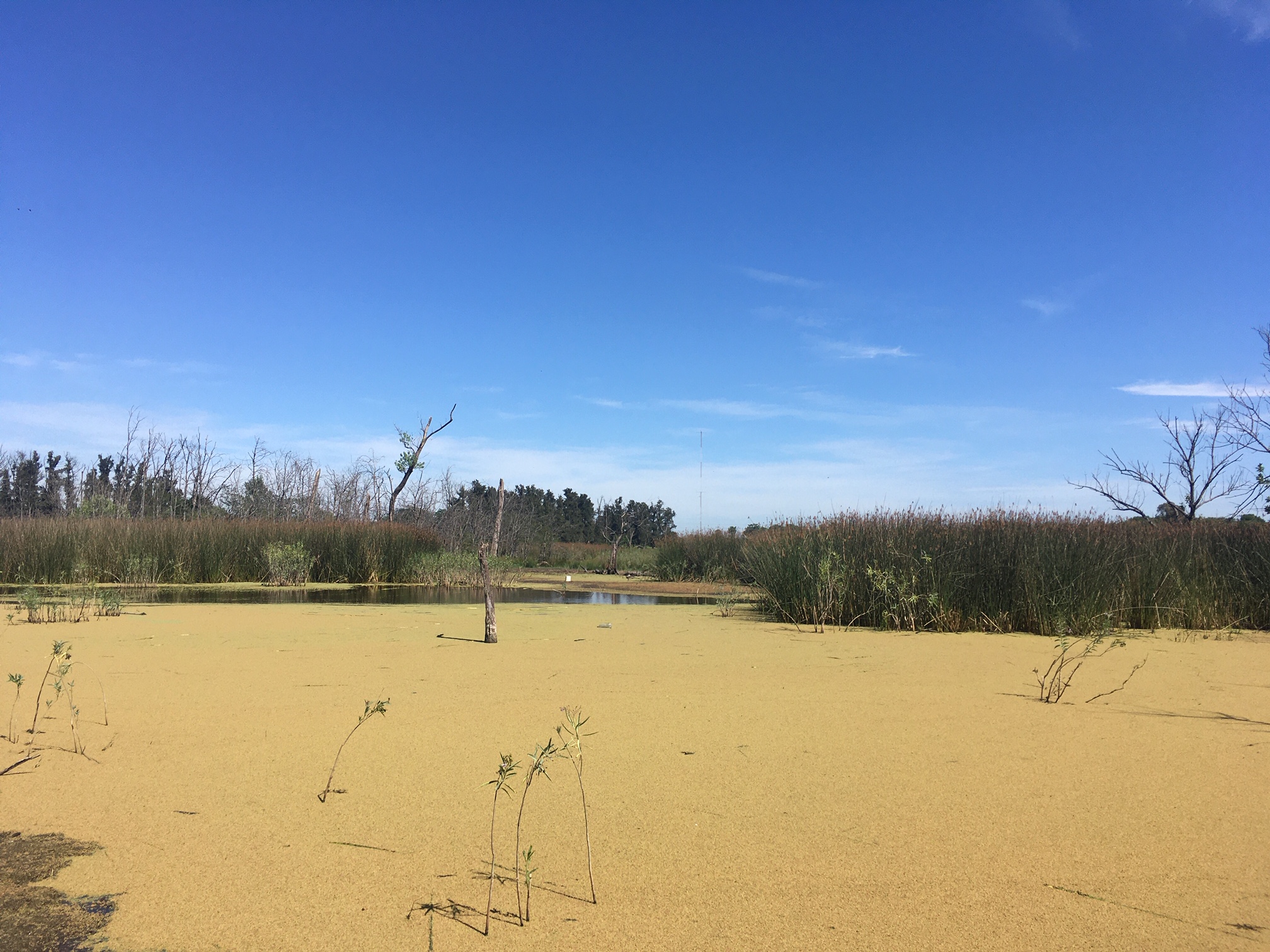
The Matanza-Riachuelo River, which runs through the city of Buenos Aires, is known to be one of the most polluted waterways in the world. Yet it also contains many important ecosystems that play a key role in the lives of millions of people, and countless plant and animal species.
Wetlands without Borders member FARN is working to draw attention to the natural and cultural value and diversity of the Matanza-Riachuelo basin and other valuable ecosystems throughout the La Plata Basin. Through creation of the Matanza-Riachuelo Biocultural Corridor, Wetlands without Borders aims to protect and restore the basin’s ecosystem, while enhancing the cultural bond of local communities to the area.
Strengthening resilience
Through Biocultural Corridors, Wetlands without Borders is reconnecting and strengthening the resilience of similar natural habitats and communities that share common socio-cultural practices throughout the La Plata Basin. The Matanza-Riachuelo Biocultural Corridor is one of ten such corridors. Situated to the south of mega city Buenos Aires, it stretches about 70 km along the Riachuelo and La Matanza rivers and their tributaries.
As a first step to creating the Matanza-Riachuelo Biocultural Corridor, the area’s biodiversity and cultural hotspots were identified. The Matanza-Riachuelo Biocultural Corridor includes numerous wetlands that lie within this suburban area, including the Santa Catalina Nature Reserve, Ciudad Evita Nature Reserve, Laguna de San Vicente Municipal Reserve, the Erratchú Protected Landscape Project and the Ministro Rivadavia Ambá Project. A key goal of the Biocultural Corridor is to connect these areas and promote their sustainable management and protection. An interactive map, created by Wetlands without Border member Casa Río, highlights the unique features of the Matanza-Riachuelo Biocultural Corridor’s unique hotspots, as well as other Biocultural Corridor’s in the Argentinian stretch of La Plata Basin.
Celebrating the Biocultural Corridor
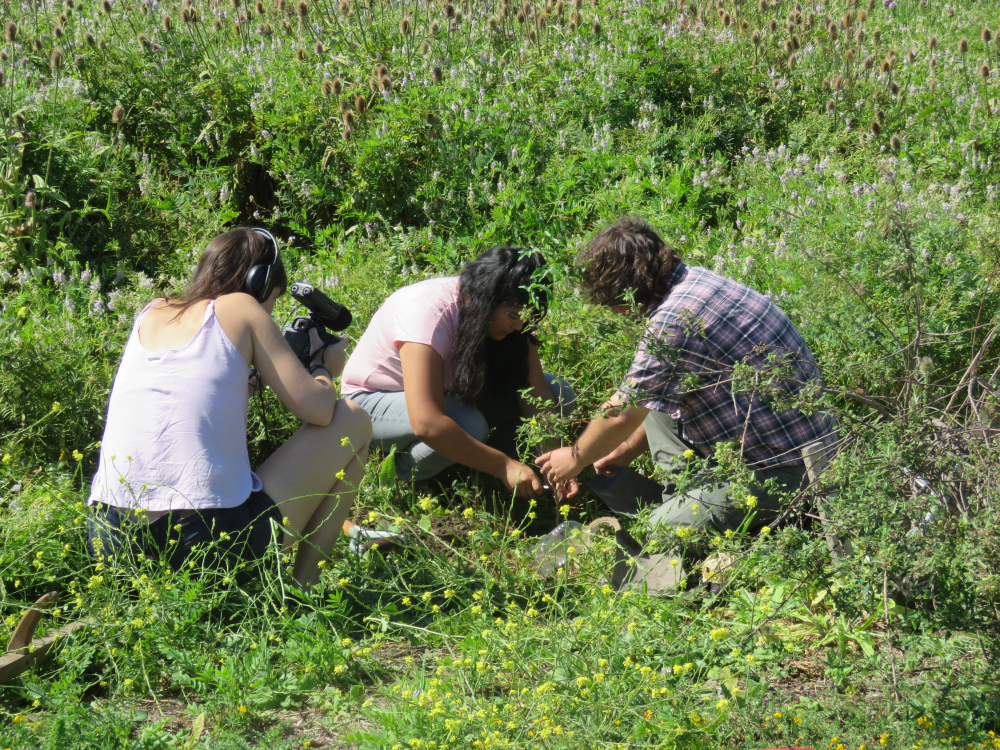
FARN and Casa Río are actively engaging residents in the Biocultural Corridor. In 2022, the groups organised a festival in the Santa Catalina Nature Reserve in Lomas de Zamora. Over 200 people attended the two-day festival, which included cultural, political and educational activities. Hundreds of school children, students and other groups from the area visited the Santa Catalina Nature Reserve and attended presentations on its biocultural heritage. For some of the children, this is the first time they experience nature. The reserve is home to the Museo de Agrobotánica, Historia y Naturaleza (the Musuem of Agrobotany, History and Nature), the starting point for many educational activities.
Action to enhance the Biocultural Corridor’s natural reserves
Wetlands without Borders is also working to restore and rehabilitate the Matanza-Riachuelo Biocultural Corridor. Activities include tree planting and nurseries, as well as advocacy to strengthen protection of existing nature reserves, which are under pressure.
The Ciudad Evita Nature Reserve is located in the Buenos Aires suburbs, where there is a dramatic shortage of natural green spaces. It is one of the strategic spaces of the Matanza-Riachuelo Basin, contributing to the conservation of biodiversity and the well-being of area residents. But plans for further urbanisation of the area threaten the future of the nature reserve. FARN and local residents of Ciudad Evita have engaged with the Municipality of La Matanza and other regional authorities, raising concerns about the encroachment of construction into the reserve. In response to the pressure, the authorities agreed to act on their previous commitment to protect the area.
Santa Catalina Nature Reserve is also under threat. Despite legislation that protects the reserve, the area’s owner, Universidad de La Plata, wants to use the land for real estate development. FARN entered a dialogue with the responsible Ministry of Environment of Buenos Aires to convince them to effectively implement the environmental protection of this natural area, and will continue to advocate for the protection of this nature reserve and the rest of the Matanza-Riachuelo river basin.
For more information
Read more about this subject
-
 Dossier /
Wetlands without Borders
With our Wetlands without Borders program, we work towards environmentally sustainable and socially responsible governance of the wetlands system of the La Plata Basin in South America.
-
 Dossier /
Amplifying environmentally just practices
Because of the close relationship with their living environment, local communities often have the best ideas for the sustainable and equitable use and governance of land, water and forests. These environmentally just practices and processes successfully protect and restore ecosystems and address climate change. They are essential in the light of the multiple crises the world faces, but are in dire need of financial and policy support.
-
 Dossier /
Soy: trade in deforestation
The rising demand for soy is having negative consequences for people and the environment in South America. Both ENDS reminds Dutch actors in the soy industry of their responsibilities and is working with partners on fair and sustainable alternatives.
-
 Dossier /
Towards a socially and environmentally just energy transition
To address the climate crisis we need to urgently transition away from fossil fuels towards clean, renewable energy. However, this transition is not only about changing energy sources. It requires an inclusive and fair process that tackles systemic inequalities and demanding consumption patterns, prioritizes environmental and social justice, and which does not repeat mistakes from the past.
-
Publication / 1 July 2025
-
 Blog / 3 June 2025
A food forest as an inspiring oasis between monoculture fields
Recently, we visited food forest Ketelbroek with a group of colleagues. This project was initiated by food forest pioneer Wouter van Eck and our own Pieter Jansen. What a beautiful place! Located between monocrop fields of ryegrass, beetroot and potatoes, the food forest is a green oasis. Birdsong fills the air and there is a constant buzz and fluttering all around. Hares, badgers, foxes and wild boars are regular visitors. And let's not forget the beavers.
-
 News / 9 May 2025
Women’s leadership in agroecology flourishes in Eastern and Southern Africa
On 12 and 13 February 2025, women from Kenya, Uganda, and Zimbabwe gathered in Nairobi for the Africa Women Leaders in Agroecology (AWOLA) Regional Networking Forum. The event marked a significant moment in the leadership programme of PELUM Kenya, which empowers young women in their role as leaders in the agroecological transition. This project was made possible thanks to support from Both ENDS as part of the Fair, Green and Global (FGG) Alliance.
-
 News / 7 April 2025
Food forest Ketelbroek: where food production and biodiversity come together
When Both ENDS-colleagues visit partners, they often go on a "field trip" to see how our joint work affects people and communities. This year, we did the same in the Netherlands. Food forestry pioneer Wouter van Eck demonstrates a group of Both ENDS partners how regenerative agriculture can offer solutions to the climate and biodiversity crises.
-
 News / 21 March 2025
Dutch Royal couple visits Thogoto Forest: a green oasis on the outskirts of Nairobi
This week, King Willem-Alexander and Queen Máxima visited Thogoto Forest as part of their state visit to Kenya. They were able to see the impact of the work of our partner MCDI in the area: a restored forest, clean water and farmers who can earn a living by selling their agro-ecological products.
-
 News / 13 January 2025
New partnership with Netherlands Enterprise Agency for resilient food systems in Sahel
The situation in Africa's Sahel is the world's fastest-growing humanitarian crisis. Over 3 million people are fleeing violence. They are ravaged by hunger, disease and increasing drought caused by climate change. Both ENDS and its partners are successfully working on accelerating the resilience of local food systems and communities in the Sahel, based on ‘Farmer Managed Natural Regeneration’ (FMNR). The project, funded by DOB Ecology, will end in mid-2026, but has already been followed up thanks to a new collaboration with the Netherlands Enterprise Agency (RVO).
-
 Video / 17 December 2024
"Change takes time" - on the importance of long-term support for Wetlands without Borders
In this video, Tamara Mohr of Both ENDS talks about our role in supporting the Wetlands without Borders network: "We send funding to smaller organizations, that also work to distribute it to more local organizations. We see in the Wetlands network that this does work, and that organizations also grow this way."
-
 News / 6 December 2024
South American Forest Fires Highlight Effects of Delaying EU Deforestation Law
On the 4th of December, the European Parliament voted in majority for a delay of implementation of the EU Deforestation Regulation (EUDR). Earlier, the European Commission and the European Council already endorsed this proposal for a delay with one year. Both ENDS and partners are worried about this decision, as there is no time to waste in our global fight against deforestation, biodiversity loss and climate change.
-
 News / 2 December 2024
Advocating for Local Solutions: Both ENDS at UNCCD COP16 to Champion Sustainable Land Management and Gender Equality
As the United Nations Convention to Combat Desertification (UNCCD) celebrates its 30th anniversary, the global community faces an urgent need to address the escalating challenges of land degradation, desertification and drought. At the forefront of these efforts, Both ENDS has long advocated for inclusive, locally-led solutions to these critical issues. In this interview, Nathalie van Haren and Yordanos Mulder, who will represent Both ENDS at the upcoming UNCCD COP16, share insights into the significance of the conference, the key issues on the agenda, and the crucial role of local communities in shaping effective land governance. They discuss Both ENDS' ongoing work to amplify the voices of marginalised groups and emphasise the importance of sustainable land management practices, particularly those driven by women, youth, and Indigenous Peoples.
-
 Event / 15 November 2024, 12:50 - 16:45
#BothENDSatCOP29 Side Events
Both ENDS’ participation at COP29 includes three critical side events that will highlight gender-just climate finance, locally-led adaptation, and multilateral approaches to a just energy transition and industrialisation in the Global South.
-
 News / 1 November 2024
Both ENDS at COP29: advocating for gender just climate finance
On November 11th, the 29th UN Climate Conference will start in Baku, Azerbaijan. Just like previous years, Both ENDS will be there to advocate for local access to climate finance, and to support our partner organisations in their advocacy work. How do we do that, and what are our hopes (and worries) about this 29th edition of the UNFCCC COP? We asked Marius Troost, who will be joining COP29 together with Daan Robben.
-
 News / 24 September 2024
Massive Wildfires Ravage South America
“The fires have reached proportions we have never experienced before.”
Large swathes of South America are currently draped in smoke. From Buenos Aires, to São Paulo to Asunción people struggle to breathe due to unprecedented fires raging on the continent, fuelled by extreme drought, the expansion of the agriculture frontier and rising temperatures linked to climate change.
-
 External link / 2 July 2024
 -
 News / 19 June 2024
Recognition for PROBIOMA from the Chamber of Deputies of the Plurinational State of Bolivia
PROBIOMA have received recognition from the Chamber of Deputies of the Plurinational State of Bolivia. The presentation of this tribute took place at the Museum of Natural History Noel Kempff Mercado, in the framework of the Environment Day.
-
 Event / 30 January 2024, 14:00 - 15:30
The environmental and human rights impacts of raw material extraction: Lithium in the High Andes, Argentina
Following the Raw Material Week in November 2023 and the provisional agreement on the Critical Raw Material Regulation, Wetlands International Europe together with Both ENDS and the EU Raw Materials Coalition have organised a session seeking an open discussion on the environmental and human rights impacts of raw materials extraction, in and around vulnerable areas.
-
 News / 25 January 2024
'We can not have a transition when we do not talk about consumption patterns'
The parliamentary elections in the Netherlands are over, and the dust has somewhat settled. No matter what government emerges from the process, one thing is clear: in the Netherlands the main focus is on the Netherlands. Foreign affairs were hardly mentioned during the elections and the same applies to the process of forming a new coalition. More alarmingly, some of the winners in the elections want to cut themselves off even further from the world around us.

