




African Development Bank accepts complaint about coal plant
A year ago, the Senegalese NGO Takkom Jerry filed a complaint with the African Development Bank (AfDB) and the Dutch Development Bank FMO, with support from Both ENDS. These banks finance the Sendou coal power station, right next to the fishing village of Bargny. The AfDB has now recognized the complaint. FMO is already processing the complaint and will publish an official response shortly.
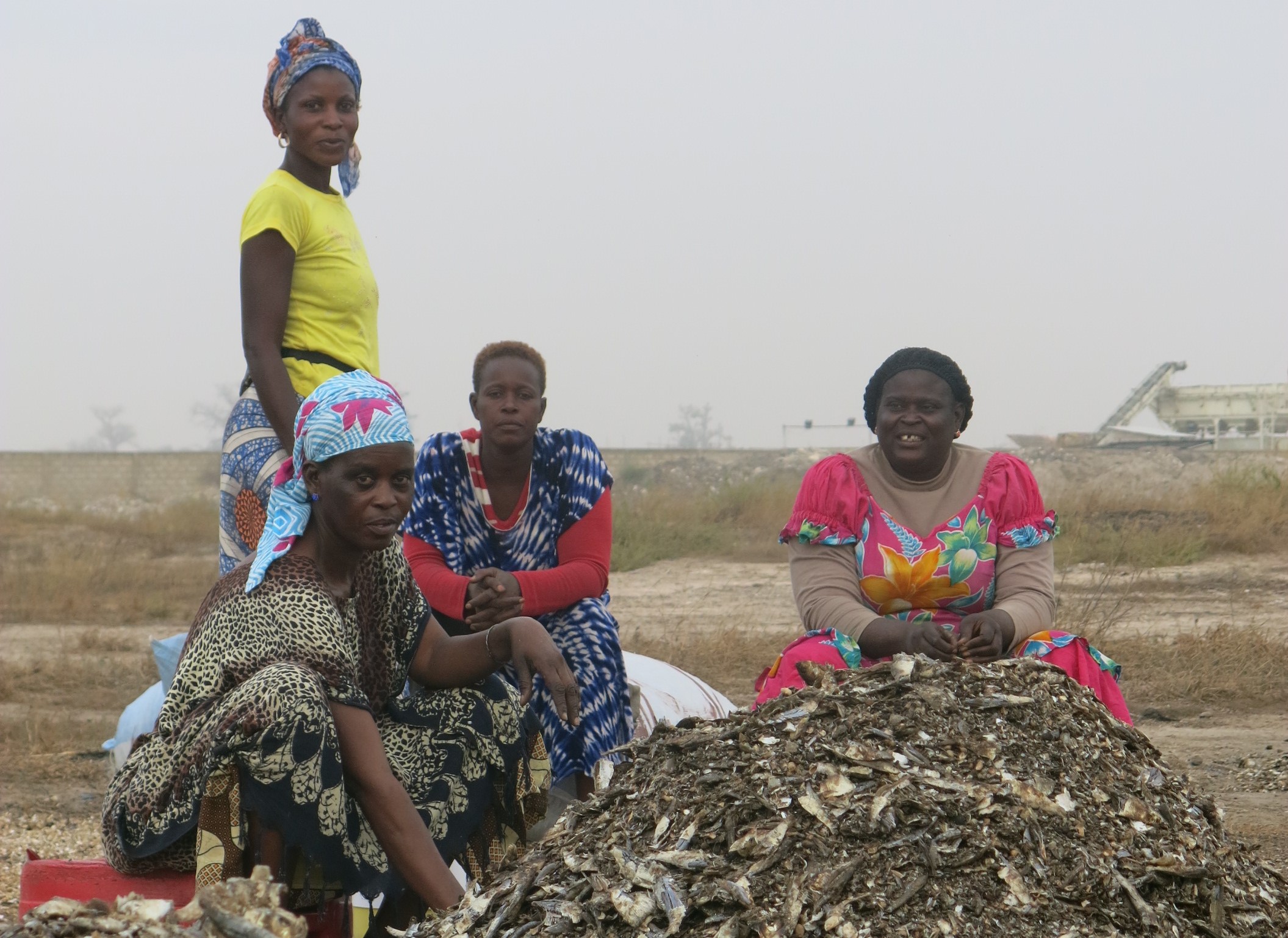
Women drying fish, Bargny 2014
Residents of Bargny fear the social and environmental effects of the coal plant, which is still under construction. The cooling water will be discharged into the sea and disrupt the life of fish, which has consequences for local fishermen. In addition, the coal power station causes air pollution in the immediate vicinity. Women who now dry and package fish for export on and next to the terrain of the future power plant, will not be allowed to do so any longer. However, there has been no consultation with local stakeholders and compensation is not yet in sight.
This is not in compliance with the banks' own policies. Therefore, in May 2016, NGO Takkom Jerry submitted a complaint with the banks, with the help of Both ENDS, SOMO and Lumière Synergie pour le Développement (LSD).
AfDB: complaint accepted
A year later, the board of the AfDB finally recognized the complaint. This probably took so long because after receiving a complaint, the bank first carries out a preliminary investigation by independent experts. Only if the complaint appears to be justified, it is accepted by the board.
In the case of Sendou, the AfDB identified a number of issues which are against their own policies. This includes loss of income for the more than 1,000 women who live off the drying and packaging of fish, taking plots of land without compensation, the risk of water pollution and poor consultation of stakeholders.
The independent experts will now investigate further to check their preliminary conclusion and advise the bank on the measures to be taken.
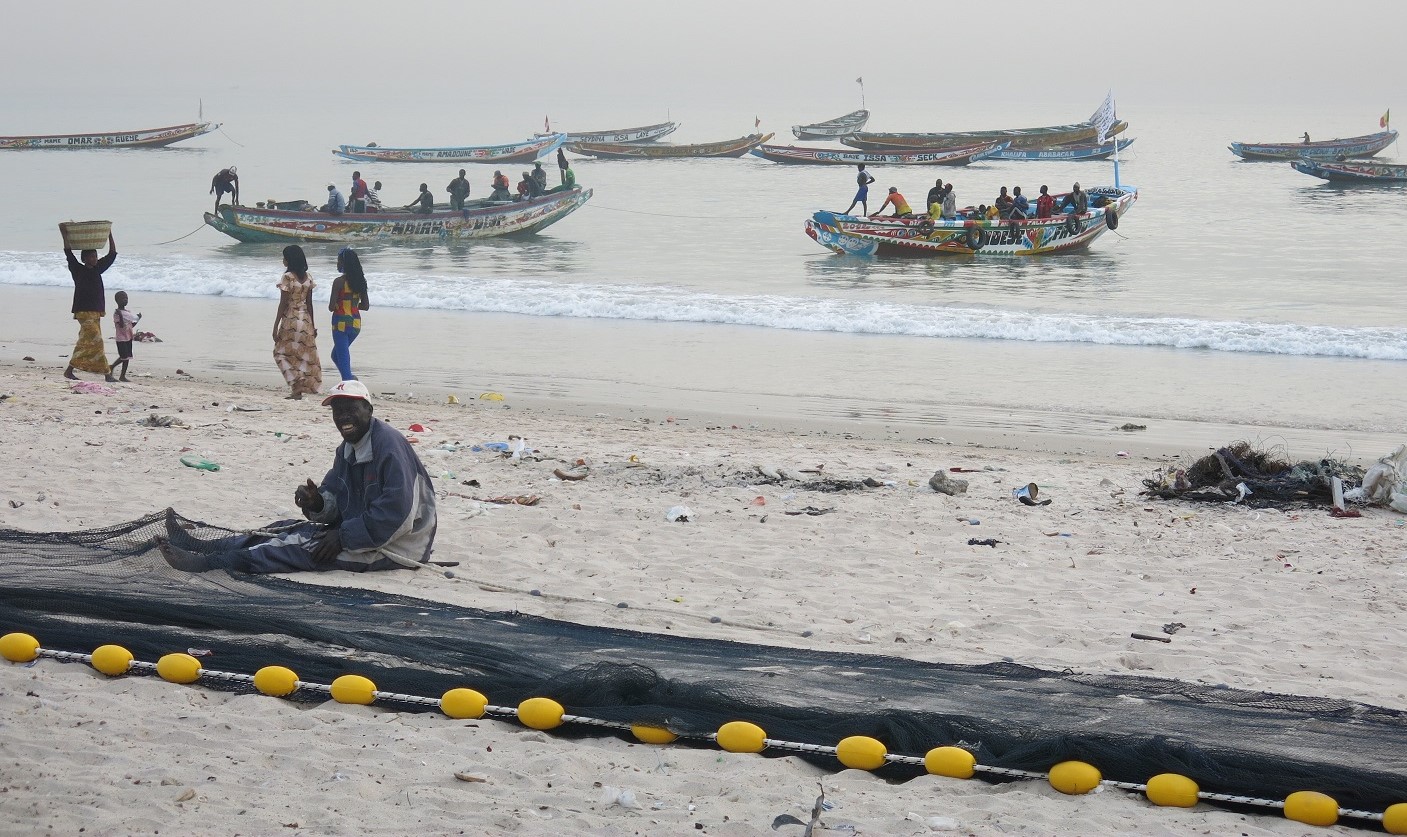
Fisherman on the beach near Bargny, 2014
FMO: report almost finished
The Dutch FMO immediately accepted the complaint and sent a research delegation to Bargny. Their findings are likely to be published shortly. If it turns out that the Sendou project is not in compliance with the bank's own rules, the research panel will advise the bank to take steps to change that. Both ENDS will ensure that the FMO keeps to its own policies and promises.
According to its current investment policy, FMO doesn't fund coal-fired power plants any more, but that policy was not yet in place when the Sendou project was launched. According to Both ENDS, however, this could be an additional motivation for FMO to withdraw from the coal power station in response to the complaints.
Now what?
In Senegal, the acceptance of the complaint by the AFDB has been welcomed. Takkom Jerry and LSD will now organize meetings with the local stakeholders with support from Both ENDS, to inform them how the complaint procedure will continue, and develop a follow-up strategy to continue their fight against the coal-fired power station.
More information:
In this video of 2 years ago, Bargny residents show why they are opposing the construction of the Sendou coal power station:
The case received some online media attention:
• Mining Weekly, 21 april 2017: AfDB to review development of Senegalese power plant after complaints
• Africa Feeds, 21 april 2017: AfDB Authorizes Probe Into Sendou Coal Fired Power Plant
Also read our previous articles about the complaint mechanism of FMO and AfDB:
• 14 February 2014: Filing a complaint with the FMO
• 16 september 2014: African NGOs want better complaints mechanism at the African Development Bank
Read more about this subject
-
 Dossier /
Advocating for responsible policies of development banks
Development banks should comply with strict environmental and human rights rules to ensure that their projects benefit and do not harm the poorest groups. Both ENDS monitors the banks to make sure they do.
-
 Dossier /
Global Alliance for Green and Gender Action (GAGGA)
GAGGA rallies the collective power of the women's rights and environmental justice movements to realize a world where women can and do access their rights to water, food security, and a clean, healthy and safe environment.
-
 Dossier /
Agua Zarca: indigenous fight against dam costs lives
Indigenous Hondurans are resisting the construction of the Agua Zarca hydrodam. Their fight has cost several lives, including that of Berta Cáceres. After considerable public pressure, Dutch development bank FMO withdrew from the project.
-
 Press release / 13 January 2026
Investigation: FMO failed to exercise adequate control over project linked to the murder of Berta Cáceres
TEGUCIGALPA/UTRECHT, January 12, 2026 – The murder of indigenous environmental activist Berta Cáceres, which took place almost 10 years ago in Honduras, appears to be the result of an organized criminal operation, in which funds from the Dutch Development Bank FMO were misappropriated to finance illegal activities. This is the conclusion of the investigation report published today by the independent commission set up by the Inter-American Commission on Human Rights, the Honduran state, and the relatives of Berta Cáceres.
For years, FMO was a major financier of the Agua Zarca project. Berta Cáceres, an indigenous leader, fought against this controversial dam and was murdered for that reason in March 2016.
-
 Dossier /
Gas in Mozambique
In 2011 one of the world’s largest gas reserves was found in the coastal province of Cabo Delgado, in the north of Mozambique. A total of 35 billion dollars has been invested to extract the gas. Dozens of multinationals and financiers are involved in these rapid developments. It is very difficult for the people living in Cabo Delgado to exert influence on the plans and activities, while they experience the negative consequences. With the arrival of these companies, they are losing their land.
-
 Dossier /
Indigenous communities threatened by Barro Blanco dam in Panama
The Barro Blanco dam project in Panama, which has Dutch financial support, is causing indigenous lands to disappear under water. Both ENDS is working to protect the rights of indigenous communities living near the dam.
-
 Blog / 1 December 2025
The Long Road to Justice for the Ngäbe of Kiad
In October 2025 I travelled to Kiad, the Indigenous Ngäbe community that led the struggle against the FMO-financed Barro Blanco dam, for one last time. I went there to say my goodbyes, both personally and on behalf of Both ENDS, and to catch a first glimpse on how a community program financed by FMO and DEG – the result of a dialogue process that took several years – is giving a new impulse to the dam-affected communities. But how did we get here?
-
 Dossier /
Communities Regreen the Sahel
In various countries in the Sahel, vast tracts of land have been restored by the local population by nurturing what spontaneously springs from the soil and protecting the sprouts from cattle and hazards.
-
 News / 27 October 2025
New Step in FMO’s Complaint Policy – Civil Society Organizations Call for Further Strengthening
The updated complaint mechanism of the development banks FMO, DEG, and Proparco marks an important step forward. Organizations that participated in the consultation acknowledge the efforts to improve the mechanism. At the same time, they emphasize that much still needs to be done to make the policy truly effective, transparent, and independent.
-
 News / 14 October 2025
Communities regreening the Sahel: strengthening resilience from the ground up
How can communities in the Sahel strengthen their food systems in the face of climate change and other shocks? Through the ARFSA Programme, Both ENDS and its partners SPONG (Burkina Faso), CRESA/INRAN (Niger) and IED Afrique (Senegal) are working together to show that locally led landscape restoration works. -
Publication / 9 October 2025
-
 Dossier /
Fair Green and Global Alliance (FGG)
Together with civil society organisations from all over the world, the Fair Green and Global (FGG) Alliance aims for socially just, inclusive and environmentally sustainable societies in the Netherlands and the Global South.
-
 News / 24 June 2025
Indigenous communities in Panama obtain recognition and partial mitigation measures by Development Banks FMO and DEG in relation to the Barro Blanco dam
Both ENDS and SOMO welcome the signing of the agreement of understanding between four Indigenous Ngäbe communities in Panama and the European development banks FMO and DEG on June 17th 2025. The arrangement includes a community development program that, together with a public statement issued by the banks, aims to recognize and mitigate some of the negative impacts caused by the Barro Blanco hydropower dam. We wish to congratulate the community-based organisation Movimiento 10 de Abril (M10) for its perseverance to seek justice for the affected communities, and we acknowledge the commitment of FMO and DEG to pursue a solution to their long-standing dispute with the communities arising from their partial financing of the hydropower project since 2011.
-
 Blog / 11 April 2025
FMO is very pleased with its own success – now the local population still needs to be
The FMO development bank is proud of its results and the opportunities it seizes where commercial banks fail to act. But do the bank's actions really help, ask Anne de Jonghe and Nick Middeldorp.
-
Letter / 3 March 2025
Input for FMO’s “investment approach to responsibly managed forest plantations”
Both ENDS has been asked by FMO to comment on its draft investment approach to responsibly managed forest plantations. To follow are a number of observations and recommendations, partially informed by Both ENDS long legacy of working in the forest & land arena, in dialogue with international donors, philanthropic foundations, companies, certification bodies and notably with forest dependent communities and other land users.
-
Publication / 16 January 2025
-
 Environmentally Just Practice /
Farmer Managed Natural Regeneration
In various countries in the Sahel, vast tracts of degraded land have been restored by the local population by nurturing what spontaneously springs from the soil. They do this using a method called 'Farmer Managed Natural Regeneration (FMNR)'.
-
 News / 13 January 2025
New partnership with Netherlands Enterprise Agency for resilient food systems in Sahel
The situation in Africa's Sahel is the world's fastest-growing humanitarian crisis. Over 3 million people are fleeing violence. They are ravaged by hunger, disease and increasing drought caused by climate change. Both ENDS and its partners are successfully working on accelerating the resilience of local food systems and communities in the Sahel, based on ‘Farmer Managed Natural Regeneration’ (FMNR). The project, funded by DOB Ecology, will end in mid-2026, but has already been followed up thanks to a new collaboration with the Netherlands Enterprise Agency (RVO).
-
 News / 23 December 2024
Dare to Trust: LSD supports women to speak up after losing their houses
Lumière Synergie pour Développement (LSD) has helped 63 individual women who all have had problems due to the development of a controversial train project (TER) in Senegal and a recent big earthquake. These communities are displaced by the train project, involuntarily resettled, their property has been destroyed and they have been harassed. Moreover, they have never been consulted and are still waiting to receive fair compensation.
-
Letter / 22 July 2024
Joint Call to Action: International Civil Society Demands Justice for Berta Cáceres' Murder Victims in Honduras
This is a joint call to action by international civil society organizations to call upon the Honduran authorities to ensure there is justice for the victims of the murder on Berta Caceres. Eight years and four months have passed since the crime against Berta and the Honduran justice system has not confirmed the sentences of those convicted and has not prosecuted the intellectual authors. We are extremely concerned that independent administration of justice and international agreements on human rights are not being upheld.


