


Kota Kinabalu Statement on Palm Oil and Freedom of Expression
Civil society organisations from around the world condemn the statements by representatives of palm oil companies during a meeting with the Malaysian government. In this meeting, the company representatives called critical NGOs "toxic entities" and asked the Malaysian government to not let these NGOs into the country. Both ENDS' partners have published a reaction in which they defend their right "to expose the realities we face in their communities about the impacts of the palm oil sector".
Read the full publication
Kota Kinabalu Statement on Palm Oil and Freedom of Expression

Read more about this subject
-
 Dossier /
Fighting for improvements in the production of palm oil
The production of palm oil is causing social and environmental problems worldwide. Both ENDS is working to make the sector fairer and more sustainable and is promoting alternatives for palm oil.
-
 News / 24 October 2017
Both ENDS’ response to the Indonesian Sustainable Palm Oil National Action Plan
On 30 September 2017 Both ENDS submitted a position statement on the draft Indonesian Sustainable Palm Oil National Action Plan. The draft National Action Plan purports to represent a blue print for improving the sustainability of the Indonesian palm oil industry. However, Both ENDS has significant concerns about the logic, rationale and purpose behind the draft National Action Plan and its legitimacy as a benchmark for a sustainable palm oil industry.
-
 News / 10 February 2020
Civil society groups assert their right to expose the impacts of palm oil production
Civil society organisations from around the world condemn the statements by representatives of palm oil companies during a meeting with the Malaysian government. In this meeting, the company representatives called critical NGOs "toxic entities" and asked the Malaysian government to not let these NGOs into the country. Both ENDS' partners have published a reaction in which they defend their right "to expose the realities we face in their communities about the impacts of the palm oil sector".
-
 News / 15 May 2018
Driving on palm oil: a dead end
Both ENDS and Forest Peoples Program have formally requested the European Parliament, Commission and Council and the EU Commissioner for Trade, Cecilia Malmström, to consult indigenous and local communities impacted by EU trade in palm oil and other agricultural commodities in formal EU policy deliberations on these topics. Why did we decide to do so and what's it all about? Our colleague Michael Rice sheds some light on the matter.
-
 News / 14 June 2019
Both ENDS partner TUK presents symbolic tree to Dutch minister Schouten
Last Thursday June 13, Rahmawati Retno Winarni of TUK, an Indonesian partner organisation of Both ENDS, presented a symbolic tree and an appeal to the Dutch Minister of Agriculture Carola Schouten, also on behalf of 10 NGOs. The joint NGOs are pushing the EU, including the Dutch government, for strict EU legislation to prevent the destruction of forests and ecosystems and to protect human rights.
-
 News / 28 June 2018
Indigenous leaders present 'Supply Chain Solutions' and petition in Paris and Brussels
Last week, indigenous leaders from various countries were in Paris to urge action on deforestation and human rights abuses at the multi-stakeholder meeting of the Amsterdam Declarations Partnership. The group, invited by Forests Peoples Programme and Both ENDS, presented a publication 'Supply chain solutions for people and forests' containing a set of practical recommendations from local communities on how to make supply chains more sustainable and fair.
-
 News / 30 June 2017
The palm oil dream: too good to be true
In 2005, a palm oil company approached the villagers of Kiungkang in West-Kalimantan, Indonesia, with offers to convert their farms to oil palm smallholdings. Many farmers agreed to the proposal because of the high monthly incomes promised by the company that they could earn from the oil palms. Unfortunately, the palm oil dream turned out to be an illusion.
-
 Blog / 29 January 2018
Indigenous leader tells about aching nine year palm oil conflict
Pak Japin is a quiet, slim, and softly-spoken man from the village of Silat Hulu, West Kalimantan, Indonesia. I met him at a recent documentary screening in Bali on the fringe of the Round Table for Sustainable Palm Oil (RSPO) annual conference, where he spoke about his community's nine year-long conflict with palm oil company Golden Agri Resources Ltd (GAR).
-
 News / 23 November 2018
RSPO takes further steps towards a less harmful palm oil sector
The production of palm oil is often accompanied by deforestation, environmental destruction and land grabbing. Local communities and activists who stand up against these problems are often threatened. Now the RSPO has taken significant steps in recent months to tackle these issues.
-
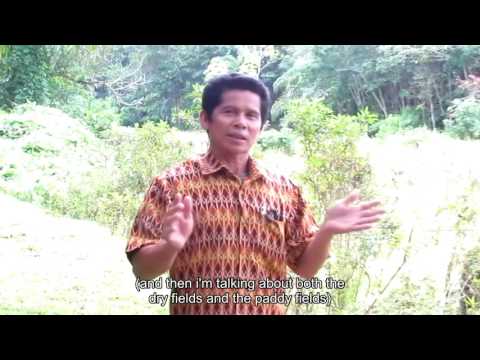 Video / 30 June 2017
The Effects of Palm Oil in Kiungkang
Farmer in Kiungkang, West-Kalimantan, talks about the effects of the palm oil plantation around his village on food production and the health of the population.
-
 News / 23 October 2014
Local organisations on the daily practice of soy and palm oil
Many of our food products contain palm oil and soy in one form or another. To meet the growing demand, they are being cultivated on an increasingly large scale. This has unfortunately been the cause of many problems. Deforestation, environmental pollution and ‘land-grabbing’ are rampant in South-East Asia and South America. Of course, these paractices should stop. But what are the most sustainable, ethical, and – above all – feasible ways to achieve this? And how do you get all parties to cooperate? To explore the answers to these questions, the Ecosystem Alliance (Both ENDS, IUCN NL and Wetlands International) is organising a conference on October 30.
-
 News / 11 November 2014
Dutch Cabinet slowly taking steps towards sustainable palm oil and soy
On Wednesday November 5th, Dutch State Secretary for Infrastructure and Environment, Mansveld, and Minister for Agriculture, Dijksma, issued a letter to the Dutch House of Representatives. This letter was their reaction to the ‘Advice Sustainability Food Sector’, which was drafted at the request of the Cabinet by the Commission Sustainability Issues Biomass – or Commission Corbey in short. Paul Wolvekamp of Both ENDS is member of this commission and gave his opinion on the letter.
-
 News / 8 December 2015
Amsterdam Declaration: towards 100% sustainable palm oil
Both ENDS has, as a member of the RSPO, participated in a dialogue with the Ministry of Foreign Affairs. The Netherlands is the largest importer of palm oil in Europe and wants to promote sustainable trade and production chains.
-
 News / 8 March 2020
Pursuing the right to livelihood and dignity for women workers in the Ugandan palm oil sector
SEATINI Uganda is engaging women working in the palm oil sector in a campaign to improve their work situation. Around International Women's Day, March 8, they are organizing various actions to gain awareness for the situation and the rights of these women workers.
-
 External link / 19 June 2020
Women and water in the shadow of oil palm plantations (Annual Report 2019)
In 2019, women from Semanga, Indonesia took action to improve the water quality in their community affected by palm oil. "The pollution needs to be stopped somewhere and it can start with me."
-
 Press release / 11 September 2020
Press release: Golden opportunity to stop deforestation caused by EU consumption
100+ NGOs launch #Together4Forests urging EU action
Fires raging in the Amazon are started deliberately to make way for large-scale industrial agriculture – and EU market demand for commodities produced on former-forest land is adding fuel to the fires. Globally, the EU is responsible for over 10% of forest destruction through its consumption of commodities like meat, dairy, soy for animal feed, palm oil, coffee and cacao.
-
 News / 11 September 2020
Have your say on the EU’s deforestation policy
The world's forests are under threat. Remaining forests – havens of precious biodiversity and the lungs of the planet – are being cleared to make way for beef, soy, sugar and palm oil production, mining and other industrial activities, fuelled by increasing demand from Europe and other countries. But the good news is: you can help stop the destruction!
-
Publication / 27 June 2018
-
 News / 28 February 2018
Human Rights defenders from all over the world visit EU to call for strong measures against deforestation
This week, from 12 until 16 February, fourteen indigenous leaders and human rights defenders from forest countries came to the Netherlands to call upon Dutch policy makers to take serious action against human rights abuses, land grabbing and further deforestation in relation to large scale agriculture, timber logging and mining. The Dutch harbours of Rotterdam and Amsterdam receive enormeous amounts of soy and palm oil, both for the Dutch market and for further transport into Europe and elswhere.
-
 News / 2 August 2019
EU unveils 'Action Plan' on Deforestation
The EU is still one of the world’s largest importers of deforestation: EU demand for commodities like soy, palm oil, beef, coffee and cacao requires millions of hectares of tropical rainforest to be cleared. This deforestation has significant biodiversity and climate impacts, and is often linked to human rights violations and violence against local communities and indigenous peoples. Both ENDS and partners have been actively lobbying the EU Commission to adopt a robust action plan to address and prevent human rights violations and deforestation ‘embodied’ in EU imports of agricultural commodities.
