




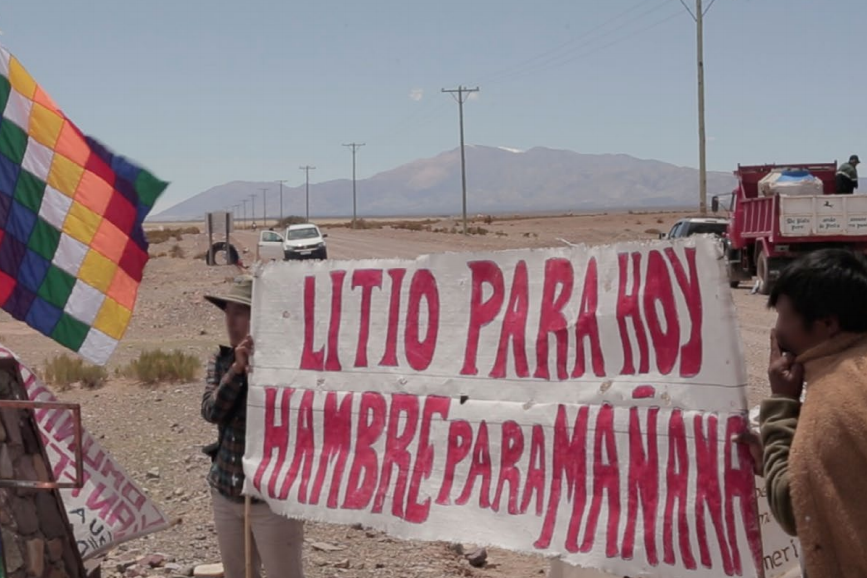
The environmental and human rights impacts of raw material extraction: Lithium in the High Andes, Argentina
Following the Raw Material Week in November 2023 and the provisional agreement on the Critical Raw Material Regulation, Wetlands International Europe together with Both ENDS and the EU Raw Materials Coalition have organised a session seeking an open discussion on the environmental and human rights impacts of raw materials extraction, in and around vulnerable areas.
The High Andean wetlands in Latin America are extremely fragile ecosystems that reflect their complex and unique hydrological systems. They are highly productive, veritable oases of vital importance for biodiversity and the wellbeing of local communities. Due to lithium extraction, enormous quantities of water are being lost every year and underground freshwater reserves are in danger of salinisation by coming in contact with brine.
Last year Both ENDS released a publication about the foreign financiers of Argentina's lithium rush, which shows the export credit agencies' support for lithium mining.
In our session we explore the complex issue: the environmental and human rights impacts of raw materials extraction in vulnerable areas. It also considers potential solutions such as more representation of local communities in strategic partnerships and projects and supply chains free of wetland degradation and ecosystem conversion.
Session outline:
- Welcoming and setting the scene: Moderator, Teresa Hoffmann, Senior Policy Advisor Raw Materials and Fair Trade, Brot für die Welt
- Case study: Environmental impact of lithium extraction in the High Andes: Román Baigún, Programme Manager of Saving High Andean Wetlands for People and Nature, Wetlands International LAC
- Case study: Human Impact of lithium extraction: Pia Marchegiani, Director of Environmental Policy – Deputy Executive Director, FARN
- The CRMA implementation: Robin Roel, EU Raw Materials Coalition Coordinator, European Environmental Bureau
- Reaction from EU: TBC
- Q&A
- Closing
-
 Dossier /
Seeking justice for the affected communities of Vale’s mining disasters in Mariana and Brumadinho
In 2015 and 2019, the Brazilian state of Minas Gerais experienced two severe mining tragedies in Mariana and Brumadinho, due to the same mining company: Vale. Since then, the affected communities have been seeking justice, via the criminal punishment of the responsible parties, and a fair compensation for the loss of their loved ones, their homes and their livelihoods. Both ENDS supports local CSOs by amplifying their quest for justice within an international audience and, more specifically, by raising awareness amongst Dutch investors in Vale about the high risks this company’s activities pose for people and the environment.
-
 External link / 2 July 2024
 -
 External link / 29 May 2019
Women say “no” to mining (Annual Report 2018)
Mining often has a huge and devastating impact on the environment, including water, air and forests. It can profoundly affect nearby communities, not only by harming local ecosystems, but also by exacerbating or provoking societal tension. In many places across the globe, women are leading resistance to mining and the 'extractivist' model.
-
 Blog / 12 August 2025
Nickel mining for the energy transition: who is accountable for the damage?
Photo blog - In June, I travelled to Indonesia with our partner organization Puanifesto to research the impacts of nickel mining in East Sulawesi. On July 13th, the news broke that the European Union and Indonesia have reached a political agreement on a free trade agreement that was years in the making, called the Comprehensive Economic Partnership Agreement (CEPA). Nickel from Sulawesi is already being used in European cars. This makes it all the more important that we ensure that human and environmental rights are secured in mining and refining operations in Indonesia, before the road is opened to more extraction and exploitation for the European market. The conversations we have had with communities and workers on East Sulawesi show that more binding regulations are necessary to make this happen and ensure an energy transition that is socially and environmentally just.
-
Publication / 13 November 2023
-
Publication / 12 April 2017
-
 News / 21 January 2010
Hungary prohibits use of cyanide in mining
On 7 December 2009 the overwhelming majority of the Hungarian Parliament voted to oppose the use of cyanide in gold mining. So doing, Hungary has set a new global environmental standard and can thus play a leading role in banning the use of cyanide in the European mining sector.
-
 News / 6 May 2010
Civil society and Dutch energy companies discussing coal mining
On the 25th of March 2010, Both ENDS organised a Political Café on the social and environmental effects of coal mining in developing countries. Matthews Hlabane of the Green Revolutionary Council was our special guest of the evening. Coming from the mining city of Witbank, South Africa, he could share his first hand experience on the devastating effects of coal mining.
-
 News / 2 February 2026
Seven years after Brumadinho: impunity allows Vale’s disasters to continue
Seven years ago, the dam owned by mining company Vale collapsed in Brumadinho, Brazil, killing 272 people and severely polluting the surrounding area. While the relatives of the victims commemorate them and fight for justice, the pollution continues.
-
 Blog / 30 January 2025
Brumadinho’s painful “seas of mud”
By Carolina de Moura
Six years ago, Brumadinho tailings dam I, from the Paraopeba Complex, owned by mining company Vale, collapsed. January 25th, 2019, forever changed the lives of thousands. The scars remain open, and the quest for justice, remembrance, and prevention of future mining crimes endures despite all adversities. This was manslaughter coupled with socio-environmental devastation of proportions difficult to measure. These are irreparable losses and damages that could have been avoided if it wasn’t for the greed, negligence, and irresponsibility of decision-makers at Vale, the German certification firm Tüv Süd, and the state of Minas Gerais.
-
 News / 26 April 2024
Communities Urgent Warning Ahead of Vale S.A.’s Annual Meeting: Stop Ongoing Abuses of People and Environment
As shareholders in Brazilian mining giant Vale S.A prepare to gather online for the company’s Annual General Meeting (AGM), communities from Brazil to Indonesia criticize the company’s track record on human rights and environmental stewardship. They also point to the almost $50 billion in mounting lawsuits against the company as a risk factor that should serve as a warning sign to investors.
-
 News / 3 October 2024
CVM trial of Vale Executives over Brumadinho Dam Collapse brings new momentum
Fabio Schvartsman and Gerd Peter Poppinga attended a Securities and Exchange Commission (CVM) trial session, last Tuesday, October 1st. Poppinga was convicted by one of the CMV directors, but the second CMV director requested more time to review the case files, postponing the judgment by 60 days. Victims’ families and supporters will have to keep waiting for justice regarding one of Brazil’s worst human and environmental disasters.
-
 Video / 3 November 2017
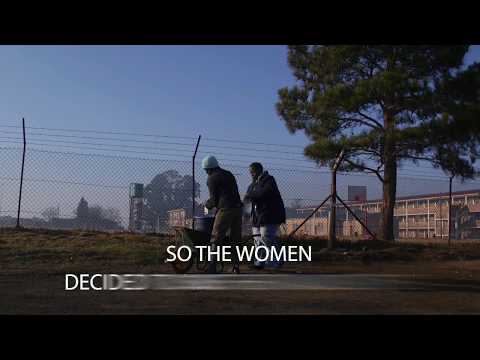
Reality of Mine: South Africa
In this video we see Maria Mkhatswa, who is claiming the right of her people to have access to clean water, like they had years ago, when the coal mining industry had not yet polluted the whole area. The three part series 'Reality of Mine' gives a voice to women affected by mining in India, Kenya and South Africa. With the support of international NGOs Both ENDS and ActionAid, they have begun to stand up for their rights.
-
Letter / 24 January 2024
Letter to investors in Vale
January 25th, 2024 is the solemn 5-year mark of the Brumadinho upstream mining dam collapse, Brazil’s worst environmental and industrial disaster that killed 272 innocent people and unleashed 12 million cubic metres of ore tailing into the surrounding areas including the Paraopeba River – a crucial tributary of the second largest river in the country.
-
 News / 24 January 2024
Both ENDS in solidarity with Justice for Brumadinho!
272 innocent people were killed. A tsunami of toxic mud unleashed, some 12 million cubic metres of ore tailing into the surrounding areas. January 25th, 2024 is the solemn 5-year mark of the Brumadinho upstream mining dam collapse. This was Brazil’s worst environmental and industrial disaster.
-
 Video / 31 May 2016
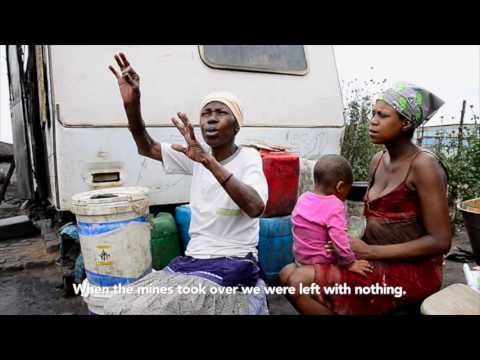
Women's rights undermined in South Africa
The population of the informal settlement Masakhane, South Africa is highly affected by the pollution and environmental damage caused by the the coal-fired Duvha power station. Before the mining and power station developments, families had access to and control over the land, even if they did not own it. Farming used to be the main source of livelihood. Today, mining companies and investors own most of the land, and as a direct consequence people have lost a lot of their farming and grazing land. This video shows testimonies of victims and their efforts to turn the tide.
-
 Video / 3 November 2017
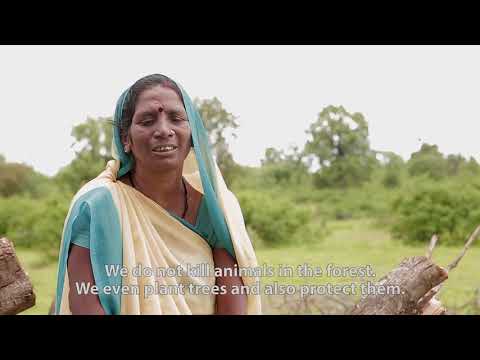
Reality of Mine: India
This short video takes you to Panna, India, where traditional adivasi women successfully oppose forced evictions. The three part series 'Reality of Mine' gives a voice to women affected by mining in India, Kenya and South Africa. With the support of international NGOs Both ENDS and ActionAid, they have begun to stand up for their rights.
-
 News / 28 February 2018
Human Rights defenders from all over the world visit EU to call for strong measures against deforestation
This week, from 12 until 16 February, fourteen indigenous leaders and human rights defenders from forest countries came to the Netherlands to call upon Dutch policy makers to take serious action against human rights abuses, land grabbing and further deforestation in relation to large scale agriculture, timber logging and mining. The Dutch harbours of Rotterdam and Amsterdam receive enormeous amounts of soy and palm oil, both for the Dutch market and for further transport into Europe and elswhere.
-
 Video / 3 November 2017
Reality of Mine: Kenya
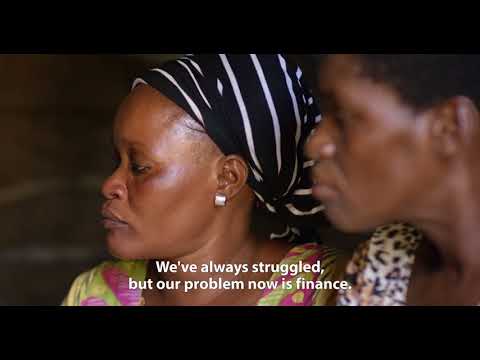
In this video, Trivinia Mwanga Mwamburi from Kenya takes you with in her fight to get the land back which was taken from her because of the expansion of large scale salt mines. The three part series 'Reality of Mine' gives a voice to women affected by mining in India, Kenya and South Africa. With the support of international NGOs Both ENDS and ActionAid, they have begun to stand up for their rights.
-
Letter / 22 March 2023
Suggestions to the CRM Act appreciations for the Dutch government
While the energy transition via renewable energy, such as solar and wind energy, is fundamental to reduce EU CO2 emissions, we are concerned with the impacts it will have on the (geo-political) economy, people and environment. Our collaboration with civil society organisations in the Global South over the past 30 years has shown us that the patterns of consumption by rich countries, such as the Netherlands and the EU in general, have a devastating impact on people and the environment in mainly Africa, South-America and South-East Asia.


