




Women lead struggle for land rights for the Avá Guaraní
By
Tamara Mohr
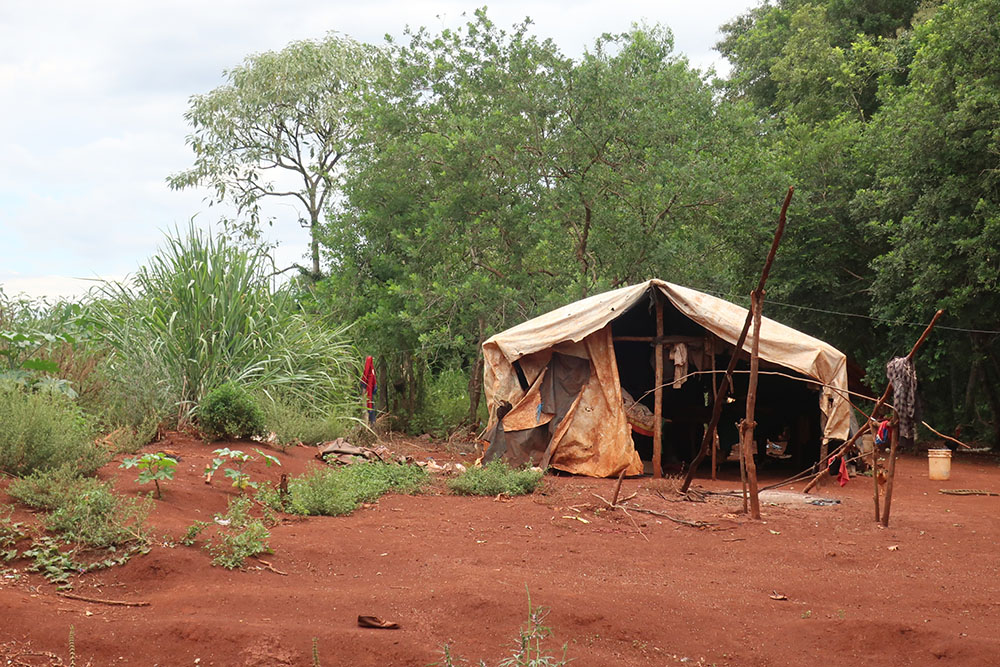
Together with five women from the Platform Suace Pyvyvõhára, I travel to Mingã Pora in the east of Paraguay. Around 45 families from the indigenous Tekohá Suace community settled here in 2016. In Guaraní, Tekohá means 'the place where we are what we are'. They reside in tents - self-made out of waste materials - on a small strip of land with a soy field on one side and a nature reserve owned by the Itaipu company on the other.
We leave Asunción at 5 a.m. For the first six hours, the road is well maintained and to the left and right are enormous silos, magnificent villas and expansive soy and maize fields. For the last hour, we drive along an unpaved road.
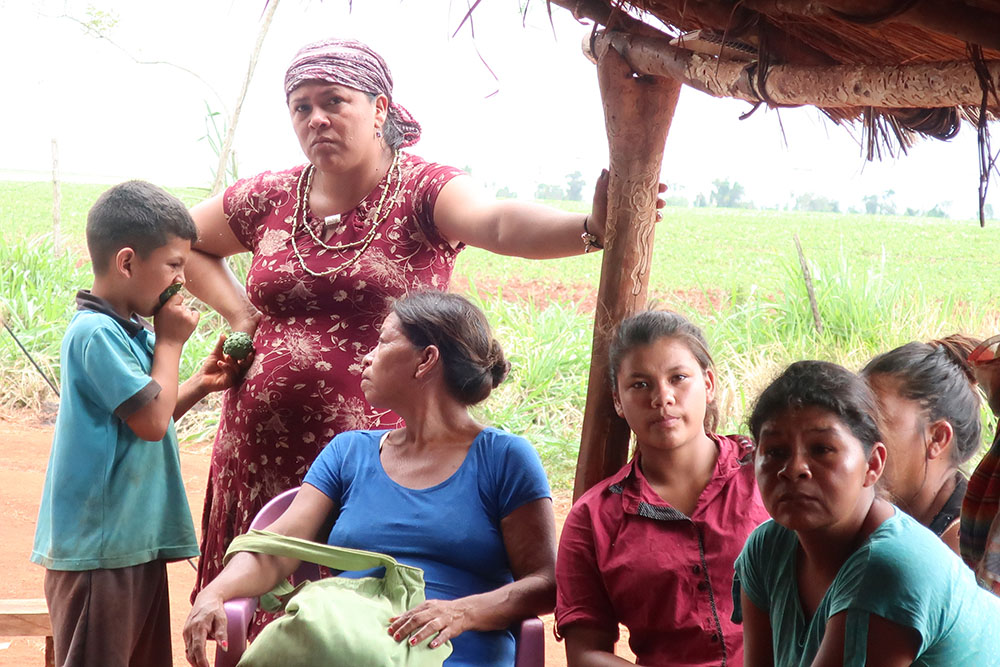
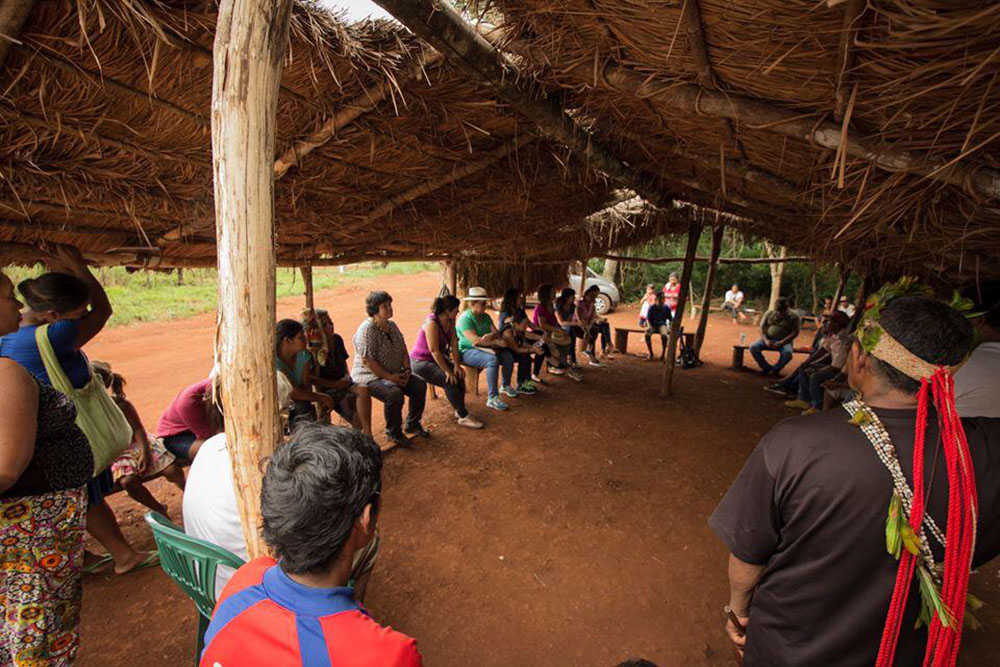
When we arrive we are warmly welcomed by the whole community, which consists of a remarkable share of women and young children. It soon becomes clear what kind of situation this indigenous community has been living in for many years: illegally on a small strip of land, without access to drinking water, food, transport or medical care. And how difficult it is to survive in these conditions, especially for the women, with their children and families. Their emotional and physical vulnerability in a place where they have no protection at all is shocking.
Driven from their land twice
It is a long and sad story. In short, this community was driven off its land in the 1970s, together with 37 others, to make way for the construction of the world's largest dam, the Itaipu, on the border between Brazil and Paraguay. Part of their land is now under water, part was sold to farmers and part has become a nature reserve. In 2016 the Tekohá Suace community was violently driven from the land it had settled on for a second time. They had no other choice than to return to the land they had originally been expelled from, where they are now living 'illegally'.
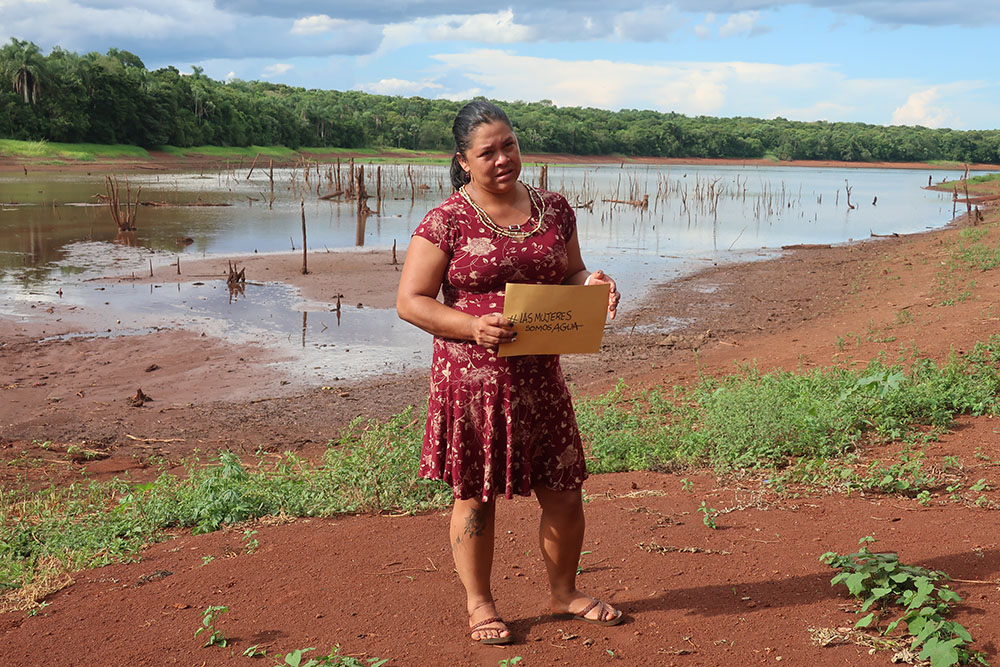
The forest rangers in the reserve make sure that the Avá Guaraní do not hunt, grow crops or catch fish. They visit the community now and then to look in the cooking pots to check that there are no wild animals in them. The community is not permitted on the farmers' land, which is private property. And to make things even worse, after a period of sustained drought, Itaipu decided four months ago to use the water in the river – which the community uses to wash themselves and their clothes – to secure the supply of water to the dam. There is not much water left in the river and the water level is still falling daily.
Women are taking the lead
The driving force in the community is Amada. I have met her twice and she is clearly stronger and more determined than ever. She is the daughter of Cristóbal Martínez, the village leader. She and her father decide on strategy. She takes part in the meetings of the Platform Suace Pyvyvõhára and discusses their situation in national and international fora. She manages the GAGGA funds that they receive from the Fondo de Mujeres del Sur to meet their basic needs. She has set up a women's committee which plays an increasingly important role in the search for a solution. It is clear that women have taken the lead here.
International support
The national and international attention for this community's struggle gives them hope. The Platform Suace was set up to discuss with Paraguayan organisations and the community what action needs to be taken to secure their rights to land. With the support of Both ENDS and GAGGA, they can pay for legal assistance. Amnesty Paraguay also tirelessly provides support with expertise and campaigns. Other members of the Platform assist with food and medical care, endless consultations with government bodies, legal assistance, research, and transport between Asunción and Mingã Pora.
The current political climate seems favourable for the community. The new boss of the nature reserve paid them a visit while we were there to give his assurances that he wants a good relationship with the community and that he will do everything possible within his mandate to help them. Itaipu will also have to take its responsibility: the megadam meant that 600 indigenous families lost 150,000 hectares of land, but the company has so far only purchased 1,300 hectares of land for two indigenous communities by way of compensation.
Between hope and desperation
The community's stories show its strength, but also its desperation. One member told us during our visit: "Many people here are hungry and sick. We are suffering a great deal. Some people in the community give up hope, but then the leaders and the people from the Platform Suace tell them what they are doing and they have hope again. Together we will survive. Without our leaders and help from outsiders, we would have disappeared long ago ".
Amada closes by saying: "Our people's struggle is long and difficult. We are losing our culture because our people are divided. The previous government didn't listen to us, but this one seems to want to help. That is a big step. No other community is receiving as much national and international support. We must not lose hope."
For more information
Read more about this subject
-
 Dossier /
Global Alliance for Green and Gender Action (GAGGA)
GAGGA rallies the collective power of the women's rights and environmental justice movements to realize a world where women can and do access their rights to water, food security, and a clean, healthy and safe environment.
-
 Dossier /
Dare to Trust: the power of unconditional funding
At Both ENDS we cherish our long-term relationships with partners in our global network. These relationships are based on equality and built on trust. The trust we have in each other has developed from years of strategic cooperation, including joint advocacy around common agendas, knowledge sharing, networking, and mobilising and sharing resources to advance environmental justice.
-
 News / 5 oktober 2026
Rural Women's Assembly wins Right Livelihood Award
We are thrilled to share that our partner the Rural Women's Assembly (RWA) is one of this year's Right Livelihood Laureates! The award, often called the "Alternative Nobel Prize", honours RWA for bringing together more than 178,000 women farmers in eleven Southern African countries. Together, these women stand up for their land, their seeds and their right to make decisions about their own lives and bodies.
-
 Dossier /
Communities Regreen the Sahel
In various countries in the Sahel, vast tracts of land have been restored by the local population by nurturing what spontaneously springs from the soil and protecting the sprouts from cattle and hazards.
-
Letter / 14 juli 2026
Statement on CAO Cambodia Microfinance Case
The independent complaints mechanism of the International Finance Corporation (IFC) and the World Bank Group found that the IFC violated its own Environmental and Social Sustainability Framework by investing in six banks providing microfinance in Cambodia.
-
 News / 6 juli 2026
Strengthening Women's Land Rights Across the Rio Conventions
From 29 June – 2 July 2026, Tamara Mohr, GAGGA coordinator at Both ENDS participated in the 4th convening of the Women's Land Rights Initiative (WLRI) in Nairobi, Kenya.Hosted by the Robert Bosch Stiftung, TMG Research and the Huairou Commission, the event brought together grassroots organisations, (inter)national NGOs, government institutions and donors from around the world.
-
Publication / 3 juli 2026
-
 Dossier /
Rights for People, Rules for Corporations – Stop ISDS!
Indigenous communities in Paraguay saw their attempts to regain their ancestral lands thwarted by German investors. In Indonesia, US-based mining companies succeeded to roll back new laws that were meant to boost the country’s economic development and protect its forests. This is the level of impact that investment treaties can have on social, environmental and economic development and rights. Why? Because of the ‘Investor-to-State Dispute Settlement’ clauses that are included in many such treaties.
-
 News / 27 februari 2026
Both ENDS strengthens the resilience of female environmental defenders worldwide thanks to multi-year contribution from the Postcode Lottery
In recent years, Both ENDS has received an additional contribution of €875,000 from the Postcode Lottery for the Autonomy & Resilience Fund (2022–2025), implemented in collaboration with the Global Alliance for Green and Gender Action (GAGGA). This support was essential because female environmental rights defenders around the world are increasingly facing climate change, repression and shrinking civil space. With this contribution, Both ENDS supports female activists and their communities with flexible, trust-based funding, enabling them to develop their own solutions to urgent environmental and climate problems.
-
 News / 2 februari 2026
Response to the D66-VVD-CDA coalition agreement
Coalition: Repair the damage and dare to go further
At Both ENDS, we see a number of cautious steps in the right direction in this coalition agreement. There is a slight emphasis on green issues, renewed attention to women's rights, recognition of the importance of civil society, and discussion of trade agreements with a focus on mutual interests. However, without structural change in how we trade, invest, and cooperate, fine words remain empty shells.
-
 Dossier /
Agua Zarca: indigenous fight against dam costs lives
Indigenous Hondurans are resisting the construction of the Agua Zarca hydrodam. Their fight has cost several lives, including that of Berta Cáceres. After considerable public pressure, Dutch development bank FMO withdrew from the project.
-
 Press release / 13 januari 2026
Investigation: FMO failed to exercise adequate control over project linked to the murder of Berta Cáceres
TEGUCIGALPA/UTRECHT, January 12, 2026 – The murder of indigenous environmental activist Berta Cáceres, which took place almost 10 years ago in Honduras, appears to be the result of an organized criminal operation, in which funds from the Dutch Development Bank FMO were misappropriated to finance illegal activities. This is the conclusion of the investigation report published today by the independent commission set up by the Inter-American Commission on Human Rights, the Honduran state, and the relatives of Berta Cáceres.
For years, FMO was a major financier of the Agua Zarca project. Berta Cáceres, an indigenous leader, fought against this controversial dam and was murdered for that reason in March 2016.
-
 Dossier /
Indigenous communities threatened by Barro Blanco dam in Panama
The Barro Blanco dam project in Panama, which has Dutch financial support, is causing indigenous lands to disappear under water. Both ENDS is working to protect the rights of indigenous communities living near the dam.
-
 Dossier /
Wetlands without Borders
With our Wetlands without Borders program, we work towards environmentally sustainable and socially responsible governance of the wetlands system of the La Plata Basin in South America.
-
Publication / 17 november 2025
-
 Environmentally Just Practice /
Non-Timber Forest Products (NTFPs)
About one in every six people, particularly women, directly rely on forests for their lives and livelihoods, especially for food. This shows how important non-timber forest products (NTFPs) and forests are to ensure community resilience. Not only as a source of food, water and income, but also because of their cultural and spiritual meaning.
-
 News / 5 november 2025
Interview: Both ENDS at COP30 for Climate Justice and Systemic Change
Both ENDS is present at COP30 to advocate for genuine access to climate finance for locally led, gender-just climate solutions and the mechanisms that facilitate this, including those for farmer-led restoration. Furthermore, the organisation participates to ensure the crucial connection between the climate negotiations and the trade and investment frameworks that shape them.
Learn more about the Both ENDS team at COP30 below, and find all the activities and side-events in which Both ENDS will participate.
-
 News / 5 november 2025
Overview of Both ENDS events at COP30 in Belem, Brazil
Both ENDS is present at COP30 to advocate for genuine access to climate finance for locally led, gender-just climate solutions, and for the mechanisms that make these possible, including those supporting farmer-led restoration. The organisation also engages to highlight the crucial connection between climate negotiations and the trade and investment frameworks that shape them.
Below is an overview of the Both ENDS team at COP30 and a detailed look at the activities and side-events in which Both ENDS will participate.
-
Publication / 2 oktober 2025
-
 Dossier /
Soy: trade in deforestation
The rising demand for soy is having negative consequences for people and the environment in South America. Both ENDS reminds Dutch actors in the soy industry of their responsibilities and is working with partners on fair and sustainable alternatives.



