




The Long Road to Justice for the Ngäbe of Kiad
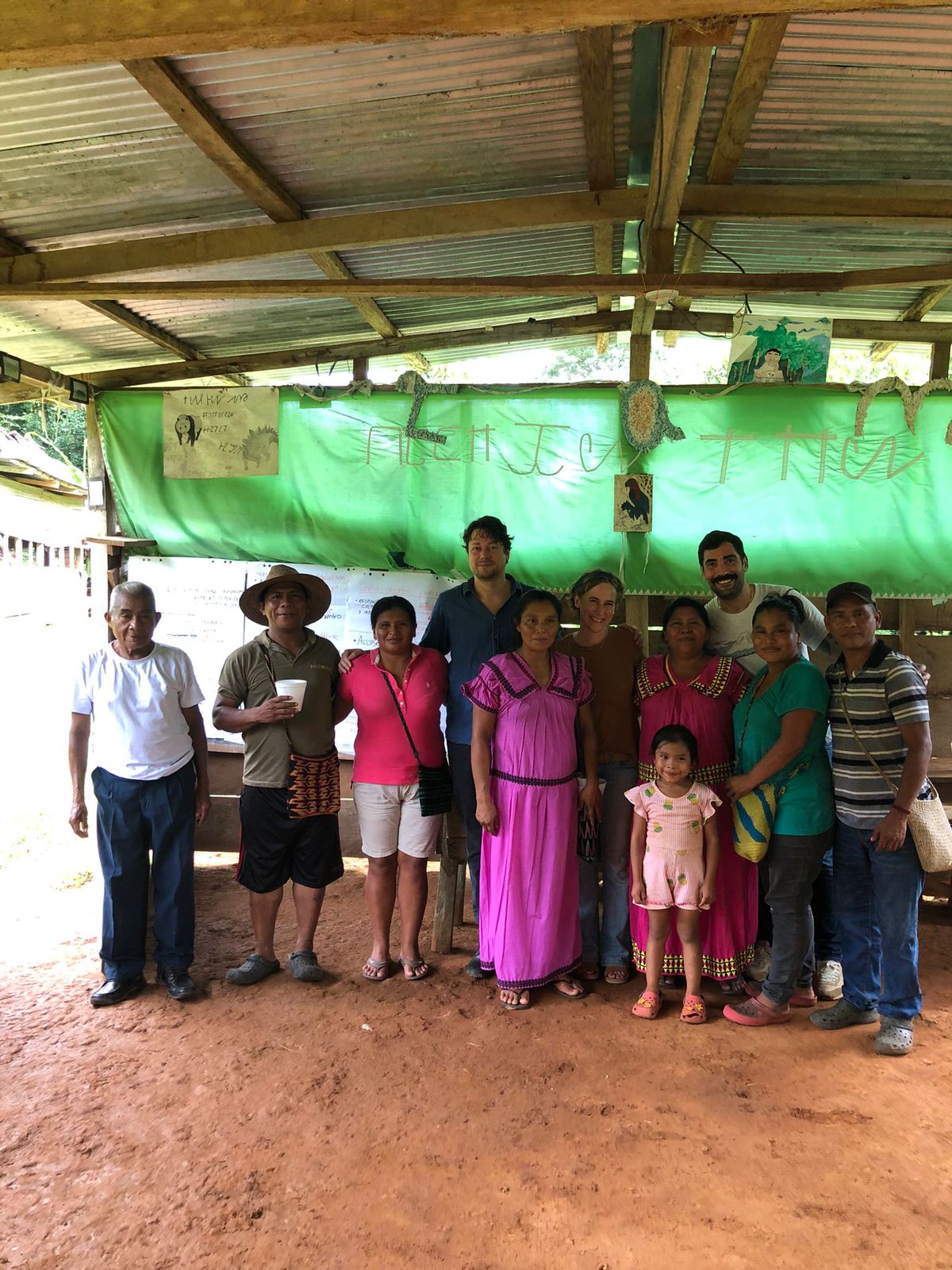
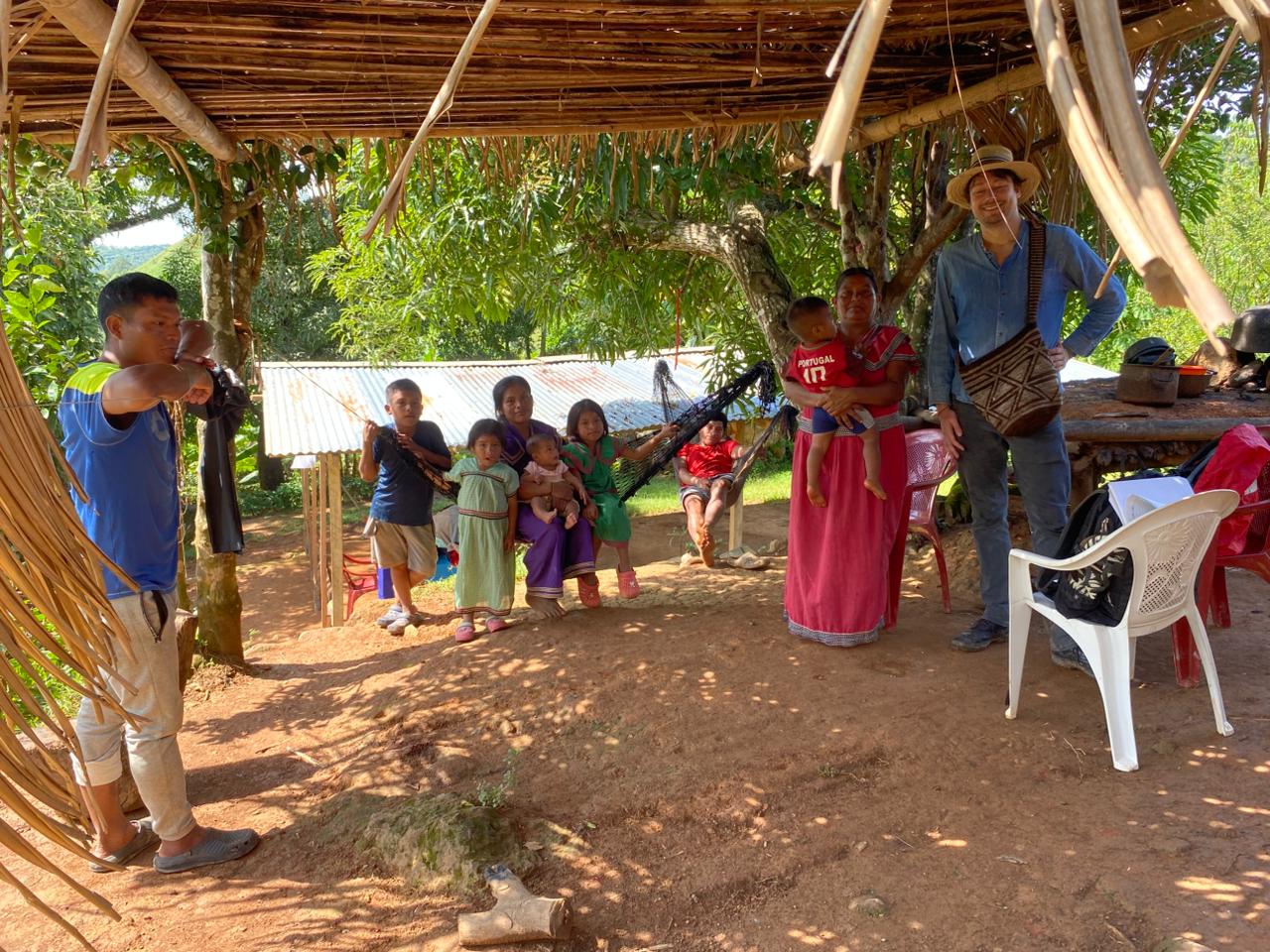
In October 2025 I travelled to Kiad, the Indigenous Ngäbe community that led the struggle against the FMO-financed Barro Blanco dam, for one last time. I went there to say my goodbyes, both personally and on behalf of Both ENDS, and to catch a first glimpse on how a community program financed by FMO and DEG – the result of a dialogue process that took several years – is giving a new impulse to the dam-affected communities. But how did we get here?
In 2012, Both ENDS received a message from the Panamanian organisation ACD, a small local CSO that works on nature conservation and the defence of the rights of Panama’s Indigenous population. And this is how Both ENDS gets involved in the struggle, led by Indigenous communities of the Ngäbe people under the banner of a social movement called M10 (Movimiento 10 de Abril), to prevent the construction of the hydroelectric dam.
Despite sustained community resistance, including a road blockade that is dismantled with lethal police force, and a UN-facilitated dialogue, which collapsed in 2015, the construction on the dam went ahead – in part due to questionable political pressure from the side of the banks. In 2016, dam construction completed and the reservoir was filled, causing damage and suffering in the affected communities.
Although the struggle could count on a lot of international support in its early years, attention to the case weakened after the dam went fully operational. Following the flooding, Both ENDS, SOMO and ACD were the only organisations left that continued to support M10. We arrived at a breakthrough in 2021, when the company behind the dam, GENISA, prepaid its loan and when the banks’ complaint mechanism, the ICM, made its final monitoring visit and noted serious negative impacts.
Development banks like FMO typically place the responsibility to respect human rights standards with their client. In this case, this position was impossible to uphold – the client had broken off all relations. It was also crystal clear that the banks themselves had been negligent, notably regarding their disrespect for the Indigenous right to FPIC – free, prior and informed consent.
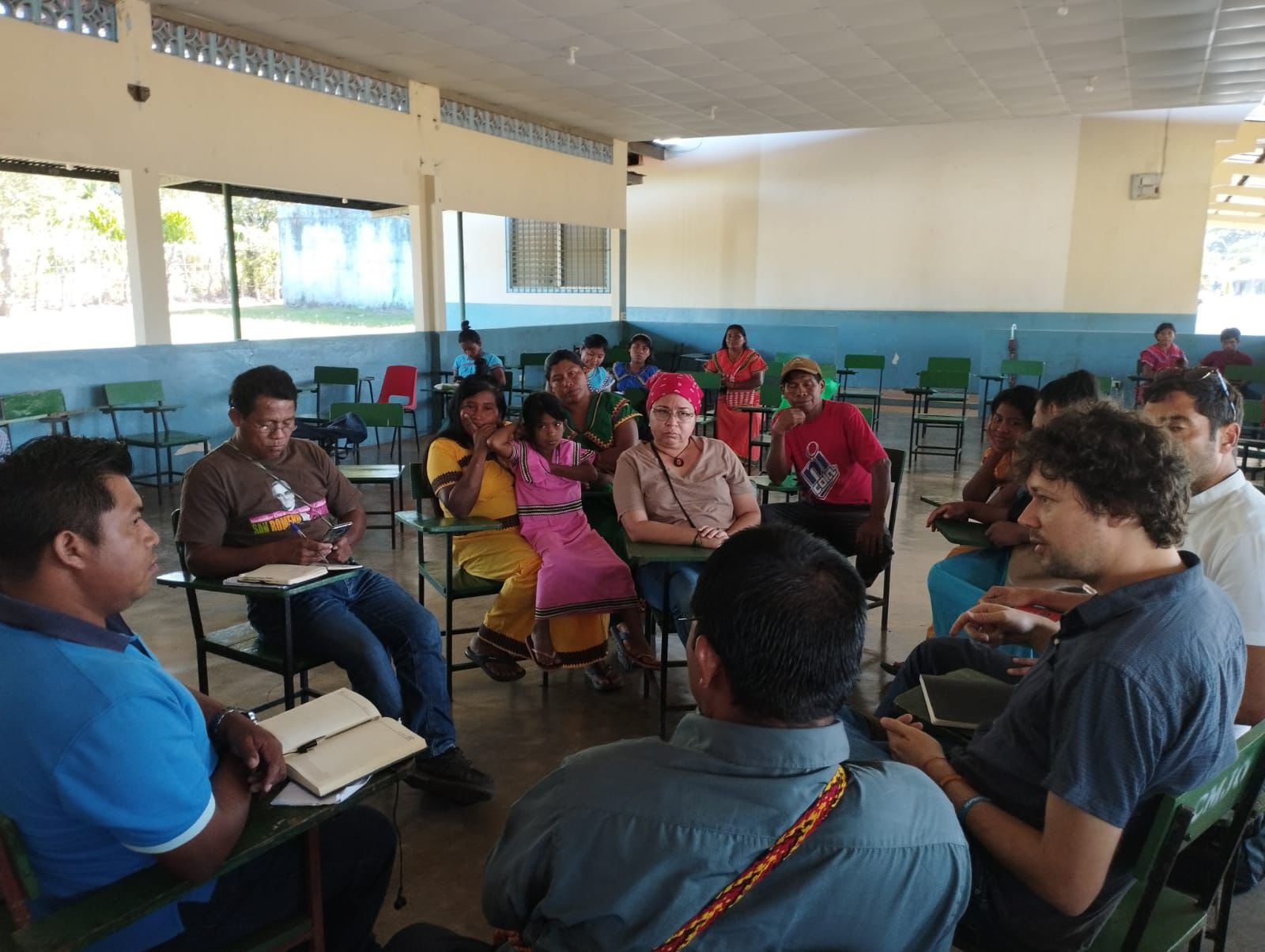
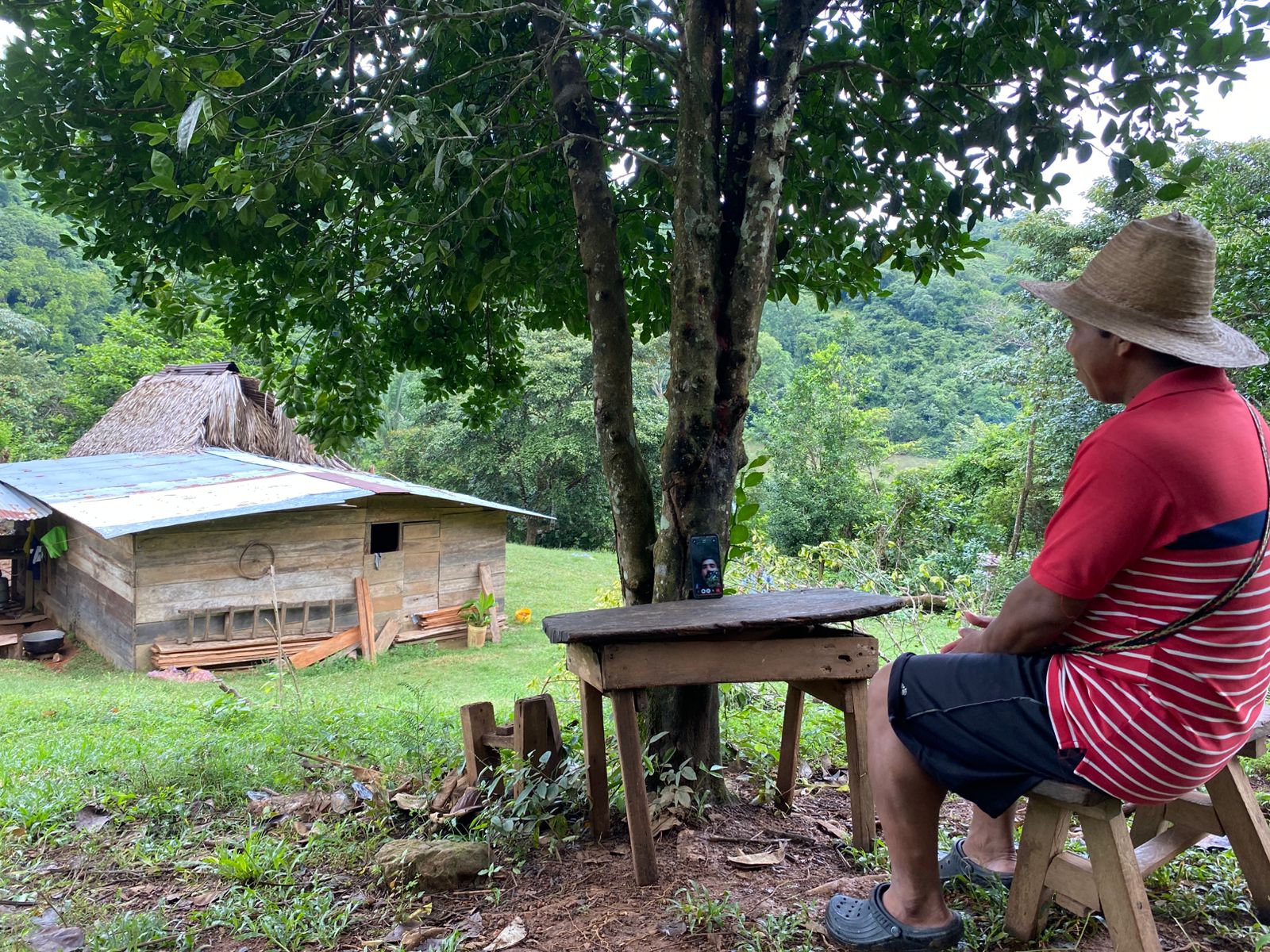
FMO and DEG decided to engage with M10’s demands for a responsible exit, and a dialogue ensued between the communities and the banks, with the objective of reaching a solution. Between 2022 and 2025, intensive conversations took place between the different parties, both physically in Panama and through numerous video calls. Representing Both ENDS, I have been able to support the community representatives throughout the entire dialogue process, with strategic advice, translations, and encouragement.
At times it was difficult for the community representatives to keep up the faith in achieving what they felt would feel like justice. The dam is already operational. ICM was slow to report. An earlier dialogue had collapsed. Encouraging them to keep on going was an important part of the job for me.
But the results are worth it: in June 2025, when the agreement was signed, the banks published a statement recognizing that...
“the communities affected by this project experienced, and continue to experience significant loss to their territory, environment, ways of life, and to the places they hold sacred. We wish to sincerely acknowledge the negative impacts caused by the construction and operation of the project, and to declare, again, our intention to help address some of the negative impacts the affected communities have endured, working in collaboration with those who have suffered, while respecting their sovereignty”.
Now, Kiad has turned into a construction site, with families building new houses. The communities will soon – finally – be receiving electricity and water. There are talks with neighbouring landowners to buy new parcels of agricultural land. Many other plans are being drawn. Humberto, one of the community representatives during the dialogue, reflected:
“We have felt violated as an Indigenous people. They have to do better research before they invest whatever resource in other parts of the world. We are the first community to have pulled their [the bank’s] ear. They’re not used to that. Together we’ve brought the banks here, to our humble communities, and we held them responsible. We made history”.
The lessons are clear. These processes are time and energy consuming, and positive outcomes are all but guaranteed. But the Barro Blanco case shows us that solidarity, sustained through time, does yield its victories. Together, we wrote history.
Read more about this subject
-
 Dossier /
Indigenous communities threatened by Barro Blanco dam in Panama
The Barro Blanco dam project in Panama, which has Dutch financial support, is causing indigenous lands to disappear under water. Both ENDS is working to protect the rights of indigenous communities living near the dam.
-
Publication / 3 July 2026
-
 Dossier /
Finance for agroecology
The lion's share of public budgets for climate, agriculture and development still goes to conventional agroindustrial projects that contribute to the current climate, food and biodiversity crises. Both ENDS and our partners are calling for a transition to agroecological practices that are people- and environment-friendly.
-
Publication / 10 April 2026
-
 News / 10 April 2026
Both ENDS: strengthened FMO complaints mechanism is a step forward, but major gaps remain
Both ENDS welcomes the strengthened Independent Complaints Mechanism (ICM) of development finance institutions FMO, DEG and Proparco as an important step forward in accountability. Working directly with communities affected by development projects, we see daily how essential it is that people can access justice when they are harmed in the name of development. For many communities, this mechanism is one of the few avenues through which harm can be formally recognised and addressed in relation to these development banks.
-
 Dossier /
Agua Zarca: indigenous fight against dam costs lives
Indigenous Hondurans are resisting the construction of the Agua Zarca hydrodam. Their fight has cost several lives, including that of Berta Cáceres. After considerable public pressure, Dutch development bank FMO withdrew from the project.
-
 Press release / 13 January 2026
Investigation: FMO failed to exercise adequate control over project linked to the murder of Berta Cáceres
TEGUCIGALPA/UTRECHT, January 12, 2026 – The murder of indigenous environmental activist Berta Cáceres, which took place almost 10 years ago in Honduras, appears to be the result of an organized criminal operation, in which funds from the Dutch Development Bank FMO were misappropriated to finance illegal activities. This is the conclusion of the investigation report published today by the independent commission set up by the Inter-American Commission on Human Rights, the Honduran state, and the relatives of Berta Cáceres.
For years, FMO was a major financier of the Agua Zarca project. Berta Cáceres, an indigenous leader, fought against this controversial dam and was murdered for that reason in March 2016.
-
 News / 27 October 2025
New Step in FMO’s Complaint Policy – Civil Society Organizations Call for Further Strengthening
The updated complaint mechanism of the development banks FMO, DEG, and Proparco marks an important step forward. Organizations that participated in the consultation acknowledge the efforts to improve the mechanism. At the same time, they emphasize that much still needs to be done to make the policy truly effective, transparent, and independent.
-
Publication / 9 October 2025
-
 Dossier /
Fair Green and Global Alliance (FGG)
Together with civil society organisations from all over the world, the Fair Green and Global (FGG) Alliance aims for socially just, inclusive and environmentally sustainable societies in the Netherlands and the Global South.
-
 News / 24 June 2025
Indigenous communities in Panama obtain recognition and partial mitigation measures by Development Banks FMO and DEG in relation to the Barro Blanco dam
Both ENDS and SOMO welcome the signing of the agreement of understanding between four Indigenous Ngäbe communities in Panama and the European development banks FMO and DEG on June 17th 2025. The arrangement includes a community development program that, together with a public statement issued by the banks, aims to recognize and mitigate some of the negative impacts caused by the Barro Blanco hydropower dam. We wish to congratulate the community-based organisation Movimiento 10 de Abril (M10) for its perseverance to seek justice for the affected communities, and we acknowledge the commitment of FMO and DEG to pursue a solution to their long-standing dispute with the communities arising from their partial financing of the hydropower project since 2011.
-
 Dossier /
Advocating for responsible policies of development banks
Development banks should comply with strict environmental and human rights rules to ensure that their projects benefit and do not harm the poorest groups. Both ENDS monitors the banks to make sure they do.
-
 Blog / 11 April 2025
FMO is very pleased with its own success – now the local population still needs to be
The FMO development bank is proud of its results and the opportunities it seizes where commercial banks fail to act. But do the bank's actions really help, ask Anne de Jonghe and Nick Middeldorp.
-
Letter / 3 March 2025
Input for FMO’s “investment approach to responsibly managed forest plantations”
Both ENDS has been asked by FMO to comment on its draft investment approach to responsibly managed forest plantations. To follow are a number of observations and recommendations, partially informed by Both ENDS long legacy of working in the forest & land arena, in dialogue with international donors, philanthropic foundations, companies, certification bodies and notably with forest dependent communities and other land users.
-
Publication / 16 January 2025
-
Letter / 22 July 2024
Joint Call to Action: International Civil Society Demands Justice for Berta Cáceres' Murder Victims in Honduras
This is a joint call to action by international civil society organizations to call upon the Honduran authorities to ensure there is justice for the victims of the murder on Berta Caceres. Eight years and four months have passed since the crime against Berta and the Honduran justice system has not confirmed the sentences of those convicted and has not prosecuted the intellectual authors. We are extremely concerned that independent administration of justice and international agreements on human rights are not being upheld.
-
 News / 13 December 2023
Response from Both ENDS and OxfamNovib to new FMO climate fund
Both ENDS and Oxfam Novib welcome the new SDG Loan Fund launched by FMO. The fund aims to invest more than a billion euros in loans to small and medium-sized enterprises in low- and middle-income countries, in the energy, inclusive financial services and sustainable agriculture sectors. At the same time, both organisations are concerned about the impact of money from the fund on normal people in future recipient countries.
-
 News / 6 November 2023
Response to FMO investments in Nicaragua
On 27 October, RTL Nieuws reported that the Steungroep Nicaragua considers the millions of euros that the Dutch development bank FMO is investing in Nicaragua irresponsible. When asked, FMO stated that 'it had to continue to support its entrepreneurs in difficult times'. Both ENDS believes that the choice to continue to invest in Nicaragua brings substantial risks, which FMO does not take sufficiently into account when deciding on financing. Previous FMO investments have caused harm to people and the environment and, in some cases, even led to violence – with, as its lowest point, the murder of Berta Cáceres in Honduras in 2016.
-
Publication / 15 March 2023
-
 Press release / 5 December 2022
Groups react with dismay to FMO’s position statement on Financial Intermediaries, pointing to outstanding human rights and climate concerns
On October 13th 2022, FMO published the final version of its Position Statement on Impact and ESG for Financial Intermediaries (FI statement). As civil society groups which have engaged with FMO on this topic for more than four years, we are extremely disappointed with the result. In the statement, FMO does not show sufficient commitment to ensuring its investments into financial intermediaries – which represent the bank's largest investment sector* – do not violate human rights or contribute to environmental harms.




