




Stop WTO talks until everyone can take full part in them again
The World Trade Organization (WTO) is often seen as an institution in crisis, powerless and no longer relevant, and especially after US president Donald Trump decided in 2019 to pull the plug on one of the WTO’s most important bodies (the one dealing with trade disputes). Now, more than 150 civil society organisations, networks and interest groups from around the world have signed an urgent letter to WTO Director General Roberto Azevedo, because they are seriously concerned about the state of affairs within the organization.
The WTO is most certainly relevant. A new round of negotiations was even planned to start in June 2020. When the meeting was cancelled because of the COVID-19pandemic, it was a relief especially to poorer member states, which are currently having to devote a disproportionate share of their scarce resources to combat the crisis.
Recently, however, it emerged that the richer member states of the WTO wanted the negotiations to go ahead, but online. That was bad news for the large group of poorer countries. Even in normal circumstances,these countries are at a disadvantage because they often lack the resources to take part in physical negotiations. It will be simply impossible for many of them to take part in online discussions.
This is the reason for the letter. The 150 signatories are concerned that those members who are able talk around the digital table will take insufficient account, if at all, of the interests of countries that are unable to play a full part in the negotiations. The letter calls for the WTO to postpone the negotiations until all members are able to participate in them fully.
As long as the WTO is making important decisions, that must occur in a decent and acceptable manner. Poor countries must not be excluded from the negotiations in any way. Both ENDS has been calling for greater attention to be paid to the interests of developing countries for many years and is bringing the concerns of civil society and local movements in these countries to the attention of delegations from the Dutch government and the European Commission to the WTO.
At this difficult time, there are issues on the agenda that are of great importance to poor people in developing countries. Talks should now be taking place on restricting subsidies to the fishing sector. That is a complex issue because, on the one hand, it is crucial that something is done about the over-fishing of the world’s oceans, and lowering or stopping subsidies would seem an obvious step to take. On the other hand, however, too few of the benefits of the fishery sector remain in poor countries, because they often do not have a developed industrial fishing sector.
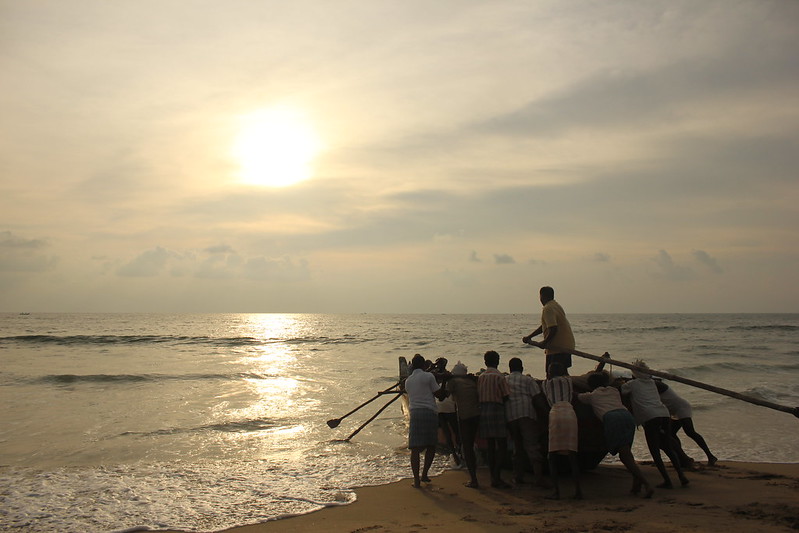
Large groups of poor people in these countries depend on fishing for their livelihoods. Fishers and their families need support from their governments to hold their own against the large-scale international fishing industry, which is the major cause of over-fishing.
This is therefore a very important dossier, especially for the least developed countries in Africa and small island states in the Caribbean and Pacific regions. It must not be allowed to happen that these countries are unable to take part in negotiations that are vital to their survival. We therefore fully support this call to suspend the negotiations temporarily.
Update 30 april 2020:
Azevedo responded to the letter five days after it was sent, unprecedentedly fast for an organisation like the WTO. The contents of the response were, however, disappointing. What it comes down to is that the WTO wishes to continue with the negotiations, ignoring the objections.
Therefore, a new letter was sent, this time to all Ministers of Trade of WTO member countries, to call for a halt of negotiations. This new letter was signed by no less than
400 organisations, networks and groups from all over the world, and was made public today.
Read more about this subject
-
 Dossier /
Trade agreements
International trade agreements often have far-reaching consequences not only for the economy of a country, but also for people and the environment. It is primarily the most vulnerable groups who suffer most from these agreements.
-
 News / 27 February 2026
Both ENDS strengthens the resilience of female environmental defenders worldwide thanks to multi-year contribution from the Postcode Lottery
In recent years, Both ENDS has received an additional contribution of €875,000 from the Postcode Lottery for the Autonomy & Resilience Fund (2022–2025), implemented in collaboration with the Global Alliance for Green and Gender Action (GAGGA). This support was essential because female environmental rights defenders around the world are increasingly facing climate change, repression and shrinking civil space. With this contribution, Both ENDS supports female activists and their communities with flexible, trust-based funding, enabling them to develop their own solutions to urgent environmental and climate problems.
-
 News / 5 November 2025
Another ISDS claim hits the Netherlands: Petrogas sues over solidarity contribution and royalty regulations
SOMO and Both ENDS strongly condemn the newly revealed investor-state dispute settlement (ISDS) case filed by Petrogas, an Omani oil and gas company operating two shallow-water gas fields in the Dutch North Sea, against the Netherlands under the Netherlands-Oman bilateral investment treaty (BIT).
-
Publication / 16 October 2025
-
Publication / 16 October 2025
-
 Dossier /
International trade and investment with respect for people and planet
The network of international trade and investment treaties is large and complex. The Netherlands alone has signed more than 70 bilateral investment treaties (BITs) and is party to the trade and investment agreements concluded by the EU, like the EU-Mercosur and EU-Indonesia trade deals.
-
 News / 23 September 2025
With the undemocratic splitting of the EU-Mercosur deal, Europe is missing the chance to lead on fair trade
Recently, many newspapers have written about Brussels’ rush to finalize the trade agreement between the EU and the South American Mercosur countries. According to the European Commission, national parliaments do not need to approve it because the trade part and the “political” part have been separated. This “splitting” means that the trade part can be approved as an EU-only decision by the European Council and the European Parliament, while national parliaments are sidelined and the political-cooperation part is postponed. Both ENDS and its partners are deeply concerned and are calling on the Dutch government to vote against this outdated agreement.
-
 News / 22 September 2025
EU-Indonesia Trade Deal Threatens Communities and Environment
On September 23th the European Union and Indonesia concluded their negotiations of the EU-Indonesia Comprehensive Economic Partnership Agreement (CEPA), a free trade agreement between the EU and Indonesia. Both ENDS condemns this agreement for favoring corporate interests over those of local communities and the environment.
-
 News / 11 September 2025
EU-Mercosur: Small GDP Gain, Big Question Marks for Farmers and Democracy
A recent report by Wageningen Economic Research (WER) on the economic consequences of the trade agreement between the EU and Mercosur confirms what civil society organizations, policymakers, and trade unions have been signaling for years: this agreement does not offer a balanced perspective for farmers and the environment. Instead, it increases power inequalities and shifts burdens onto (small-scale) farmers. Moreover, the deal risks reinforcing unsustainable practices that complicate the climate transition and addressing environmental challenges in both the EU and Mercosur countries.
-
 Dossier /
Towards a socially and environmentally just energy transition
To address the climate crisis we need to urgently transition away from fossil fuels towards clean, renewable energy. However, this transition is not only about changing energy sources. It requires an inclusive and fair process that tackles systemic inequalities and demanding consumption patterns, prioritizes environmental and social justice, and which does not repeat mistakes from the past.
-
 Blog / 17 July 2025
A disaster for farmers: here and there
The trade agreement with South America is harmful to farmers, the climate, and biodiversity, on both sides of the Atlantic. It’s time to take this deal off the table once and for all, argues Fernando Hernandez, Senior Policy Officer for Trade and Investment at Both ENDS.
-
 News / 24 June 2025
Indigenous communities in Panama obtain recognition and partial mitigation measures by Development Banks FMO and DEG in relation to the Barro Blanco dam
Both ENDS and SOMO welcome the signing of the agreement of understanding between four Indigenous Ngäbe communities in Panama and the European development banks FMO and DEG on June 17th 2025. The arrangement includes a community development program that, together with a public statement issued by the banks, aims to recognize and mitigate some of the negative impacts caused by the Barro Blanco hydropower dam. We wish to congratulate the community-based organisation Movimiento 10 de Abril (M10) for its perseverance to seek justice for the affected communities, and we acknowledge the commitment of FMO and DEG to pursue a solution to their long-standing dispute with the communities arising from their partial financing of the hydropower project since 2011.
-
 News / 5 June 2025
Op-ed: New trading partners, but not on the same terms
Since President Trump's trade war and tariffs, international trade has once again been thrust into the spotlight. In Europe and the Netherlands, there are growing calls for new free trade agreements to be concluded as quickly as possible, as reflected in recent opinions in FD and de Volkskrant. But that is the wrong reflex, writes our colleague Marius Troost.
-
 Press release / 18 February 2025
Trade deal fueling resource grab? 120+ groups from Europe and Indonesia sound the alarm
Brussels, 18 February 2025 - Over 120 civil society organizations and trade unions from Indonesia and Europe today call on the Indonesian government and the European Union to stop the negotiations for the Indonesia-EU free trade agreement – the Comprehensive Economic Partnership Agreement (CEPA).
-
 News / 22 January 2025
 -
Letter / 9 December 2024
People and the Planet Entebbe Declaration: Reclaiming investment frameworks for people and the planet
The time for change is now. Civil society demands international investment
frameworks that are aligned with economic justice, social and environmental
sustainability, and the needs of communities worldwide. -
 Dossier /
Investment treaties
Investment treaties must be inclusive, sustainable and fair. That means that they must not put the interests of companies before those of people and their living environment.
-
 News / 11 November 2024
Kenya Terminates Bilateral Investment Treaty with the Netherlands
The government of Kenya has officially terminated its bilateral investment treaty (BIT) with the Netherlands, marking a significant win for economic justice and environmental protection. Kenya’s decision reflects a growing global trend of rethinking outdated treaties that often prioritize corporate interests over public welfare. The Dutch Minister for Foreign Trade and Development recently confirmed that Kenya unilaterally ended the treaty in December 2023, rendering it inoperative from 11 June 2024. Kenya now joins South Africa, Tanzania, and Burkina Faso as the fourth African country to terminate its BIT with the Netherlands.
-
Publication / 25 March 2024
-
 News / 12 March 2024
Equality as a key for international trade
Trade has been in the global spotlight once again in recent times. Recently, ministers from around the world gathered in Abu Dhabi at the WTO for negotiations on world trade in the coming years. However, participants from civil society were silenced. Never before has their freedom been so severely restricted at the WTO. In a time when geopolitical tensions are escalating by the day, it is crucial to prioritize equality in international trade.



