Both ENDS




"How many layers of clothing are you wearing? One? No, that's not enough. You should wear your ski pants over your jeans, and change your shoes for snowboots." And there you are, on day 1 of your trip to Mongolia. I had already heard that Mongolia is very cold at the end of November, and with -22 degrees that seemed to be all true.
Both ENDS submitted a public comment on the proposed access to information policy of the Asian Development Bank. In the regime of exceptions and limitations to the disclosure policy, we are concerned about the lack of a clear requirement for the Bank to adequately justify exceptions. We would prefer the regime of exceptions and limitations to be based on the principle that access to information may be refused only when the Bank can adequately demonstrate harm that may be caused by disclosure.

We are shocked and alarmed by the news that the Philippine government has declared a list of 600 people to be communist terrorists. On the list are mostly indigenous leaders, environmental activists and human rights defenders. Among them are some of our partners, and we are deeply worried about them and the other people on this list.

Women around the globe are at the forefront of addressing the impacts of climate change and environmental degradation, designing, implementing, and scaling up their own solutions. Socially defined gender roles often position women and girls as stewards of the physical, economic, and cultural well-being of their communities.
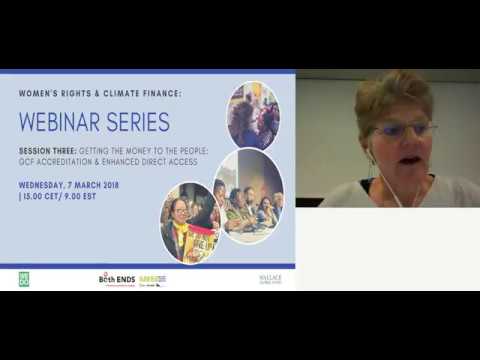
The third session of our five part series on women's rights and climate finance, Getting the Money to the People: GCF Accreditation and Enhanced Direct Action, focused on accessing the Green Climate Fund through working with stakeholders at the country level (engaging with the National Designated Authority), utilizing Enhanced Direct Access, and seeking accreditation.

Join us for the third session of this five-part series on women's rights and climate finance, aimed at building knowledge and power to ensure finance flows benefit local women's groups, respond to community needs and respect human rights.

On Friday, March 2, the director of DESA, David Castillo, was arrested in Honduras on suspicion of involvement in the murder of Berta Cáceres, exactly 2 years ago. The Honduran government refused for a long time to not only detect the actual murderers, but also the intellectual authors of the murder of Cáceres.


