Both ENDS




We are deeply shocked and saddened by the death of Berta Cáceres, who was murdered in her own home last week. Berta was the driving force behind the ‘Consejo Civico de Organizaciones Populares e Indigenas de Honduras’ (COPINH), a network of Honduran civil society organisations standing up for the rights of indigenous communities in the country. This attack once again proves that these rights are virtually non-existent in Honduras. We share the fear of many in and outside the region that this assassination will further worsen the situation of local communities.

The U.S. is not always in the front line when it comes to the protection of human rights and the environment in developing countries, but there are exceptions. The Netherlands has recently joined the ‘climate initiative’ of President Obama, which aims at ending the public funding of coal plants. But the U.S. is going even further than that: under the ‘Appropriations Bill’, U.S. directors at international financial institutions have to vote against projects that support large dams and industrial logging or mining projects in tropical forests. We are calling on Dutch Minister Ploumen to follow the U.S. example!

Congratulations to our brave colleagues from the National Association of Professional Environmentalists (NAPE) from Uganda! At last, their work received official recognition, as on International Human Rights Day, NAPE was awarded a prestigious Human Rights Award by the Uganda Human Rights Commission (UHRC), endorsed by the UN Office of the High Commissioner for Human Rights (OHCHR). To Frank Muramuzi, executive director of NAPE, the award is a tribute to the organisation’s long time work in fighting for the sustainable use of Uganda’s natural resources and the rights of communities affected by large scale development processes in the country.

In July this year, 120 nations voted in favour of a UN resolution confirming the rights to water and sanitation as human rights. Recently, however, all references to human rights have been removed from the draft text of a United Nations General Assembly resolution on a separate drive for sanitation. This change in the text removed the obligation of states under international law to report to the UN on progress in providing their citizens with access to clean water and sanitation. On November 23, the final version of the text is due to be completed.

On 25 and 26 May 2009 the Dutch Ministry of Foreign Affairs hosted a seminar on the interlinkages between human rights and the Millennium Development Goals. For many years, Both ENDS and allied organisations - such as the Freshwater Action Network, the Centrre on Housing Rights and Evictions and Simavi - have been advocating a human rights approach to development. This approach strengthens the rights of civil society in determining how natural resources are managed.

We are shocked and alarmed by the news of a planned raid into the headquarters of an environmental organisation in the Philippines. Although the raid has not materialised until now, we are deeply concerned for their wellbeing.
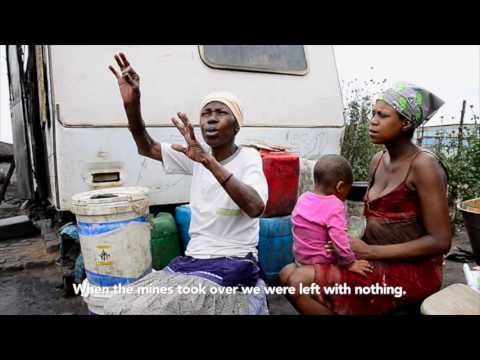
The population of the informal settlement Masakhane, South Africa is highly affected by the pollution and environmental damage caused by the the coal-fired Duvha power station. Before the mining and power station developments, families had access to and control over the land, even if they did not own it. Farming used to be the main source of livelihood. Today, mining companies and investors own most of the land, and as a direct consequence people have lost a lot of their farming and grazing land. This video shows testimonies of victims and their efforts to turn the tide.


