Both ENDS




A Negotiated Approach envisages the meaningful and long-term participation of communities in all aspects of managing the water and other natural resources on which their lives depend. It seeks to achieve healthy ecosystems and equitable sharing of benefits among all stakeholders within a river basin. This inclusive way of working is an essential precondition for the Transformative Practices that are promoted by Both ENDS and partners.
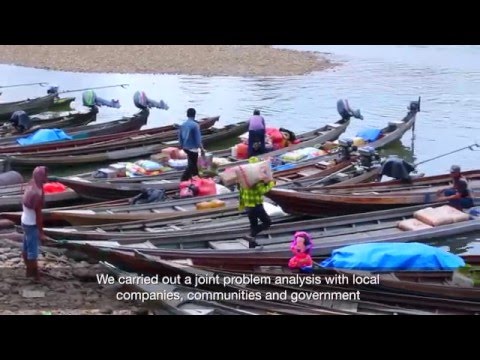
Indonesia has many rivers, but clean water is increasingly scarce. To address the Indonesian water crisis, Both ENDS and 3 Indonesian civil society organisations initiated IndoWater Community of Practice. IndoWaterCoP is born out of concern that the implementation of Indonesian water resource management is failing. It aims to assist Indonesian government to improve its performance.
IUCN-NL, Both ENDS, and 16 other Dutch and international civil society organizations (CSOs), networks, and expert groups are calling on the Dutch government to invest more strongly in locally led forest management and forest-based economies. This should be done within the framework of Dutch international cooperation and its associated policy instruments.

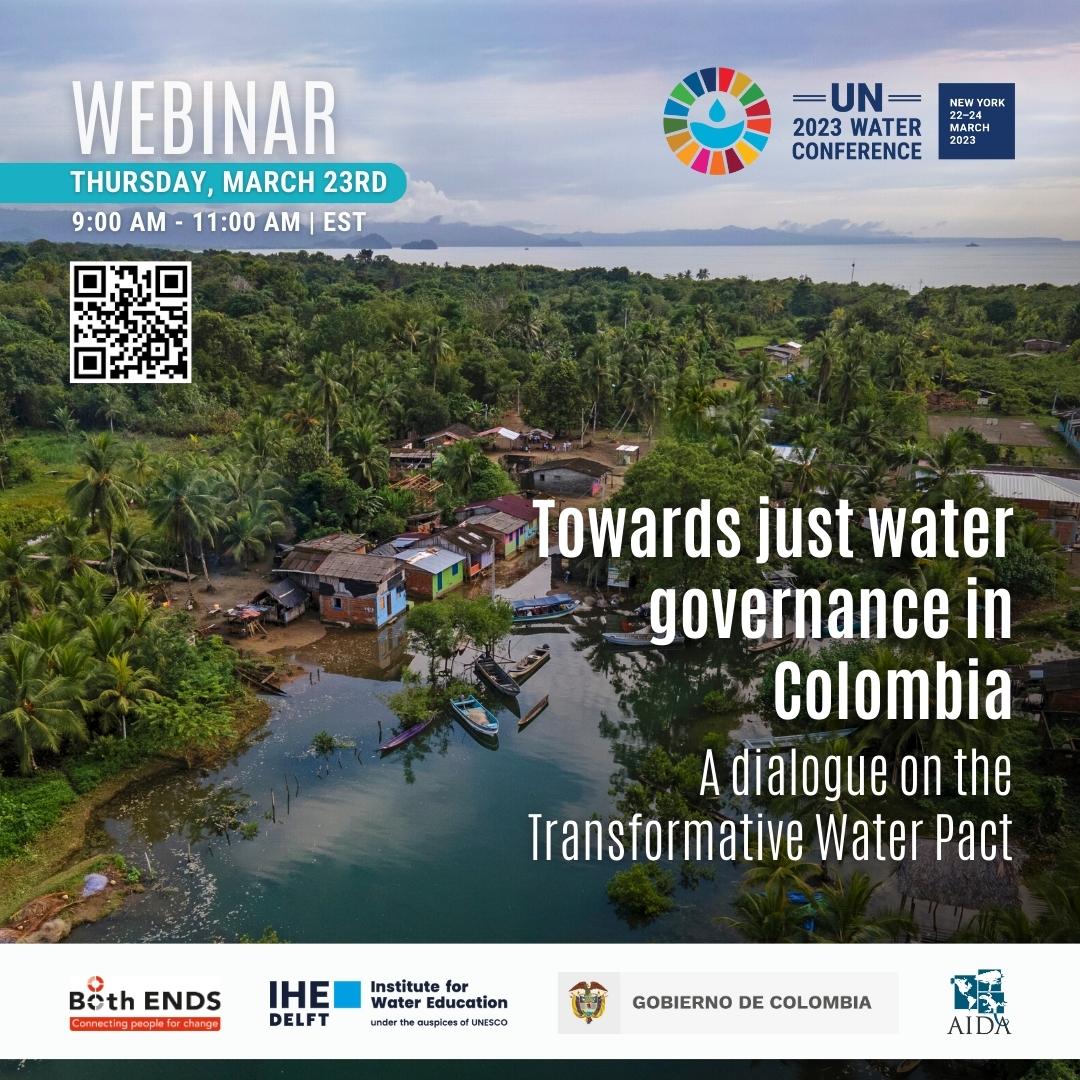
Academics and civil society representatives from around the world came together to articulate an alternative vision and framework for water governance, in the run-up to the UN Water Conference 2023 in New York. The Transformative Water Pact was developed in response to the continued exploitation of nature, neglect of human rights and the extreme power-imbalances that characterize contemporary water governance throughout the world. It details an alternative vision of water governance based on the tenets of environmental justice, equality and care.

This event will present The Transformative Water Pact (TWP), an innovative framework for water governance that has been developed by environmental justice experts from around the world. The TWP will serve as a starting point for dialogue between representatives of the government of Colombia, academia, regional and international NGOs in relation to Colombia's current ambitions in multi-scalar water governance.

"Water is life, water is food" is this year's theme for World Food Day. Our partners around the world know all too well that this is a very true sentence. To celebrate World Food Day 2023 this October 16th, we'd like to show a few examples of how our partners fight for the right to water and this way, contribute to local food sovereignty at the same time.



