




EU-Mercosur: Small GDP Gain, Big Question Marks for Farmers and Democracy
A recent report by Wageningen Economic Research (WER) on the economic consequences of the trade agreement between the EU and Mercosur confirms what civil society organizations, policymakers, and trade unions have been signaling for years: this agreement does not offer a balanced perspective for farmers and the environment. Instead, it increases power inequalities and shifts burdens onto (small-scale) farmers. Moreover, the deal risks reinforcing unsustainable practices that complicate the climate transition and addressing environmental challenges in both the EU and Mercosur countries.
Supporters in the Netherlands and across Europe often hail the agreement as an engine of growth and a tool to broaden the EU’s trade relations. The Dutch Parliament therefore explicitly requested an updated impact assessment. The WER report “Effects of the EU-Mercosur Agreement on the Dutch Economy: Update of a 2020 Study”, commissioned by the Ministry of Foreign Affairs, provides that analysis.
Limited Macro Effects, Concentrated Sectoral Damage
The WER report shows that the macroeconomic benefit for the Netherlands is negligible: by 2040, GDP is expected to increase by about 0.02 percent (around €239 million). For the EU as a whole, the projected growth is even smaller. Yet behind this small gain lie clear downsides: the model results indicate substantial negative effects in specific agricultural chains, particularly in beef (processing). Other chains also face pressure, though not uniformly and less strongly. For farm incomes, WER reports average declines in some business types; these are model averages, and effects may vary per farm. Overall, the agreement increases pressure on a sector already undergoing a necessary transition: meeting climate targets, reducing nitrogen emissions, adapting to more extreme weather, and giving farmers greater influence over their futures.
Environment and Human Rights: Outside WER’s Scope, But Real Concerns
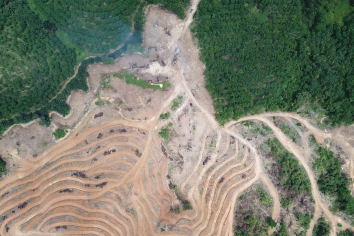
It is important to stress that WER does not model effects on the environment, deforestation, or biodiversity. Our concerns on these issues are based on other analyses and the experiences of partner organizations. Independent assessments (such as from the Veblen Institute) point to the lack of enforceable commitments in the sustainability chapter and to weak enforcement mechanisms. Lower tariffs are expected to stimulate export-driven production of beef and soy in Mercosur countries, two sectors strongly linked to deforestation in the Amazon and the Cerrado. Without firm, enforceable agreements on deforestation-free supply chains and human rights, there is a risk that the European sustainability agenda, including the EUDR, will be undermined.
Procedural Concern: “Splitting” Weakens Democratic Scrutiny
Beyond WER’s economic findings, the chosen procedure raises concerns. The European Commission aims to “split” the agreement: pushing the trade pillar through the Council (by qualified majority) and the European Parliament, while postponing the political and cooperation pillars. This sidelines national parliaments, allows the trade part to provisionally enter into force, and leaves safeguards for human rights and sustainability stuck in the ‘political’ part. More than 200 representatives have already emphasized that full, non-split democratic scrutiny of the agreement is non-negotiable.
Choosing a Course: Strengthen Farmers, Climate, and Legitimacy
WER’s conclusions align with the consistent position of the Dutch Parliament since 2020. Given the negligible macro-level gains and concentrated sectoral damage, combined with the real risks for sustainability and democratic legitimacy, it is both logical and necessary for the Netherlands to oppose this agreement in the Council and to push for full, non-split consideration with binding and enforceable safeguards.
The world is turbulent, with tariff wars and geopolitical pressures. Precisely for that reason, Europe must remain reliable: no short-term tricks, but rules and agreements that are transparent and enforceable. This is how we build equal partnerships and a future-proof agriculture and trade system—both here and in the Mercosur countries.
Read more about this subject
-
 Dossier /
International trade and investment with respect for people and planet
The network of international trade and investment treaties is large and complex. The Netherlands alone has signed more than 70 bilateral investment treaties (BITs) and is party to the trade and investment agreements concluded by the EU, like the EU-Mercosur and EU-Indonesia trade deals.
-
 Dossier /
Trade agreements
International trade agreements often have far-reaching consequences not only for the economy of a country, but also for people and the environment. It is primarily the most vulnerable groups who suffer most from these agreements.
-
 News / 15 October 2026
ISDS infringement complaint filed with the European Commission
The Netherlands and Portugal join four other EU countries facing such a complaint.
-
 Press release / 15 October 2026
Dutch and Portuguese organisations file EU complaint over investment treaties that let companies and sanctioned Russian oligarchs sue EU countries for compensation
The Netherlands and Portugal join four other EU countries facing such a complaint, as the Global Days of Action against Investor-State Dispute Settlement (ISDS) begin.
-
 News / 29 September 2026
Summary - Both ENDS complaint under the EU-New Zealand trade agreement
On 29 September 2026, Both ENDS lodged the first complaint on climate grounds with the European Commission's Single Entry Point. It asks the Commission to examine whether Aotearoa New Zealand has broken two promises both sides made in the EU-New Zealand Free Trade Agreement: not to weaken or set aside environmental laws in order to encourage trade or investment, and to effectively implement the Paris Agreement.
-
Publication / 29 September 2026
-
 News / 29 September 2026
Q&A: New Zealand's climate rollback and the EU trade agreement
On 29 September 2026 / 30 September in Aotearoa New Zealand, Both ENDS lodged a complaint with the European Commission under the EU-New Zealand Free Trade Agreement. These are the questions we are asked most often, and our answers. The complaint summary, the case explainer and the key public sources are linked at the end of this page.
-
 Press release / 29 September 2026
New Zealand faces its first climate complaint under EU trade rules
UTRECHT / WELLINGTON, 29 September 2026 /30 September in Aotearoa New Zealand
Both ENDS, a Dutch environmental justice organisation, has lodged a formal complaint with the European Commission arguing that New Zealand has broken the climate promises it made in its free trade agreement with the European Union. It is the first complaint on environmental and climate grounds under the Commission's Single Entry Point, the mechanism that lets civil society ask the EU to enforce the sustainability commitments in its trade agreements.
-
Publication / 3 July 2026
-
Publication / 18 June 2026
-
 Dossier /
Wetlands without Borders
With our Wetlands without Borders program, we work towards environmentally sustainable and socially responsible governance of the wetlands system of the La Plata Basin in South America.
-
 News / 5 November 2025
Another ISDS claim hits the Netherlands: Petrogas sues over solidarity contribution and royalty regulations
SOMO and Both ENDS strongly condemn the newly revealed investor-state dispute settlement (ISDS) case filed by Petrogas, an Omani oil and gas company operating two shallow-water gas fields in the Dutch North Sea, against the Netherlands under the Netherlands-Oman bilateral investment treaty (BIT).
-
Publication / 16 October 2025
-
Publication / 16 October 2025
-
 News / 6 October 2025
From Entebbe to Accra: civil society is rewriting the rules of investment
By Fernando Hernández Espino and Bart-Jaap Verbeek
Almost a year after African civil society gathered in Uganda to adopt the Entebbe Declaration, the call to transform international investment governance continues to gain strength. From the 6th to the 9th of October, over 50 civil society organisations from across West Africa, including from Ghana, Senegal, Nigeria, Côte d’Ivoire, Cameroon, Gambia, Sierra Leone, as well as from Kenya and Latin America, are convening in Accra to deepen and operationalise the Declaration’s vision.
-
 News / 23 September 2025
With the undemocratic splitting of the EU-Mercosur deal, Europe is missing the chance to lead on fair trade
Recently, many newspapers have written about Brussels’ rush to finalize the trade agreement between the EU and the South American Mercosur countries. According to the European Commission, national parliaments do not need to approve it because the trade part and the “political” part have been separated. This “splitting” means that the trade part can be approved as an EU-only decision by the European Council and the European Parliament, while national parliaments are sidelined and the political-cooperation part is postponed. Both ENDS and its partners are deeply concerned and are calling on the Dutch government to vote against this outdated agreement.
-
 News / 22 September 2025
EU-Indonesia Trade Deal Threatens Communities and Environment
On September 23th the European Union and Indonesia concluded their negotiations of the EU-Indonesia Comprehensive Economic Partnership Agreement (CEPA), a free trade agreement between the EU and Indonesia. Both ENDS condemns this agreement for favoring corporate interests over those of local communities and the environment.
-
 News / 9 September 2025
Simplification Must Not Mean Weakening: Why the EUDR and other Environmental Legislation Must Stay Strong
Both ENDS warns that the current debate on “simplification” of EU environmental law must not become an excuse to weaken or postpone urgently needed safeguards. In earlier contributions to the drafting of the EU Deforestation Regulation (EUDR), Both ENDS relayed the voices of local and Indigenous forest-dependent peoples, who consistently urged the EU to take responsibility for the massive deforestation linked to European imports. They underlined how this deforestation destroys biodiversity, undermines climate stability, and erodes their rights, livelihoods and cultures.
-
 Blog / 12 August 2025
Nickel mining for the energy transition: who is accountable for the damage?
Photo blog - In June, I travelled to Indonesia with our partner organization Puanifesto to research the impacts of nickel mining in East Sulawesi. On July 13th, the news broke that the European Union and Indonesia have reached a political agreement on a free trade agreement that was years in the making, called the Comprehensive Economic Partnership Agreement (CEPA). Nickel from Sulawesi is already being used in European cars. This makes it all the more important that we ensure that human and environmental rights are secured in mining and refining operations in Indonesia, before the road is opened to more extraction and exploitation for the European market. The conversations we have had with communities and workers on East Sulawesi show that more binding regulations are necessary to make this happen and ensure an energy transition that is socially and environmentally just.
-
 Dossier /
Towards a socially and environmentally just energy transition
To address the climate crisis we need to urgently transition away from fossil fuels towards clean, renewable energy. However, this transition is not only about changing energy sources. It requires an inclusive and fair process that tackles systemic inequalities and demanding consumption patterns, prioritizes environmental and social justice, and which does not repeat mistakes from the past.




