




Indigenous knowledge and languages crucial in the fight against climate change
Amsterdam, 8 August 2022 – In most countries around the world, the extensive knowledge of Indigenous peoples on nature, food, health, cultural traditions and Indigenous languages receives insufficient appreciation and attention in education and policy. The Indigenous-Led Education (ILED) Network believes that this must change. To mark the International Day of the World's Indigenous Peoples on 9 August, the ILED Network is calling for more support for the transfer of this Indigenous knowledge, which also plays a major role in resolving the biodiversity and climate crises.
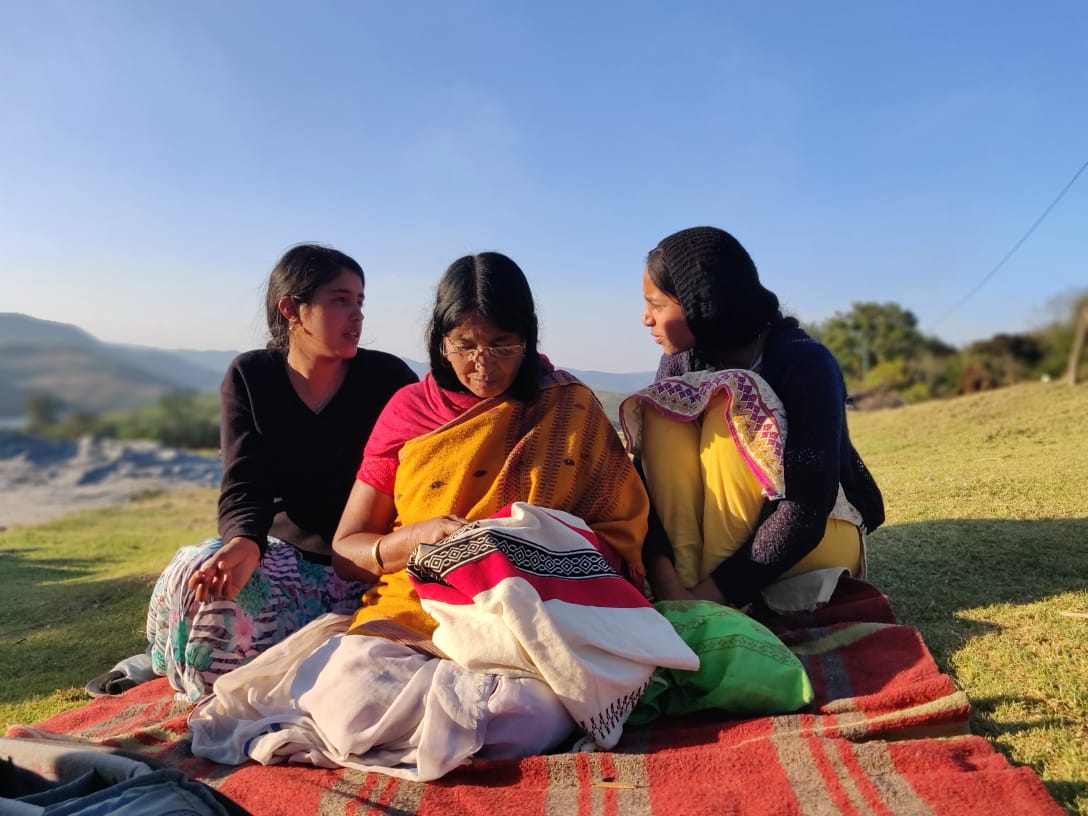
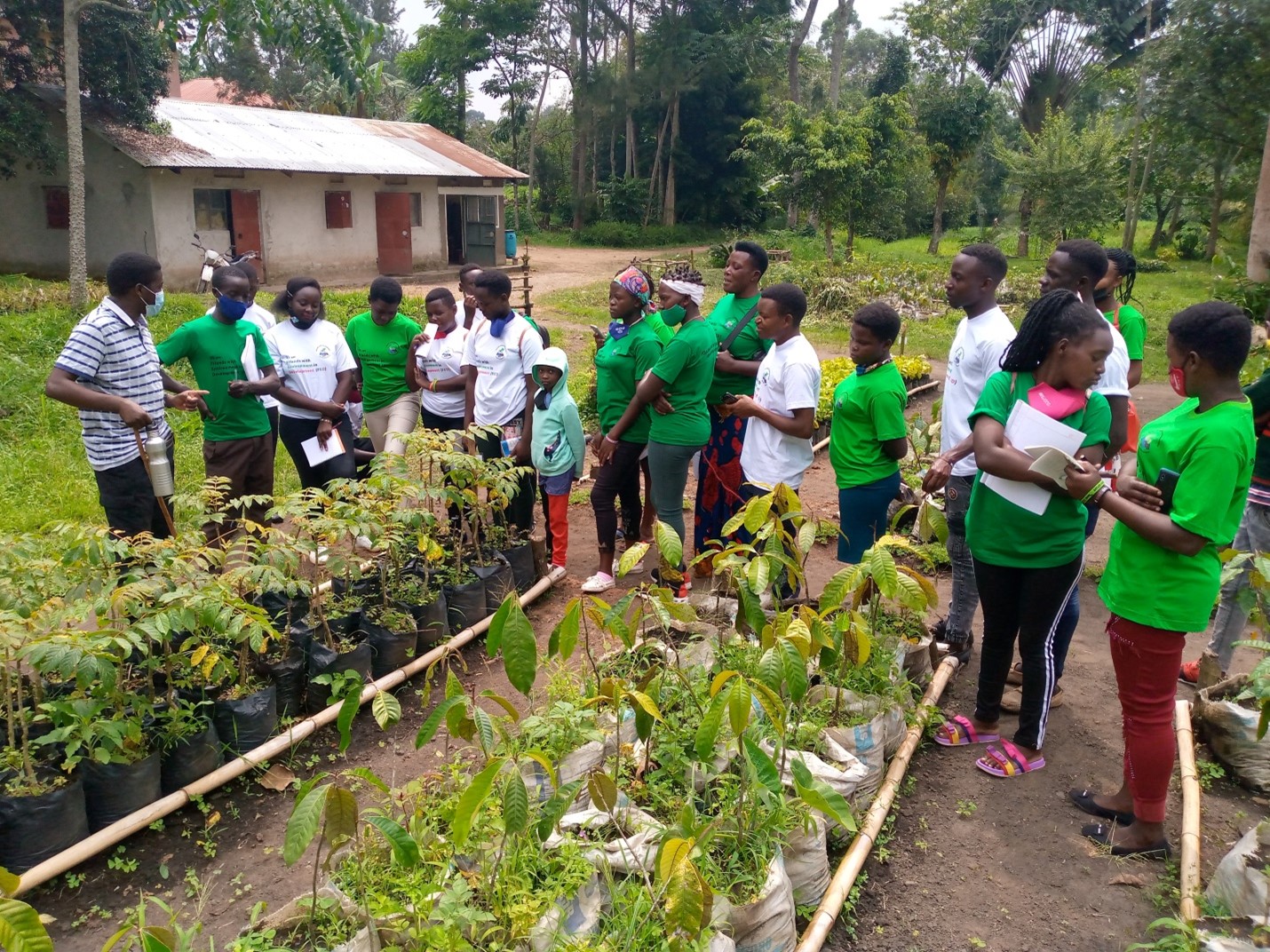
Indigenous peoples are increasingly being recognised as protectors of the natural environment. Their traditional way of life is based on age-old knowledge of their living environment and how to use it in a sustainable way. Less well known is that, because much of this knowledge is embedded in Indigenous languages, it is crucial for the knowledge to be transferred in those languages. Women play a particularly important role in transferring Indigenous knowledge to younger generations. This includes the use of medicinal plants, restoration of forest and water resources, and the transfer of natural knowledge through songs.
Repression of Indigenous languages and cultures in policy and education
As a result of the discrimination and repression experienced by Indigenous peoples – and especially women – around the world, the knowledge, culture and way of life of Indigenous communities receive insufficient attention from policymakers and politicians and in the decisions they make. This can lead, for example, to Indigenous communities being driven from their land by the government to 'protect' the environment, as happened to the Sengwer community in Kenya.
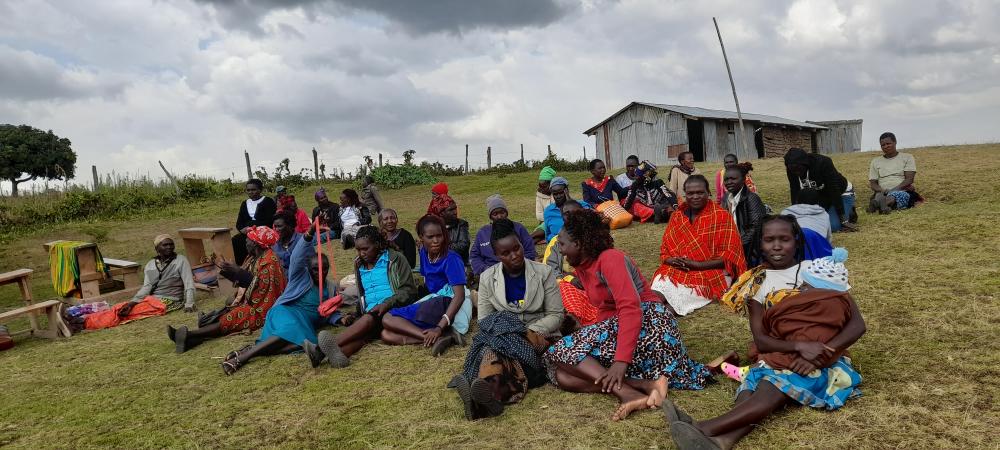
"The Sengwer should not be seen as a threat to the natural environment, but as its protectors," says Milka Chepkorir, a young female leader of the Sengwer and regional coordinator for the African members of the ILED Network. "Our language and culture contains a lot of knowledge on how to treat the natural environment. That knowledge must not be lost."
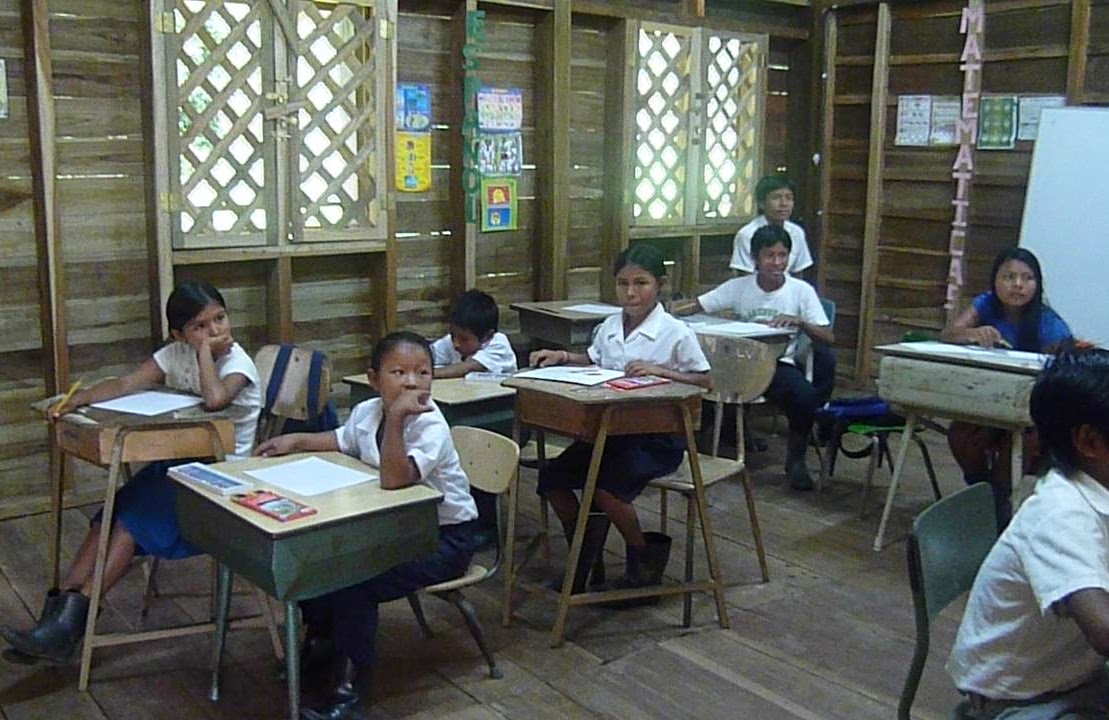
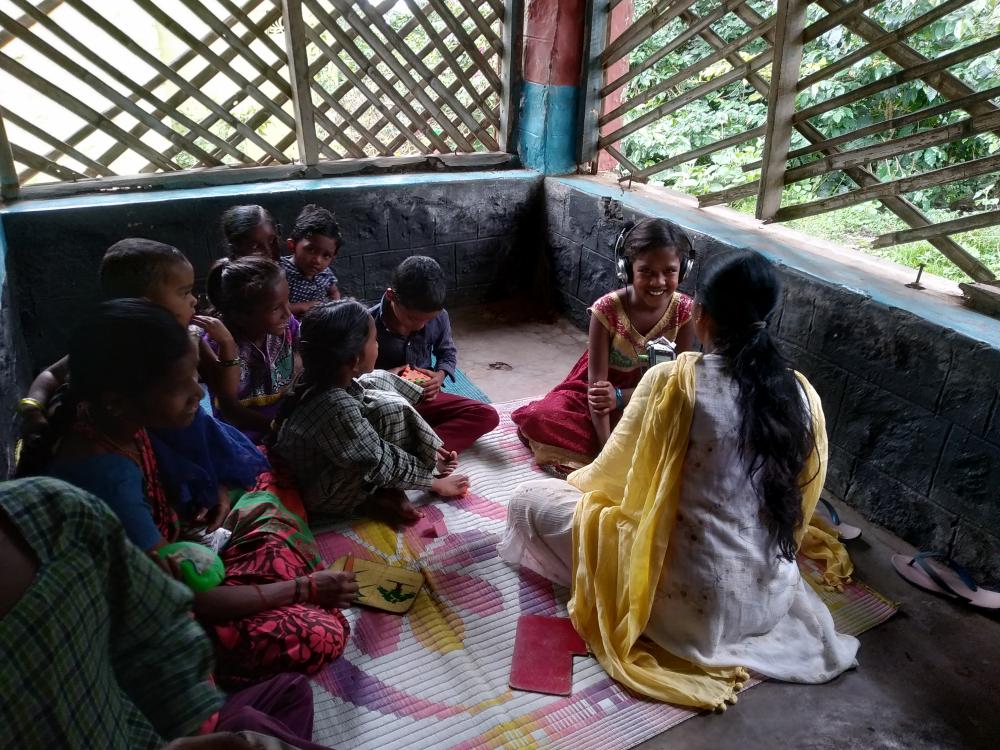
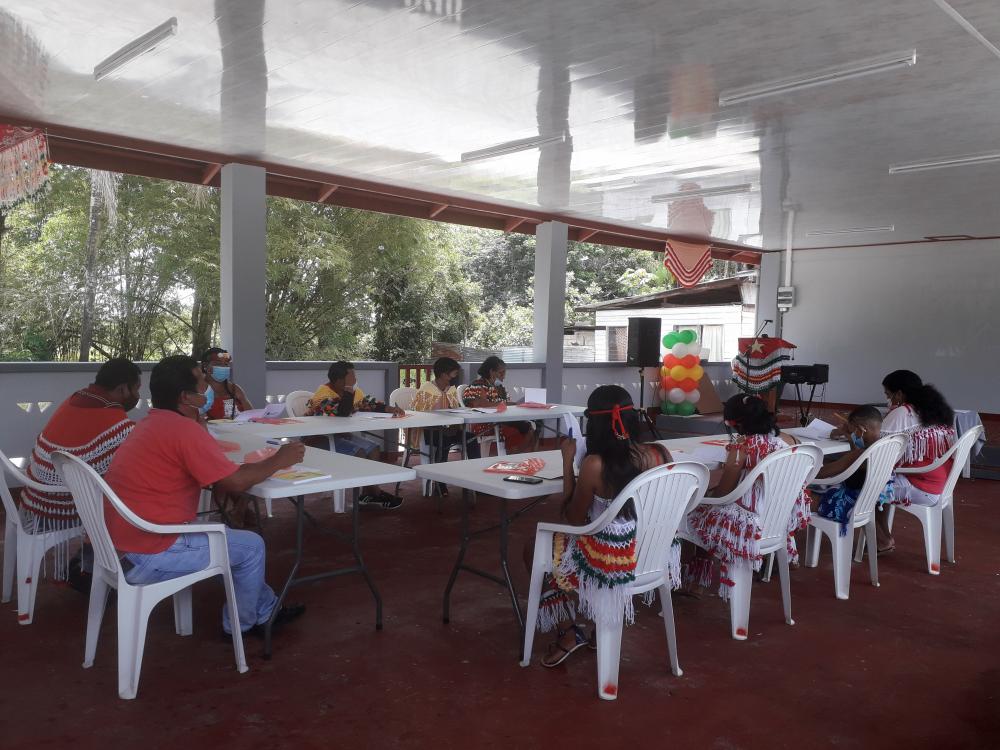
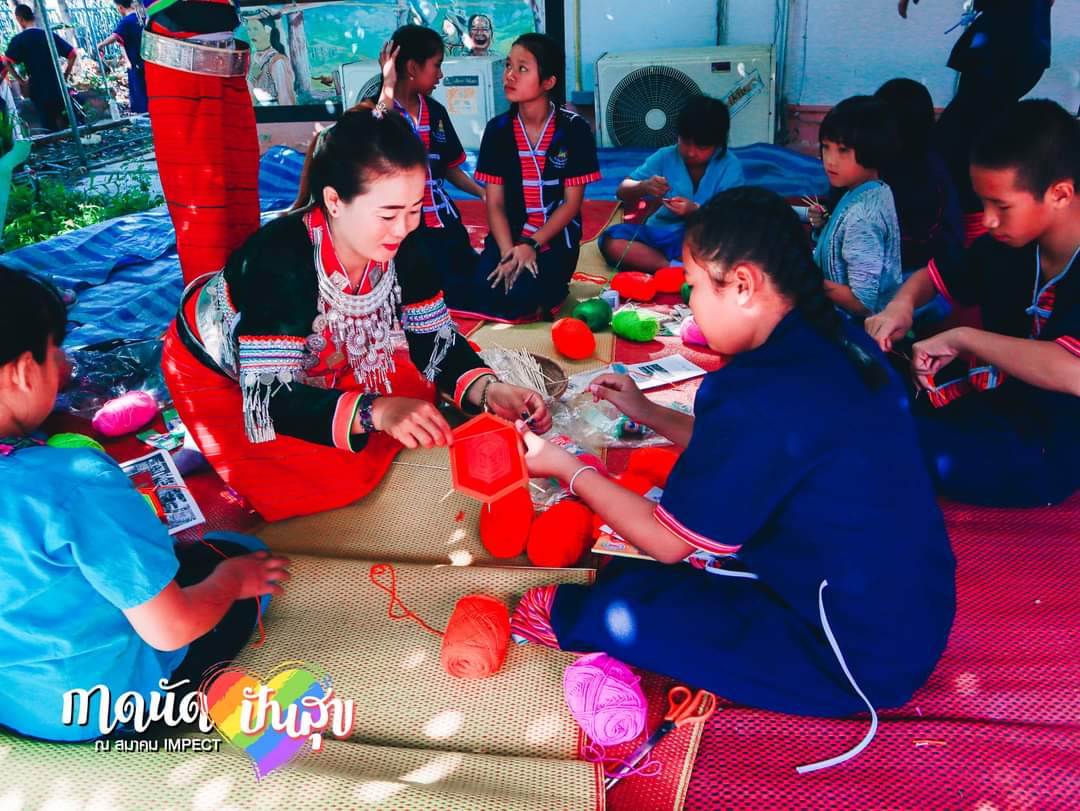
This repression of Indigenous cultures and knowledge is also visible in formal education. Not only is there insufficient attention to Indigenous languages and knowledge transfer, but Indigenous children are sometimes even banned from speaking their own language at school. That is why Indigenous-led education initiatives are crucial. In Kenya, for example, various Sengwer villages have set up their own cultural centres and make educational videoclips in which they not only pass on their own language and cultural customs but also knowledge of trees, plants and restoration of the natural environment.
Recognition of Indigenous knowledge transfer also relevant in tackling climate crisis
Examples like those in Kenya are to be found all around the world, despite the fact that Indigenous knowledge can be of great value in tackling the current climate and biodiversity crises. Indigenous peoples manage more than 500 million hectares of tropical forest worldwide. Now that research has shown that there is significantly less deforestation in areas managed by Indigenous peoples, international organisations like the IPCC and the FAO recognise the importance of Indigenous peoples in the fight against climate change and land degradation.
In light of the UN's International Decade of Indigenous languages, which started in 2022, the ILED Network is calling on policymakers around the world to give greater attention and support to Indigenous knowledge and languages. Not only in the development of plans and policy in the areas of land and water use, and protection of the natural environment and climate, but also in education.
Everything starts with education
"Pass it on! Stories of Indigenous-Led Education from the Grassroots", published tomorrow by the ILED Network, clearly shows that everything starts with education. "If Indigenous children can learn about their language, culture and traditional knowledge and share them rather than feeling ashamed of them, it will help them to stand up more strongly for their rights and protect their living environments in the future," says Ellen-Rose Kambel, director of the Rutu Foundation, a member organisation of the ILED Network.
"Indigenous communities around the world are showing that they have both the knowledge and the will to take care of their living environments," says Paul Wolvekamp, policy officer at Both ENDS, which is also a member of the ILED Network. "Instead of forcing them into a Western-style education system, we should be learning from them. That is also the value of the ILED Network, which was partly set up by Indigenous organisations. Only with a joint effort and the transfer of traditional Indigenous knowledge founded on the needs and perspective of Indigenous communities can we seriously address the threats of climate change and decreasing biodiversity."
******************************
Note for editors:
About the ILED Network:
The Indigenous-Led Education (ILED) Network is a global network of Indigenous communities and support organisations. Its aim is to generate support and visibility for education initiatives and knowledge transfer by Indigenous peoples. The network's secretariat is hosted by the Dutch Rutu Foundation in Amsterdam.
Contact: iledsecretariat@rutufoundation.org
For more information:
Ellen-Rose Kambel, Rutu Foundation:
ellen-rose@rutufoundation.org
Paul Wolvekamp, Both ENDS:
p.wolvekamp@bothends.org
Read more about this subject
-
 Environmentally Just Practice /
Non-Timber Forest Products (NTFPs)
About one in every six people, particularly women, directly rely on forests for their lives and livelihoods, especially for food. This shows how important non-timber forest products (NTFPs) and forests are to ensure community resilience. Not only as a source of food, water and income, but also because of their cultural and spiritual meaning.
-
 News / 10 September 2026
Rutu Foundation receives UNESCO Literacy Prize for multilingual education
Both ENDS’ partner the Rutu Foundation for Intercultural Multilingual Education has been awarded the 2026 UNESCO King Sejong Literacy Prize for its language friendly school programme. This prestigious prize recognises the importance of multilingual education and the right of children to learn in an environment where their home languages are valued.
-
 News / 19 March 2026
Winners of the ILED ‘Women Are Educators Award’ announced
Our partner organisation ILED (Indigenous-led Education Network) announced the seven winners of the ILED ‘Women Are Educators Award’ this month. These are women who play extraordinary roles in passing on knowledge, whether in formal or informal educational settings.
-
Letter / 14 November 2025
Letter: TPAC’s report “Final Judgement Detailed Research MTCS’’
A coalition of Malaysian and international NGOs has released a memorandum in response to the recent TPAC report on the Malaysian Timber Certification Scheme (MTCS). The organisations express serious concerns about the independence, quality, and credibility of the assessment carried out by the Timber Procurement Assessment Committee (TPAC).
-
 Press release / 13 November 2025
Global Alliance Urges Dutch Government to Reconsider Endorsement of Controversial Timber Certification Scheme
A coalition of Malaysian and international NGOs has released a memorandum in response to the recent TPAC report on the Malaysian Timber Certification Scheme (MTCS). The organizations express serious concerns about the independence, quality, and credibility of the assessment carried out by the Timber Procurement Assessment Committee (TPAC).
-
 Dossier /
Amplifying environmentally just practices
Because of the close relationship with their living environment, local communities often have the best ideas for the sustainable and equitable use and governance of land, water and forests. These environmentally just practices and processes successfully protect and restore ecosystems and address climate change. They are essential in the light of the multiple crises the world faces, but are in dire need of financial and policy support.
-
 Dossier /
Dare to Trust: the power of unconditional funding
At Both ENDS we cherish our long-term relationships with partners in our global network. These relationships are based on equality and built on trust. The trust we have in each other has developed from years of strategic cooperation, including joint advocacy around common agendas, knowledge sharing, networking, and mobilising and sharing resources to advance environmental justice.
-
 Dossier /
Inclusive ways to sustainable and healthy food for all
All around the world small-scale farmers are using sustainable and inclusive methods to produce food. Working together with nature and each other, they provide their families and communities with sufficient and healthy food. But their production methods are under pressure from large-scale agriculture and the globally dominant system of industrial food production. Together with our partners, Both ENDS is trying to turn the tide in favour of sustainable, local practices that are mostly known as 'agro-ecological' or 'nature-inclusive'. Why are we focusing on these methods? Agro-ecological practices are climate-proof and inclusive and increase the opportunities for communities around the world to produce their food sustainably.
-
 News / 24 December 2024
Dare to Trust: a journey of culture, renewal, and empowerment of Sengwer women
Historically, the Sengwer community has lived in harmony with their environment, relying on forest resources for sustenance and integrating conservation into their daily lives. However, recent government policies aimed at forest protection have limited their access to these ancestral lands. Although these regulations intend to protect the environment, they often disregard the traditional conservation practices of indigenous communities like the Sengwer, who have been natural stewards of these lands for generations. Faced with these restrictions, the Segerger Women’s Conservation Group intensified their conservation efforts, viewing it as both a cultural duty and a means to safeguard their heritage.
-
 News / 24 December 2024
NTFP-EP supports grassroots women’s organisations with Dare to Trust-grants
The pilot of Dare to Trust, facilitated by NTFP-EP, was implemented in two grassroots women’s organisations in the Philippines and Cambodia. The Dare to Trust project provided them with the independence to utilize the resources they have and thus handed to them the agency for more grounded and better judgment. By giving more liberty to the communities we are moving them away from bureaucratic processes and power structures, and towards more empowered decision making capabilities.
-
 News / 24 August 2023
Recognition of the transformative work of the ILED Network by GEF
A wave of international recognition is shedding light on the valuable role that indigenous communities play in looking after our planet's most vital ecosystems. Last night in Vancouver, two of our partners won a grant in the Inclusive GEF Assembly Challenge Program: the ILED Network and AIDER (Peru). Our colleague Eva Schmitz was present to receive the prize on behalf of the ILED Network.
-
Publication / 23 June 2023
-
 News / 24 November 2022
Women Barefoot Ecologists won a Gender Just Climate Solutions award at COP27
At this year's UN Climate Conference COP27, Bhavya George, Climate Change coordinator of our partner organisation Keystone Foundation won one of the Gender Just Climate Solutions awards. Her project "Women Barefoot Ecologists", which also is supported by the Global Alliance for Green and Gender Action (GAGGA), won in the category "Transformational Solutions".
-
Publication / 4 November 2022
-
 Environmentally Just Practice /
Inclusive Land Governance
Both ENDS works with partners around the world to ensure that land is governed fairly and inclusively and managed sustainably with priority for the rights and interests of local communities.
-
 News / 18 March 2022
International Forests Day: the importance of forests for livelihoods and a healthy environment
Today is International Day of Forests. An ever more important day, as the amount of forest and forested area's on this globe is shrinking at a fast pace. One the main causes is our ever increasing demand for products such as soy and palm oil from area's that have been deforested for their cultivation. The current proposed EU-deforestation law to prevent this, is not strict enough and does not include the protection of other crucial natural areas such as grasslands, savannas and swamps, as well as the human rights of the millions of people living in these area's. During these past few weeks we therefore participated in the campaign #Together4Forests, calling on citizens to send a letter to their own responsible ministers. The campaign paid off: almost 54,000 letters were sent to European ministers across the European Union, demanding a strict forest law that guarantees the import of only deforestation-free products in Europe.
To celebrate this International Day of Forests, we would like to emphasise the great value of forests and other natural areas, directly or indirectly, for the livelihoods of at least 2 billion people. Below, we selected some examples that show how, throughout the world, local communities use many different ways to collect and produce food and other natural products in a sustainable way, while protecting and restoring the forests and forested area's they are so dependent upon.
-
 News / 17 September 2021
Beyond trees: the importance of Non-Timber Forest Products for communities
About one in every six people, particularly women, directly rely on forests for their lives and livelihoods, especially for food. This shows how important non-timber forest products (NTFPs) and forests are to ensure community resilience. Not only as a source of food, water and income, but also because of their cultural and spiritual meaning.
-
 External link / 20 July 2021
Women’s rights and Non-Timber Forest Products (Annual Report 2020)
As a source of food, water and income, and for their cultural and spiritual meaning, forests and Non-Timber Forest Products (NTFPs) help ensure community resilience. Both ENDS has a long history of collaboration with partners such as the Non-Timber Forest Products Exchange Programme (NTFP-EP) and Keystone Foundation, which support forest communities in promoting the NTFP concept for forest conservation and livelihood enhancement.
-
 Dossier /
Fighting for improvements in the production of palm oil
The production of palm oil is causing social and environmental problems worldwide. Both ENDS is working to make the sector fairer and more sustainable and is promoting alternatives for palm oil.
-
Publication / 19 July 2021



