


Temporary ban on new hydro dams in the Brazilian Pantanal
Good news from Brazil! The National Water Agency (ANA) has stopped issuing new permits for the construction of hydroelectric dams in the Brazilian Paraguay river basin, which is part of the Pantanal wetlands in South-America. The suspension will last at least until May 2020, after the publication of a comprehensive socio-economic and environmental impact assessment that the ANA started in 2016.
The suspension is viewed as a huge success by Instituto Gaia, a long-time partner of Both ENDS in Brazil, who has been trying to halt the destructive construction of hydro dams in the Pantanal for many years. Through their persistent and tireless lobby, advocacy and awareness-raising activities the members of the organisation -mostly volunteers- have, without doubt, contributed to this fantastic outcome.
The world's second largest freshwater Wetland
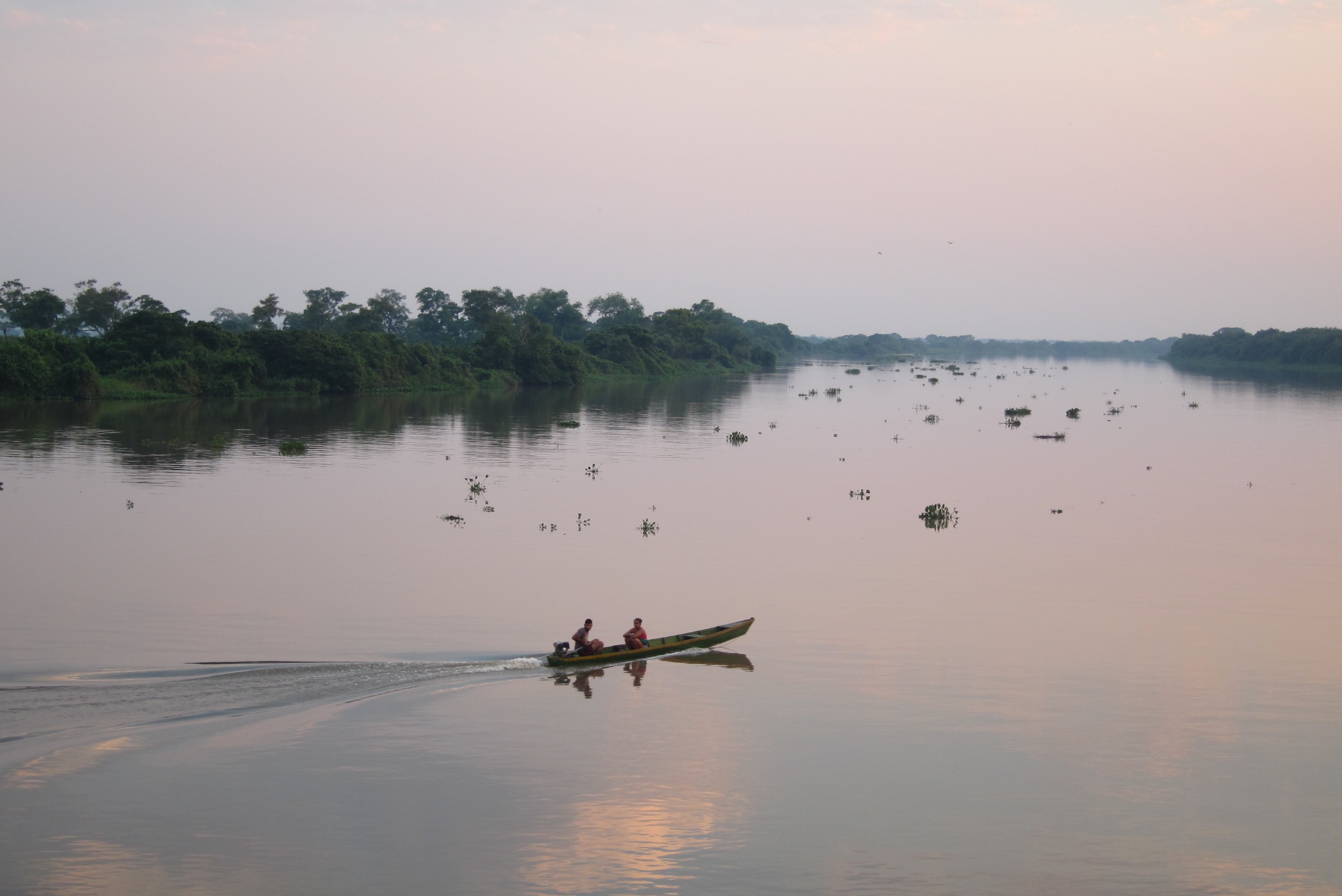
The Pantanal is the world's second largest freshwater wetland with an extremely rich biodiversity. Tourism and fishing are the main sources of income for the local population. This enormous ecosystem is invaluable for the water management of a big part of the continent, stretching all the way down to the Argentinian La Plata area, some 1.500km away.
The threats of hydro dams
One of the biggest threats to the Pantanal is the planned construction of over 150 small dams in the rivers that are part of the wetland. These dams are used to produce energy and thus are a lucrative investment. However, most of this energy is not even meant for the local population, but goes straight to the big cities in the rest of the country or is even sold abroad. The construction of these dams has an enormously detrimental impact on the entire fragile wetland and the social fabric of the area. By stopping the free flow of the rivers, the dams destroy invaluable river ecosystems for example by hindering the movement and breeding of fish and other species. Furthermore, the necessary construction work of the dams and their embankments lead to massive loss of unique biodiversity and affect thousands of river adjacent communities who depends on a healthy river landscape for their income.
Social and environmental criteria
The regional governments are required to hold public hearings before the licensing of new dams is granted. But given that these processes are often not carried out correctly, the local groups who oppose the construction of new dams have over the past years managed to successfully disrupt and halt a number of these hearings by mobilising the local people likely to be affected by their construction. According to the local groups, the licensing processes and the hearings are not only often following faulty procedures but until now also frequently rely on inadequate social- and environmental impact assessments. But according to the local authority in the Pantanal area, the new studies by the ANA could improve their procedures and project licensing criteria. This could mean that in the future, hydro projects in order to be given the green light, they would have to meet stricter social and environmental criteria. This would be a hugely important step in securing the future of the health of the entire Pantanal area.
Wetlands without Borders
Both ENDS started actively supporting local organisations striving to protect the Pantanal – such as Instituto Gaia - in 1994. This has culminated in a large, long-term programme in four countries (Brazil, Bolivia, Paraguay and Argentina) which supports local organisations in their efforts to protect the entire Rio de la Plata Basin of which the Pantanal is part. This unique programme is called 'Wetlands without Borders' and is funded by DOB Ecology.
The article about this news in 'Globo.com' (in Portuguese)
For more information
Read more about this subject
-
 Dossier /
Wetlands without Borders
With our Wetlands without Borders program, we work towards environmentally sustainable and socially responsible governance of the wetlands system of the La Plata Basin in South America.
-
 Dossier /
Large-scale infrastructure
Large-scale infrastructural projects have detrimental effects on local people and the environment, while their benefits are felt elsewhere. Both ENDS is working to ensure that local people have a greater say in decision-making and is investigating the way these projects are funded.
-
 Environmentally Just Practice /
A Negotiated Approach for Inclusive Water Governance
A Negotiated Approach envisages the meaningful and long-term participation of communities in all aspects of managing the water and other natural resources on which their lives depend. It seeks to achieve healthy ecosystems and equitable sharing of benefits among all stakeholders within a river basin. This inclusive way of working is an essential precondition for the Transformative Practices that are promoted by Both ENDS and partners.
-
 News / 7 September 2026
Unprecedented criminal conviction in the Mariana disaster case breaks mining industry's cycle of impunity
A Brazilian federal court has, for the first time, criminally convicted a mining company and three of its managers for their role in the 2015 collapse of the Fundão dam, one of the worst environmental disasters in Brazil's history. Our partner Instituto Cordilheira, which represented victims as assistant prosecutors in the case, calls it a historic breakthrough after years of impunity.
-
 Dossier /
Communities Regreen the Sahel
In various countries in the Sahel, vast tracts of land have been restored by the local population by nurturing what spontaneously springs from the soil and protecting the sprouts from cattle and hazards.
-
 News / 3 September 2026
Restoring Land, Restoring Hope: Both ENDS at UNCCD COP17 in Mongolia
From 17 to 28 August, governments gathered in Ulaanbaatar, Mongolia, for COP17 of the UN Convention to Combat Desertification (UNCCD). At stake was more than how the world responds to land degradation and drought. It was also a question of who gets to shape land restoration, whose knowledge counts, and where the money goes.
-
Letter / 14 July 2026
Statement on CAO Cambodia Microfinance Case
The independent complaints mechanism of the International Finance Corporation (IFC) and the World Bank Group found that the IFC violated its own Environmental and Social Sustainability Framework by investing in six banks providing microfinance in Cambodia.
-
Publication / 3 July 2026
-
 Dossier /
Gas in Mozambique
In 2011 one of the world’s largest gas reserves was found in the coastal province of Cabo Delgado, in the north of Mozambique. A total of 35 billion dollars has been invested to extract the gas. Dozens of multinationals and financiers are involved in these rapid developments. It is very difficult for the people living in Cabo Delgado to exert influence on the plans and activities, while they experience the negative consequences. With the arrival of these companies, they are losing their land.
-
 Dossier /
Finance for agroecology
The lion's share of public budgets for climate, agriculture and development still goes to conventional agroindustrial projects that contribute to the current climate, food and biodiversity crises. Both ENDS and our partners are calling for a transition to agroecological practices that are people- and environment-friendly.
-
Publication / 18 June 2026
-
Publication / 12 May 2026
-
 Press release / 12 May 2026
UN report warns of a growing sand crisis - The Dutch dredging sector plays a key role in global sand extraction
GENEVA/UTRECHT, 12 May 2026 – A new report by the United Nations Environment Programme (UNEP), Sand and Sustainability: An Essential Resource for Nature and Development, warns that global demand for sand is exceeding ecological limits. Large-scale extraction of sand from marine and coastal ecosystems is leading to biodiversity loss, damage to coastal communities and increasing risks in an era of climate change. Dutch dredging companies play a prominent role in this as global market leaders in large-scale sand extraction and land reclamation. “Our analyses show that the dredging sector operates globally within a system in which ecological damage and the consequences for coastal communities are systematically underestimated, whilst transparency and effective oversight are often lacking,” says the Dutch environmental and human rights organisation Both ENDS, which contributed to the report.
-
 Dossier /
Rights for People, Rules for Corporations – Stop ISDS!
Indigenous communities in Paraguay saw their attempts to regain their ancestral lands thwarted by German investors. In Indonesia, US-based mining companies succeeded to roll back new laws that were meant to boost the country’s economic development and protect its forests. This is the level of impact that investment treaties can have on social, environmental and economic development and rights. Why? Because of the ‘Investor-to-State Dispute Settlement’ clauses that are included in many such treaties.
-
Publication / 14 April 2026
-
Publication / 10 April 2026
-
 News / 10 April 2026
Both ENDS: strengthened FMO complaints mechanism is a step forward, but major gaps remain
Both ENDS welcomes the strengthened Independent Complaints Mechanism (ICM) of development finance institutions FMO, DEG and Proparco as an important step forward in accountability. Working directly with communities affected by development projects, we see daily how essential it is that people can access justice when they are harmed in the name of development. For many communities, this mechanism is one of the few avenues through which harm can be formally recognised and addressed in relation to these development banks.
-
 News / 9 April 2026
Minister Sjoerdsma hosts roundtable conversations with civil society
This week, Minister Sjoerdsma organized roundtable conversations with civil society organizations – a valuable initiative that brings together Dutch civil society voices to address critical challenges faced by democratic societies.
-
 News / 26 March 2026
New project: Climate Accountability in EU Trade
Through its new project “Climate Accountability in EU Trade: Testing the SEP and DAGs for Climate-Linked FTA Enforcement” Both ENDS, with support from the European Climate Foundation, is exploring how the European complaints mechanism (SEP) and Domestic Advisory Groups (DAGs) can be more effectively used to advance climate accountability. The project runs for 13 months, until end of 2026.
-
 News / 24 March 2026
Statement: Invest in local leadership for tropical forest management and local economies
IUCN-NL, Both ENDS, and 16 other Dutch and international civil society organizations (CSOs), networks, and expert groups are calling on the Dutch government to invest more strongly in locally led forest management and forest-based economies. This should be done within the framework of Dutch international cooperation and its associated policy instruments.




