




Urgent call to Shell: Don’t leave the Niger Delta without cleaning up decades of pollution
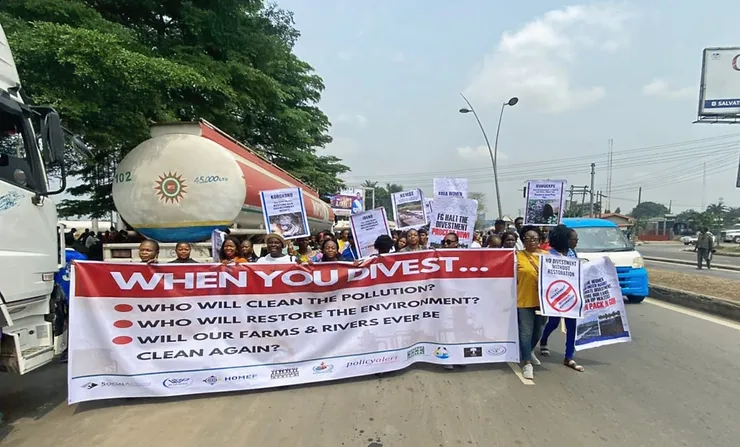
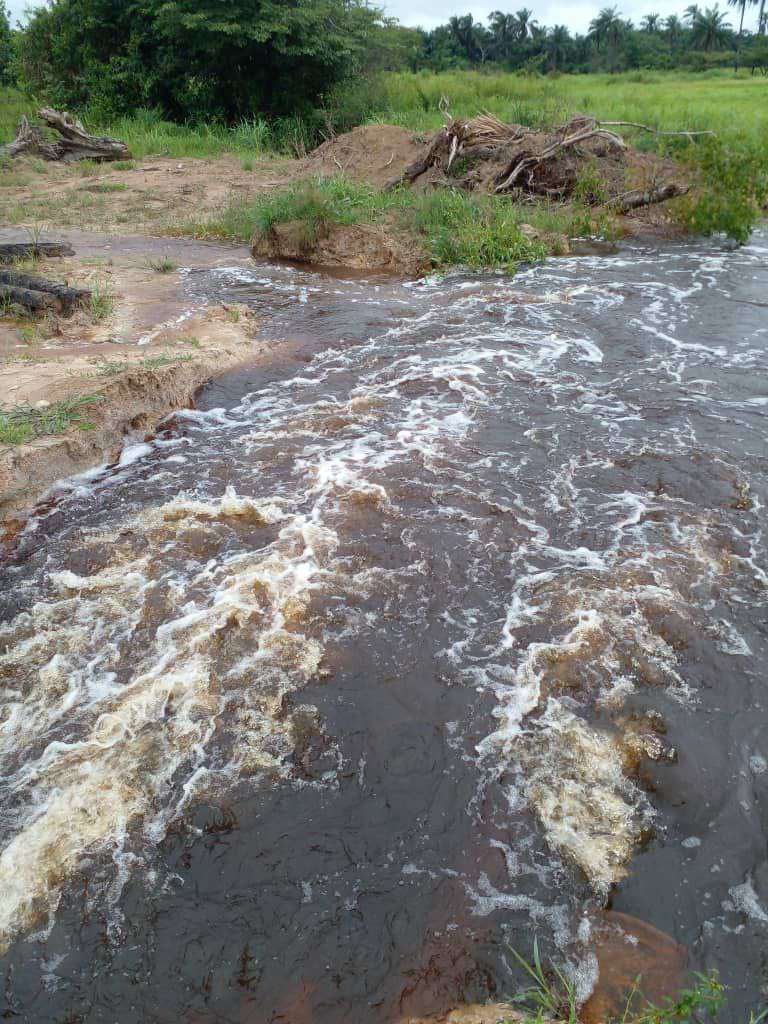
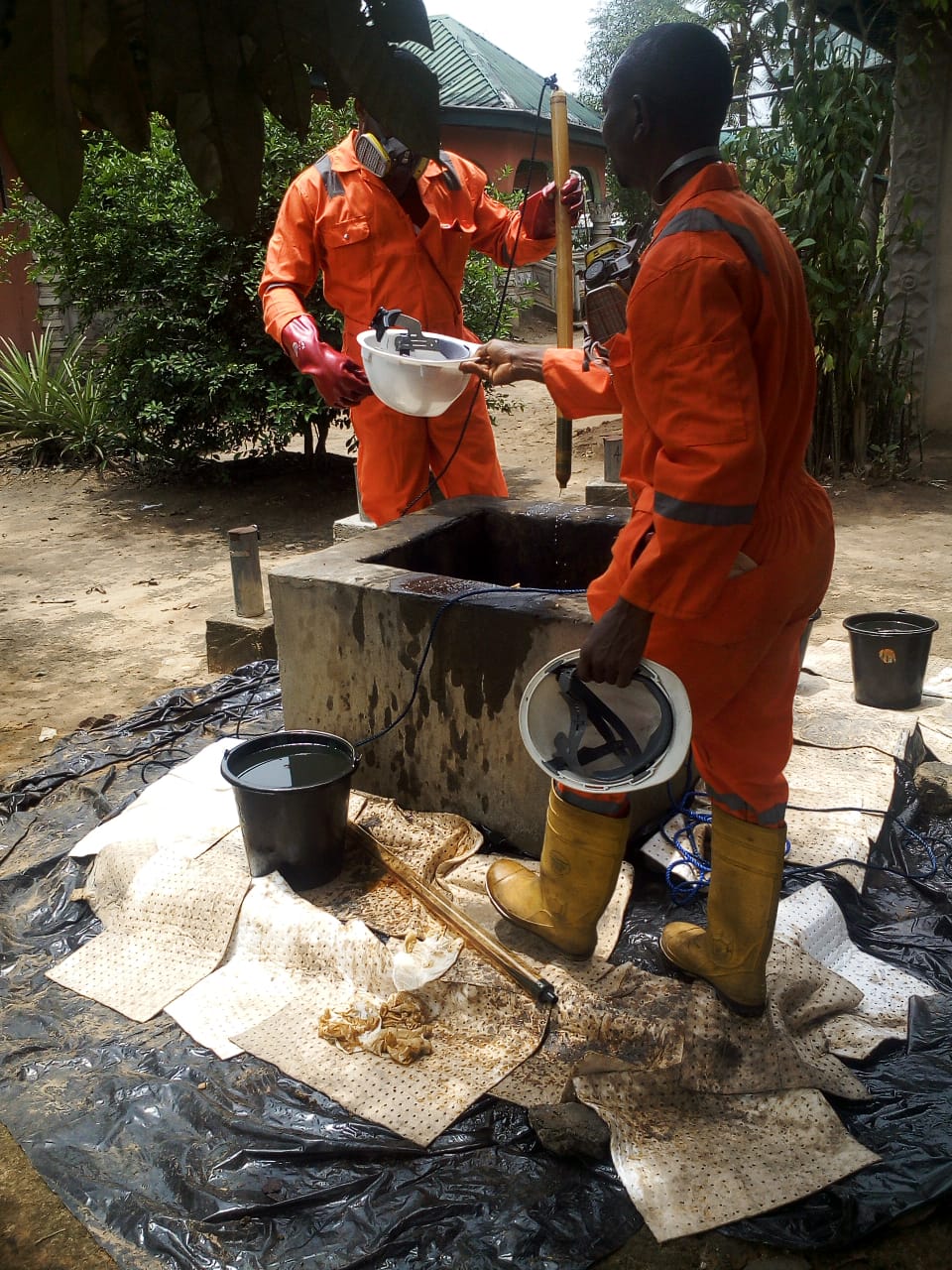
Last week, Shell reported that it officially completed the sale of its on-shore oil assets in the Niger Delta, leaving behind a vast oil pollution caused by 70 years of oil extraction in the region.
Despite the local communities and international civil society calls to President Tinubu and the decision from Nigeria's regulatory authority NUPRC to refuse Shell divestment request, the deal appears to be closed.
Both ENDS and our Nigerian partners have been calling for a responsible exit for years. This means that Shell and it's Nigerian daughter company SPDC should first clean up the extreme polution caused by their oil winning activities over decades.
Just transition = responsible divestment
The history of the energy transition is being written now. Whilst Shell's oil extraction in the Niger Delta and the pollution and conflict accompanied by it wrote history as a bad example of the fossil fuel era, the same now threatens to happen with Shell's irresponsible exit from the Niger Delta. The energy transition can only be just if oil companies' divestment occurs in a responsible way by cleaning up the pollution and repairing other damage caused by their actions.
By selling it's shares of SPDC before the clean-up of the Niger Delta's polluted ecosystem has even properly started, it appears that Shell is washing its hands of the Niger Delta. This is an example of the oil industry's irresponsible divestment strategy, passing toxic assets and liabilities to others. Unfortunately, the victims are the hundreds of thousands of Niger Delta citizens forced to live with the vast pollution left by SPDC operations.
Call for full clean-up
Today, on Shell Capital Markets Day 2025, Both ENDS together with 195 international and Nigerian of civil society organisations is sending an open letter to Shell Plc Executive Committee to demand the full clean up of SPDC pollution legacy and to share publicly how this essential process will occur.
In particular, Both ENDS calls upon all Dutch investors in Shell to ensure corporate accountability and responsibility.
For more information
Read more about this subject
-
 Dossier /
Towards a socially and environmentally just energy transition
To address the climate crisis we need to urgently transition away from fossil fuels towards clean, renewable energy. However, this transition is not only about changing energy sources. It requires an inclusive and fair process that tackles systemic inequalities and demanding consumption patterns, prioritizes environmental and social justice, and which does not repeat mistakes from the past.
-
 Dossier /
Global Alliance for Green and Gender Action (GAGGA)
GAGGA rallies the collective power of the women's rights and environmental justice movements to realize a world where women can and do access their rights to water, food security, and a clean, healthy and safe environment.
-
 News / 2 February 2026
Response to the D66-VVD-CDA coalition agreement
Coalition: Repair the damage and dare to go further
At Both ENDS, we see a number of cautious steps in the right direction in this coalition agreement. There is a slight emphasis on green issues, renewed attention to women's rights, recognition of the importance of civil society, and discussion of trade agreements with a focus on mutual interests. However, without structural change in how we trade, invest, and cooperate, fine words remain empty shells.
-
 Dossier /
Seeking justice for the affected communities of Vale’s mining disasters in Mariana and Brumadinho
In 2015 and 2019, the Brazilian state of Minas Gerais experienced two severe mining tragedies in Mariana and Brumadinho, due to the same mining company: Vale. Since then, the affected communities have been seeking justice, via the criminal punishment of the responsible parties, and a fair compensation for the loss of their loved ones, their homes and their livelihoods. Both ENDS supports local CSOs by amplifying their quest for justice within an international audience and, more specifically, by raising awareness amongst Dutch investors in Vale about the high risks this company’s activities pose for people and the environment.
-
 News / 22 January 2026
Shell files new arbitration against the Netherlands over Groningen gas field closure
Shell is suing the Netherlands in yet another attempt to evade its responsibility for decades of gas extraction in Groningen. For years, gas production has triggered earthquakes, damaged over a hundred thousand homes, and left residents living in prolonged insecurity, still waiting for repairs, reinforcement, and justice.
-
 Dossier /
Gas in Mozambique
In 2011 one of the world’s largest gas reserves was found in the coastal province of Cabo Delgado, in the north of Mozambique. A total of 35 billion dollars has been invested to extract the gas. Dozens of multinationals and financiers are involved in these rapid developments. It is very difficult for the people living in Cabo Delgado to exert influence on the plans and activities, while they experience the negative consequences. With the arrival of these companies, they are losing their land.
-
 Dossier /
Communities Regreen the Sahel
In various countries in the Sahel, vast tracts of land have been restored by the local population by nurturing what spontaneously springs from the soil and protecting the sprouts from cattle and hazards.
-
 News / 23 October 2025
TotalEnergies financiers beware: EACOP is eating up money, nature and livelihoods
A new analysis shows that the developers of the East African Crude Oil Pipeline, led by France’s TotalEnergies, are being forced to self-finance the project almost entirely. The analysis, part of a new Finance Risk Updatefrom a coalition of African and International civil society organisations, shows that the companies have abandoned plans to raise 60% of the project’s growing costs from bank loans, and are now on the hook for almost 90% of the costs themselves.
-
 Blog / 12 August 2025
Nickel mining for the energy transition: who is accountable for the damage?
Photo blog - In June, I travelled to Indonesia with our partner organization Puanifesto to research the impacts of nickel mining in East Sulawesi. On July 13th, the news broke that the European Union and Indonesia have reached a political agreement on a free trade agreement that was years in the making, called the Comprehensive Economic Partnership Agreement (CEPA). Nickel from Sulawesi is already being used in European cars. This makes it all the more important that we ensure that human and environmental rights are secured in mining and refining operations in Indonesia, before the road is opened to more extraction and exploitation for the European market. The conversations we have had with communities and workers on East Sulawesi show that more binding regulations are necessary to make this happen and ensure an energy transition that is socially and environmentally just.
-
 News / 10 July 2025
Shell's Silent Exit: Evading Accountability in the Niger Delta
Following Both ENDS & Kebekatche Women Development & Research Centre participation in Shell’s Annual General Meeting (AGM) and a formal follow-up in writing, the response received from Shell plc raises more questions than it answers.
-
Publication / 1 July 2025
-
Publication / 1 July 2025
-
 News / 4 June 2025
Demanding Shell’s Accountability for decades of pollution in Niger Delta
Both ENDS and our Nigerian partner Kebetkache Women Development & Research Centre attended Shell’s Annual General Meeting (AGM), on May 20th, in London, to demand transparency and accountability for Shell Plc’s opaque divesment in the Niger Delta.
-
 News / 20 May 2025
Both ENDS and partners demand Shell to clean up the Niger Delta before divesting
At the Annual General Meeting (AGM) of Shell in London, community leaders from the Niger Delta and international allies, including Both ENDS, are confronting Shell with a clear demand: Shell must take full responsibility for decades of pollution and human suffering in Nigeria’s Niger Delta before divesting from its on-shore oil operations.
-
 Dossier /
Dare to Trust: the power of unconditional funding
At Both ENDS we cherish our long-term relationships with partners in our global network. These relationships are based on equality and built on trust. The trust we have in each other has developed from years of strategic cooperation, including joint advocacy around common agendas, knowledge sharing, networking, and mobilising and sharing resources to advance environmental justice.
-
Letter / 25 March 2025
Letter to Shell's CEO and plc Executive Committee: don’t leave the Niger Delta without cleaning up
Today, on Shell Capital Markets Day 2025, Both ENDS together with 195 international and Nigerian of civil society organisations is sending an open letter to Shell’s Executive Committee demanding a full cleanup of the SPDC pollution legacy and transparency on the cleanup process.
-
 Dossier /
The Climate lawsuit against Shell
Both ENDS is co-plaintiff in the climate lawsuit brought by Milieudefensie (Friends of the Earth The Netherlands) in 2018 against Shell to stop the company from causing harm to the climate. In 2021, the judge ruled in favor of the climate, but unfortunately the company appealed. The court will therefore render its verdict at the end of 2024.
-
 Blog / 30 January 2025
Brumadinho’s painful “seas of mud”
By Carolina de Moura
Six years ago, Brumadinho tailings dam I, from the Paraopeba Complex, owned by mining company Vale, collapsed. January 25th, 2019, forever changed the lives of thousands. The scars remain open, and the quest for justice, remembrance, and prevention of future mining crimes endures despite all adversities. This was manslaughter coupled with socio-environmental devastation of proportions difficult to measure. These are irreparable losses and damages that could have been avoided if it wasn’t for the greed, negligence, and irresponsibility of decision-makers at Vale, the German certification firm Tüv Süd, and the state of Minas Gerais.
-
 News / 23 December 2024
Dare to Trust: Beneficiaries Tell Success Stories of Kebetkache's Empowerment Project
The Dare to Trust-initiative, led by Kebetkache Women Development & Resource Centre with support from Both ENDS, empowers individual women with support for their businesses and a sustainable income. The program has successfully supported 40 beneficiaries, enabling them to grow their businesses and skills without the need for formal proposals.
-
Letter / 16 December 2024
Urgent call to halt all divestments in the Niger Delta, including Shell's refused sale of SPDC shares
The proposed sale of Shell’s shares in the Shell Petroleum Development Company (SPDC) to the Renaissance consortium, alongside similar divestments by TotalEnergies and other oil companies, threatens the Niger Delta and its people environmental and social well-being for generations to come.


