


New report: Phasing out ISDS in the Netherlands: a roadmap
Today, Both ENDS and SOMO are publishing the report Phasing out ISDS in the Netherlands: a roadmap. In the report, we highlight the Netherlands’ role in the ISDS system and offer practical guidance on phasing out ISDS.
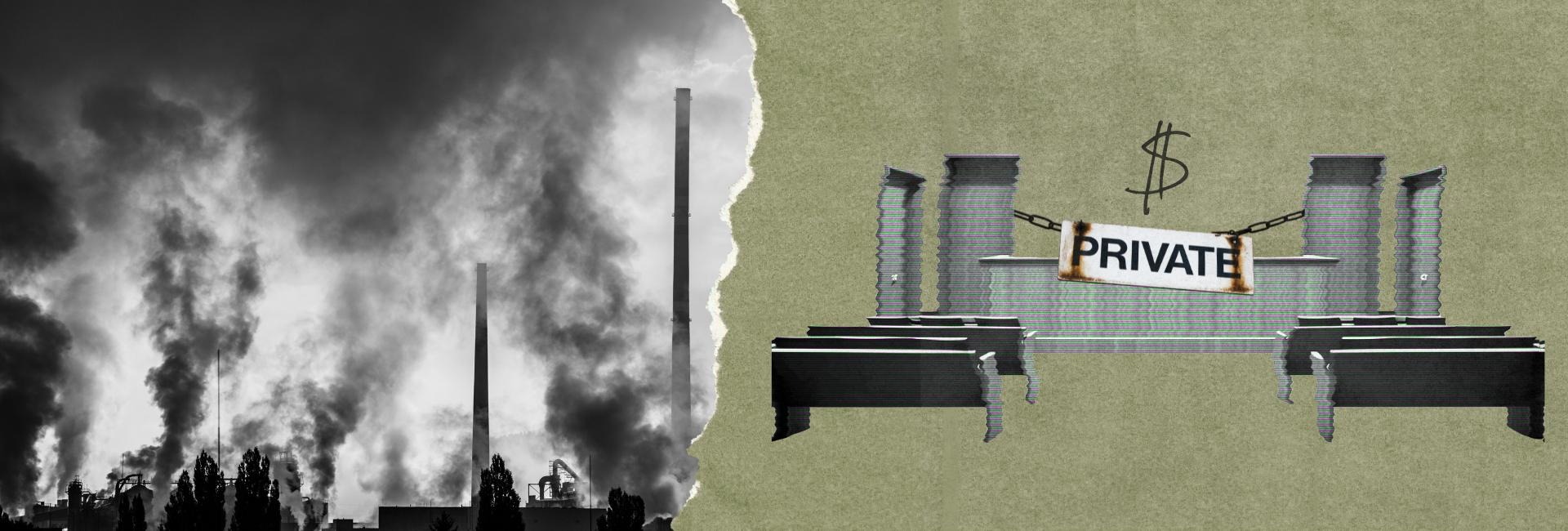
The so-called ISDS (investor-state dispute settlement) was originally established to protect foreign investments, but is increasingly being used to challenge measures relating to climate, security, public health and the environment. Governments, including the Dutch government, are thus at risk of facing claims running into billions, which puts the public interest under pressure.
It is therefore high time to address this risk by phasing out ISDS. This urgency is further underscored by the fact that ISDS is high on the agenda of the Conference on Transitioning Away from Fossil Fuels organised by the Netherlands from 24 to 29 April.
The figures
- The Netherlands is a key player in the international ISDS system, with 70 active treaties containing ISDS provisions. Dutch treaties are used extensively: with 140 known cases, they account for almost 10 per cent of all ISDS cases worldwide, placing the Netherlands in second place, after the United States.
- ISDS claims under Dutch treaties amount to approximately €97 billion, with €17 billion in actual payouts. This places enormous pressure on government budgets at home and abroad, particularly in the Global South.
Our recommendations
- Prevent new ISDS obligations
- Terminate or amend existing investment treaties
- Seek cooperation with like-minded countries
- Exclude ISDS from contracts with companies
View the full report here. Alongside the report, we are also launching the Dutch ISDS data hub today, containing the most important information on Dutch bilateral investment treaties (BITs).
For more information
Read more about this subject
-
 Dossier /
Rights for People, Rules for Corporations – Stop ISDS!
Indigenous communities in Paraguay saw their attempts to regain their ancestral lands thwarted by German investors. In Indonesia, US-based mining companies succeeded to roll back new laws that were meant to boost the country’s economic development and protect its forests. This is the level of impact that investment treaties can have on social, environmental and economic development and rights. Why? Because of the ‘Investor-to-State Dispute Settlement’ clauses that are included in many such treaties.
-
 Blog / 25 november 2025
COP30 shows why dismantling ISDS is essential for real climate action
Standing in Belém during COP30, I felt the weight of the moment. We came to the Amazon hoping for decisive progress on phasing out fossil fuels, yet the final outcome fell far short of the ambition science and justice demand. The agreement brought welcome commitments on adaptation finance and global indicators, but it refused to confront the structural forces that make climate action so difficult.
-
Publication / 14 april 2026
-
 News / 26 juni 2020
630 civil society groups sound alarm over wave of Covid-19 claims in 'corporate courts'
Countries could be facing a wave of cases from transnational corporations suing governments over actions taken to respond to the Covid pandemic using a system known as investor-state dispute settlement, or ISDS. Cases could arise from actions that many governments have taken to save lives, stem the pandemic, protect jobs, counter economic disaster and ensure peoples' basic needs are met. Threats of cases have already been made in Peru over the suspension of charging on toll roads, and law firms are actively advising corporations of the options open to them. 630 organisations from across the world, representing hundreds of millions of people, are calling on governments in an open letter to urgently take action to shut down this threat. The letter below is published today.
-
Publication / 23 mei 2023
-
Letter / 26 juni 2020
Letter to governments over wave of Covid-19 claims in 'corporate courts'
Countries could be facing a wave of cases from transnational corporations suing governments over actions taken to respond to the Covid pandemic using a system known as investor-state dispute settlement, or ISDS. 630 organisations from across the world, representing hundreds of millions of people, are calling on governments in an open letter to urgently take action to shut down this threat.
-
 News / 11 oktober 2019
Rights for people, rules for corporations: the case of Paraguay
Indigenous communities in Paraguay saw their attempts to regain their ancestral lands thwarted by German investors. This is the level of impact that investment treaties can have on social, environmental and economic development and rights. Why? Because of the ‘Investor-to-State Dispute Settlement’ (ISDS) clauses that are included in many such treaties.
-
 Dossier /
Investment treaties
Investment treaties must be inclusive, sustainable and fair. That means that they must not put the interests of companies before those of people and their living environment.
-
 News / 26 november 2024
The Time to Rethink Investment Rules: Amplifying Civil Society Voices
At the core of the Fair, Green, and Global (FGG) Alliance’s mission is the commitment to building a just and sustainable world. As members of this alliance, Both ENDS, SOMO, and the Transnational Institute (TNI) recognise the urgent need to reimagine global investment frameworks. These frameworks, entrenched in outdated treaties such as Bilateral Investment Treaties (BITs) and the Energy Charter Treaty (ECT), often prioritise corporate profits over human rights, environmental sustainability, and social justice.
-
 Press release / 23 mei 2023
60th anniversary of Dutch bilateral investment treaties no cause for celebration
On 23 May, the Netherlands celebrates 60 years of bilateral investment treaties (BITs). The first BIT was signed with Tunisia in 1963. These treaties were intended to make an important contribution to protecting foreign investments by Dutch companies. A study by SOMO, Both ENDS and the Transnational Institute (TNI), however, shows that in practice they mainly give multinationals a powerful instrument that has far-reaching consequences people and the environment worldwide.
-
Letter / 9 december 2024
People and the Planet Entebbe Declaration: Reclaiming investment frameworks for people and the planet
The time for change is now. Civil society demands international investment
frameworks that are aligned with economic justice, social and environmental
sustainability, and the needs of communities worldwide. -
 Dossier /
International trade and investment with respect for people and planet
The network of international trade and investment treaties is large and complex. The Netherlands alone has signed more than 70 bilateral investment treaties (BITs) and is party to the trade and investment agreements concluded by the EU, like the EU-Mercosur and EU-Indonesia trade deals.
-
 News / 17 juli 2024
EU Exits Energy Charter Treaty (ECT): A Milestone for Climate Action
The European Union's decision to exit the Energy Charter Treaty (ECT) is a landmark victory for climate action. For years, the ECT's Investor-State Dispute Settlement (ISDS) mechanism has enabled fossil fuel companies to challenge climate policies, hindering progress towards sustainability.
-
 News / 25 november 2024
Empowering Civil Society: Shaping investment policies for climate and sustainable development in Africa
From 26-29 November 2024, Both ENDS and its partners will host the Civil Society Forum on Investment Policies, Climate and Sustainable Development Goals in Entebbe, Uganda. Our colleagues Iván and Fernando explain the importance of this event: “Through this event, we aim to provide an in-depth perspective on the impact of current investment policies on climate and environmental issues, with a strong focus on the African continent.”
-
 News / 22 januari 2026
Shell files new arbitration against the Netherlands over Groningen gas field closure
Shell is suing the Netherlands in yet another attempt to evade its responsibility for decades of gas extraction in Groningen. For years, gas production has triggered earthquakes, damaged over a hundred thousand homes, and left residents living in prolonged insecurity, still waiting for repairs, reinforcement, and justice.
-
 News / 11 november 2024
Kenya Terminates Bilateral Investment Treaty with the Netherlands
The government of Kenya has officially terminated its bilateral investment treaty (BIT) with the Netherlands, marking a significant win for economic justice and environmental protection. Kenya’s decision reflects a growing global trend of rethinking outdated treaties that often prioritize corporate interests over public welfare. The Dutch Minister for Foreign Trade and Development recently confirmed that Kenya unilaterally ended the treaty in December 2023, rendering it inoperative from 11 June 2024. Kenya now joins South Africa, Tanzania, and Burkina Faso as the fourth African country to terminate its BIT with the Netherlands.
-
 News / 5 november 2025
Interview: Both ENDS at COP30 for Climate Justice and Systemic Change
Both ENDS is present at COP30 to advocate for genuine access to climate finance for locally led, gender-just climate solutions and the mechanisms that facilitate this, including those for farmer-led restoration. Furthermore, the organisation participates to ensure the crucial connection between the climate negotiations and the trade and investment frameworks that shape them.
Learn more about the Both ENDS team at COP30 below, and find all the activities and side-events in which Both ENDS will participate.
-
 News / 6 oktober 2025
From Entebbe to Accra: civil society is rewriting the rules of investment
By Fernando Hernández Espino and Bart-Jaap Verbeek
Almost a year after African civil society gathered in Uganda to adopt the Entebbe Declaration, the call to transform international investment governance continues to gain strength. From the 6th to the 9th of October, over 50 civil society organisations from across West Africa, including from Ghana, Senegal, Nigeria, Côte d’Ivoire, Cameroon, Gambia, Sierra Leone, as well as from Kenya and Latin America, are convening in Accra to deepen and operationalise the Declaration’s vision.
-
Publication / 30 oktober 2023
-
 Dossier /
Trade agreements
International trade agreements often have far-reaching consequences not only for the economy of a country, but also for people and the environment. It is primarily the most vulnerable groups who suffer most from these agreements.



