


Lobbying for local and sustainable practices during the UNCCD summit
From May 9 to 20, the 15th Conference of the UN Convention to Combat Desertification, Land Degradation and Drought (UNCCD COP15) will take place in Abidjan, the capital of Côte d'Ivoire. Governments, policymakers, civil society organisations and scientists from countries all over the world will discuss the problems around drought, land degradation and desertification that are increasing. Colleagues Nathalie van Haren and Stefan Schüller will be there, as will a large number of representatives of organisations with which Both ENDS has been working together for decades. But what is the purpose of the meeting, what is discussed and why is it important to be present? We asked Nathalie and Stefan.
Nathalie: "The UNCCD is a UN treaty on combating desertification, land degradation and drought. The convention was signed in 1994 by all members, or member states, of the UN, which is why all those countries are 'parties' to the convention. Once every two years the members meet to discuss the struggle against desertification, land degradation and drought, and how members can help each other. This is called the 'Conference of the Parties', abbreviated COP."
You are present at the COP. What is the main reason for that?
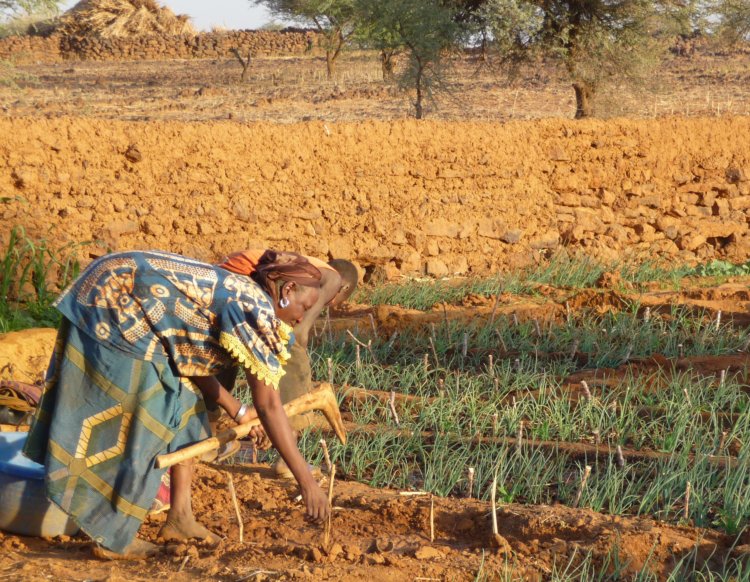
Stefan: "Both ENDS has followed the international negotiations within the UNCCD since the first COP, in 1997. Together with local civil society organisations that work with communities in dry and semi-dry areas, we want to ensure that better and more inclusive policies are implemented. Policies that stimulates sustainable, agroecological agriculture and pastoralism and that are based on what women farmers, farmers, nomads and herders in arid areas need in order to use the land sustainably. Many of them have been doing this for a long time, but national and international policy does not take these practices into account and financial flows often still go to large-scale projects. These are generally not well attuned to the local context and therefore not very effective."
Nathalie: "That's why at this 15th UNCCD COP we will use examples from our partners, among other things, to show that the sustainable methods they use really work well for soil health, the environment and the livelihood of local communities. They not only prevent land degradation, but also restore land that has already been degraded. We hope to convince policy makers and donors to create more financial and policy space for such practices.
The UNCCD-COP is sometimes called the little sister of the UNFCCC-COP. Is this a deserved nickname?
Nathalie: "I don't think it is exactly deserved, but it is true that the UNCCD has a bit of an image problem. Many people think that the treaty is mainly about desert areas, which is only partly true. The treaty is about the process of human action turning fertile land into barren land and the effects of drought on the health of soils and local communities. These are processes that affect the whole world, including the inhabitants of temperate ecosystems such as the Netherlands. Just look at the droughts in the Netherlands in 2018, 2019, 2020 and how dry it is in the Netherlands at this moment. That will only happen more often.
Are the agreements made in the UNCCD binding?
Stefan: The UNCCD is a UN treaty, which means that national governments commit themselves to convert decisions taken within that treaty into national policy. However, it remains 'soft law': if a country does not fulfill that promise, it will not be thrown out of the convention. You can regard the UNCCD as an opportunity to achieve good international cooperation and better national policy."
What is your main message at this particular COP?
Stefan: "Since desertification, land degradation and drought are most felt by marginalised groups such as women, small-scale farmers/farmers, nomads and herders and local communities, their interests must come first. If policies are made to combat desertification and restore degraded land, they must fit in with many different local contexts. What is needed? For example, to start with, farming communities need to be sure that they can use their land for years to come. That is often not the case now, because land use rights are not at all secured in many countries.
Nathalie: If you can be evicted from your land at any moment, that's not really a motivation to grow trees and farm sustainably. Then you mainly look at the short term. If, on the other hand, you are sure that you can use that land for years or maybe even decades, you'll make sure that your land is still fertile in the future and it is also worth planting trees for shade, fruit and soil fertility. Land use rights are therefore extremely important, which is why it is crucial that local communities are seen and heard in policy processes.
Are civil society organisations listened to at the COP?
Nathalie: "Civil society organisations have observer status within the UNCCD, just like international organisations such as the FAO and the Global Environmental Facility. International organisations and civil society organisations are sometimes given the opportunity to issue a statement. We have organised ourselves within the UNCCD, there is an NGO meeting every morning before the negotiations, and so we jointly prepare a statement for every item on the agenda."
Stefan: "Two 'Open Dialogue Sessions' are also always planned in the official COP programme, in which NGOs often show the work they do with local communities on sustainable land use and propose how policymakers and funds can support these initiatives and practices with better policies and financing. But whether they really listen, time will tell!"
When will you go home satisfied?
Stefan: "I will go home satisfied if we, as an NGO group, can continue the conversation with policy makers and funds about the importance of sustainable initiatives initiated by women, indigenous groups and local communities to combat desertification and land degradation. We must keep planting and feeding those seeds!
Nathalie: "And I will go home absolutely delighted when the value of agroecology and community-based initiatives is explicitly on the agenda during the next UNCCD-COP, number 16, which will take place in two years' time. This would mean that at a high level it is recognised that these kinds of initiatives can make an important contribution to the prevention and reduction of desertification and land degradation in the short and long term and therefore deserve full support, both politically and financially."
WHAT'S ON THE AGENDA FOR THE 15th COP?
- Drought: how countries can work together and exchange knowledge on how to deal better with drought, how to be better prepared and how to respond to drought
- Land rights and land use planning: how countries can work together and exchange knowledge on how to get land use planning in order
- Gender Action Plan: how countries can cooperate and exchange knowledge on how to better involve women in the implementation of the convention in national policy and financing
- Migration: how countries can work together and exchange knowledge to create better livability in rural areas, especially for young people, so that one of the drivers of international migration is reduced
- Finance: how to pay for improved policy action on desertification, land degradation and drought and supporting sustainable land use.
Meer informatie:
Both ENDS is also co-organiser of a couple of side events during the COP, take a look in the agenda
Read more about this subject
-
 Dossier /
Amplifying environmentally just practices
Because of the close relationship with their living environment, local communities often have the best ideas for the sustainable and equitable use and governance of land, water and forests. These environmentally just practices and processes successfully protect and restore ecosystems and address climate change. They are essential in the light of the multiple crises the world faces, but are in dire need of financial and policy support.
-
 Environmentally Just Practice /
Inclusive Land Governance
Both ENDS works with partners around the world to ensure that land is governed fairly and inclusively and managed sustainably with priority for the rights and interests of local communities.
-
 News / 5 October 2026
Rural Women's Assembly wins Right Livelihood Award
We are thrilled to share that our partner the Rural Women's Assembly (RWA) is one of this year's Right Livelihood Laureates! The award, often called the "Alternative Nobel Prize", honours RWA for bringing together more than 178,000 women farmers in eleven Southern African countries. Together, these women stand up for their land, their seeds and their right to make decisions about their own lives and bodies.
-
 Dossier /
Communities Regreen the Sahel
In various countries in the Sahel, vast tracts of land have been restored by the local population by nurturing what spontaneously springs from the soil and protecting the sprouts from cattle and hazards.
-
 News / 3 September 2026
Restoring Land, Restoring Hope: Both ENDS at UNCCD COP17 in Mongolia
From 17 to 28 August, governments gathered in Ulaanbaatar, Mongolia, for COP17 of the UN Convention to Combat Desertification (UNCCD). At stake was more than how the world responds to land degradation and drought. It was also a question of who gets to shape land restoration, whose knowledge counts, and where the money goes.
-
 News / 6 July 2026
Strengthening Women's Land Rights Across the Rio Conventions
From 29 June – 2 July 2026, Tamara Mohr, GAGGA coordinator at Both ENDS participated in the 4th convening of the Women's Land Rights Initiative (WLRI) in Nairobi, Kenya.Hosted by the Robert Bosch Stiftung, TMG Research and the Huairou Commission, the event brought together grassroots organisations, (inter)national NGOs, government institutions and donors from around the world.
-
Publication / 3 July 2026
-
 News / 2 July 2026
Land restoration can help mitigate and resolve conflict - but only if everyone has a seat at the table
Can restoring degraded land also help reduce conflict? According to experts from Niger, Ghana, the Netherlands and other regions, the answer is yes - but only when restoration is rooted in inclusive land governance, local ownership and social cohesion.
-
 Dossier /
Finance for agroecology
The lion's share of public budgets for climate, agriculture and development still goes to conventional agroindustrial projects that contribute to the current climate, food and biodiversity crises. Both ENDS and our partners are calling for a transition to agroecological practices that are people- and environment-friendly.
-
Publication / 18 June 2026
-
Publication / 12 May 2026
-
Publication / 14 April 2026
-
 News / 24 March 2026
Statement: Invest in local leadership for tropical forest management and local economies
IUCN-NL, Both ENDS, and 16 other Dutch and international civil society organizations (CSOs), networks, and expert groups are calling on the Dutch government to invest more strongly in locally led forest management and forest-based economies. This should be done within the framework of Dutch international cooperation and its associated policy instruments.
-
 News / 27 February 2026
Both ENDS strengthens the resilience of female environmental defenders worldwide thanks to multi-year contribution from the Postcode Lottery
In recent years, Both ENDS has received an additional contribution of €875,000 from the Postcode Lottery for the Autonomy & Resilience Fund (2022–2025), implemented in collaboration with the Global Alliance for Green and Gender Action (GAGGA). This support was essential because female environmental rights defenders around the world are increasingly facing climate change, repression and shrinking civil space. With this contribution, Both ENDS supports female activists and their communities with flexible, trust-based funding, enabling them to develop their own solutions to urgent environmental and climate problems.
-
Publication / 27 November 2025
-
 News / 27 November 2025
Communities and International Consortium Present Community-Led Plan for Nature-Based Adaptation to Sea-Level Rise in Coastal Bangladesh
Local communities in the southwestern coastal region of Bangladesh—together with an international consortium including Uttaran, CEGIS, and Both ENDS—have presented a community-led plan to confront climate change and accelerating sea-level rise through nature-based adaptation. The People’s Plan for Upscaling Ecosystem-Based Adaptation outlines a scalable strategy rooted in local ownership and generations of lived experience. At its centre is Community-Based Tidal River Management (CBTRM), a proven approach that reduces waterlogging, raises land elevation, and restores ecological balance by working with natural tidal and sediment dynamics.
-
 Dossier /
Wetlands without Borders
With our Wetlands without Borders program, we work towards environmentally sustainable and socially responsible governance of the wetlands system of the La Plata Basin in South America.
-
 News / 5 November 2025
Interview: Both ENDS at COP30 for Climate Justice and Systemic Change
Both ENDS is present at COP30 to advocate for genuine access to climate finance for locally led, gender-just climate solutions and the mechanisms that facilitate this, including those for farmer-led restoration. Furthermore, the organisation participates to ensure the crucial connection between the climate negotiations and the trade and investment frameworks that shape them.
Learn more about the Both ENDS team at COP30 below, and find all the activities and side-events in which Both ENDS will participate.
-
 News / 5 November 2025
Overview of Both ENDS events at COP30 in Belem, Brazil
Both ENDS is present at COP30 to advocate for genuine access to climate finance for locally led, gender-just climate solutions, and for the mechanisms that make these possible, including those supporting farmer-led restoration. The organisation also engages to highlight the crucial connection between climate negotiations and the trade and investment frameworks that shape them.
Below is an overview of the Both ENDS team at COP30 and a detailed look at the activities and side-events in which Both ENDS will participate.
-
 News / 14 October 2025
Communities regreening the Sahel: strengthening resilience from the ground up
How can communities in the Sahel strengthen their food systems in the face of climate change and other shocks? Through the ARFSA Programme, Both ENDS and its partners SPONG (Burkina Faso), CRESA/INRAN (Niger) and IED Afrique (Senegal) are working together to show that locally led landscape restoration works.




