


How Agroecological Logbooks empower women farmers in Brazil
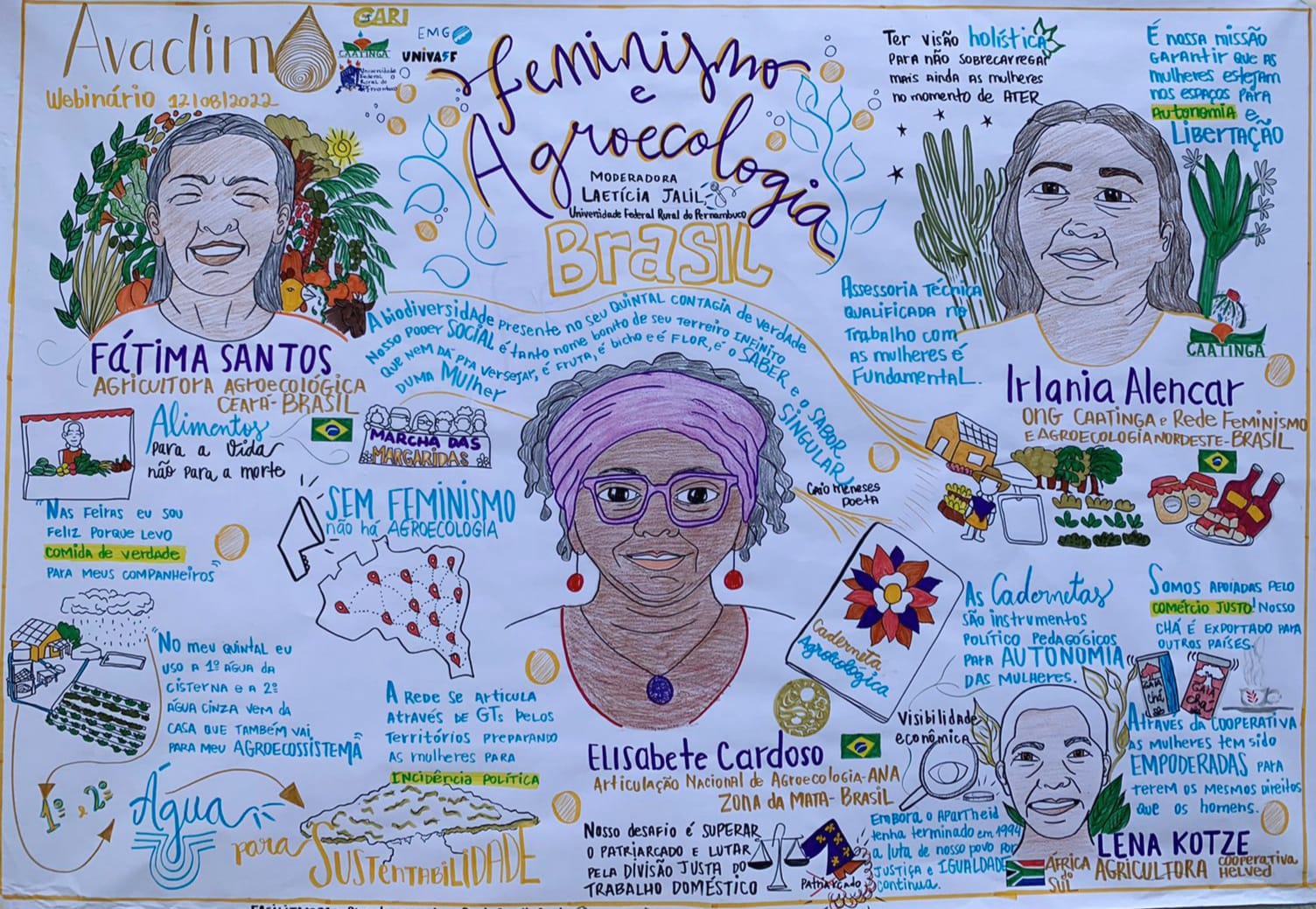
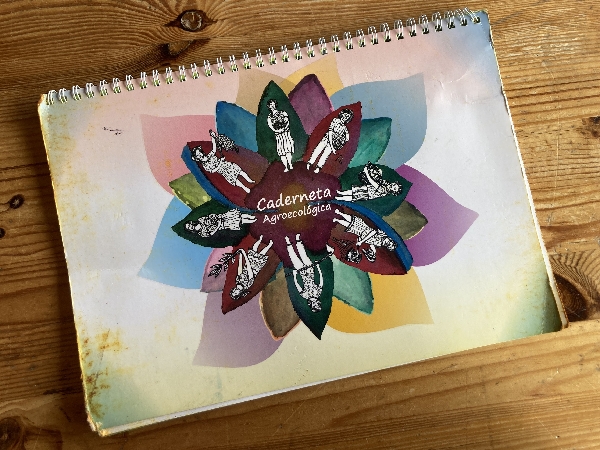
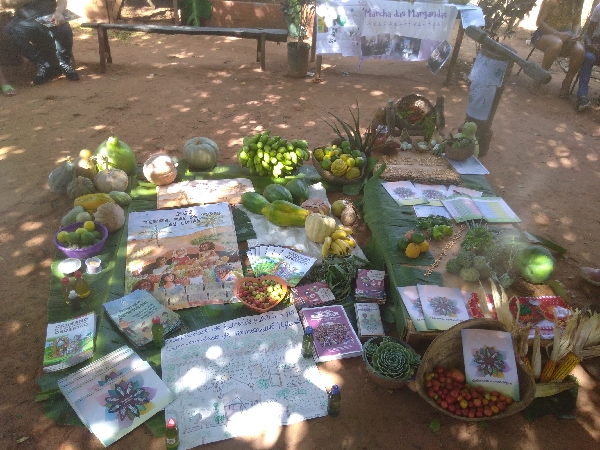
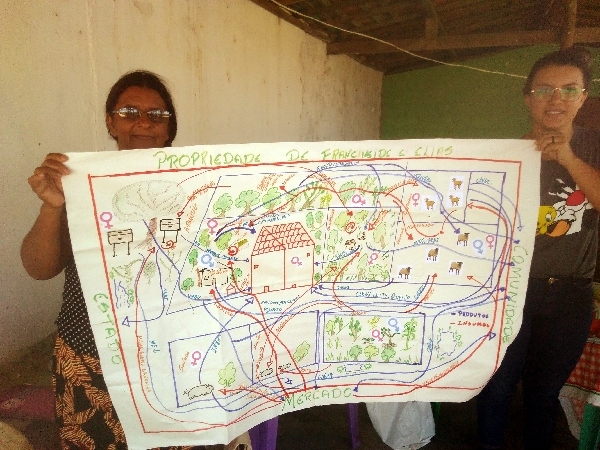
In the Jenipapo community, in the north-east region of the Caatinga Biome in Brazil, farmer Fátima Maria dos Santos runs her farm. Fátima is applying the principles of agroecology on her farm by having a cistern that collects rainwater, retaining native vegetation and developing an agroforestry system that comprises of native and fruit trees and crops and medical plants. Fátima is also one of the first farmers to be part of the 'Caderneta Agroecológica' or 'Agroecological Logbook' initiative, that stimulates women farmers to monitor their food production. This way, they get more insights about the value of production for the family, about monetary and non-monetary benefits and the preservation of soil health and biodiversity.
How does it work?
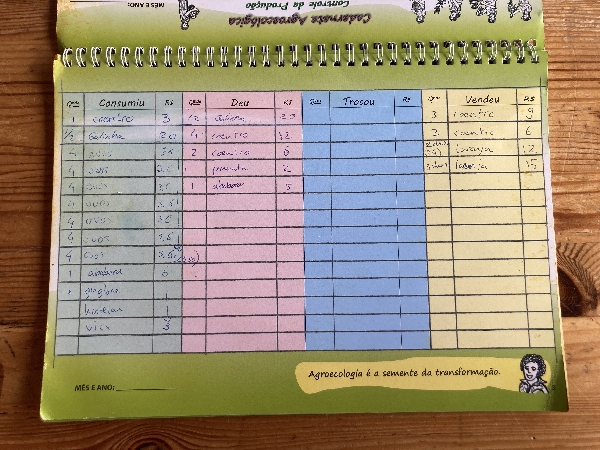
Women use their Agroecological Logbook to keep track of their yields: what they use themselves; what they give away; what they trade for other food, goods, services etc.; and what they sell in the market. At the end of the month, they calculate the fictional monetary value of these activities. This helps them and their families understand the relevance of their work, also compared to the rest of the monetary income of the family. To give an example: if vegetables are traded for cooking wood, there is no need to buy wood. The initiative also facilitates group discussions to encourage the exchange of knowledge and practices among women farmers. It raises awareness about the important role of women as food producers: it broadens the general view of monetary and non-monetary income and the contribution of women farmers to food and nutritional security. Moreover, the data and knowledge strengthen women farmers to engage with policy makers to improve policies that support agroecological food production.
Importance of having data
The importance of the logbooks for participating women farmers is evident: the logbook of Fátima and other women, for example, helped them in their discussions about seeds and reducing the risk of crop failure. These discussions led to the creation of a community seed bank, allowing farmers to conserve and share seeds for food production. This seed bank supports agrobiodiversity and helps the women to be more resilient to droughts and other climate change shocks.
Agroecological Logbooks have changed lives
Francineide Santos Dibrito, in rural Remanso, Bahia,, 3 months after starting to work with her Caderneta: "I couldn't believe it! So much money that I saved through my work!? And I haven't even counted all the fruits that my fruit trees give us.... You could say that I have earned more than a minimum salary per month. I never imagined this. I think these logbooks are very important."
Edneide Brito Nascimento in Pilão Arcado: "When my husband was unable to work and stayed at home for 3 months, he finally saw the importance of our garden and my investments in it are for the well-being of our family. Since then, he treats me with much more respect, and so do my children. All because of the work with the logbooks."
Both ENDS, Drynet and CAATINGA
The acricultural logbook project is supported by the working group Women of ANA (the National Agroecology Network) and the organisation CAATINGA. Both ENDS is working together with CAATINGA and the working group of ANA and supporting them in their fundraising efforts for the Caderneta Agroecológica initiative. Both ENDS and CAATINGA have been working together for more than 10 years in Drynet to advocate at the UN Convention to combat Desertification, Land Degradation and Drought for policies that support communities in drylands.
More information:
A short video about the Agricultural Logbooks (in Portuguese, but very comprehensible for those who do not understand Portuguese as well)
Read more about this subject
-
 Dossier /
Amplifying environmentally just practices
Because of the close relationship with their living environment, local communities often have the best ideas for the sustainable and equitable use and governance of land, water and forests. These environmentally just practices and processes successfully protect and restore ecosystems and address climate change. They are essential in the light of the multiple crises the world faces, but are in dire need of financial and policy support.
-
 News / 6 november 2026
Both ENDS and partners head to COP31 in Antalya, Türkiye
On Monday 9 November, world leaders, negotiators and civil society meet in Antalya, Türkiye for COP31, the UN climate conference that runs until 20 November. Both ENDS and our partners will be there, pushing for two things: climate finance that actually reaches women-led and community-based organisations, and an end to economic rules that block the move away from fossil fuels.
-
 Dossier /
Green Climate Fund: calling for local access to climate finance
Local organisations and groups must be given access to climate finance from the Green Climate Fund. They know exactly what is happening in their local context and what is required for climate adaptation.
-
 Blog / 6 november 2026
As the Green Climate Fund turns its hopes to the private sector, it must not forget the communities most in need
By Daan RobbenOver the past few months, I made two trips that capture both the work we do at Both ENDS and what is at stake in today’s debate on climate finance. While large international funds are struggling to deliver on locally led climate action, initiatives Both ENDS is part of, such as the PaPes programme in Senegal and the GAGGA alliance, are showing how it can be done. With the evidence of the funding mechanisms that work, we advocate at international spaces for change.
-
 Dossier /
Finance for agroecology
The lion's share of public budgets for climate, agriculture and development still goes to conventional agroindustrial projects that contribute to the current climate, food and biodiversity crises. Both ENDS and our partners are calling for a transition to agroecological practices that are people- and environment-friendly.
-
 Environmentally Just Practice /
Agroecology
Agroecology is a diverse set of agricultural practices, a field of science and a social movement. It aims to transform food systems towards greater ecological sustainability, social justice, and resilience. Both ENDS and CSO-partners around the world support farmers and pastoralists practising agroecology, both on the ground and in gathering political and financial support.
-
Publication / 6 november 2026
-
 News / 27 oktober 2026
Both ENDS at COP31: Locally led climate finance and ending investment rules that block climate action
At COP31, Both ENDS advocates for climate finance that reaches women-led and community-based organisations at the forefront of climate action, while challenging the economic rules that obstruct the transition away from fossil fuels. Together with partners in the Global Alliance for Green and Gender Action (GAGGA) and the PAPeS programme, we push for locally led adaptation, gender-just climate action and greater accountability for governments and companies.
We asked our colleagues Daan Robben and Fernando Hernandez why they are going to COP31, what messages they want to bring to negotiators, and what a positive outcome would look like.
-
 Dossier /
International trade and investment with respect for people and planet
The network of international trade and investment treaties is large and complex. The Netherlands alone has signed more than 70 bilateral investment treaties (BITs) and is party to the trade and investment agreements concluded by the EU, like the EU-Mercosur and EU-Indonesia trade deals.
-
 News / 5 oktober 2026
Rural Women's Assembly wins Right Livelihood Award
We are thrilled to share that our partner the Rural Women's Assembly (RWA) is one of this year's Right Livelihood Laureates! The award, often called the "Alternative Nobel Prize", honours RWA for bringing together more than 178,000 women farmers in eleven Southern African countries. Together, these women stand up for their land, their seeds and their right to make decisions about their own lives and bodies.
-
 Dossier /
Communities Regreen the Sahel
In various countries in the Sahel, vast tracts of land have been restored by the local population by nurturing what spontaneously springs from the soil and protecting the sprouts from cattle and hazards.
-
 News / 3 september 2026
Restoring Land, Restoring Hope: Both ENDS at UNCCD COP17 in Mongolia
From 17 to 28 August, governments gathered in Ulaanbaatar, Mongolia, for COP17 of the UN Convention to Combat Desertification (UNCCD). At stake was more than how the world responds to land degradation and drought. It was also a question of who gets to shape land restoration, whose knowledge counts, and where the money goes.
-
 News / 6 juli 2026
Strengthening Women's Land Rights Across the Rio Conventions
From 29 June – 2 July 2026, Tamara Mohr, GAGGA coordinator at Both ENDS participated in the 4th convening of the Women's Land Rights Initiative (WLRI) in Nairobi, Kenya.Hosted by the Robert Bosch Stiftung, TMG Research and the Huairou Commission, the event brought together grassroots organisations, (inter)national NGOs, government institutions and donors from around the world.
-
Publication / 3 juli 2026
-
 News / 2 juli 2026
Land restoration can help mitigate and resolve conflict - but only if everyone has a seat at the table
Can restoring degraded land also help reduce conflict? According to experts from Niger, Ghana, the Netherlands and other regions, the answer is yes - but only when restoration is rooted in inclusive land governance, local ownership and social cohesion.
-
Publication / 18 juni 2026
-
Publication / 12 mei 2026
-
 News / 27 februari 2026
Both ENDS strengthens the resilience of female environmental defenders worldwide thanks to multi-year contribution from the Postcode Lottery
In recent years, Both ENDS has received an additional contribution of €875,000 from the Postcode Lottery for the Autonomy & Resilience Fund (2022–2025), implemented in collaboration with the Global Alliance for Green and Gender Action (GAGGA). This support was essential because female environmental rights defenders around the world are increasingly facing climate change, repression and shrinking civil space. With this contribution, Both ENDS supports female activists and their communities with flexible, trust-based funding, enabling them to develop their own solutions to urgent environmental and climate problems.
-
 Dossier /
Seeking justice for the affected communities of Vale’s mining disasters in Mariana and Brumadinho
In 2015 and 2019, the Brazilian state of Minas Gerais experienced two severe mining tragedies in Mariana and Brumadinho, due to the same mining company: Vale. Since then, the affected communities have been seeking justice, via the criminal punishment of the responsible parties, and a fair compensation for the loss of their loved ones, their homes and their livelihoods. Both ENDS supports local CSOs by amplifying their quest for justice within an international audience and, more specifically, by raising awareness amongst Dutch investors in Vale about the high risks this company’s activities pose for people and the environment.
-
 Dossier /
Wetlands without Borders
With our Wetlands without Borders program, we work towards environmentally sustainable and socially responsible governance of the wetlands system of the La Plata Basin in South America.