




Counter summit in Brussels: civil society organisations call for sustainable and fair trade
On 17 and 18 July, representatives of the governments of Latin America, the Caribbean and the European Union meet in Brussels for the EU-CELAC summit. The European Commission and several EU Member States want to use this moment to accelerate the ratification of the trade and investment treaties between the EU and Mexico, the EU and Chile and the EU and the South American Mercosur countries*.
Different voice
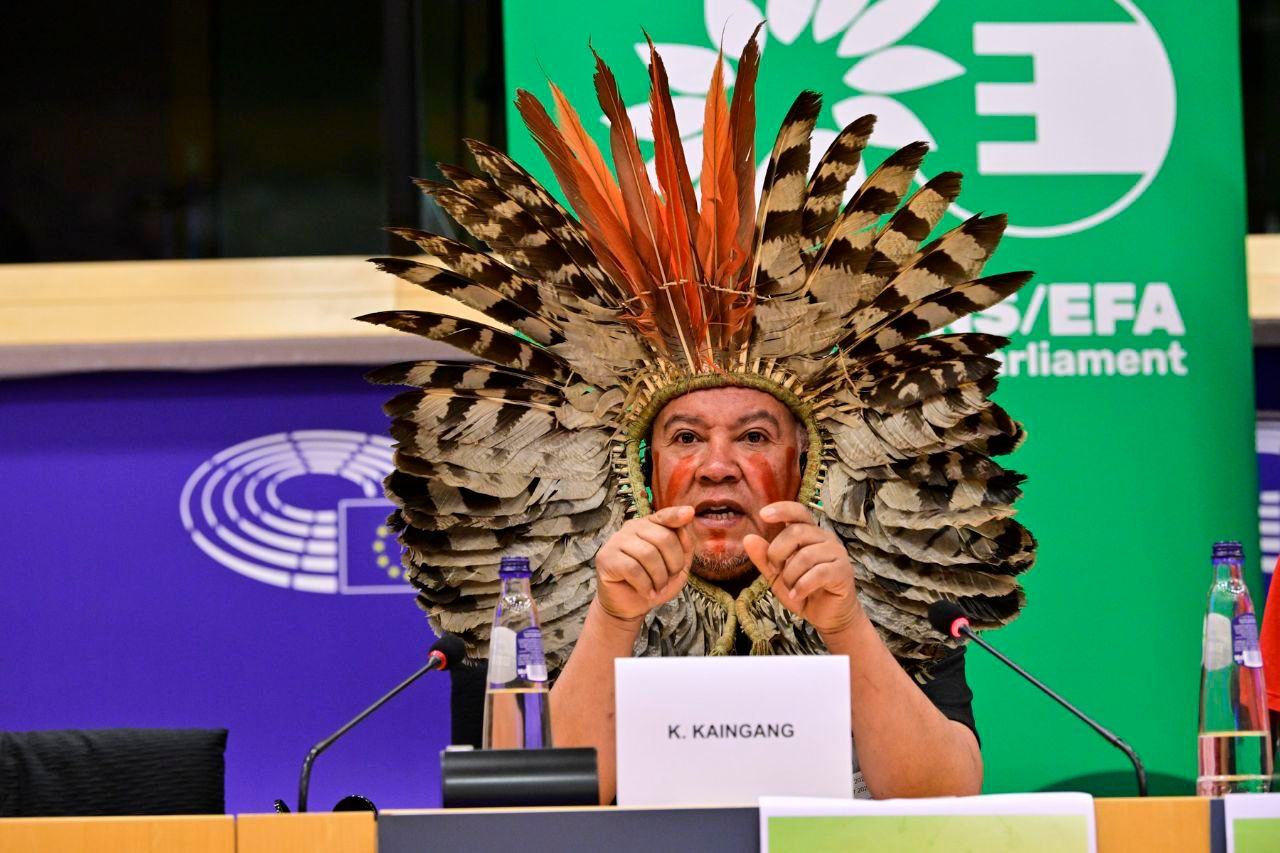
Such treaties represent 'business as usual': trade that is doing more harm than good to the planet and its inhabitants. They favor large companies at the expense of our planet, decent working conditions, jobs and animal welfare. They will also lead to more social inequality between Latin America and Europe.That is why dozens of civil society organisations from Latin America and Europe come together in Brussels on the 17th and 18th of July to make a strong counterpoint to the European Union and the Latin American states that are now promoting free trade - at the expense of people and nature.
More collaboration to tackle challenges
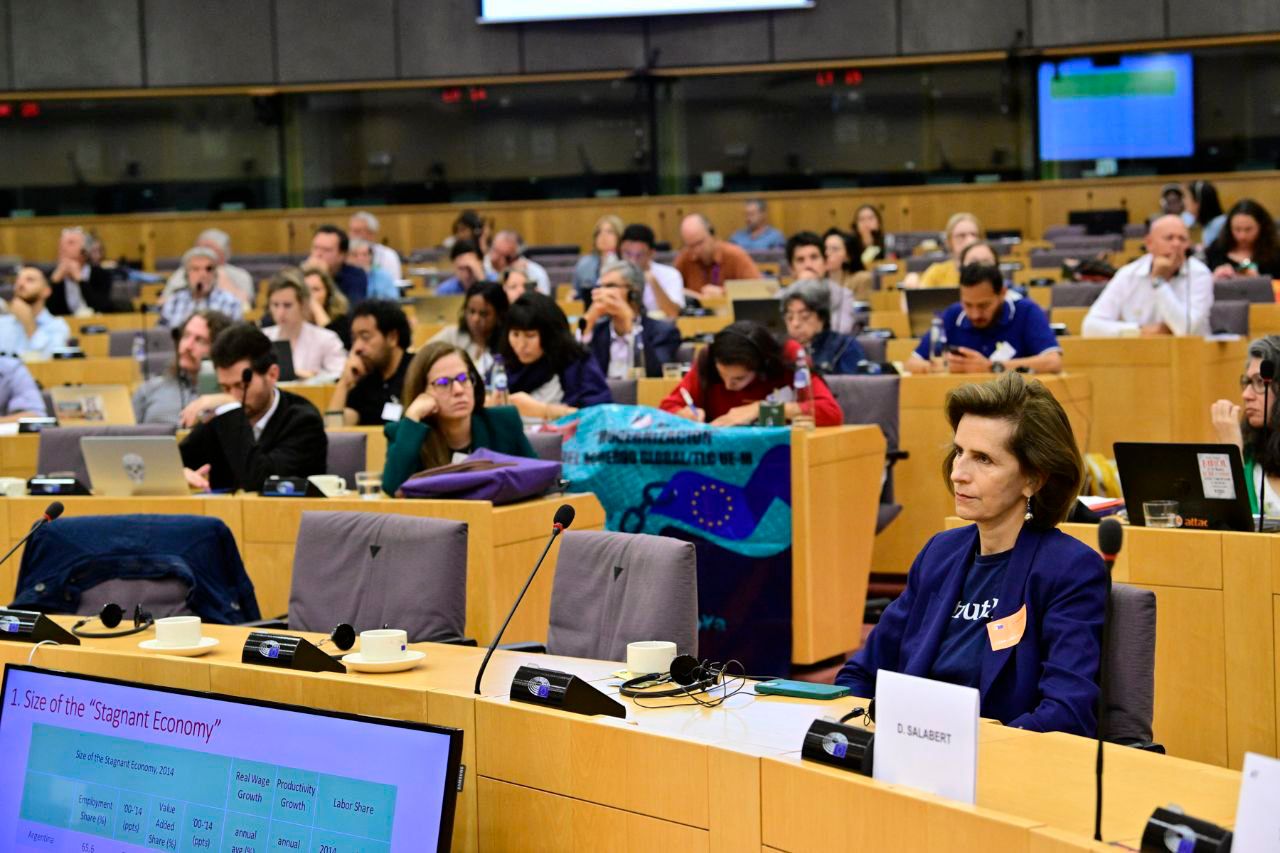
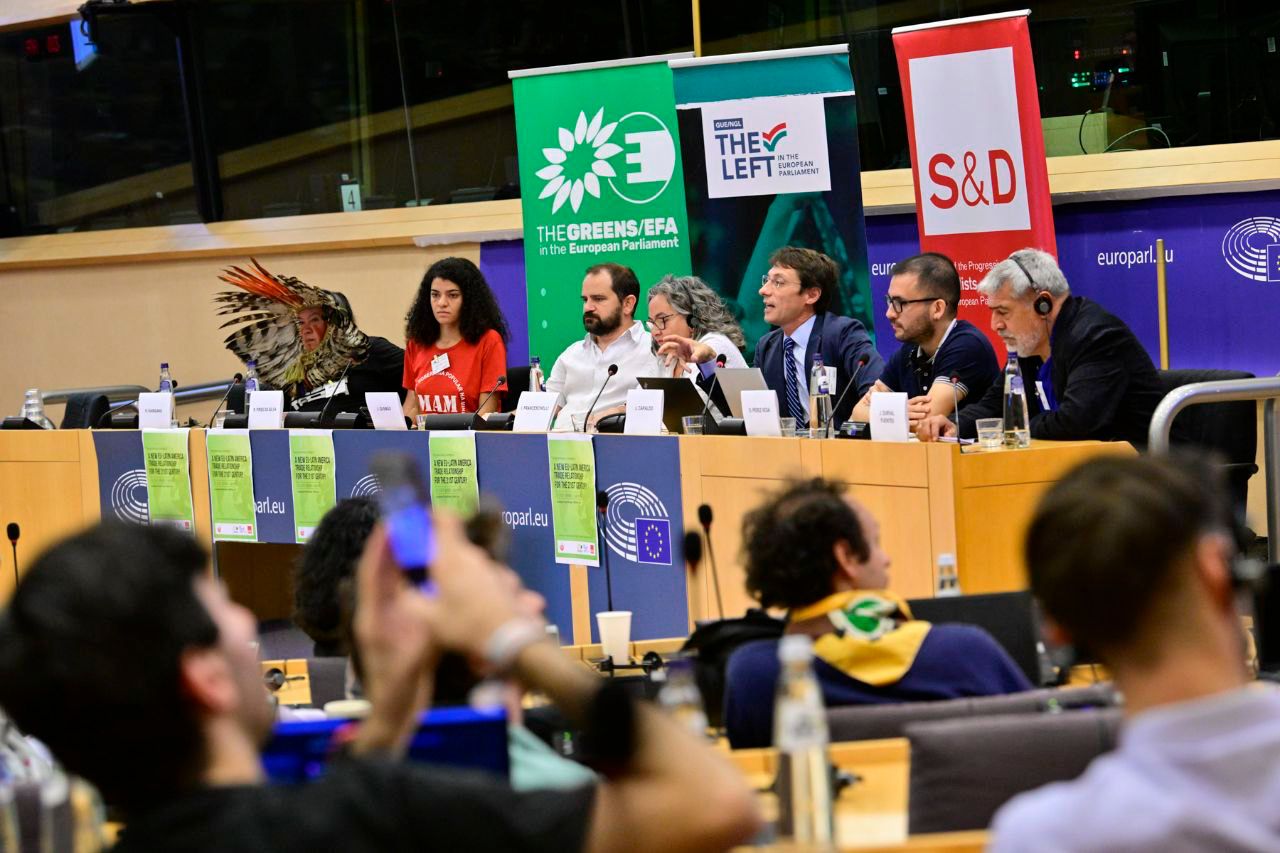
Instead of more free trade, more cooperation is needed between Latin America and Europe, the organisations believe. This is the only way to tackle the major challenges that lie ahead: the climate crisis, the loss of biodiversity, increasing poverty, unemployment and hunger, and geopolitical conflicts.Representatives of civil society organisations, social movements, farmers' organisations, trade unions, members of the European Parliament and parliamentarians ánd representatives of the governments Latin American countries will gather in the European Parliament for half a day to learn from twenty years of free trade agreements between the EU and Latin America and the Caribbean.
Sustainable trade relationships
In addition, the organisations also look to the future: how to do away with 'business as usual' and work on new fair and sustainable trade relationships that are aimed at the challenges of the 21st century. What is needed to build transatlantic relations that promote socially just and environmentally resilient societies, based on the principles of democracy, solidarity, protection of human and labor rights and respect for the planet's carrying capacity.
This meeting is supported, among others, by MEPs from theGreens/EFA, Left, and the Socialist & Democrats group: Manon Aubry. Saskia Bricmont,Christophe Clergeau, José Gusmão, Ana Miranda, Tilly Metz, HelmutScholz, Miguel Urban and Thomas Waitz.
*Mercosur countries: Argentina, Brazil, Paraguay and Uruguay. Venezuela is also an official member, but was suspended in 2016.
Read more about this subject
-
 Dossier /
Trade agreements
International trade agreements often have far-reaching consequences not only for the economy of a country, but also for people and the environment. It is primarily the most vulnerable groups who suffer most from these agreements.
-
 News / 5 november 2025
Another ISDS claim hits the Netherlands: Petrogas sues over solidarity contribution and royalty regulations
SOMO and Both ENDS strongly condemn the newly revealed investor-state dispute settlement (ISDS) case filed by Petrogas, an Omani oil and gas company operating two shallow-water gas fields in the Dutch North Sea, against the Netherlands under the Netherlands-Oman bilateral investment treaty (BIT).
-
Publication / 16 oktober 2025
-
Publication / 16 oktober 2025
-
 Dossier /
International trade and investment with respect for people and planet
The network of international trade and investment treaties is large and complex. The Netherlands alone has signed more than 70 bilateral investment treaties (BITs) and is party to the trade and investment agreements concluded by the EU, like the EU-Mercosur and EU-Indonesia trade deals.
-
 News / 23 september 2025
With the undemocratic splitting of the EU-Mercosur deal, Europe is missing the chance to lead on fair trade
Recently, many newspapers have written about Brussels’ rush to finalize the trade agreement between the EU and the South American Mercosur countries. According to the European Commission, national parliaments do not need to approve it because the trade part and the “political” part have been separated. This “splitting” means that the trade part can be approved as an EU-only decision by the European Council and the European Parliament, while national parliaments are sidelined and the political-cooperation part is postponed. Both ENDS and its partners are deeply concerned and are calling on the Dutch government to vote against this outdated agreement.
-
 News / 22 september 2025
EU-Indonesia Trade Deal Threatens Communities and Environment
On September 23th the European Union and Indonesia concluded their negotiations of the EU-Indonesia Comprehensive Economic Partnership Agreement (CEPA), a free trade agreement between the EU and Indonesia. Both ENDS condemns this agreement for favoring corporate interests over those of local communities and the environment.
-
 News / 11 september 2025
EU-Mercosur: Small GDP Gain, Big Question Marks for Farmers and Democracy
A recent report by Wageningen Economic Research (WER) on the economic consequences of the trade agreement between the EU and Mercosur confirms what civil society organizations, policymakers, and trade unions have been signaling for years: this agreement does not offer a balanced perspective for farmers and the environment. Instead, it increases power inequalities and shifts burdens onto (small-scale) farmers. Moreover, the deal risks reinforcing unsustainable practices that complicate the climate transition and addressing environmental challenges in both the EU and Mercosur countries.
-
 Dossier /
Towards a socially and environmentally just energy transition
To address the climate crisis we need to urgently transition away from fossil fuels towards clean, renewable energy. However, this transition is not only about changing energy sources. It requires an inclusive and fair process that tackles systemic inequalities and demanding consumption patterns, prioritizes environmental and social justice, and which does not repeat mistakes from the past.
-
 Blog / 17 juli 2025
A disaster for farmers: here and there
The trade agreement with South America is harmful to farmers, the climate, and biodiversity, on both sides of the Atlantic. It’s time to take this deal off the table once and for all, argues Fernando Hernandez, Senior Policy Officer for Trade and Investment at Both ENDS.
-
Publication / 1 juli 2025
-
 News / 5 juni 2025
Op-ed: New trading partners, but not on the same terms
Since President Trump's trade war and tariffs, international trade has once again been thrust into the spotlight. In Europe and the Netherlands, there are growing calls for new free trade agreements to be concluded as quickly as possible, as reflected in recent opinions in FD and de Volkskrant. But that is the wrong reflex, writes our colleague Marius Troost.
-
 Press release / 18 februari 2025
Trade deal fueling resource grab? 120+ groups from Europe and Indonesia sound the alarm
Brussels, 18 February 2025 - Over 120 civil society organizations and trade unions from Indonesia and Europe today call on the Indonesian government and the European Union to stop the negotiations for the Indonesia-EU free trade agreement – the Comprehensive Economic Partnership Agreement (CEPA).
-
 News / 22 januari 2025
 -
 News / 19 december 2024
Trading Away the Future: How the EU-Mercosur deal fails people and the planet - and what needs to be done
On December 6, the visit of European Commission President Ursula von der Leyen to the Mercosur Summit sealed the agreement on the final text of the EU-Mercosur Association Agreement. Both ENDS condemns this damaging agreement for undermining human rights, the environment, and democracy in Europe, and in Mercosur countries. Should the agreement be ratified as it stands, it will have devastating consequences for the environment, indigenous communities, family farming and small-scale farmers on both sides of the Atlantic.
-
Letter / 9 december 2024
People and the Planet Entebbe Declaration: Reclaiming investment frameworks for people and the planet
The time for change is now. Civil society demands international investment
frameworks that are aligned with economic justice, social and environmental
sustainability, and the needs of communities worldwide. -
 News / 6 december 2024
South American Forest Fires Highlight Effects of Delaying EU Deforestation Law
On the 4th of December, the European Parliament voted in majority for a delay of implementation of the EU Deforestation Regulation (EUDR). Earlier, the European Commission and the European Council already endorsed this proposal for a delay with one year. Both ENDS and partners are worried about this decision, as there is no time to waste in our global fight against deforestation, biodiversity loss and climate change.
-
 Dossier /
Investment treaties
Investment treaties must be inclusive, sustainable and fair. That means that they must not put the interests of companies before those of people and their living environment.
-
 News / 11 november 2024
Kenya Terminates Bilateral Investment Treaty with the Netherlands
The government of Kenya has officially terminated its bilateral investment treaty (BIT) with the Netherlands, marking a significant win for economic justice and environmental protection. Kenya’s decision reflects a growing global trend of rethinking outdated treaties that often prioritize corporate interests over public welfare. The Dutch Minister for Foreign Trade and Development recently confirmed that Kenya unilaterally ended the treaty in December 2023, rendering it inoperative from 11 June 2024. Kenya now joins South Africa, Tanzania, and Burkina Faso as the fourth African country to terminate its BIT with the Netherlands.
-
 News / 17 juli 2024
EU Exits Energy Charter Treaty (ECT): A Milestone for Climate Action
The European Union's decision to exit the Energy Charter Treaty (ECT) is a landmark victory for climate action. For years, the ECT's Investor-State Dispute Settlement (ISDS) mechanism has enabled fossil fuel companies to challenge climate policies, hindering progress towards sustainability.



