




Case Study: Women Advocating for Gender and Climate Justice in Burkina Faso
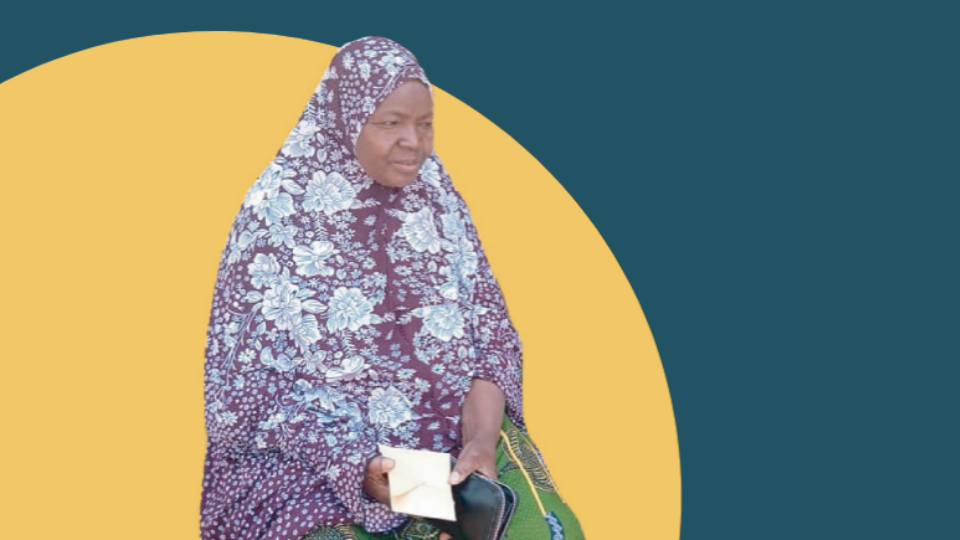
The Women Environmental Programme Burkina Faso (WEP BF or WEP) is leading the way in gender-just climate solutions, putting the power of advocacy directly into the hands of women farmers. “In Burkina Faso, women play a crucial role in food production and natural resource management, yet they continue to face systemic barriers to land ownership,” explains a WEP team member. “Despite legal provisions, deeply ingrained customary norms remain dominant, restricting women’s access to land as user rights only, which need to be mediated through male family members.” Without secure access to land, they face significant obstacles in sustaining their agricultural activities, improving local food security, and fully participating in their communities.
This case study is part of the FCDO project under the GAGGA programme.
WEP’s approach is not about speaking for these women but about ensuring they have the platform, tools, mutual support and confidence to speak for themselves. Through the Food Sovereignty and Women’s Leadership Project, and the Green Response Initiative dedicated to support communities to adapt to climate change, WEP works with women in Zinaire, Zorgho, and Koudougou who are engaged in agriculture and livestock rearing to define their own advocacy priorities, centering their lived experiences of land insecurity, climate change, and exclusion from decision-making. Women identified key challenges such as land grabbing, lack of legal documentation, and cultural norms that deny them land rights and are particularly severe for widows. Instead of being passive recipients of aid, they took action to become the driving force behind change. WEP provided training on leadership, land advocacy, and sustainable natural resource management, equipping women with the knowledge and skills to push for concrete policy reforms.
“Land and women are the wealth of humanity. By facilitating women’s access to land, we are preserving treasures for future generations,” declared a woman farmer from Zorgho. “We urge our customary and communal authorities to help us formalize long-term land agreements of 15 to 20 years, in line with Article 11 of Law 034-2009 on rural land ownership. This will enable us to fully participate in the agricultural sector, promote gender equality in land access, and increase our contributions to local economic growth.”
The women of Koudougou echoed this call. “Our participation in agriculture benefits our families and strengthens our communities,” stated a representative. “Without secure access to land, our work remains uncertain. We need legal recognition of our land use rights so that we can continue to contribute to food security and local economies.”
As the advocacy efforts gained momentum, women brought their demands directly to traditional chiefs, municipal representatives, and land officials. They called for clear legal rights, fair land distribution, and protection against land expropriation. Authorities acknowledged the urgency of the issue, committing to improving land access for women and strengthening governance structures to ensure their meaningful participation in decision-making. With this success at hand, the newly formed women’s cooperatives are keeping the momentum alive, continuing to organize, advocate, and influence local governance. What started as a series of trainings has the potential to evolve into a grassroots movement with lasting impact.
WEP’s work in Burkina Faso proves that climate solutions can go far beyond technical fixes and address structural inequalities and amplify women’s leadership. The climate crisis is not just about environmental shifts, but about ensuring that those most affected have the power to shape solutions. When women define their own advocacy priorities and successfully push for policy changes, they don’t just secure land for themselves. They pave the way for future generations, strengthening food sovereignty, economic and gender justice in the face of a changing climate.
This case study is part of the FCDO project under the GAGGA programme.
Read more about this subject
-
 Dossier /
Global Alliance for Green and Gender Action (GAGGA)
GAGGA rallies the collective power of the women's rights and environmental justice movements to realize a world where women can and do access their rights to water, food security, and a clean, healthy and safe environment.
-
 News / 27 February 2026
Both ENDS strengthens the resilience of female environmental defenders worldwide thanks to multi-year contribution from the Postcode Lottery
In recent years, Both ENDS has received an additional contribution of €875,000 from the Postcode Lottery for the Autonomy & Resilience Fund (2022–2025), implemented in collaboration with the Global Alliance for Green and Gender Action (GAGGA). This support was essential because female environmental rights defenders around the world are increasingly facing climate change, repression and shrinking civil space. With this contribution, Both ENDS supports female activists and their communities with flexible, trust-based funding, enabling them to develop their own solutions to urgent environmental and climate problems.
-
 News / 2 February 2026
Response to the D66-VVD-CDA coalition agreement
Coalition: Repair the damage and dare to go further
At Both ENDS, we see a number of cautious steps in the right direction in this coalition agreement. There is a slight emphasis on green issues, renewed attention to women's rights, recognition of the importance of civil society, and discussion of trade agreements with a focus on mutual interests. However, without structural change in how we trade, invest, and cooperate, fine words remain empty shells.
-
 Dossier /
Gas in Mozambique
In 2011 one of the world’s largest gas reserves was found in the coastal province of Cabo Delgado, in the north of Mozambique. A total of 35 billion dollars has been invested to extract the gas. Dozens of multinationals and financiers are involved in these rapid developments. It is very difficult for the people living in Cabo Delgado to exert influence on the plans and activities, while they experience the negative consequences. With the arrival of these companies, they are losing their land.
-
 News / 27 November 2025
Communities and International Consortium Present Community-Led Plan for Nature-Based Adaptation to Sea-Level Rise in Coastal Bangladesh
Local communities in the southwestern coastal region of Bangladesh—together with an international consortium including Uttaran, CEGIS, and Both ENDS—have presented a community-led plan to confront climate change and accelerating sea-level rise through nature-based adaptation. The People’s Plan for Upscaling Ecosystem-Based Adaptation outlines a scalable strategy rooted in local ownership and generations of lived experience. At its centre is Community-Based Tidal River Management (CBTRM), a proven approach that reduces waterlogging, raises land elevation, and restores ecological balance by working with natural tidal and sediment dynamics.
-
 Dossier /
Wetlands without Borders
With our Wetlands without Borders program, we work towards environmentally sustainable and socially responsible governance of the wetlands system of the La Plata Basin in South America.
-
 Environmentally Just Practice /
Non-Timber Forest Products (NTFPs)
About one in every six people, particularly women, directly rely on forests for their lives and livelihoods, especially for food. This shows how important non-timber forest products (NTFPs) and forests are to ensure community resilience. Not only as a source of food, water and income, but also because of their cultural and spiritual meaning.
-
 Dossier /
Communities Regreen the Sahel
In various countries in the Sahel, vast tracts of land have been restored by the local population by nurturing what spontaneously springs from the soil and protecting the sprouts from cattle and hazards.
-
 News / 5 November 2025
Interview: Both ENDS at COP30 for Climate Justice and Systemic Change
Both ENDS is present at COP30 to advocate for genuine access to climate finance for locally led, gender-just climate solutions and the mechanisms that facilitate this, including those for farmer-led restoration. Furthermore, the organisation participates to ensure the crucial connection between the climate negotiations and the trade and investment frameworks that shape them.
Learn more about the Both ENDS team at COP30 below, and find all the activities and side-events in which Both ENDS will participate.
-
 News / 5 November 2025
Overview of Both ENDS events at COP30 in Belem, Brazil
Both ENDS is present at COP30 to advocate for genuine access to climate finance for locally led, gender-just climate solutions, and for the mechanisms that make these possible, including those supporting farmer-led restoration. The organisation also engages to highlight the crucial connection between climate negotiations and the trade and investment frameworks that shape them.
Below is an overview of the Both ENDS team at COP30 and a detailed look at the activities and side-events in which Both ENDS will participate.
-
 News / 14 October 2025
Communities regreening the Sahel: strengthening resilience from the ground up
How can communities in the Sahel strengthen their food systems in the face of climate change and other shocks? Through the ARFSA Programme, Both ENDS and its partners SPONG (Burkina Faso), CRESA/INRAN (Niger) and IED Afrique (Senegal) are working together to show that locally led landscape restoration works. -
Publication / 9 October 2025
-
 Dossier /
International trade and investment with respect for people and planet
The network of international trade and investment treaties is large and complex. The Netherlands alone has signed more than 70 bilateral investment treaties (BITs) and is party to the trade and investment agreements concluded by the EU, like the EU-Mercosur and EU-Indonesia trade deals.
-
 Dossier /
Amplifying environmentally just practices
Because of the close relationship with their living environment, local communities often have the best ideas for the sustainable and equitable use and governance of land, water and forests. These environmentally just practices and processes successfully protect and restore ecosystems and address climate change. They are essential in the light of the multiple crises the world faces, but are in dire need of financial and policy support.
-
Publication / 2 October 2025
-
 News / 23 September 2025
With the undemocratic splitting of the EU-Mercosur deal, Europe is missing the chance to lead on fair trade
Recently, many newspapers have written about Brussels’ rush to finalize the trade agreement between the EU and the South American Mercosur countries. According to the European Commission, national parliaments do not need to approve it because the trade part and the “political” part have been separated. This “splitting” means that the trade part can be approved as an EU-only decision by the European Council and the European Parliament, while national parliaments are sidelined and the political-cooperation part is postponed. Both ENDS and its partners are deeply concerned and are calling on the Dutch government to vote against this outdated agreement.
-
 Dossier /
Soy: trade in deforestation
The rising demand for soy is having negative consequences for people and the environment in South America. Both ENDS reminds Dutch actors in the soy industry of their responsibilities and is working with partners on fair and sustainable alternatives.
-
 News / 9 September 2025
Simplification Must Not Mean Weakening: Why the EUDR and other Environmental Legislation Must Stay Strong
Both ENDS warns that the current debate on “simplification” of EU environmental law must not become an excuse to weaken or postpone urgently needed safeguards. In earlier contributions to the drafting of the EU Deforestation Regulation (EUDR), Both ENDS relayed the voices of local and Indigenous forest-dependent peoples, who consistently urged the EU to take responsibility for the massive deforestation linked to European imports. They underlined how this deforestation destroys biodiversity, undermines climate stability, and erodes their rights, livelihoods and cultures.
-
 Dossier /
Towards a socially and environmentally just energy transition
To address the climate crisis we need to urgently transition away from fossil fuels towards clean, renewable energy. However, this transition is not only about changing energy sources. It requires an inclusive and fair process that tackles systemic inequalities and demanding consumption patterns, prioritizes environmental and social justice, and which does not repeat mistakes from the past.
-
 News / 16 July 2025
Case Study: Fighting Environmental Transphobia and Social Fragmentation in Brazil
In the face of environmental transphobia, a form of discrimination where trans and gender-diverse communities are disproportionately impacted by environmental degradation,excluded from climate policies, and often met with stigma and exclusion by environmental justice movements, Grupo Orgulho, Liberdade e Dignidade (GOLD) has emerged as a bold and visionary force for change in Brazil. At the heart of this movement is Débora Sabará ,GOLD’s leader, a travesti activist who has fought tirelessly to place the perspectives andneeds of LGBTIQAPN+ (Lesbian, Gay, Bisexual, Trans, Intersex, Queer, Asexual, Pansexual, Nonbinary and other identities), Indigenous and Afro-Brazilian communities at the center of environmental justice conversations.


