


Analog Forestry: sustainable food production with a feminist perspective
In times of ecosystem degradation, deforestation and climate change, rural communities often struggle to make a living in a healthy and autonomous way. One of the solutions to counter their problems is Analog Forestry, a sustainable practice promoted by many of Both ENDS's partners. We spoke to Carolina Sorzano Lopez*, Analog Forestry trainer from Colombia for the International Analog Forestry Network (IAFN), and Luz Marina Valle*, a local Analog Forestry promotora in her community of El Jocote in Northern Nicaragua, to explain to us the advantages of Analog Forestry.
What is Analog Forestry and what are its advantages?
Carolina: It is a way of restoring forests. In conservation, normally you think only of conservation of nature, but in Analog Forestry we also take people and their economic well-being into account. An analog forest looks like a natural forest, but with useful species that provide food or income to the community.
Luz: An Analog Forest has many functions: restoration, but also production and climate change mitigation. Now that in Nicaragua there is little native forest left, due to deforestation and large monoculture plantations, this is extra important.
Carolina: Indeed, in many places soils are degraded by monoculture production. With Analog Forestry we can restore the soils which is essential to get healthy and resilient ecosystems that have a natural resistance to plagues, droughts and other threats. Diversification of crops means a farmer decreases risks and also needs less external input (like chemicals) to counter threats.
Luz: This is what now happens in my community. Due to drought, many of my neighbours haven't been able to harvest their grains yet and won't be able to pay back their credits they had to take to be able to sow in spring time. Whereas I have no such problems at my parcel, I can still harvest because of the great diversity of species I grow.
How did you start to work with Analog Forestry?
Carolina: I was working as a biologist in the environmental institutions of the Colombian government, but I wanted to focus more on serving local communities and their needs. Then, at a training in Bolivia I met a member of the IAFN. This turned out to be exactly what I was looking for.
Luz: Analog Forestry is part of the agroecological model I already applied to my parcel. So when we were invited in 2019 to join a training of IAFN in Costa Rica together with some colleagues of FEM I was happy to go. This was organised as part of the GAGGA programme. We left the training not only with a lot of theoretical knowledge, but also with a design for our own Analog Forest on our own pieces of land.
When can Analog Forestry be applied?
Carolina: It is adaptable to different situations. For example, big or small, from 5 or 6 hectares to less than 1: it is always possible, although in the small ones you have to adapt more and see which species are possible in such a small space. It also depends on the goal one has, for example is it only for feeding their own family or also bringing products to the market?
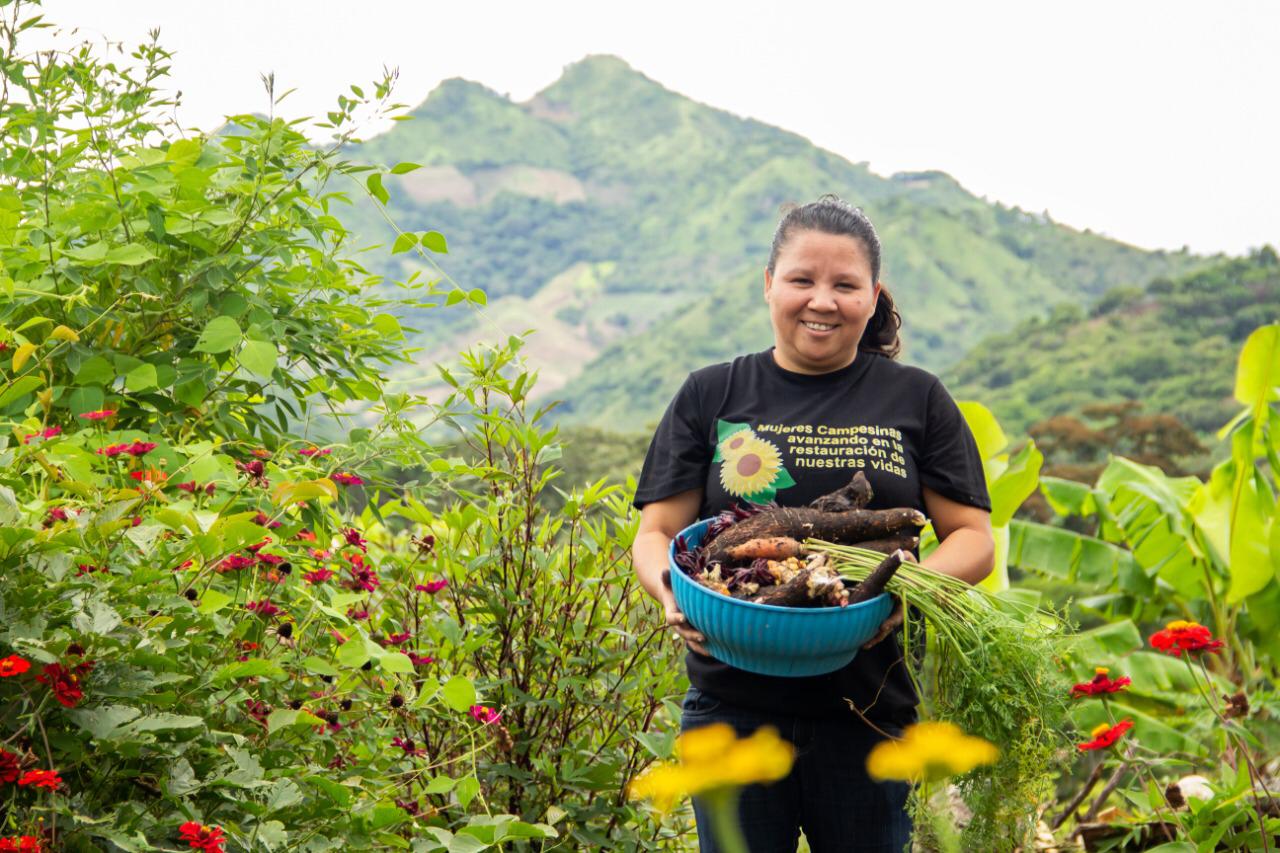
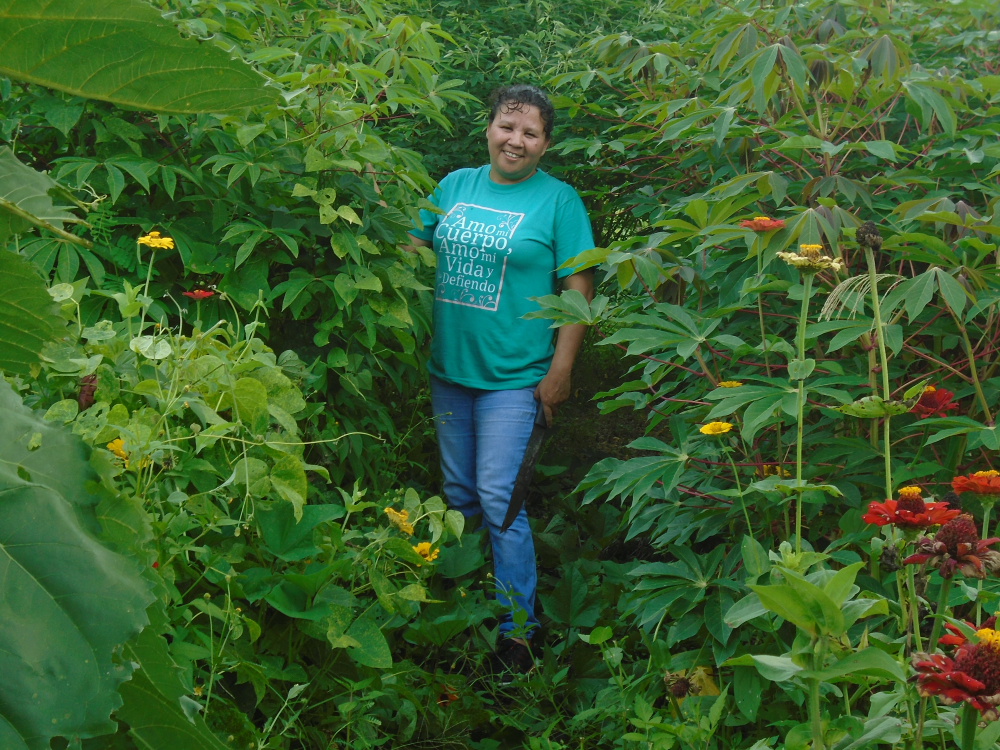
Luz: I have a parcel of 0,5 manzana (about 1/3 ha) on which I was already working within the agroecological model. Analog Forestry complements this. Two years after the training, I already can harvest cafe, banana, maracuja, sunflowers, different spices and vegetables, and next year I'll have avocado too.
But, as Carolina says: many people want to earn money too, so next year I'll also experiment with some cash crops: mais and beans, for example. I want to show my community members what's possible with Analog Forestry.
How does Analog Forestry improve access to good and healthy food for all?
Carolina: Analog Forestry contributes to food sovereignty: communities produce more different food products themselves and don't need to buy everything. Also they can produce more healthy food, have decisive power about what they sow and eat and how it has been produced.
Especially in the pandemic, we see how important this food sovereignty is. In the cities, it became more difficult to obtain food while rural communities could sustain themselves.
Luz: Indeed, Analog Forests provide us with healthy and diverse food, and more: medicines, wood, even water. But is also promotes the sharing of ancestral knowledge, it connects people and is a powerful tool against gender inequality. It is part of the feminist fight.
What is feminist about Analog Forestry?
Luz: In the conventional agrarian production system, women are no more than labour force, an object to be used. Analog Forestry for us is an opportunity to also get involved in the production of healthy food and to regain ownership over our own alimentation and health. It gives us more autonomy.
But it is not only technical. Analog Forestry – when it is being applied with a feminist perspective – can be part of the continuous feminist fight for land rights and the commons. Land is a common good that gives us power and that we need to live in dignity, so we need to fight for land titles, for access to and control over land. We have to negotiate in our families, which is possible for women through a process of empowerment.
What are the results so far of the trainings for the promotors and how will you advance in the future?
Carolina: The group of women I work with, four promotoras from Honduras, so far are sowing and learning on their parcels. But the most effect I see is in the women: they are more secure when they speak, they share more, and have a bigger capacity of analysing and solving problems. They are now learning how to work with their communities and pass on their knowledge.
Luz: Indeed, I want to be an example for other women and other families, show them that more sustainable production is possible. I want to use my forest as a demonstration site, a place to learn and exchange experiences. I want to motivate other women, share my knowledge. Promote food security and sovereignty, the use of medicinal plants, and restore water sources. I hope other families in my communities will join me and start their own Analog Forest.
Carolina: Analog Forestry is a way for communities to live in dignity. They will not be rich in economical terms, but rich in having a healthy environment (water, soils, vegetation), rich in well-being, physically and economically. It is a slow process but I'm sure this is the way to go forward!
*About Carolina and Luz
Carolina Sorzano Lopez is a biologist from Colombia. Before starting her work as a trainer in Analog Forestry for the International Analog Forestry Network (IAFN), she worked for the environmental institutions of the Colombian government. Luz Marina Valle is a feminist farmer, trained as an engineer in agricultural and cooperative management. She is a member of the Fundacion Entre Mujeres (FEM) and a local promotor of Analog Forestry in her community.
Read more about this subject
-
 Dossier /
Inclusive ways to sustainable and healthy food for all
All around the world small-scale farmers are using sustainable and inclusive methods to produce food. Working together with nature and each other, they provide their families and communities with sufficient and healthy food. But their production methods are under pressure from large-scale agriculture and the globally dominant system of industrial food production. Together with our partners, Both ENDS is trying to turn the tide in favour of sustainable, local practices that are mostly known as 'agro-ecological' or 'nature-inclusive'. Why are we focusing on these methods? Agro-ecological practices are climate-proof and inclusive and increase the opportunities for communities around the world to produce their food sustainably.
-
 Environmentally Just Practice /
Analog Forestry
Analog forestry is a transformative approach to the ecological restoration of degraded lands. Natural forests are used as guides to create ecologically sustainable landscapes, which support the social and economical needs of local communities.
-
 Dossier /
Global Alliance for Green and Gender Action (GAGGA)
GAGGA rallies the collective power of the women's rights and environmental justice movements to realize a world where women can and do access their rights to water, food security, and a clean, healthy and safe environment.
-
 Dossier /
Communities Regreen the Sahel
In various countries in the Sahel, vast tracts of land have been restored by the local population by nurturing what spontaneously springs from the soil and protecting the sprouts from cattle and hazards.
-
Publication / 3 juli 2026
-
 Dossier /
Finance for agroecology
The lion's share of public budgets for climate, agriculture and development still goes to conventional agroindustrial projects that contribute to the current climate, food and biodiversity crises. Both ENDS and our partners are calling for a transition to agroecological practices that are people- and environment-friendly.
-
Publication / 18 juni 2026
-
 News / 27 februari 2026
Both ENDS strengthens the resilience of female environmental defenders worldwide thanks to multi-year contribution from the Postcode Lottery
In recent years, Both ENDS has received an additional contribution of €875,000 from the Postcode Lottery for the Autonomy & Resilience Fund (2022–2025), implemented in collaboration with the Global Alliance for Green and Gender Action (GAGGA). This support was essential because female environmental rights defenders around the world are increasingly facing climate change, repression and shrinking civil space. With this contribution, Both ENDS supports female activists and their communities with flexible, trust-based funding, enabling them to develop their own solutions to urgent environmental and climate problems.
-
 Environmentally Just Practice /
A Negotiated Approach for Inclusive Water Governance
A Negotiated Approach envisages the meaningful and long-term participation of communities in all aspects of managing the water and other natural resources on which their lives depend. It seeks to achieve healthy ecosystems and equitable sharing of benefits among all stakeholders within a river basin. This inclusive way of working is an essential precondition for the Transformative Practices that are promoted by Both ENDS and partners.
-
 Dossier /
Wetlands without Borders
With our Wetlands without Borders program, we work towards environmentally sustainable and socially responsible governance of the wetlands system of the La Plata Basin in South America.
-
 Environmentally Just Practice /
Non-Timber Forest Products (NTFPs)
About one in every six people, particularly women, directly rely on forests for their lives and livelihoods, especially for food. This shows how important non-timber forest products (NTFPs) and forests are to ensure community resilience. Not only as a source of food, water and income, but also because of their cultural and spiritual meaning.
-
 News / 5 november 2025
Interview: Both ENDS at COP30 for Climate Justice and Systemic Change
Both ENDS is present at COP30 to advocate for genuine access to climate finance for locally led, gender-just climate solutions and the mechanisms that facilitate this, including those for farmer-led restoration. Furthermore, the organisation participates to ensure the crucial connection between the climate negotiations and the trade and investment frameworks that shape them.
Learn more about the Both ENDS team at COP30 below, and find all the activities and side-events in which Both ENDS will participate.
-
 News / 5 november 2025
Overview of Both ENDS events at COP30 in Belem, Brazil
Both ENDS is present at COP30 to advocate for genuine access to climate finance for locally led, gender-just climate solutions, and for the mechanisms that make these possible, including those supporting farmer-led restoration. The organisation also engages to highlight the crucial connection between climate negotiations and the trade and investment frameworks that shape them.
Below is an overview of the Both ENDS team at COP30 and a detailed look at the activities and side-events in which Both ENDS will participate.
-
Publication / 9 oktober 2025
-
 Dossier /
International trade and investment with respect for people and planet
The network of international trade and investment treaties is large and complex. The Netherlands alone has signed more than 70 bilateral investment treaties (BITs) and is party to the trade and investment agreements concluded by the EU, like the EU-Mercosur and EU-Indonesia trade deals.
-
 Dossier /
Amplifying environmentally just practices
Because of the close relationship with their living environment, local communities often have the best ideas for the sustainable and equitable use and governance of land, water and forests. These environmentally just practices and processes successfully protect and restore ecosystems and address climate change. They are essential in the light of the multiple crises the world faces, but are in dire need of financial and policy support.
-
 News / 6 oktober 2025
From Entebbe to Accra: civil society is rewriting the rules of investment
By Fernando Hernández Espino and Bart-Jaap Verbeek
Almost a year after African civil society gathered in Uganda to adopt the Entebbe Declaration, the call to transform international investment governance continues to gain strength. From the 6th to the 9th of October, over 50 civil society organisations from across West Africa, including from Ghana, Senegal, Nigeria, Côte d’Ivoire, Cameroon, Gambia, Sierra Leone, as well as from Kenya and Latin America, are convening in Accra to deepen and operationalise the Declaration’s vision.
-
 News / 16 juli 2025
Case Study: Women Advocating for Gender and Climate Justice in Burkina Faso
The Women Environmental Programme Burkina Faso (WEP BF or WEP) is leading the way in gender-just climate solutions, putting the power of advocacy directly into the hands of women farmers. “In Burkina Faso, women play a crucial role in food production and natural resource management, yet they continue to face systemic barriers to land ownership,” explains a WEP team member. “Despite legal provisions, deeply ingrained customary norms remain dominant, restricting women’s access to land as user rights only, which need to be mediated through male family members.” Without secure access to land, they face significant obstacles in sustaining their agricultural activities, improving local food security, and fully participating in their communities.
-
 News / 16 juli 2025
Case Study: Fighting Environmental Transphobia and Social Fragmentation in Brazil
In the face of environmental transphobia, a form of discrimination where trans and gender-diverse communities are disproportionately impacted by environmental degradation,excluded from climate policies, and often met with stigma and exclusion by environmental justice movements, Grupo Orgulho, Liberdade e Dignidade (GOLD) has emerged as a bold and visionary force for change in Brazil. At the heart of this movement is Débora Sabará ,GOLD’s leader, a travesti activist who has fought tirelessly to place the perspectives andneeds of LGBTIQAPN+ (Lesbian, Gay, Bisexual, Trans, Intersex, Queer, Asexual, Pansexual, Nonbinary and other identities), Indigenous and Afro-Brazilian communities at the center of environmental justice conversations.
-
 News / 16 juli 2025
Case Study: Community Paralegals Defending Land Rights from Extractive Industries and Land Grabs in Mozambique
Across Mozambique, land represents more than just territory. It is the cornerstone of livelihoods, culture, and autonomy for many communities. When companies arrive, claiming large portions for mining, oil exploration or agribusiness, residents face significant challenges in asserting their rights. Mozambique’s Land Law (1997) grants communities user rights, ensuring they can occupy and use land for subsistence and cultural purposes.



