




New faces are needed for a different future
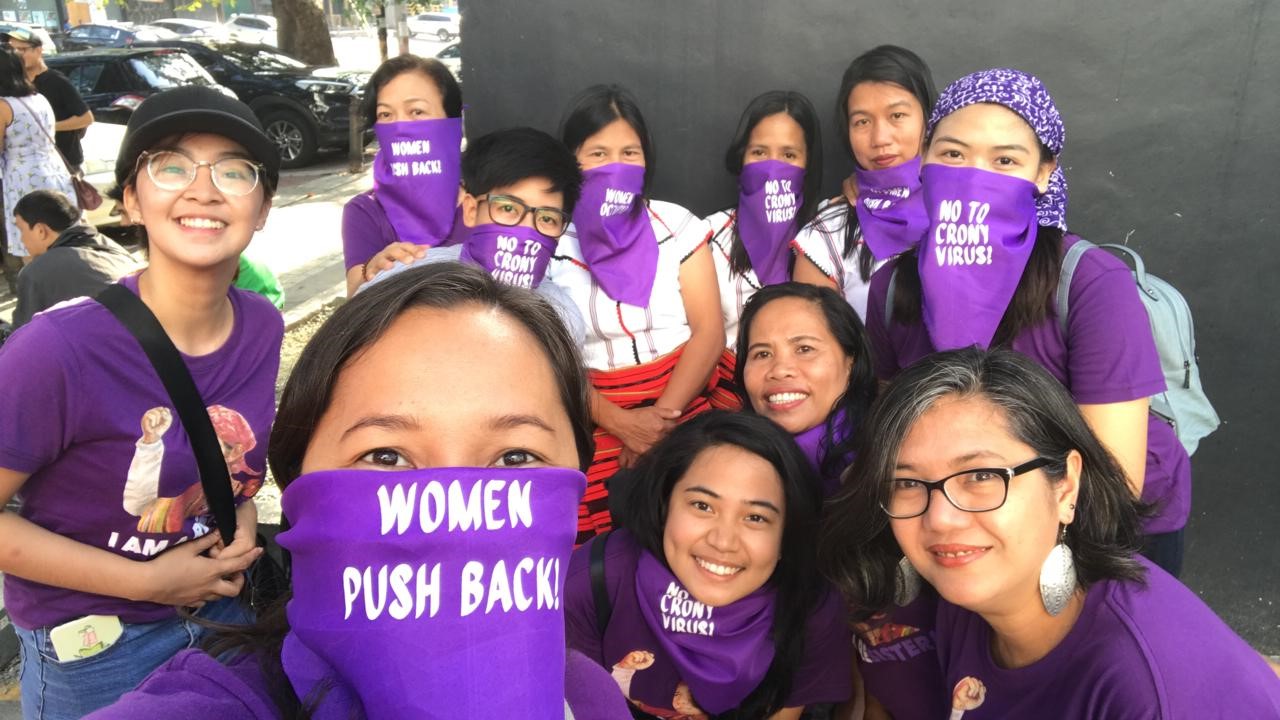
In this time of crisis-driven reflection we can read telling analyses of past and present on all sides which are being translated into agendas for action. Many of the analyses address issues like inequality, climate, the financial sector, health care, education and women’s rights. They talk about ‘what’ and much less about ‘who’ or ‘how’.But a different future can only be built together with everyone, young and old, men and women. This future will not simply happen to us; we ourselves have a hand in it. It is time for new faces around the table, with new voices. It is time for a new future.
In the Netherlands, it is clear that there are few new voices to be heard. The national crisis team we see as normal citizens is made up only of men. Now and again, we hear the opinion of a white woman, usually talking about background details. And the great majority of the people we get to see are over 45.
That can and must change. Giving other people an influence on our future will give us a different future. If we allow the same ideas and thoughts that brought us to where we are now to shape our future, we will end up in the same place. At Both ENDS we have been working for many years to get fresh faces, people who can offer new ideas, around the decision-making table.
Since the beginning of the twentieth century, we have seen a rapid growth in local networks which, parallel to the process of globalisation, have grown into worldwide movements. The women’s movement, trade unions and the anti-racism movement have all been in existence for more than century. In response to globalisation, the climate movement, the tax justice movement, Voedsel Anders and transition cities have all grown to maturity.
All of these movements are a combination of protest and concrete action. Proposals for the future are inspired by successful experiences at local level – food forests, greening of the Sahel, sustainable energy cooperatives, and public budgeting processes. Besides great diversity and active members, they have self-created funding mechanisms. So far, our political leaders and the often male directors of banks and corporations only pay lip service to this widely supported call for change. They remain selectively deaf and ignore the very feasible trade perspectives that these movements and their funding mechanisms offer to move us closer to a fair and sustainable world.
If we want a more just and sustainable future, we have to take a different course. Together with all those movements that have one foot in local action and the other in the wider world. Let us make policy and investment decisions together. After all, if we keep doing what we have always done, we will get what we always got. So, in Loesje’s words: 'Make the world better. Start now!'.
Read more about this subject
-
 Blog / 20 mei 2020
'Comfortably staying home with the family': three women in Latin American villages about the Covid-19 crisis
"The Covid-19 crisis is affecting everyone, but in different ways. In some countries, people are feeling the consequences less than in others, in cities the problems are completely different to in the countryside, and men are suffering from the restrictions totally differently to women. Some of the organisations that we work with in Latin America talked to rural women about the effects of the crisis on their everyday lives and what they are doing to keep their heads above water. Below is a small selection from these conversations (freely translated from Spanish) to give some idea of the situation women in remote areas are finding themselves in, of the enormous solidarity they are experiencing and of the solutions, which largely lie in stimulating local food production." - Danielle Hirsch
-
Letter / 26 juni 2020
Letter to governments over wave of Covid-19 claims in 'corporate courts'
Countries could be facing a wave of cases from transnational corporations suing governments over actions taken to respond to the Covid pandemic using a system known as investor-state dispute settlement, or ISDS. 630 organisations from across the world, representing hundreds of millions of people, are calling on governments in an open letter to urgently take action to shut down this threat.
-
 News / 26 juni 2020
630 civil society groups sound alarm over wave of Covid-19 claims in 'corporate courts'
Countries could be facing a wave of cases from transnational corporations suing governments over actions taken to respond to the Covid pandemic using a system known as investor-state dispute settlement, or ISDS. Cases could arise from actions that many governments have taken to save lives, stem the pandemic, protect jobs, counter economic disaster and ensure peoples' basic needs are met. Threats of cases have already been made in Peru over the suspension of charging on toll roads, and law firms are actively advising corporations of the options open to them. 630 organisations from across the world, representing hundreds of millions of people, are calling on governments in an open letter to urgently take action to shut down this threat. The letter below is published today.
-
 News / 19 mei 2020
Effective strategy to tackle COVID-19 calls for a global reset
On Monday 11 May, at the government's request, the Advisory Council on International Affairs (AIV) published an emergency advisory report on how the Netherlands can make an effective contribution to the worldwide fight against the Corona virus. Together with companies, scientists and environmental, human rights and development organisations, Both ENDS is today presenting a response to this report, in which we make a number of suggestions for investing in countries and people with insufficient resources to tackle the crisis effectively.
-
 External link / 19 oktober 2020
Alarm over possible wave COVID19 corporate court cases via ISDS
Countries might face a wave of cases from transnational corporations suing governments over actions taken to respond to the Covid pandemic using a system known as investor-state dispute settlement, or ISDS. In June 2020, 630 organisations already called on governments to urgently take action to shut down this threat. With this video we invigorate this message, as the threat, unfortunately, has not decreased.
-
 Blog / 30 april 2020
Discovery of gas in Mozambique: blessing or curse?
COVID-19is placing our economy under a magnifying glass. Now that a large part of global trade has come to a standstill, the tension between international economic activity and local well-being is becoming more visible. That is very clear in northern Mozambique, where one of the world’s largest gas fields was discovered in 2011. Dutch companies are investing in the processing and transport of the gas.
-
 Blog / 28 mei 2020
South American organisations are pushing back their boundaries
By Eva SchmitzThe Rio de la Plata Basin in South America extends across Argentina, Bolivia, Brazil, Paraguay and Uruguay. The livelihoods of the millions of people who live there – city-dwellers, small farmers and fishers, and indigenous peoples – are under pressure from soya cultivation, mining and logging, and by the construction of dams and ports. The COVID-19 crisis is making the situation even worse.
-
 Blog / 16 juni 2020
The political and industrial elites in Indonesia grasp their opportunity
In September 2019, the streets of Jakarta were filled with angry demonstrators protesting against the Omnibus Employment Law. The law will ease the rules for mining, make it much more difficult to hold companies liable for criminal acts and severely restrict the power of the national anti-corruption committee. At the moment, such protests are completely impossible in Indonesia because of the COVID-19 crisis and the associated lockdown measures. And Indonesian people already had few other means of exerting influence on decision-making and legislative processes.
-
 Blog / 13 mei 2020
You can’t eat gold, copper and gas
You can't eat gold, copper and gas
"The virus is spreading quicker than the information" – that was the first we heard in the Netherlands about COVID-19 in many African countries and the measures they were taking to tackle it. While states of emergency were announced, borders were closed and we saw image after image of violent police and army responses, many people outside the big cities did not know that what was going on. When the situation became clearer, serious concerns arose about the consequences of the measures that had been taken: the informal economy coming to a standstill, food shortages and internal migration flows.
-
 Blog / 13 april 2020
Invest International – a golden opportunity to green our trade relations
Since his previous government, prime minister Mark Rutte has wanted to create a green legacy with Invest-NL and Invest International, two new financial organisations. With the advent of the COVID-19 crisis, these organisations are more important than ever. Aiming to stimulate investment in sustainable and social projects, they will operate at a distance from the government so that they can act quickly and efficiently. With an initial budget of 2.5 billion euros, they will give financial support to companies active in sectors that the market avoids and which are at the heart of the transition. At Both ENDS, we see that as an essential step in closing the door for good on our old polluting lifestyle and putting sustainability at the centre of developments in the energy sector, in the organisation of our transport and mobility system, in how we produce our food and in the design of our cities.
-
 Blog / 20 april 2020
Call to Minister Kaag: do not waste time and help poor countries through local organisations
The world is turned upside down in this pandemic. Ordinary life is disrupted on our end. Many people suffer from the ‘polder lockdown’, although fortunately we have enough resilience and safety nets to meet our most urgent needs. Unfortunately, outside the Netherlands this all too often lacking. Especially in countries where public health structures are weak and where people are in a total lockdown. Because local communities that are shackled today may be hungry tomorrow. And aid and money does not naturally flow to the most vulnerable citizens there. So extra financial support is urgent.
-
 Blog / 15 april 2020
Now is the time! Investing in a socially just and sustainable society
After Dutch Minister of Finance Wopke Hoekstra had brought the fury of the Southern European countries down on his head on 26 March by blocking the European emergency fund, the Dutch were suddenly 'small-minded and selfish‘ (Parool) and we should ‘go on holiday somewhere else‘ (RTL News). The tone was set. The difficulties encountered in making agreements on support at European level contrast sharply with the speed with which the welcome support measures for employers, entrepreneurs and companies had been announced in the Netherlands two weeks earlier. We have learned nothing from our own past, while everyone benefits from greater priority for solidarity.
-
 Blog / 14 april 2020
Stop WTO talks until everyone can take full part in them again
The World Trade Organization (WTO) is often seen as an institution in crisis, powerless and no longer relevant, and especially after US president Donald Trump decided in 2019 to pull the plug on one of the WTO’s most important bodies (the one dealing with trade disputes). Now, more than 150 civil society organisations, networks and interest groups from around the world have signed an urgent letter to WTO Director General Roberto Azevedo, because they are seriously concerned about the state of affairs within the organization.
-
 Blog / 5 mei 2020
Freedom
Today the Netherlands is celebrating freedom. Our freedom goes further than living in peace. We have the freedom to discuss policy to our hearts’ content on, for example, ending the lockdown on television, in the press and on social media. We can do that freely because we know that our rights to freedom of expression are well protected. But how different that is in countries where authoritarian leaders are grasping the crisis as an excuse to throw these rights out with the trash and rule with an iron hand.
-
 News / 19 mei 2020
Women from the Niger Delta demand Shell to end pollution of air and water
Communities in the Niger Delta have been affected by air and water pollution due to Shell's activities for decades. This year, at Royal Dutch Shell's annual meeting, Kebetkache Women's Resource and Development Centre held Shell accountable for the consequences of their activities. Clean-up of oil spillages and ending gas flaring is becoming even more urgent in the fight against COVID-19, in which clean water is crucial to prevent the spread of the virus.
-
 External link / 20 juli 2021
Solidarity in the face of a global pandemic (Annual Report 2020)
Both ENDS collaborates with civil society organisations (CSOs) worldwide. Building strong, trusting relationships with our partners around the world is absolutely crucial to realising our vision. So when the COVID-19 pandemic hit, we immediately responded by reaching out to partners to show our solidarity and to ask them about their challenges and needs.
-
 News / 11 december 2020
Both ENDS presents new strategy towards 2025
Both ENDS has a new 5-year strategy. It is set up along three strategic pathways that together lay the foundation for our vision to become reality: 1) An empowered and influential civil society; 2) Systemic change in public institutions that prioritizes people and planet; and 3) Transformative practices are the norm.
-
 Blog / 7 juli 2020
Blind spot for Northeast Brazil makes local organisations indispensable
By Eva SchmitzPernambuco, is in the extreme northeast of Brazil, is one of the country's poorest regions. One of the most important projects aimed at stimulating development in the state is the expansion of the deep-sea port of Suape, complete with an oil refinery and shipyards. The port covers an enormous area; at 13,500 hectares it is bigger than all the different sites of the port of Rotterdam together. Unfortunately, the port lies in the middle of an exceptional and vulnerable ecosystem of mangrove forests and Atlantic rainforest, which are under serious threat from the expansion. Furthermore, the livelihoods of the approximately 25,000 people living in the area are at risk. Most of these people are so called 'traditional communities' of artisanal fisher folk including a number of Quilombola communities whose inhabitants are descended from enslaved people who have lived in this lands for hundreds of years. The communities' fishing catch is visibly declining as a consequence of industrial pollution, the most serious case of which was the oil spill that badly affected the whole coast of Northeast Brazil at the end of last year.
-
 External link / 15 juni 2022
Open letter to Trade Ministers at the World Trade Organization (WTO)
Joint CSO call to all WTO Trade Ministers to not accept the current draft of Ministerial Decision on the TRIPS Agreement and demand a real Waiver
-
Letter / 4 mei 2020
Letter to Minister Kaag with five recommendations to achieve the SDGs and the climate agreement
The Corona crisis is showing us just how closely our current economy is irrevocably intertwined with the pollution of the planet and is making people all around the world more and more vulnerable. Both ENDS and MVO Nederland (CSR Netherlands) – are particularly concerned about what we hear about human rights, climate and the environment. We ask the Dutch government, in a letter to Minister Kaag, to commit to achieving the Sustainable Development Goals (SDGs) and the goals of the Paris climate agreement.