Both ENDS




New website shines a light on the extent of export credit agencies' support for fossil fuels
Each year governments provide tens of billions of dollars in financial support to fossil fuel projects via export credit agencies (ECAs). Today, 18 civil society groups from 14 countries are launching a new website to shine a spotlight on how ECAs are undermining global climate goals. In advance of the November UN climate conference, the organisations are calling on governments around the world to end public financial support for coal, oil and gas projects, including support from ECAs. Ending this support and redirecting financial resources to sustainable alternatives is essential for a just energy transition.
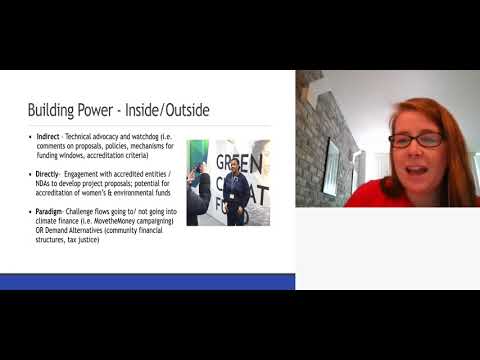
The fourth webinar of a five part series on women's rights and climate finance: Strategies for Organizing to Influence, Monitor, and Track Climate Finance (from Global to Local), focused on strategies to engage with various actors to both facilitate and advocate for the meaningful inclusion of the perspectives and experiences of women's groups, affected communities, and other civil society stakeholders in the design and implementation of projects and programs.
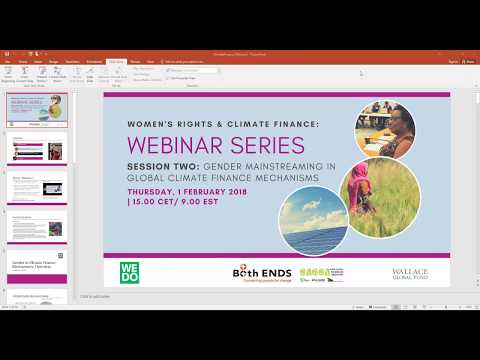
The second session of our five part series on women's rights and climate finance, Gender Mainstreaming in Climate Finance Mechanisms, provided an overview of how gender equality has been mainstreamed into global climate finance mechanisms, including a deep dive on gender considerations under the Green Climate Fund by Liane Schalatek of the Heinrich Boell Foundation - North America.
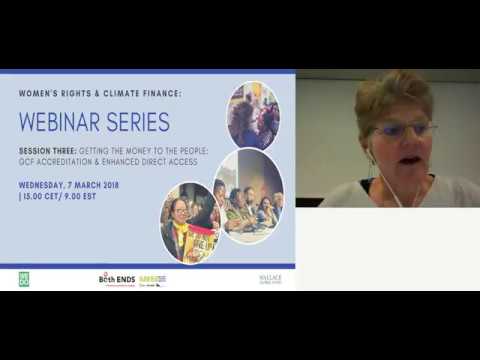
The third session of our five part series on women's rights and climate finance, Getting the Money to the People: GCF Accreditation and Enhanced Direct Action, focused on accessing the Green Climate Fund through working with stakeholders at the country level (engaging with the National Designated Authority), utilizing Enhanced Direct Access, and seeking accreditation.
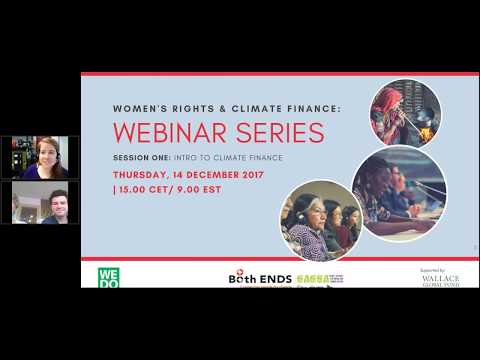
This Introduction to Climate Finance is the first of a five part series on women's rights and climate finance, aiming to build knowledge and power to ensure finance flows are benefiting local women's groups, responding to community needs and respecting human rights. This session will outline the climate finance landscape, as well as the key challenges and opportunities we hope to explore in this webinar series.

Join us for the fourth session of this five-part series on women's rights and climate finance, aimed at building knowledge and power to ensure finance flows benefit local women's groups, respond to community needs and respect human rights. The webinar will be conducted in English with simultaneous translation in Spanish and French.

Today, a week before the international climate summit in Egypt, the Dutch Government has broken a major climate promise it made last year to end public financing for international fossil fuel projects. International and Dutch NGOs argue that the new policy published by the Dutch Government on restricting finance for fossil fuels has such significant loopholes, that it essentially means The Netherlands has reneged on its promise.

GAGGA rallies the collective power of the women's rights and environmental justice movements to realize a world where women can and do access their rights to water, food security, and a clean, healthy and safe environment.

Join us for the third session of this five-part series on women's rights and climate finance, aimed at building knowledge and power to ensure finance flows benefit local women's groups, respond to community needs and respect human rights.