Both ENDS




With our Wetlands without Borders program, we work towards environmentally sustainable and socially responsible governance of the wetlands system of the La Plata Basin in South America.
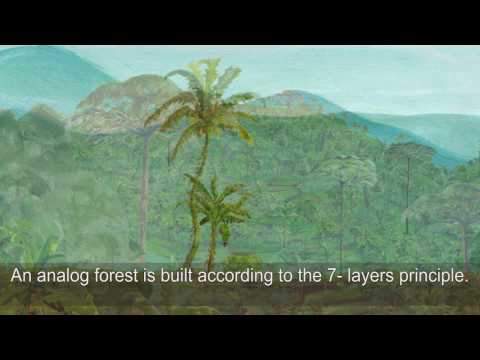
This short video is an introduction to 'Rich Forests, a Dutch initiative aiming to promote food forests or 'analog forestry' all over the world, together with working together with local partner organisations.

"Water is life, water is food" is this year's theme for World Food Day. Our partners around the world know all too well that this is a very true sentence. To celebrate World Food Day 2023 this October 16th, we'd like to show a few examples of how our partners fight for the right to water and this way, contribute to local food sovereignty at the same time.

While agriculture and livestock food production in the world have become increasingly large-scale, industrial and ever more efficient for decades, the damage and inequality this food system causes is also becoming increasingly clear. Across the world, more and more people are therefore engaged in alternative, sustainable food production that ensures many generations to come to still have access to fertile, healthy land and clean water.
In this talkshow, we highlight some of these examples and hope to fuel the dialogue about this topic.
Farid Tabarki - Studio Zeitgeist
Inspired? Join our 'The Future We See' - talkshow on September 28th! You can either attend live or online, quietly listen or actively participate in the discussion - or during the drinks afterwards. We hope to see you there!
To get a glimpse of the atmosphere, see a short video of our last session (about economic systems): https://youtu.be/AUNGcROovnc
And to dive in a little deeper, watch this compilation: https://youtu.be/nzuwIREeiNo

Join us this Saturday the 28th of May for an inpiring session about the role of agro-ecology in the trasformation to a future proof food and farming system on the African continent (and beyond).

Globally, the area that is suffering desertification and land degradation is ever expanding. Unsustainable and often large-scale agricultural practices, including the copious use of pesticides and fertilisers, are a major driver of land degradation, aprocess that is further exacerbated by climate change, causing more erratic rainfall patterns, longer periods of drought and unpredictable growing seasons. This is very problematic not only for the hundreds of millions of people who directly depend on land and water for their livelihoods, but also for life on earth as a whole. It is clear that this process must be stopped and reversed, better sooner than later. But how to go about it?

The Wetlands without Borders programme aims to preserve the biodiversity of the La Plata Basin and the sustainable livelihoods of its communities. Preservation of the La Plata Basin is essential for protecting the region from flood and drought, and preserving the quality of life of its inhabitants. Click here for the programme's website and for the latest information.


