Both ENDS




Both ENDS and the Land Portal Foundation invite you to the third webinar in the Whose Land? Inclusive Pathways to Land Governance series. This third Whose Land? webinar will showcase gender transformative approaches on women's land rights. Gender transformative approaches are defined by women acting as agents of change, transforming structural barriers and redefining gender norms. These approaches facilitate the participation of women in land governance decision-making processes, but require closing the land data gender gap.
Register here

This webinar will feature experiences from several grassroots initiatives and highlight how they fight for women's improved access to and control over land and other natural resources and to scale up women's land rights.

The water quality of East Java's largest river, the Brantas River, is increasingly deteriorating due to a combination of industrial and household waste. This environmental pollution has a disproportionate impact on women. Yet, their participation in decision-making remains lacking. ECOTON is working to improve the situation.

When destructive projects are seen through the eyes of local women, it is clear that International financial Institutions (IFIs) are one piece of a large and complicated puzzle. Therefore, in 2019 we brought together experts in women's rights and IFIs to learn from each other.

Today is International Women's Day. A day originating from women's strikes against poor working conditions in the textile industry, some 100 years ago. Since then, a lot has improved for women but, unfortunately, men and women obviously still don’t have equal rights. In 1949, Simone de Beauvoir already warned that ‘women’s rights will never be vested. You have to stay vigilant your whole life’. Recent developments such as the tightening of abortion laws in some countries confirm this view and show that even in the ‘free West’ women’s rights are still far from self-evident.
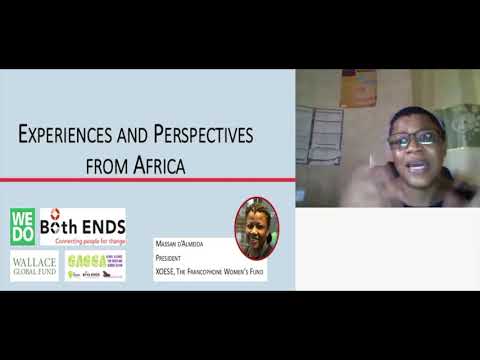
The fifth session of our five part series on women's rights and climate finance, Experiences and Perspectives of Women Engaging in Climate Finance, shared the insights of three activists who have been serving as GCF Monitors as part of the "Women Demand 'Gender-Just' Climate Finance" initiative. They spoke about their processes of learning about climate finance and connecting with others to monitor climate finance in their communities and regions, discussed the value they have found in this work, and answered questions from webinar participants.
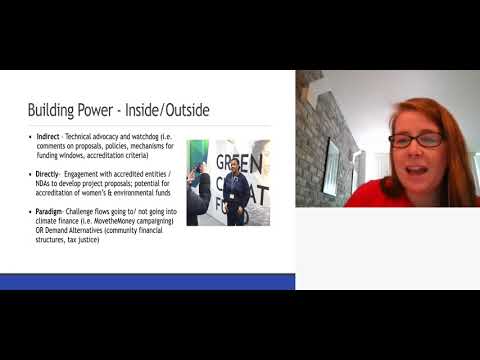
The fourth webinar of a five part series on women's rights and climate finance: Strategies for Organizing to Influence, Monitor, and Track Climate Finance (from Global to Local), focused on strategies to engage with various actors to both facilitate and advocate for the meaningful inclusion of the perspectives and experiences of women's groups, affected communities, and other civil society stakeholders in the design and implementation of projects and programs.

It was minus 20 degrees Celsius when 2.000 women gathered at the main square of Ulaanbaatar, Mongolia, to voice their distress about the terrible smog in the city caused by three large power plants. Soon after, the women were invited to speak about the problem of air pollution with the minister of environment.
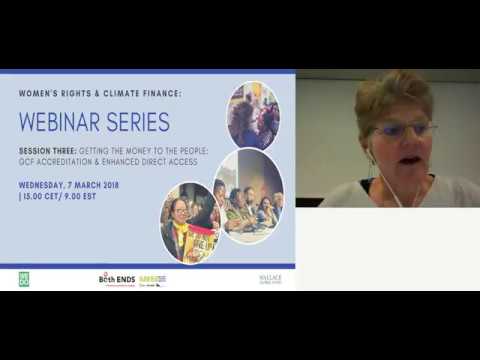
The third session of our five part series on women's rights and climate finance, Getting the Money to the People: GCF Accreditation and Enhanced Direct Action, focused on accessing the Green Climate Fund through working with stakeholders at the country level (engaging with the National Designated Authority), utilizing Enhanced Direct Access, and seeking accreditation.