Both ENDS




During the 24th Conference of the Parties (COP24) of the UNFCCC taking place in Katowice, Both ENDS partner Raju Pandit Chettri – director of Prakriti Resources Centre in Nepal - was one of the selected Southern leaders to meet with the Dutch Minister of Development Cooperation and Foreign Trade, Sigrid Kaag. We asked Raju about his expectations, messages, Kaag's responses and his experiences of the meeting.

Still, more funds are spent on the fossil industry than on sustainable solutions. Banks, pension funds, insurers and governments keep investing in fossil infrastructure which endangers people and the environment. Therefore we call on financial institutions to stop funding the climate crisis.
Join our "Stop Fossil Finance" block at the next climate march!

The UN Water Conference is an important event that brings together stakeholders from around the world to discuss water and climate solutions. This year, GAGGA is organizing a side event during the conference that you won't want to miss!
On Thursday March 23rd, from 1.15 -2.30 pm, GAGGA will present their commitment to support, finance, and promote locally rooted, gender just climate and water solutions within the Water Action Agenda. This event will inspire other stakeholders to join in their commitment, while presenting inspiring examples of such solutions presented by local women from Nepal, Kenya, Paraguay, Mexico, and Nigeria.

The vast majority of climate finance is channelled to (and through) big institutions and large-scale projects, often without taking into account the wishes and interests of local communities. Both ENDS is working with diverse partners worldwide to address this problem, with a special focus on the Green Climate Fund (GCF).

With gender-responsiveness a work in progress, current climate funds are hardly accessible for women-led community based organizations. While these groups lack access to finance and decision-making, they already lead bold holistic gender-just climate solutions and initiatives worth funding support.
Follow this event live on YouTube!

Both ENDS, MamaCash and FCAM are proud to contribute to the 'Adaptation Futures 2016- conference'.
Adaptation Futures is the biennial conference of the Global Programme of Research on Climate Change Vulnerability, Impacts and Adaptation (PROVIA). In 2016 the European Commission and the Government of the Netherlands co-host the fourth edition. Adaptation Futures 2016 is where scholars, practitioners, policymakers and business people from all around the world go to connect, learn and inspire. It highlights adaptation practices and solutions for people, governments and businesses. The programme addresses all sectors and all parts of the world.
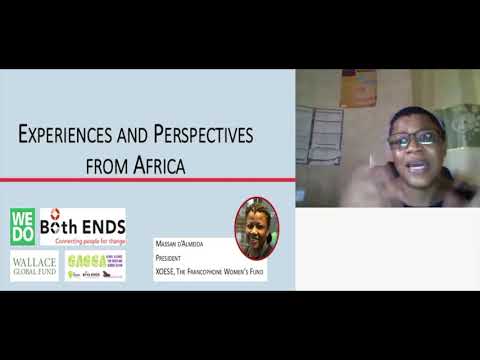
The fifth session of our five part series on women's rights and climate finance, Experiences and Perspectives of Women Engaging in Climate Finance, shared the insights of three activists who have been serving as GCF Monitors as part of the "Women Demand 'Gender-Just' Climate Finance" initiative. They spoke about their processes of learning about climate finance and connecting with others to monitor climate finance in their communities and regions, discussed the value they have found in this work, and answered questions from webinar participants.


