




The year of truth: EU Member States urged to combat deforestation
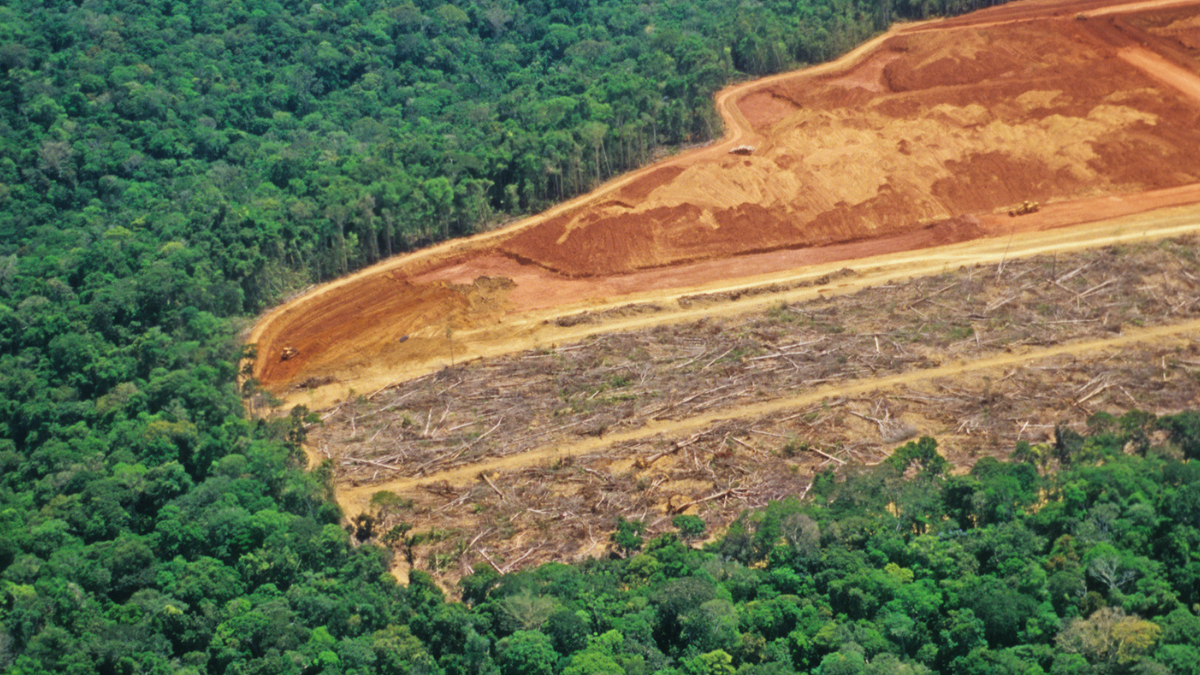
The EU is the world's largest "importer of deforestation," due to the huge volumes of unsustainably produced soy, timber, palm oil, and other raw materials that EU member states import. After many years of delay, the European Parliament and the European Council passed a law in December 2023 to address this problem: The EU Deforestation Regulation (EUDR). Both ENDS is part of a broad coalition of organizations that have been pushing for this European legislation. However, there is now a serious delay, and perhaps even postponement, of the law's implementation. Objections have been raised by a number of member states, who are sensitive to lobbying by certain business sectors and producer countries.
Countries such as Sweden and Hungary are lobbying hard against the law based on a poorly understood self-interest to protect their own forestry industry and agriculture, among other things. The Netherlands is one of the world's largest importers of soy and other 'deforestation raw materials'. It therefore has a heavy co-responsibility to make the EUDR a success, in close cooperation with tropical producer countries, companies and civil society.
Letter
Both ENDS and about 170 other nature conservation, environmental, and human rights organizations sent a fireletter to European Commission President Ursula von der Leyen, with the following plea:
"We urge you to protect the integrity of the EU democratic decision-making process and to ensure that the EU stands firm in pursuing the objectives set out in the EUDR. Political leadership, as reflected in the development of the Green Deal, shows long-term vision, which is needed for this global crisis. We trust that you will stand by the commitment you made to EU citizens and uphold the law that you and your Commission proposed - and that the Council and Parliament overwhelmingly approved - by ensuring its proper and swift implementation." Read the letter (pdf)
Businesses and governments invariably argue that a country like the Netherlands should not act alone in addressing this issue, in order to avoid an unfavorable competitive position. They argue that trade regulation should take place at the European level to promote a "level playing field."
Unacceptable
It is therefore unacceptable, and incomprehensible, that EU Member States are now threatening to stall progress in tackling deforestation through EU regulations. It also puts companies from Europe and tropical producer countries that operate seriously sustainably at a disadvantage compared to 'free riders': i.e. companies that, for example, save costs by paying little attention to the environment, climate and human rights.
Legitimate concerns have been raised that this European law could create market barriers for small producers (or "small holders") from tropical countries. This is a serious risk that needs to be addressed by the EU with trading partners through accompanying measures. At the same time, it should be noted that a number of governments from tropical countries label the EUDR as discriminatory, using the occasional argument of excluding small producers.
Many crocodile tears are shed over small producers, while governments at home often take inadequate action to improve their position. The focus of government policy, investment, and licensing is often on facilitating large companies.
Climate Goals
The UN Climate Panel IPCC (Intergovernmental Panel on Climate Change) emphasizes that it is not possible to meet the Paris climate goals without reversing deforestation. According to the IPCC, there is no scenario in which global warming can be limited to 2 degrees Celsius, let alone 1.5 degrees, without halting deforestation.
Role of Indigenous Peoples
It is also indicated that the role of indigenous peoples, custodians of more than 500 million hectares of forest, is indispensable in this regard. We previously wrote about this in a post.
Deforestation for the production of soy, wood, and extraction of oil, gas, coal, and other raw materials for the European market leads to large-scale land grabbing of farmers and indigenous communities and widespread violation of human rights.
Both ENDS has facilitated direct dialogue between EU policymakers in Brussels and with member states with indigenous delegations several times in recent years. Affected indigenous peoples appeal to policymakers to take responsibility, in their Call to Action.
Courage, Commitment, and Diligence
It is now time for the Netherlands and other EU member states to show courage, commitment, and diligence to make their contribution to combating deforestation.
Both ENDS has been a member of RSPO (Roundtable on Sustainable Palm Oil) since 2005, whose mission is to facilitate active cooperation and shared commitment in the value chain to stimulate demand and ensure sufficient supply of sustainable palm oil.
Read more about this subject
-
 Dossier /
Soy: trade in deforestation
The rising demand for soy is having negative consequences for people and the environment in South America. Both ENDS reminds Dutch actors in the soy industry of their responsibilities and is working with partners on fair and sustainable alternatives.
-
 Press release / 29 september 2026
New Zealand faces its first climate complaint under EU trade rules
UTRECHT / WELLINGTON, 29 September 2026 /30 September in Aotearoa New Zealand
Both ENDS, a Dutch environmental justice organisation, has lodged a formal complaint with the European Commission arguing that New Zealand has broken the climate promises it made in its free trade agreement with the European Union. It is the first complaint on environmental and climate grounds under the Commission's Single Entry Point, the mechanism that lets civil society ask the EU to enforce the sustainability commitments in its trade agreements.
-
 Dossier /
Trade agreements
International trade agreements often have far-reaching consequences not only for the economy of a country, but also for people and the environment. It is primarily the most vulnerable groups who suffer most from these agreements.
-
 Dossier /
International trade and investment with respect for people and planet
The network of international trade and investment treaties is large and complex. The Netherlands alone has signed more than 70 bilateral investment treaties (BITs) and is party to the trade and investment agreements concluded by the EU, like the EU-Mercosur and EU-Indonesia trade deals.
-
 News / 23 september 2025
With the undemocratic splitting of the EU-Mercosur deal, Europe is missing the chance to lead on fair trade
Recently, many newspapers have written about Brussels’ rush to finalize the trade agreement between the EU and the South American Mercosur countries. According to the European Commission, national parliaments do not need to approve it because the trade part and the “political” part have been separated. This “splitting” means that the trade part can be approved as an EU-only decision by the European Council and the European Parliament, while national parliaments are sidelined and the political-cooperation part is postponed. Both ENDS and its partners are deeply concerned and are calling on the Dutch government to vote against this outdated agreement.
-
 News / 11 september 2025
EU-Mercosur: Small GDP Gain, Big Question Marks for Farmers and Democracy
A recent report by Wageningen Economic Research (WER) on the economic consequences of the trade agreement between the EU and Mercosur confirms what civil society organizations, policymakers, and trade unions have been signaling for years: this agreement does not offer a balanced perspective for farmers and the environment. Instead, it increases power inequalities and shifts burdens onto (small-scale) farmers. Moreover, the deal risks reinforcing unsustainable practices that complicate the climate transition and addressing environmental challenges in both the EU and Mercosur countries.
-
 News / 9 september 2025
Simplification Must Not Mean Weakening: Why the EUDR and other Environmental Legislation Must Stay Strong
Both ENDS warns that the current debate on “simplification” of EU environmental law must not become an excuse to weaken or postpone urgently needed safeguards. In earlier contributions to the drafting of the EU Deforestation Regulation (EUDR), Both ENDS relayed the voices of local and Indigenous forest-dependent peoples, who consistently urged the EU to take responsibility for the massive deforestation linked to European imports. They underlined how this deforestation destroys biodiversity, undermines climate stability, and erodes their rights, livelihoods and cultures.
-
 Blog / 17 juli 2025
A disaster for farmers: here and there
The trade agreement with South America is harmful to farmers, the climate, and biodiversity, on both sides of the Atlantic. It’s time to take this deal off the table once and for all, argues Fernando Hernandez, Senior Policy Officer for Trade and Investment at Both ENDS.
-
Publication / 1 juli 2025
-
 News / 5 juni 2025
Op-ed: New trading partners, but not on the same terms
Since President Trump's trade war and tariffs, international trade has once again been thrust into the spotlight. In Europe and the Netherlands, there are growing calls for new free trade agreements to be concluded as quickly as possible, as reflected in recent opinions in FD and de Volkskrant. But that is the wrong reflex, writes our colleague Marius Troost.
-
 Press release / 18 februari 2025
Trade deal fueling resource grab? 120+ groups from Europe and Indonesia sound the alarm
Brussels, 18 February 2025 - Over 120 civil society organizations and trade unions from Indonesia and Europe today call on the Indonesian government and the European Union to stop the negotiations for the Indonesia-EU free trade agreement – the Comprehensive Economic Partnership Agreement (CEPA).
-
 News / 19 december 2024
Trading Away the Future: How the EU-Mercosur deal fails people and the planet - and what needs to be done
On December 6, the visit of European Commission President Ursula von der Leyen to the Mercosur Summit sealed the agreement on the final text of the EU-Mercosur Association Agreement. Both ENDS condemns this damaging agreement for undermining human rights, the environment, and democracy in Europe, and in Mercosur countries. Should the agreement be ratified as it stands, it will have devastating consequences for the environment, indigenous communities, family farming and small-scale farmers on both sides of the Atlantic.
-
 News / 6 december 2024
South American Forest Fires Highlight Effects of Delaying EU Deforestation Law
On the 4th of December, the European Parliament voted in majority for a delay of implementation of the EU Deforestation Regulation (EUDR). Earlier, the European Commission and the European Council already endorsed this proposal for a delay with one year. Both ENDS and partners are worried about this decision, as there is no time to waste in our global fight against deforestation, biodiversity loss and climate change.
-
 News / 17 juli 2024
EU Exits Energy Charter Treaty (ECT): A Milestone for Climate Action
The European Union's decision to exit the Energy Charter Treaty (ECT) is a landmark victory for climate action. For years, the ECT's Investor-State Dispute Settlement (ISDS) mechanism has enabled fossil fuel companies to challenge climate policies, hindering progress towards sustainability.
-
 News / 19 juni 2024
Recognition for PROBIOMA from the Chamber of Deputies of the Plurinational State of Bolivia
PROBIOMA have received recognition from the Chamber of Deputies of the Plurinational State of Bolivia. The presentation of this tribute took place at the Museum of Natural History Noel Kempff Mercado, in the framework of the Environment Day.
-
 Blog / 28 mei 2024
Democratic Values Under Attack in Europe: The Need to Look Beyond the Dutch Dikes and the Role of Philanthropy
Mid May, I read about the expected – yet still shocking – implications of the radical shift to the far-right in the Netherlands. The current coalition agreement includes measures previously adopted by other European countries with similar election outcomes, leading to a curtailment of democratic freedoms, an inward focus, and attempts to limit the role of civil society. With the European elections on the horizon and another rightward shift anticipated, it is more important than ever for philanthropy to join forces in advancing a just climate transition, promoting democratic values, and ensuring all voices are heard.
-
 News / 4 april 2024
EU ECA fossil fuel phase-out tracker reveals EU Member States’ lagging commitment to Paris Agreement goals in export credit policies
Our new report titled EU ECA fossil fuel phase-out tracker by Both ENDS, Counter Balance and Oil Change International sheds light on the concerning lack of harmony between EU Member States' export credit climate policies.
The report was updated on April 17th, following new responses by Member States on their respective policies.
-
 News / 14 februari 2024
Petition to protect the Saamaka people and the Amazon Forest
The Saamaka People, the Afro-descendant tribe of Suriname, have preserved close to 1.4 million hectares of the Amazon rainforest. They have for decades urged the government to recognise their ancestral territorial land rights.
-
 News / 17 juli 2023
Counter summit in Brussels: civil society organisations call for sustainable and fair trade
On 17 and 18 July, representatives of the governments of Latin America, the Caribbean and the European Union meet in Brussels for the EU-CELAC summit. The European Commission and several EU Member States want to use this moment to accelerate the ratification of the trade and investment treaties between the EU and Mexico, the EU and Chile and the EU and the South American Mercosur countries*.
-
Publication / 9 maart 2023


