




Women from the Niger Delta demand Shell to end pollution of air and water
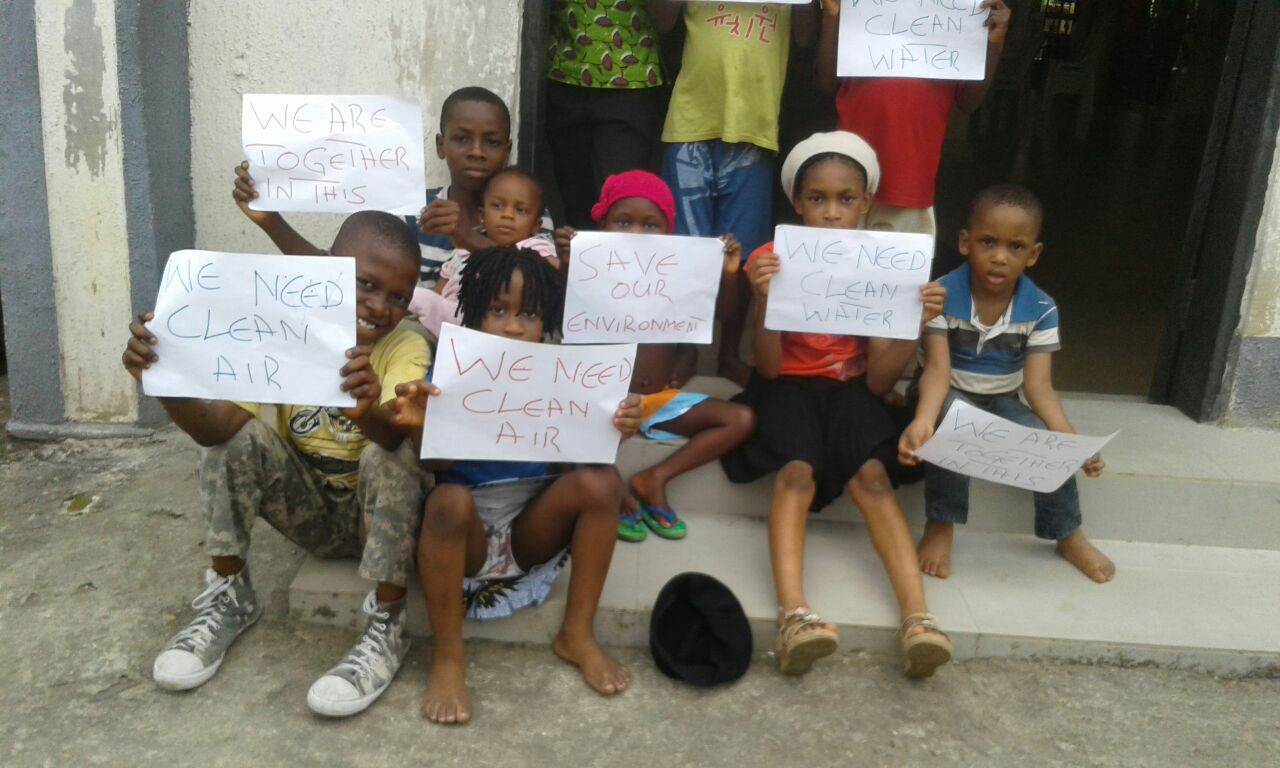
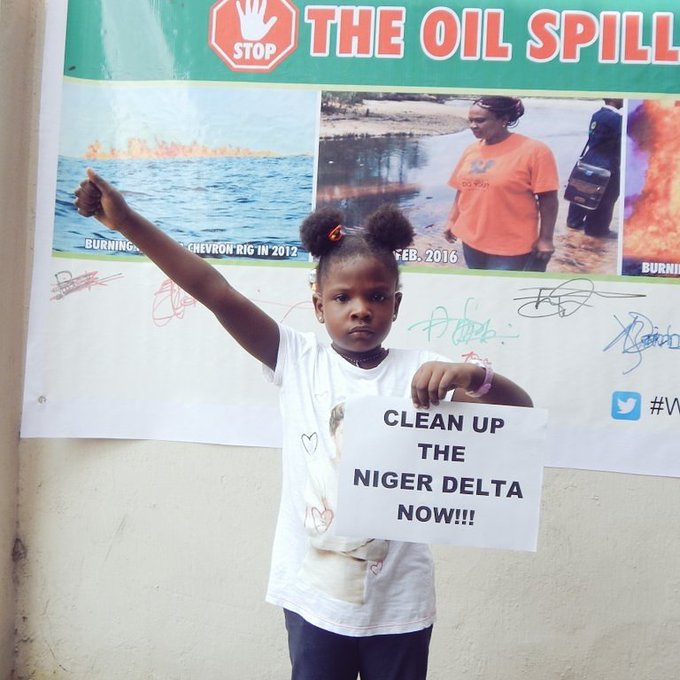
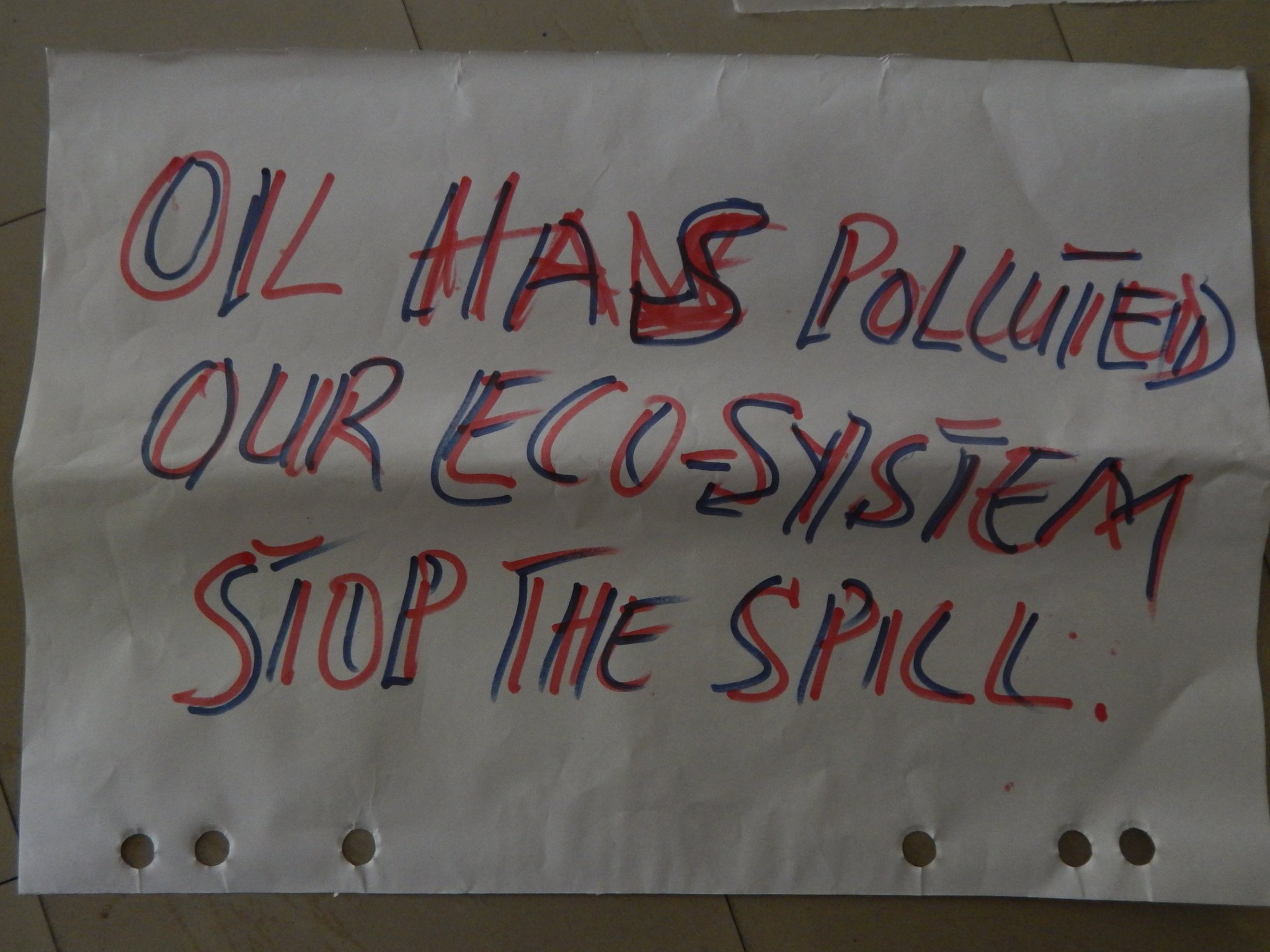
Communities in the Niger Delta have been affected by air and water pollution due to Shell's activities for decades. This year, at Royal Dutch Shell's annual meeting, Kebetkache Women's Resource and Development Centre held Shell accountable for the consequences of their activities. Clean-up of oil spillages and ending gas flaring is becoming even more urgent in the fight against COVID-19, in which clean water is crucial to prevent the spread of the virus.
COVID-19 forces us all to change our way of working and find new and innovative ways to meet, discuss and continue life as usual. Like any other company, Royal Dutch Shell organized their Annual Shareholder Meeting in May 2020 via webcast.
Shell continues operations in Niger Delta during COVID-19 crisis
In the run up to May 13th and May 19th, COVID-19 measurements took over the world, incited states of emergencies, curfews and lockdowns, including in Nigeria's Niger Delta – one of Shell's oldest, most disturbing and troubled areas of oil production in the world. The Nigerian Federal government urged people to work from home. However, it soon became known that oil platforms and gas flaring activities continued business as usual, flying workers in and out with helicopters. Community women in Rivers State noted that "Shell is still working because Shell's vehicles are still moving about as if nothing has happened."
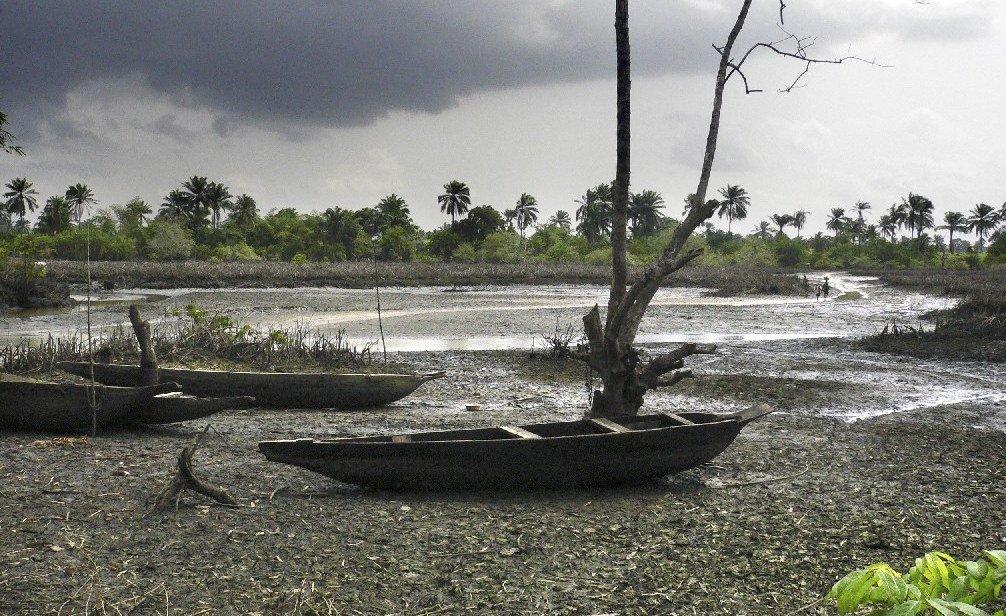
To prevent the spread of the virus, Nigeria's governments also urged people to wash their hands and ensure hygienic measures. Even if oil company- or government provided boreholes of water are in place and work, as a result of decades of oil spillage and gas flaring throughout the Niger Delta, rivers, streams and creeks are polluted by oil, borehole water taste of crude and rain water is acidic and not fit for drinking. The continuous gas flaring increases lung diseases, skin rashes and cancer and women suffers from maternal health issues. The average life expectancy of people growing up in the Niger Delta is 47 years. In this context, where especially women and children are vulnerable, a possible spread of COVID-19 could be disastrous and puts people in even more immediate risk.
Nigerian women ask Shell to take its responsibility to clean up the Delta
Emem Okon, Director of Kebetkache Women's Resource and Development Centre, based in Port Harcourt and dedicated to support women affected by gas flaring and oil spillage in all nine states of Nigeria's Niger Delta since 2004, asked questions during the Shell Shareholder Engagement Webcast on May 13th also on behalf of Gbogbia Feefeelo and Women Initiative on Climate Change. They aim to make Shell and its shareholders aware of the issue of air and water pollution in the Niger Delta, and its effects on women and children's health, especially in the light of COVID-19.
"In this time of COVID-19, Niger Delta community members are at high risk. How are community members able to access clean water to wash hands and live safely? Particularly women experience additional burden as they bear primary responsibility of household water management. Access to water is one of the Sustainable Development Goals. When is Shell planning to commence full remediation of environment impacted by their activities? What measures are you adopting to address water pollution in the Niger Delta and meet the global goal of clean water and sanitation for all (SDG 6)?"
Shell answered that it had limited its clean-up activities in Ogoniland due to COVID-19 measures. However it continues its other operations in other areas of the Delta. The Niger Delta women's organisations therefore ask Shell to set its priorities straight and demand it continues the remediation activities first and foremost to ensure access to clean environment and restoration of livelihood.
Stop the gas flaring
Continued oil production and gas flaring is happening in Bayelsa, Rivers and Delta states. Shell's activities have contributed to the lack of access to clean water in the Niger Delta. Rivers, streams and creeks are polluted by oil; borehole water taste of crude; rain water is acidic and not fit for drinking. The gas flaring increases health problems, such as increased lung diseases, skin rashes and cancer. The average life expectancy of people growing up in the Niger Delta is 47 years, and women suffer effects on their maternal health.
Ms. Okon therefore questioned Shell on the issue of water pollution in the Niger Delta as a result of spillage of oil from Shell extractive ventures into rivers and creeks in communities in the Niger Delta and the refusal of Shell to end gas flaring in Niger Delta communities.
"The Shell gas flare site at Imiringi in Bayelsa state is just beside a Federal Government Girls College in Imiringi. Shell has been flaring toxic gases from this location for many decades. This is inhuman and very insensitive to the impacts on the health of women and girls in the school and the entire Imiringi community. What measures has Shell adopted to mitigate the impacts of the flare on the students and teachers of this school? What investigations has Shell made to investigate the impacts of Shell's actions to rural communities, particularly women? When does Shell plan to end gas flaring in the Niger Delta?"
In its response Shell claimed that "the SPDC joint venture (30% Shell) has significantly reduced continuous flaring from its operations, embarking on Associated Gas Gathering Solutions since Year 2000. The flaring data is disclosed in our sustainability report. In respect to the specific location mentioned [Imiringi], it is important to note that gas flaring has reduced by more than 98% since Year 2011, averaging 13 ton CO2 equivalent per year compared to 790 ton CO2 equivalent per year in the preceding 5 years prior to implementation of the flare reduction strategy." Shell furthermore stated that "the school in question is more than 2km from the nearest Shell facility emission source, and significantly lies outside the range of distances of 200 meters intervals away from the installation along the direction of the prevailing wind as per regulatory guideline (EGASPIN) for air quality monitoring."
Although this data is accurate, this does not mean that the effects of gas flaring do not reach the young girls going to school in Imiringi and that Shell needs to be held accountable for their stock in the quality of air in various states throughout the Delta, including Imiringi.
Shell states it aims to end gas flaring by 2030. That's 10 more years of severe air pollution to our communities. Kebetkache Women's Resource and Development Centre, Gbogbia Feefeelo and Women Initiative on Climate Change have demanded this for years and ask it again: stop gas flaring immediately!
Taking equal responsibility for air and water pollution through the Delta
Shell has responded to some of the questions, but the women from the Niger Delta are not satisfied and will continue their fight for their right to clean water and environmental justice.
Next to ensuring the continuous clean-up of Ogoniland, they demand that Shell takes action to address the issues of water pollution, loss of livelihood and gas flaring in other Niger Delta states like Akwa-Ibom State, Bayelsa State and Delta State, and takes responsibility for the environment and the lives of people in all regions in which they operate equally.
Kebetkache Women's Resource and Development Centre is supported in its struggle by the Global Alliance for Green and Gender Action (GAGGA)
Read more about this subject
-
 Dossier /
Global Alliance for Green and Gender Action (GAGGA)
GAGGA rallies the collective power of the women's rights and environmental justice movements to realize a world where women can and do access their rights to water, food security, and a clean, healthy and safe environment.
-
 Dossier /
Communities Regreen the Sahel
In various countries in the Sahel, vast tracts of land have been restored by the local population by nurturing what spontaneously springs from the soil and protecting the sprouts from cattle and hazards.
-
Letter / 14 juli 2026
Statement on CAO Cambodia Microfinance Case
The independent complaints mechanism of the International Finance Corporation (IFC) and the World Bank Group found that the IFC violated its own Environmental and Social Sustainability Framework by investing in six banks providing microfinance in Cambodia.
-
 News / 6 juli 2026
Strengthening Women's Land Rights Across the Rio Conventions
From 29 June – 2 July 2026, Tamara Mohr, GAGGA coordinator at Both ENDS participated in the 4th convening of the Women's Land Rights Initiative (WLRI) in Nairobi, Kenya.Hosted by the Robert Bosch Stiftung, TMG Research and the Huairou Commission, the event brought together grassroots organisations, (inter)national NGOs, government institutions and donors from around the world.
-
Publication / 3 juli 2026
-
 Dossier /
Gas in Mozambique
In 2011 one of the world’s largest gas reserves was found in the coastal province of Cabo Delgado, in the north of Mozambique. A total of 35 billion dollars has been invested to extract the gas. Dozens of multinationals and financiers are involved in these rapid developments. It is very difficult for the people living in Cabo Delgado to exert influence on the plans and activities, while they experience the negative consequences. With the arrival of these companies, they are losing their land.
-
Publication / 18 juni 2026
-
Publication / 12 mei 2026
-
 News / 14 april 2026
New report: Phasing out ISDS in the Netherlands: a roadmap
Today, Both ENDS and SOMO are publishing the report Phasing out ISDS in the Netherlands: a roadmap. In the report, we highlight the Netherlands’ role in the ISDS system and offer practical guidance on phasing out ISDS.
-
Publication / 14 april 2026
-
 News / 26 maart 2026
New project: Climate Accountability in EU Trade
Through its new project “Climate Accountability in EU Trade: Testing the SEP and DAGs for Climate-Linked FTA Enforcement” Both ENDS, with support from the European Climate Foundation, is exploring how the European complaints mechanism (SEP) and Domestic Advisory Groups (DAGs) can be more effectively used to advance climate accountability. The project runs for 13 months, until end of 2026.
-
 News / 24 maart 2026
Statement: Invest in local leadership for tropical forest management and local economies
IUCN-NL, Both ENDS, and 16 other Dutch and international civil society organizations (CSOs), networks, and expert groups are calling on the Dutch government to invest more strongly in locally led forest management and forest-based economies. This should be done within the framework of Dutch international cooperation and its associated policy instruments.
-
 News / 27 februari 2026
Both ENDS strengthens the resilience of female environmental defenders worldwide thanks to multi-year contribution from the Postcode Lottery
In recent years, Both ENDS has received an additional contribution of €875,000 from the Postcode Lottery for the Autonomy & Resilience Fund (2022–2025), implemented in collaboration with the Global Alliance for Green and Gender Action (GAGGA). This support was essential because female environmental rights defenders around the world are increasingly facing climate change, repression and shrinking civil space. With this contribution, Both ENDS supports female activists and their communities with flexible, trust-based funding, enabling them to develop their own solutions to urgent environmental and climate problems.
-
News / 2 februari 2026
Response to the D66-VVD-CDA coalition agreement
Coalition: Repair the damage and dare to go further
At Both ENDS, we see a number of cautious steps in the right direction in this coalition agreement. There is a slight emphasis on green issues, renewed attention to women's rights, recognition of the importance of civil society, and discussion of trade agreements with a focus on mutual interests. However, without structural change in how we trade, invest, and cooperate, fine words remain empty shells.
-
 News / 22 januari 2026
Shell files new arbitration against the Netherlands over Groningen gas field closure
Shell is suing the Netherlands in yet another attempt to evade its responsibility for decades of gas extraction in Groningen. For years, gas production has triggered earthquakes, damaged over a hundred thousand homes, and left residents living in prolonged insecurity, still waiting for repairs, reinforcement, and justice.
-
 Blog / 11 december 2025
Reflections on working on Dutch finance for Mozambique LNG
Last Tuesday, I received a short text message with big news: the minister had just announced that the financing policy for the Mozambique LNG project was stopped. It was a decision that I – along with so many others – have fought for for years. Only now, more than a week later, it is slowly sinking in that we have really won. The years of perseverance, frustration, discussions and investigations have finally led to this result. It still feels a bit surreal.
-
 Dossier /
Export Credit Agencies: Who pays the price?
Both ENDS calls on the government only to provide export credit insurance to sustainable projects that cause no social and/or environmental damage in the countries where they take place.
-
 Environmentally Just Practice /
A Negotiated Approach for Inclusive Water Governance
A Negotiated Approach envisages the meaningful and long-term participation of communities in all aspects of managing the water and other natural resources on which their lives depend. It seeks to achieve healthy ecosystems and equitable sharing of benefits among all stakeholders within a river basin. This inclusive way of working is an essential precondition for the Transformative Practices that are promoted by Both ENDS and partners.
-
 News / 27 november 2025
Communities and International Consortium Present Community-Led Plan for Nature-Based Adaptation to Sea-Level Rise in Coastal Bangladesh
Local communities in the southwestern coastal region of Bangladesh—together with an international consortium including Uttaran, CEGIS, and Both ENDS—have presented a community-led plan to confront climate change and accelerating sea-level rise through nature-based adaptation. The People’s Plan for Upscaling Ecosystem-Based Adaptation outlines a scalable strategy rooted in local ownership and generations of lived experience. At its centre is Community-Based Tidal River Management (CBTRM), a proven approach that reduces waterlogging, raises land elevation, and restores ecological balance by working with natural tidal and sediment dynamics.
-
 Blog / 25 november 2025
COP30 shows why dismantling ISDS is essential for real climate action
Standing in Belém during COP30, I felt the weight of the moment. We came to the Amazon hoping for decisive progress on phasing out fossil fuels, yet the final outcome fell far short of the ambition science and justice demand. The agreement brought welcome commitments on adaptation finance and global indicators, but it refused to confront the structural forces that make climate action so difficult.




