




Civil society groups assert their right to expose the impacts of palm oil production
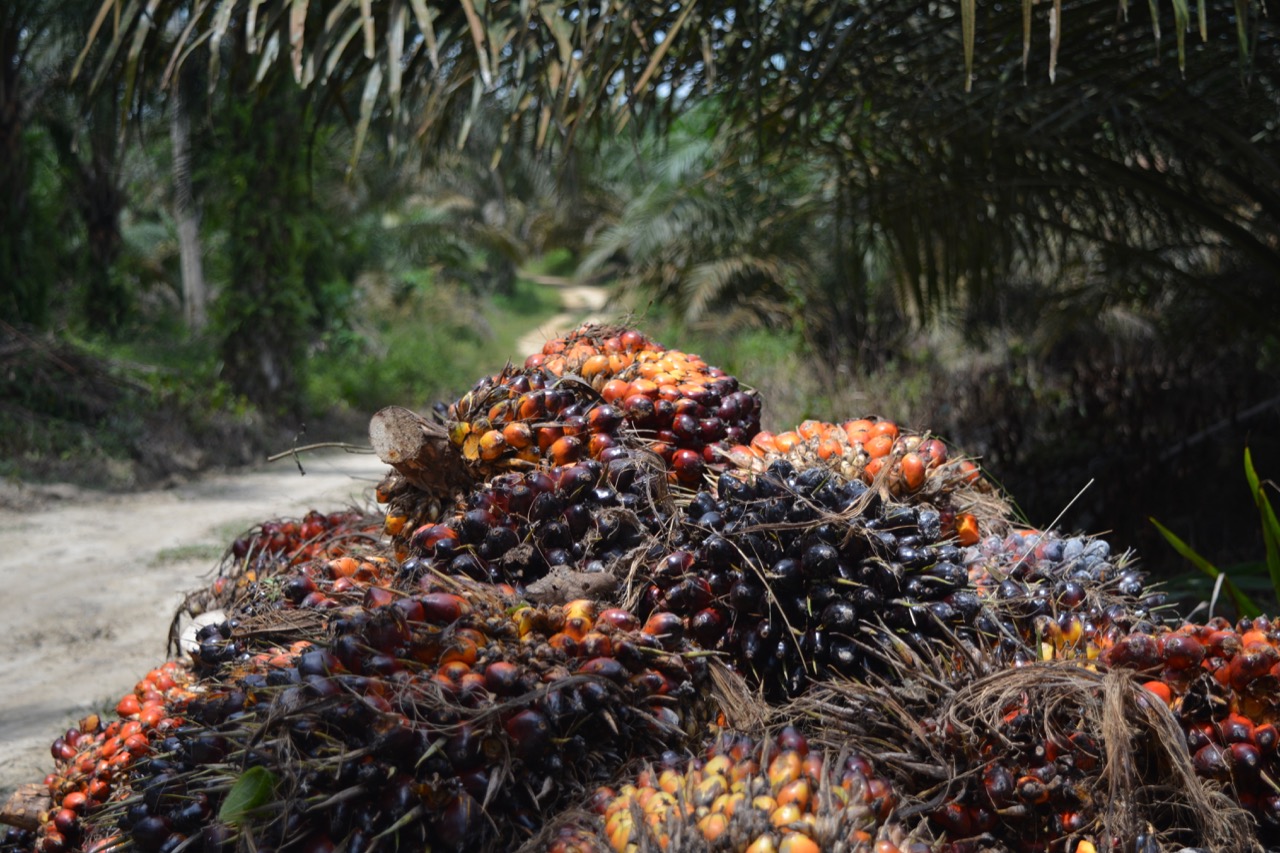
Civil society organisations from around the world condemn the statements by representatives of palm oil companies during a meeting with the Malaysian government. In this meeting, the company representatives called critical NGOs "toxic entities" and asked the Malaysian government to not let these NGOs into the country. Both ENDS' partners have published a reaction in which they defend their right "to expose the realities we face in their communities about the impacts of the palm oil sector".
On 4 February 2020, Reuters reported that during a meeting with Malaysian government officials in Kuala Lumpur, representatives from some of the world's largest palm oil companies and industry lobby groups have stated that NGOs were "toxic entities", that they were "orchestrating attacks on palm oil" and suggested that governments should ban international NGOs from entering their countries and should "do something drastic for once".
CSOs meet to address impacts of palm oil
Coincidentally, at the same time Both ENDS and Forest Peoples Programme gathered with local partners and civil society organisations from around the world in Kota Kinabalu, Sabah, Malaysia. The meeting brought together 33 representatives of 25 environmental justice, human rights, women's, youth and indigenous peoples' organisations from 11 palm oil-producing countries from Latin America, Africa and South East Asia who are working to address the negative impacts of the palm oil industry.
The purpose of this meeting was to build connections between civil society groups responding to the local impacts of the industry at a global level, to explore potential reforms in the countries and the industry internationally so that palm oil production brings genuine development. It provided a space to share their experiences across borders and regions, and to discuss potential reforms in their home countries and internationally to address the devastating environmental and human rights impacts of the palm oil business.
Freedom of expression
Statements seeking to vilify and discredit civil society groups for defending the human rights of local peoples, to silence efforts to expose the realities of palm oil production on local communities and the environment, or to incite government sanctions or punishment for local civil society or community leaders that exercise their right to freedom of expression have no place in public debate and should be condemned in the strongest terms.
Therefore we are glad to read in the same article that two Malaysian ministers confirm that the government wants to continue working with NGOs.
Kota Kinabalu Statement on Palm Oil and Freedom of Expression
As a reaction, the civil society organisations issued the Kota Kinabalu Statement on Palm Oil and Freedom of Expression. This statement highlights the range of impacts suffered by local people in plantation zones and exposes how government policy and company behaviour increases, rather than reduces, the impacts, difficulties, risks and dangers faced by local communities and the civil society organisations helping them defend their rights.
Both ENDS and Forest Peoples Programme support the Kota Kinabalu Statement. We call on all palm oil companies to uphold their duty to respect environmental limits and human rights, including the right to freedom of expression. We remind governments of both palm oil-producing and consuming countries that their first obligation is to respect, protect and promote the rights of their people.
Read more about this subject
-
 Dossier /
Fighting for improvements in the production of palm oil
The production of palm oil is causing social and environmental problems worldwide. Both ENDS is working to make the sector fairer and more sustainable and is promoting alternatives for palm oil.
-
 News / 3 september 2026
Restoring Land, Restoring Hope: Both ENDS at UNCCD COP17 in Mongolia
From 17 to 28 August, governments gathered in Ulaanbaatar, Mongolia, for COP17 of the UN Convention to Combat Desertification (UNCCD). At stake was more than how the world responds to land degradation and drought. It was also a question of who gets to shape land restoration, whose knowledge counts, and where the money goes.
-
Publication / 3 juli 2026
-
Publication / 18 juni 2026
-
 News / 9 april 2026
Minister Sjoerdsma hosts roundtable conversations with civil society
This week, Minister Sjoerdsma organized roundtable conversations with civil society organizations – a valuable initiative that brings together Dutch civil society voices to address critical challenges faced by democratic societies.
-
 Dossier /
Global Alliance for Green and Gender Action (GAGGA)
GAGGA rallies the collective power of the women's rights and environmental justice movements to realize a world where women can and do access their rights to water, food security, and a clean, healthy and safe environment.
-
 News / 27 februari 2026
Both ENDS strengthens the resilience of female environmental defenders worldwide thanks to multi-year contribution from the Postcode Lottery
In recent years, Both ENDS has received an additional contribution of €875,000 from the Postcode Lottery for the Autonomy & Resilience Fund (2022–2025), implemented in collaboration with the Global Alliance for Green and Gender Action (GAGGA). This support was essential because female environmental rights defenders around the world are increasingly facing climate change, repression and shrinking civil space. With this contribution, Both ENDS supports female activists and their communities with flexible, trust-based funding, enabling them to develop their own solutions to urgent environmental and climate problems.
-
 News / 17 februari 2026
Civic space at the frontlines: "Build strong coalitions and counter repressive regimes"
Today, we look back on an inspiring event Civic space at the frontlines -
Environmental Defenders and the Role of International Trade and Investment Policy. The panel exist of Michel Forst, UN Special Rapporteur Environmental Defenders under the Aarhus Convention, Suzanne Kröger, Member of Parliament for GroenLinks–PvdA, Dr. Margit van Wessel, Associate Professor at Wageningen University, Anne de Jonghe, policy advisor at Both ENDS, and Jonila Castro, national spokesperson for Kalikasan People's Network for the Environment. With an audience of CSO experts, academics, accountability experts and students we discussed the effects of Dutch economic activity on Environmental Defenders, and what we all can do to support those on the front lines of the fight for the environment and human rights. -
 Event / 26 januari 2026
Civic space at the frontlines
Environmental Defenders and the Role of International Trade and Investment Policy
Both ENDS invites you to an interactive dialogue with experts from the UN, policy, academia, and civil society on environmental defenders and international trade. Together, we will explore how citizens, policymakers, academics, and activists can defend civic space and support those on the frontlines of environmental and human rights struggles. With a focus on the Netherlands’ role in international trade and investment policy, and drawing on the experiences of activists from the Philippines, the event aims to foster solidarity and identify strategic priorities to better protect environmental defenders amid the global crackdown on civic space
-
Publication / 17 november 2025
-
Letter / 14 november 2025
Letter: TPAC’s report “Final Judgement Detailed Research MTCS’’
A coalition of Malaysian and international NGOs has released a memorandum in response to the recent TPAC report on the Malaysian Timber Certification Scheme (MTCS). The organisations express serious concerns about the independence, quality, and credibility of the assessment carried out by the Timber Procurement Assessment Committee (TPAC).
-
 Press release / 13 november 2025
Global Alliance Urges Dutch Government to Reconsider Endorsement of Controversial Timber Certification Scheme
A coalition of Malaysian and international NGOs has released a memorandum in response to the recent TPAC report on the Malaysian Timber Certification Scheme (MTCS). The organizations express serious concerns about the independence, quality, and credibility of the assessment carried out by the Timber Procurement Assessment Committee (TPAC).
-
Publication / 16 oktober 2025
-
Publication / 16 oktober 2025
-
Publication / 9 oktober 2025
-
Publication / 2 oktober 2025
-
 News / 22 september 2025
EU-Indonesia Trade Deal Threatens Communities and Environment
On September 23th the European Union and Indonesia concluded their negotiations of the EU-Indonesia Comprehensive Economic Partnership Agreement (CEPA), a free trade agreement between the EU and Indonesia. Both ENDS condemns this agreement for favoring corporate interests over those of local communities and the environment.
-
 Dossier /
Soy: trade in deforestation
The rising demand for soy is having negative consequences for people and the environment in South America. Both ENDS reminds Dutch actors in the soy industry of their responsibilities and is working with partners on fair and sustainable alternatives.
-
 News / 9 september 2025
Simplification Must Not Mean Weakening: Why the EUDR and other Environmental Legislation Must Stay Strong
Both ENDS warns that the current debate on “simplification” of EU environmental law must not become an excuse to weaken or postpone urgently needed safeguards. In earlier contributions to the drafting of the EU Deforestation Regulation (EUDR), Both ENDS relayed the voices of local and Indigenous forest-dependent peoples, who consistently urged the EU to take responsibility for the massive deforestation linked to European imports. They underlined how this deforestation destroys biodiversity, undermines climate stability, and erodes their rights, livelihoods and cultures.
-
 Dossier /
Fair Green and Global Alliance (FGG)
Together with civil society organisations from all over the world, the Fair Green and Global (FGG) Alliance aims for socially just, inclusive and environmentally sustainable societies in the Netherlands and the Global South.




