


Understanding the African Development Bank
This guide, co-produced by members of the AfDB CSOs Working Group, is intended to serve as a tool for communities and CSOs that would like to join the collective struggle to hold the AfDB more accountable and transparent, to ensure its projects do not harm people and the planet, and to let local communities decide their own development priorities and pathways.
Read the full publication

Understanding the African Development Bank

For more information
Read more about this subject
-
 News / 26 October 2022
Senegal: 26 innocent people including Both ENDS' partner arrested in Senegal
Update October 27th:
Today our friends have been released after five nights in detention. We welcome this great news and we are happy and relieved that Babacar Diouf and the others who were arrested will soon be back with their loved ones.
Nonetheless this was a very bad signal from Senegalese authorities and police and an indication of the growing restriction on civic space in Senegal. It is unacceptable that freedom of expression is restricted, people should not have to go to jail for peacefully expressing their opinion - especially when their livelihood is at stake.
-
 News / 23 May 2018
African civil society urges AfDB to support sustainable, inclusive and people-centred development
This week, the African Development Bank (AfDB) holds its 2018 Annual Meetings. A large group of African civil society organisations calls on the bank to ensure social and environmental protection, to involve civil society, to pay attention to gender issues and to make sustainable choices in their energy access ambitions.
-
Letter / 15 May 2022
Joint Submission of comments and recommendations to the Public Consultation on AfDB Integrated Safeguards System
Together with 29 other CSO's, we've submitted our comments and recommendations in the Public Consultation on the AfDB Integrated Safeguards System. These include that the Bank should prioritize community-led development and human rights-based approaches; protect natural resources and tackles environmental and climate crises; raise the bar on access to information, transparency and accountability; facilitate participatory processes in policies, programmes and projects; and end inequality, poverty, and the cutback and privatization of vital services.
-
Letter / 15 May 2022
Both ENDS Comments and recommendations on the Bank Group’s Environmental and Social Policy of the AfDB Integrated Safeguards System
This letter by Both ENDS to the African Development Bank is a comment written in reaction to a draft version published by the Bank of its Environmental and Social Policy as part of a formal public consultation held by the Bank. This comment was sent to the bank along a joint submission letter with other CSOs, and specifically responds to the overarching Policy.
The bank's flexible requirements for clients and national standards for risky projects dilute safeguards. Project approval should be predicated on specific and binding targets for compliance and reflect input from communities involved.
-
 News / 10 November 2022
African women raise their voice ahead of COP27 and call for climate justice
In October 2022, 150 women from 14 African Countries gathered in Port Harcourt, Nigeria for the first African Women's Climate Assembly. The aim of this Assembly was to strengthen and unify women-led struggles against dirty extractives and false solutions to the climate crisis in West and Central Africa, and propose the real development solutions that support women's interests in a good and decent life and livelihoods in a time of climate crisis.
-
 Dossier /
Advocating for responsible policies of development banks
Development banks should comply with strict environmental and human rights rules to ensure that their projects benefit and do not harm the poorest groups. Both ENDS monitors the banks to make sure they do.
-
 News / 22 August 2022
Complaint to development banks about the Nachtigal dam in Cameroon
Both ENDS partner IFI Synergy has filed a complaint to the World Bank on behalf of local inhabitants about the Nachtigal dam in Cameroon. The dam is causing considerable problems for local communities and local people feel that the compensation they receive is inadequate. They also feel that they were insufficiently informed and consulted before construction of the dam started.
-
 Dossier /
Dare to Trust: the power of unconditional funding
At Both ENDS we cherish our long-term relationships with partners in our global network. These relationships are based on equality and built on trust. The trust we have in each other has developed from years of strategic cooperation, including joint advocacy around common agendas, knowledge sharing, networking, and mobilising and sharing resources to advance environmental justice.
-
 News / 23 December 2024
Dare to Trust: LSD supports women to speak up after losing their houses
Lumière Synergie pour Développement (LSD) has helped 63 individual women who all have had problems due to the development of a controversial train project (TER) in Senegal and a recent big earthquake. These communities are displaced by the train project, involuntarily resettled, their property has been destroyed and they have been harassed. Moreover, they have never been consulted and are still waiting to receive fair compensation.
-
 News / 9 November 2024
Why is the Dutch climate case against Shell important to our partners in the Global South?
On November 12th, a new ruling will be issued by the Court of Appeal in The Hague in the climate case against Shell, in which Both ENDS is a co-plaintiff. Ahead of this ruling, we asked our partners why this Dutch lawsuit is important for the Global South.
-
 External link / 19 June 2020
A Senegal community beats back coal (Annual Report 2019)
After many years of resistance, in 2019 residents of Bargny, Senegal welcomed the shutdown of a coal plant in their community, as local fisherwomen retain access to their fish drying grounds. The case shows how complaint mechanisms can be a powerful tool to enforce change.
-
 External link / 10 December 2018
Human Rights Defenders are a Cornerstone of Sustainable Development
An Open Letter to States and Development Financiers on the need to ensure that development interventions support the realization of human rights, safeguard human rights defenders and guarantee meaningful public participation
-
 Dossier /
Large-scale infrastructure
Large-scale infrastructural projects have detrimental effects on local people and the environment, while their benefits are felt elsewhere. Both ENDS is working to ensure that local people have a greater say in decision-making and is investigating the way these projects are funded.
-
 News / 11 May 2017
African Development Bank accepts complaint about coal plant
A year ago, the Senegalese NGO Takkom Jerry filed a complaint with the African Development Bank (AfDB) and the Dutch Development Bank FMO, with support from Both ENDS. These banks finance the Sendou coal power station, right next to the fishing village of Bargny. The AfDB has now recognized the complaint. FMO is already processing the complaint and will publish an official response shortly.
-
 Video / 18 March 2015
Money Energy People
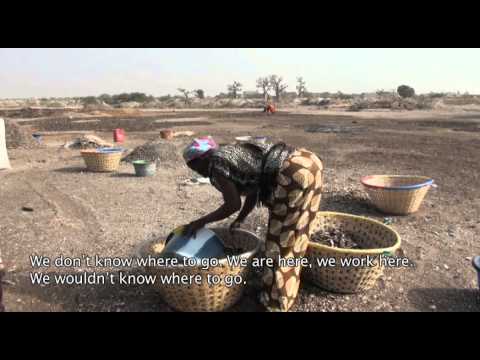
Senegal is one of the countries with the highest amount of effective sunshine on earth. Instead of using the 3000 hours of sunshine a year as a source of energy, 2 new coal fired power plants are now being built with the help of the Dutch development bank FMO, using public money. This video shows the consequences for the local population.
-
Publication / 11 February 2016
-
Publication / 10 December 2018
-
 News / 24 June 2025
Indigenous communities in Panama obtain recognition and partial mitigation measures by Development Banks FMO and DEG in relation to the Barro Blanco dam
Both ENDS and SOMO welcome the signing of the agreement of understanding between four Indigenous Ngäbe communities in Panama and the European development banks FMO and DEG on June 17th 2025. The arrangement includes a community development program that, together with a public statement issued by the banks, aims to recognize and mitigate some of the negative impacts caused by the Barro Blanco hydropower dam. We wish to congratulate the community-based organisation Movimiento 10 de Abril (M10) for its perseverance to seek justice for the affected communities, and we acknowledge the commitment of FMO and DEG to pursue a solution to their long-standing dispute with the communities arising from their partial financing of the hydropower project since 2011.
-
 Press release / 10 February 2021
Transparency at development bank FMO is seriously lacking
The Dutch development bank FMO is not sufficiently transparent about the projects it finances and is therefore acting contrary to its mandate. This is evident from a new report published by the International Accountability Project (IAP) and the Foundation for the Development of Sustainable Policies (FUNDEPS), endorsed by 28 organizations including Both ENDS, SOMO, and Oxfam Novib. The research assesses FMO's disclosure and access to information practices for investments proposed between January 1, 2019, and May 31, 2020. Only in 25% of the cases was it disclosed what potential negative consequences an investment by FMO would have for people and the environment.
-
 News / 23 July 2021
Dutch development bank FMO's funding for Agua Zarca project possibly linked to malpractices
The million-dollar loan that the Dutch development bank FMO provided to project developers of Honduran company DESA for the construction of the controversial Agua Zarca dam project in Honduras, may be related to gross corruption and malpractice. This is concluded in an article published today in the Dutch news paper Financieel Dagblad, based on information provided by COPINH, the indigenous organisation that has been opposing the construction of the dam for years. Several members of the organisation, including its leader Berta Cáceres, were murdered. DESA director David Castillo has recently been convicted of being involved in the assassination of Cáceres in 2016.

