


New report: investment in agroecology necessary for healthy global food system
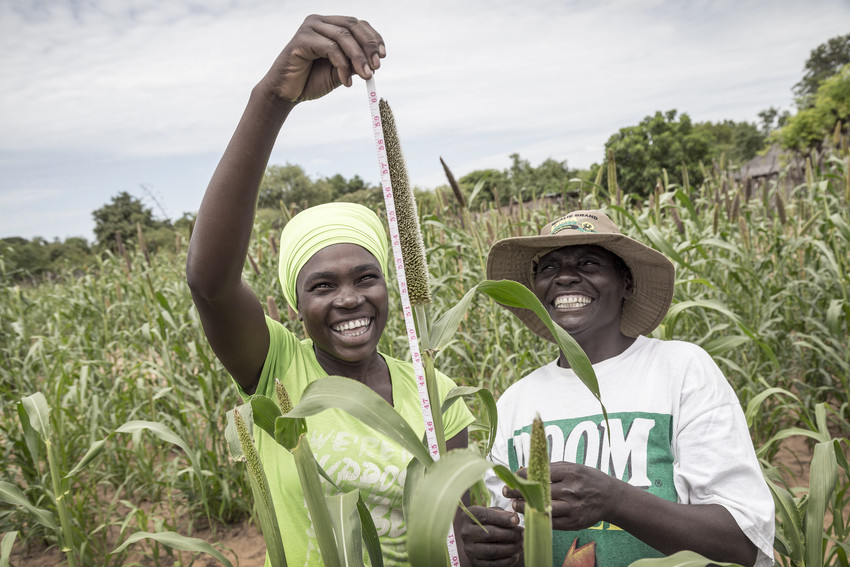
A recent study by Profundo for Both ENDS and Oxfam Novib shows that investment in agroecology is necessary for a sustainable and inclusive global food system. Today, some 768 million – one in ten – people suffer from hunger or a severe shortage of food on a daily basis. Conflict, economic stagnation caused by the Corona epidemic, and the climate crisis present an immediate threat to the production of and access to sufficient nutritious food. Agroecology, a form of agriculture that places small-scale farmers, the natural environment and short supply chains at the centre of food production, makes communities in developing countries more resilient and helps them combat hunger. The study concludes however that major donors, including the Netherlands, are so far providing insufficient support for agroecology.
In 2018, the Netherlands had the ambition to become the 'world leader in circular agriculture', but the Oxfam Novib/Both ENDS study shows that most of the agriculture and food projects funded by Dutch development cooperation devote little or no attention to agroecology. In the past decade, only 9% of these projects have applied a more integrated approach to agricultural change. Specific study of agricultural projects in four African countries shows that a fifth focus mainly on increasing efficiency, with less than 10% giving priority to issues like the circular economy, resilience and recycling. Other agroecological elements, such as diversity and human and social values, are only considered in 6 to 7 % of the projects, while concepts like good governance and cultural and food-related traditions receive the least attention.
"It is high time that we made use of the opportunities that agroecology offers to reduce hunger and strengthen biodiversity," says Nout van der Vaart, agricultural expert at Oxfam Novib. "With their knowledge of local ecosystems, small-scale farmers, who produce the lion's share of food in developing countries, have a crucial role to play in achieving this goal. We should give them the resources to produce local, varied and sustainable food, and put a stop to destructive and exploitative aspects of industrial agriculture, such as the excessive use of agricultural toxins and violation of land rights. By investing in agroecological food production methods, we not only strengthen the position of small-scale farmers but we can also put a stop to the biodiversity and climate crises."
Agriculture accounts for a quarter of the world's emissions of greenhouse gases and 80% of deforestation and loss of diversity. Despite the abundance of food produced, hunger and malnutrition are increasing worldwide. Agroecology is a systematic approach to agriculture and food production focused primarily on the ecologically sustainable, socially inclusive and economically profitable production of food. This approach is supported by the UN Food and Agricultural Organization (FAO) and a growing number of donor countries, including Switzerland, Germany and France.
Oxfam Novib and Both ENDS are therefore calling on the government to place the thorough restructuring of the food system high on the agenda of its development cooperation policy. And to actively advocate its ambitions for circular agriculture not only at home but also internationally. It can achieve this by doubling its support and the budget for agroecological projects in developing countries and taking the lead in promoting agroecology within the UN and other international policy fora.
"Our food system is reaching its limits," says Stefan Schüller, policy officer for sustainable food at Both ENDS. "Agroecology is aimed at the economically responsible cultivation of crops, a fair price for farmers worldwide, and a stronger link between consumer and producer. In other words, it connects agriculture, the natural environment, fair trade relations and respect for the farmer."
More information:
The research commissioned by Both ENDS and Oxfam Novib, conducted by research bureau Profundo
Read more about this subject
-
 Dossier /
Amplifying environmentally just practices
Because of the close relationship with their living environment, local communities often have the best ideas for the sustainable and equitable use and governance of land, water and forests. These environmentally just practices and processes successfully protect and restore ecosystems and address climate change. They are essential in the light of the multiple crises the world faces, but are in dire need of financial and policy support.
-
 Environmentally Just Practice /
Agroecology
Agroecology is a diverse set of agricultural practices, a field of science and a social movement. It aims to transform food systems towards greater ecological sustainability, social justice, and resilience. Both ENDS and CSO-partners around the world support farmers and pastoralists practising agroecology, both on the ground and in gathering political and financial support.
-
 Dossier /
Finance for agroecology
The lion's share of public budgets for climate, agriculture and development still goes to conventional agroindustrial projects that contribute to the current climate, food and biodiversity crises. Both ENDS and our partners are calling for a transition to agroecological practices that are people- and environment-friendly.
-
 Dossier /
Communities Regreen the Sahel
In various countries in the Sahel, vast tracts of land have been restored by the local population by nurturing what spontaneously springs from the soil and protecting the sprouts from cattle and hazards.
-
Publication / 3 July 2026
-
Publication / 18 June 2026
-
Publication / 12 May 2026
-
 Environmentally Just Practice /
A Negotiated Approach for Inclusive Water Governance
A Negotiated Approach envisages the meaningful and long-term participation of communities in all aspects of managing the water and other natural resources on which their lives depend. It seeks to achieve healthy ecosystems and equitable sharing of benefits among all stakeholders within a river basin. This inclusive way of working is an essential precondition for the Transformative Practices that are promoted by Both ENDS and partners.
-
 News / 5 November 2025
Interview: Both ENDS at COP30 for Climate Justice and Systemic Change
Both ENDS is present at COP30 to advocate for genuine access to climate finance for locally led, gender-just climate solutions and the mechanisms that facilitate this, including those for farmer-led restoration. Furthermore, the organisation participates to ensure the crucial connection between the climate negotiations and the trade and investment frameworks that shape them.
Learn more about the Both ENDS team at COP30 below, and find all the activities and side-events in which Both ENDS will participate.
-
Publication / 9 October 2025
-
 Dossier /
International trade and investment with respect for people and planet
The network of international trade and investment treaties is large and complex. The Netherlands alone has signed more than 70 bilateral investment treaties (BITs) and is party to the trade and investment agreements concluded by the EU, like the EU-Mercosur and EU-Indonesia trade deals.
-
 News / 6 October 2025
From Entebbe to Accra: civil society is rewriting the rules of investment
By Fernando Hernández Espino and Bart-Jaap Verbeek
Almost a year after African civil society gathered in Uganda to adopt the Entebbe Declaration, the call to transform international investment governance continues to gain strength. From the 6th to the 9th of October, over 50 civil society organisations from across West Africa, including from Ghana, Senegal, Nigeria, Côte d’Ivoire, Cameroon, Gambia, Sierra Leone, as well as from Kenya and Latin America, are convening in Accra to deepen and operationalise the Declaration’s vision.
-
Publication / 1 July 2025
-
 Environmentally Just Practice /
Analog Forestry
Analog forestry is a transformative approach to the ecological restoration of degraded lands. Natural forests are used as guides to create ecologically sustainable landscapes, which support the social and economical needs of local communities.
-
 Blog / 3 June 2025
A food forest as an inspiring oasis between monoculture fields
Recently, we visited food forest Ketelbroek with a group of colleagues. This project was initiated by food forest pioneer Wouter van Eck and our own Pieter Jansen. What a beautiful place! Located between monocrop fields of ryegrass, beetroot and potatoes, the food forest is a green oasis. Birdsong fills the air and there is a constant buzz and fluttering all around. Hares, badgers, foxes and wild boars are regular visitors. And let's not forget the beavers.
-
 News / 9 May 2025
Women’s leadership in agroecology flourishes in Eastern and Southern Africa
On 12 and 13 February 2025, women from Kenya, Uganda, and Zimbabwe gathered in Nairobi for the Africa Women Leaders in Agroecology (AWOLA) Regional Networking Forum. The event marked a significant moment in the leadership programme of PELUM Kenya, which empowers young women in their role as leaders in the agroecological transition. This project was made possible thanks to support from Both ENDS as part of the Fair, Green and Global (FGG) Alliance.
-
Letter / 15 April 2025
African civil society urges Oman against EACOP support as east Africa trade expo kicks off
Just one day before the Oman East Africa Trade and Investment
Expo opens in Muscat on April 16, over 70 civil society organisations (CSOs) from Uganda, Tanzania, the Democratic Republic of Congo, and beyond have published an open letter urging the Government of Oman to refrain from providing financial or diplomatic support for the controversial East African Crude Oil Pipeline (EACOP). -
 Dossier /
Inclusive ways to sustainable and healthy food for all
All around the world small-scale farmers are using sustainable and inclusive methods to produce food. Working together with nature and each other, they provide their families and communities with sufficient and healthy food. But their production methods are under pressure from large-scale agriculture and the globally dominant system of industrial food production. Together with our partners, Both ENDS is trying to turn the tide in favour of sustainable, local practices that are mostly known as 'agro-ecological' or 'nature-inclusive'. Why are we focusing on these methods? Agro-ecological practices are climate-proof and inclusive and increase the opportunities for communities around the world to produce their food sustainably.
-
 News / 7 April 2025
Food forest Ketelbroek: where food production and biodiversity come together
When Both ENDS-colleagues visit partners, they often go on a "field trip" to see how our joint work affects people and communities. This year, we did the same in the Netherlands. Food forestry pioneer Wouter van Eck demonstrates a group of Both ENDS partners how regenerative agriculture can offer solutions to the climate and biodiversity crises.
-
Publication / 1 April 2025




