


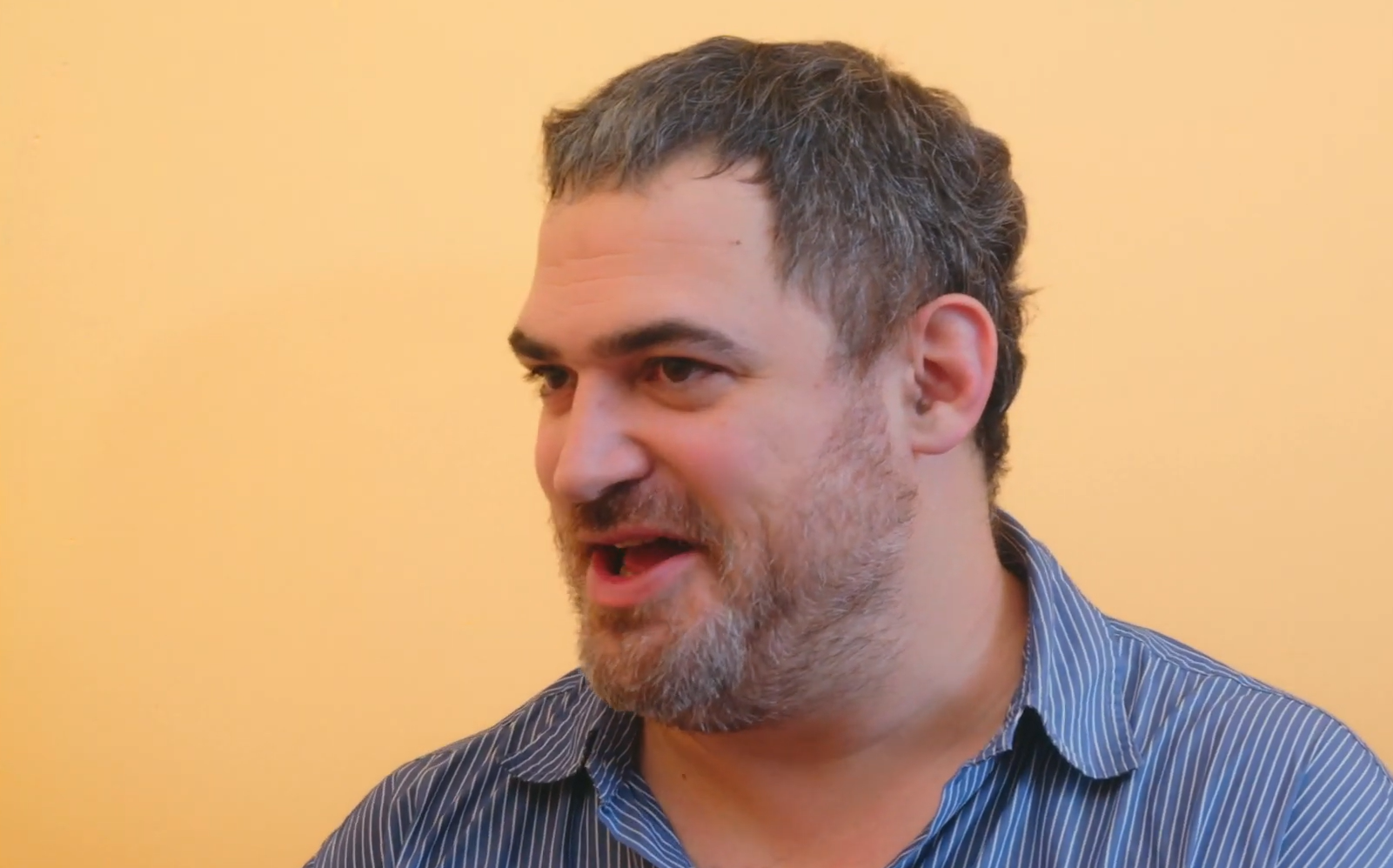
Ariel Slipak of La Fundación Ambiente y Recursos Naturales
At the moment, Argentina is going through difficult times in terms of politics, related to the growth of institutional violence and that is why FARN believes passionately that the defense of the environment is also the defense of human rights, the defense of a good life for people, the defense of justice, of equity. So they fight passionately for greater access to information and for people to live better.
From FARN they are convinced that the greatest extraction of fossil fuels, contrary to the rhetoric of the governments of the East and those that passed, does not generate more wealth. Instead it generates profound social and environmental damage.
Read more about this subject
-
 Dossier /
Wetlands without Borders
With our Wetlands without Borders program, we work towards environmentally sustainable and socially responsible governance of the wetlands system of the La Plata Basin in South America.
-
 Dossier /
Soy: trade in deforestation
The rising demand for soy is having negative consequences for people and the environment in South America. Both ENDS reminds Dutch actors in the soy industry of their responsibilities and is working with partners on fair and sustainable alternatives.
-
 Dossier /
Towards a socially and environmentally just energy transition
To address the climate crisis we need to urgently transition away from fossil fuels towards clean, renewable energy. However, this transition is not only about changing energy sources. It requires an inclusive and fair process that tackles systemic inequalities and demanding consumption patterns, prioritizes environmental and social justice, and which does not repeat mistakes from the past.
-
Publication / 1 juli 2025
-
 Event / 15 november 2024, 12:50 - 16:45
#BothENDSatCOP29 Side Events
Both ENDS’ participation at COP29 includes three critical side events that will highlight gender-just climate finance, locally-led adaptation, and multilateral approaches to a just energy transition and industrialisation in the Global South.
-
 News / 10 oktober 2024
Argentina’s Matanza-Riachuelo Biocultural Corridor
The Matanza-Riachuelo River, which runs through the city of Buenos Aires, is known to be one of the most polluted waterways in the world. Yet it also contains many important ecosystems that play a key role in the lives of millions of people, and countless plant and animal species.
-
 Video / 3 juli 2024
Jonila Castro of AKAP KA & Kalikasan People's Network for the Environment
Jonila Castro works for AKAP KA Manila Bay and/or Kalikasan People's Network for the Environment (Kalikasan PNE). The livelihood of the majority of the Filipino people depends on the environment, on the seas and the lands and mountains.
-
 External link / 2 juli 2024
 -
 Video / 18 mei 2024
Charity Migwi of Oil Change International
Oil Change International is mainly focused on research, communication, and advocacy. Charity Migwi helps with campaigning to get fossil fuel companies to face out their production of oil and gas. In Africa, for instance Nigeria and Senegal, she works together with communities, especially where the projects are happening to see how they can collaborate and strengthen each other. And they are under pressure of time. Where advocacy takes patience and time, climate change impacts are rising daily. A personal talk about the importance of things that are worth fighting for. At Both ENDS, our aim is to connect people for change.
-
 Video / 17 mei 2024
Muhammad Al Amin of WAHLI-Sulawesi
Muhammad Al Amin works as the executive director at WALHISulawesiSelatan. WALHI is an Indonesian environmental non-governmental organization, which is part of the Friends of the Earth International (FoEI) network and the biggest environmental non-profit organization in Indonesia.
-
 Video / 16 mei 2024
Lungisa Huna of the Rural Womens's Assembly
Lungisa Huna works at Rural Womens’s Assembly in Cape Town South Africa. She talks about her dreams, concerns and work with the farming women of South Africa.
-
 Event / 30 januari 2024, 14:00 - 15:30
The environmental and human rights impacts of raw material extraction: Lithium in the High Andes, Argentina
Following the Raw Material Week in November 2023 and the provisional agreement on the Critical Raw Material Regulation, Wetlands International Europe together with Both ENDS and the EU Raw Materials Coalition have organised a session seeking an open discussion on the environmental and human rights impacts of raw materials extraction, in and around vulnerable areas.
-
 News / 25 januari 2024
'We can not have a transition when we do not talk about consumption patterns'
The parliamentary elections in the Netherlands are over, and the dust has somewhat settled. No matter what government emerges from the process, one thing is clear: in the Netherlands the main focus is on the Netherlands. Foreign affairs were hardly mentioned during the elections and the same applies to the process of forming a new coalition. More alarmingly, some of the winners in the elections want to cut themselves off even further from the world around us.
-
 News / 13 november 2023
Recommendations to the foreign financiers of Argentina's lithium rush
To realise the energy transition, large quantities of minerals and metals such as lithium, cobalt and rare earth metals are needed. These raw materials are mainly extracted in countries in the global South, and unfortunately this is almost always accompanied by human rights violations and environmental destruction. Today – also in light of EU Raw Materials Week that is happening this week – Argentinian organisation FARN and Both ENDS publish a joint report on the extraction of lithium in Argentina.
-
Publication / 13 november 2023
-
Publication / 23 juni 2023
-
 News / 15 juni 2023
Biocultural corridors to restore the La Plata Basin
Even a region like the South American La Plata Basin, known for it's majestic rivers and wetlands, is struggling with drought. A group of organisations united in the Wetlands without Borders network strive to turn the tide.
-
 News / 26 augustus 2022
Fires in the Paraná Delta show urgent need for a Wetlands Law
In Argentina, the wetlands of the Paraná Delta are burning. The fires, caused by human activity and aggrevated by climate change, clearly show the wetlands need protection. The Argentinian organisations that form part of the Wetlands without Borders programme are therefore calling for a strong "Ley de Humedales", a Wetlands Law.
-
 Blog / 2 februari 2022
On World Wetlands Day communities throughout the La Plata Basin are asking for support in their fight for their endangered wetland ecosystems
By Eva SchmitzThe new year has barely begun but already record high summer temperatures are being reported in parts of South America, especially Argentina, Paraguay and Southern Brazil. The latest heatwave, with temperatures of up to 45C, arrives on top of two years of severe drought which had a devastating effect on the entire region. It is a painful reminder of the immediacy of climate change and emblematic for what happens when vital ecosystems are not protected and for the catastrophic consequences as much on already endangered wildlife as on the local communities who depend on them for their livelihoods. One of the most affected areas are the regions wetlands – unique ecosystems, which are crucial ecological pressure points, vital for the regulation of river systems and huge carbon sinks. Their loss not only has ecological impacts but affects thousands of local communities which depend on their health for fishing, tourism and local agriculture. The threat to them by for example droughts and fires, can be directly linked to the large-scale production of soy, produced mainly for export. This in turn means responsibility for what is happening in the region needs to be acknowledged and shared by leaders around the world, and especially large importers such as the Netherlands.
-
 External link / 20 januari 2022
Wetlands without Borders
The Wetlands without Borders programme aims to preserve the biodiversity of the La Plata Basin and the sustainable livelihoods of its communities. Preservation of the La Plata Basin is essential for protecting the region from flood and drought, and preserving the quality of life of its inhabitants. Click here for the programme's website and for the latest information.



