


The Netherlands can contribute much to making agriculture sustainable – nationally and internationally
If the Netherlands wants to make its agriculture and livestock industry sustainable and to ensure that farmers get a fair price for their products, it will also have to look beyond its own borders. The Netherlands is the world's second largest exporter of agricultural products. We have a great impact because, through our trade relations, we uphold a system of intensive agriculture that destroys ecosystems and undermines local production. Partly due to our trade in agricultural products, the Dutch economy is has a large, and growing, footprint. That should and can be different: the Netherlands is in a good position to lead the required transition in agriculture. Fortunately, the party manifestos for the coming elections offer sufficient opportunities to set that in motion. A new coalition can thus take decisive new steps.
The road to sustainability
Most of the attention in the manifestos goes to achieving sustainability at national level. PvdA, GroenLinks, PvdD, SP, ChristenUnie and D66 want to see agriculture and the livestock industry made completely sustainable and focus on nature-inclusive and circular agriculture. Their manifestos give the government a stimulating and regulatory role in achieving these aims. CDA and VVD lay the emphasis on using technological solutions to make the existing agricultural model sustainable. The government provides a supportive framework, with farmers themselves playing an initiating and leading role.
The parties are in general agreement that farmers should get a fair price for their products, chains should be shorter and products should be marketed and consumed locally. That calls for a radical change of direction, especially in our foreign policy. Dutch banks, companies and agricultural engineers actively promote and support the Dutch agricultural model in all kinds of ways beyond our borders, while that model is the subject of much criticism at home.
Trade and investment agreements
Trade agreements are an important component of the export strategy for our non-sustainable agricultural model. Agreements that the Netherlands and the EU have concluded or will conclude in the future with countries in Asia, Africa and Latin America allow large-scale producers to open up new markets, at the expense of small local farmers.
The provisions in these agreements throw up severe obstacles for local food producers. Farmers in Indonesia can only produce rice sustainably if they can use their own local seeds. But that is all too often prevented by international trade agreements that favour giants like Bayer and Syngenta. Women in Guatemala wishing to plant food forests have to compete for water with rapidly expanding palm oil plantations in the hands of foreign multinationals, whose activities are made possible by banks, insurance companies and trade and investment agreements.
But famers in the Netherlands, too, are disadvantaged by these agreements. Dutch growers are coming under pressure from large-scale and cheaply produced green beans from Senegal and Morocco – mainly produced by an originally Dutch company. Cheap, non-sustainably produced roses from Kenya are making it difficult for Dutch greenhouse farmers to grow them sustainably. And there are many more examples. The EU-Mercosur agreement, which has been criticised by a majority in parliament, has increased competition from South American meat and crops produced according to much less stringent sustainability standards and also pose a great threat to the Amazon region.
The Netherlands is part of the solution
Rather than being part of the problem, the Netherlands can be part of the solution. To really get the transition to sustainable agriculture moving, the new coalition will have to discourage the production of non-sustainable products like soya and palm oil by imposing strict sustainability requirements on the import of these bulk goods. In the EU and WTO, it can call for provisions to be included in new trade and investment agreements like the EU-Mercosur agreement imposing import duties on non-sustainable products. Within its own trade agreements, like that with Indonesia, the new government can combat the monopoly of giant seed companies that make it impossible for farmers to use their own seeds.
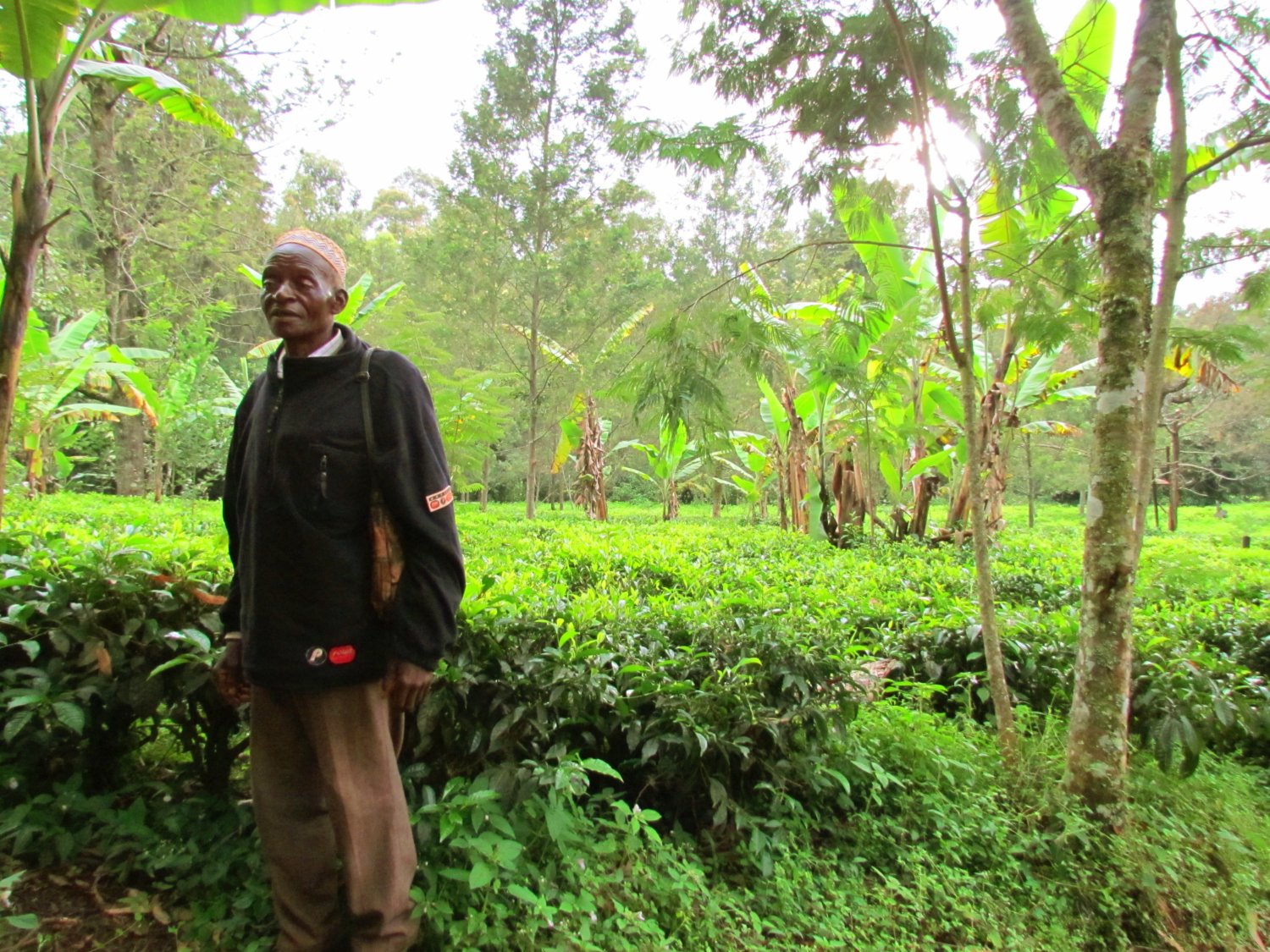
Practice has shown that food forests and other agro-ecological initiatives within and outside the Netherlands are future-proof and profitable. The new coalition can reward Dutch farmers who also wish to operate sustainably beyond our borders – the front runners who we have to rely on – and where possible encourage this development by giving them financial support instead of continuing to support non-sustainable agricultural companies.
Our science is a potential ally for the new coalition. Wageningen and other universities are breeding the talent and energy to make sustainability the norm. Together with scientists, the Netherlands can invest in expanding agro-ecology and other forms of sustainable and circular agriculture and livestock breeding. That can start with trade missions aimed primarily at exporting these methods instead of our large-scale, twentieth century agricultural model.
What the Netherlands does beyond its borders is of enormous importance for the international sustainable agriculture and food transition. It is up to the new coalition to take on the responsibility that comes with that role, and to give the transition a substantial boost within and outside the Netherlands.
Read more about this subject
-
 Dossier /
Trade agreements
International trade agreements often have far-reaching consequences not only for the economy of a country, but also for people and the environment. It is primarily the most vulnerable groups who suffer most from these agreements.
-
 News / 5 oktober 2026
Rural Women's Assembly wins Right Livelihood Award
We are thrilled to share that our partner the Rural Women's Assembly (RWA) is one of this year's Right Livelihood Laureates! The award, often called the "Alternative Nobel Prize", honours RWA for bringing together more than 178,000 women farmers in eleven Southern African countries. Together, these women stand up for their land, their seeds and their right to make decisions about their own lives and bodies.
-
 News / 29 september 2026
Summary - Both ENDS complaint under the EU-New Zealand trade agreement
On 29 September 2026, Both ENDS lodged the first complaint on climate grounds with the European Commission's Single Entry Point. It asks the Commission to examine whether Aotearoa New Zealand has broken two promises both sides made in the EU-New Zealand Free Trade Agreement: not to weaken or set aside environmental laws in order to encourage trade or investment, and to effectively implement the Paris Agreement.
-
Publication / 29 september 2026
-
 News / 29 september 2026
Q&A: New Zealand's climate rollback and the EU trade agreement
On 29 September 2026 / 30 September in Aotearoa New Zealand, Both ENDS lodged a complaint with the European Commission under the EU-New Zealand Free Trade Agreement. These are the questions we are asked most often, and our answers. The complaint summary, the case explainer and the key public sources are linked at the end of this page.
-
 Press release / 29 september 2026
New Zealand faces its first climate complaint under EU trade rules
UTRECHT / WELLINGTON, 29 September 2026 /30 September in Aotearoa New Zealand
Both ENDS, a Dutch environmental justice organisation, has lodged a formal complaint with the European Commission arguing that New Zealand has broken the climate promises it made in its free trade agreement with the European Union. It is the first complaint on environmental and climate grounds under the Commission's Single Entry Point, the mechanism that lets civil society ask the EU to enforce the sustainability commitments in its trade agreements.
-
 Dossier /
Communities Regreen the Sahel
In various countries in the Sahel, vast tracts of land have been restored by the local population by nurturing what spontaneously springs from the soil and protecting the sprouts from cattle and hazards.
-
Publication / 3 juli 2026
-
 Dossier /
Gas in Mozambique
In 2011 one of the world’s largest gas reserves was found in the coastal province of Cabo Delgado, in the north of Mozambique. A total of 35 billion dollars has been invested to extract the gas. Dozens of multinationals and financiers are involved in these rapid developments. It is very difficult for the people living in Cabo Delgado to exert influence on the plans and activities, while they experience the negative consequences. With the arrival of these companies, they are losing their land.
-
 Dossier /
Finance for agroecology
The lion's share of public budgets for climate, agriculture and development still goes to conventional agroindustrial projects that contribute to the current climate, food and biodiversity crises. Both ENDS and our partners are calling for a transition to agroecological practices that are people- and environment-friendly.
-
Publication / 18 juni 2026
-
Publication / 12 mei 2026
-
 News / 24 maart 2026
Statement: Invest in local leadership for tropical forest management and local economies
IUCN-NL, Both ENDS, and 16 other Dutch and international civil society organizations (CSOs), networks, and expert groups are calling on the Dutch government to invest more strongly in locally led forest management and forest-based economies. This should be done within the framework of Dutch international cooperation and its associated policy instruments.
-
 News / 17 februari 2026
Civic space at the frontlines: "Build strong coalitions and counter repressive regimes"
Today, we look back on an inspiring event Civic space at the frontlines -
Environmental Defenders and the Role of International Trade and Investment Policy. The panel exist of Michel Forst, UN Special Rapporteur Environmental Defenders under the Aarhus Convention, Suzanne Kröger, Member of Parliament for GroenLinks–PvdA, Dr. Margit van Wessel, Associate Professor at Wageningen University, Anne de Jonghe, policy advisor at Both ENDS, and Jonila Castro, national spokesperson for Kalikasan People's Network for the Environment. With an audience of CSO experts, academics, accountability experts and students we discussed the effects of Dutch economic activity on Environmental Defenders, and what we all can do to support those on the front lines of the fight for the environment and human rights. -
News / 2 februari 2026
Response to the D66-VVD-CDA coalition agreement
Coalition: Repair the damage and dare to go further
At Both ENDS, we see a number of cautious steps in the right direction in this coalition agreement. There is a slight emphasis on green issues, renewed attention to women's rights, recognition of the importance of civil society, and discussion of trade agreements with a focus on mutual interests. However, without structural change in how we trade, invest, and cooperate, fine words remain empty shells.
-
 Dossier /
Wetlands without Borders
With our Wetlands without Borders program, we work towards environmentally sustainable and socially responsible governance of the wetlands system of the La Plata Basin in South America.
-
 News / 5 november 2025
Another ISDS claim hits the Netherlands: Petrogas sues over solidarity contribution and royalty regulations
SOMO and Both ENDS strongly condemn the newly revealed investor-state dispute settlement (ISDS) case filed by Petrogas, an Omani oil and gas company operating two shallow-water gas fields in the Dutch North Sea, against the Netherlands under the Netherlands-Oman bilateral investment treaty (BIT).
-
 News / 5 november 2025
Interview: Both ENDS at COP30 for Climate Justice and Systemic Change
Both ENDS is present at COP30 to advocate for genuine access to climate finance for locally led, gender-just climate solutions and the mechanisms that facilitate this, including those for farmer-led restoration. Furthermore, the organisation participates to ensure the crucial connection between the climate negotiations and the trade and investment frameworks that shape them.
Learn more about the Both ENDS team at COP30 below, and find all the activities and side-events in which Both ENDS will participate.
-
 News / 5 november 2025
Overview of Both ENDS events at COP30 in Belem, Brazil
Both ENDS is present at COP30 to advocate for genuine access to climate finance for locally led, gender-just climate solutions, and for the mechanisms that make these possible, including those supporting farmer-led restoration. The organisation also engages to highlight the crucial connection between climate negotiations and the trade and investment frameworks that shape them.
Below is an overview of the Both ENDS team at COP30 and a detailed look at the activities and side-events in which Both ENDS will participate.
-
Publication / 16 oktober 2025




