


If we women don't speak up, no one will speak for us
By
Maaike Hendriks and
Tamara Mohr
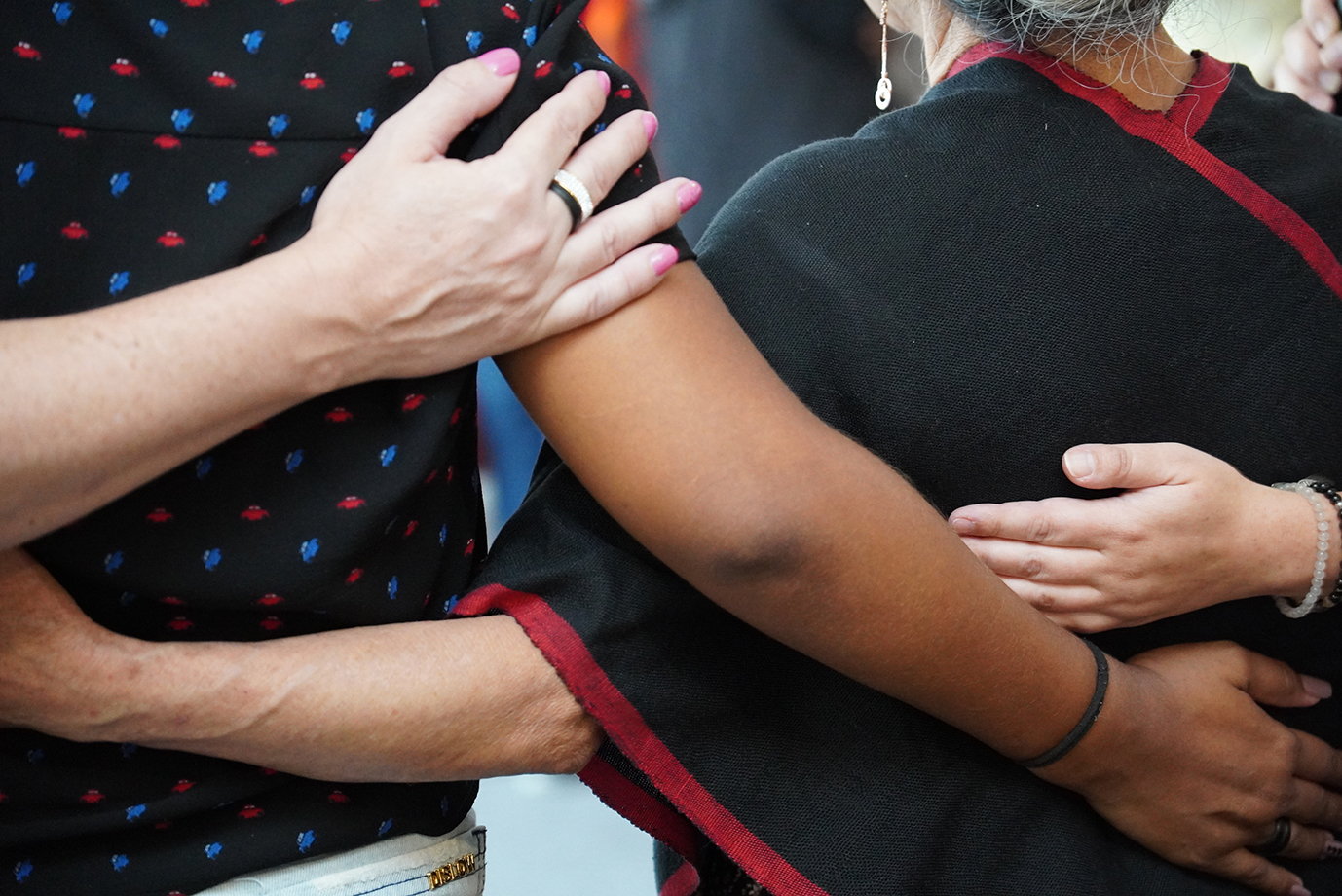
This February women environmental defenders from around the world met each other in Indonesia. All these defenders face structural violence. GAGGA, the Global Alliance for Green and Gender Action, supports these women. This meeting in Indonesia provided a unique space for women, trans-, intersex and non-binary people who are often the subject of conversation but rarely have the opportunity to engage with each other and meet other defenders from around the world. For they are all amazingly knowledgeable, strong and resilient women whom we should take seriously.
“From Sexual and domestic violence to kidnapping and murder. In their efforts to defend their land, territories and natural resources, women and girl environmental defenders (WGEDs) around the world are experiencing various forms of structural violence. The violence they experience ranges from the physical to the spiritual. From dislocation and dispossession, to harassment and defamation. From sexual and domestic violence to kidnapping and murder” (this is from this report by the global Gagga-alliance from 2021).
Coming together as a follow-up
As a follow-up to this study around 25 - mostly women - representatives of community-based organisations from 12 countries in Latin America, Africa, Asia and Eastern Europe met in Indonesia from February 19 to 21 for a mutual sharing and linking gathering. The meeting and the study are the initiative of the Global Alliance for Green and Gender Action (GAGGA), an alliance led by the Central American Women’s Fund (FCAM) with Both ENDS and Mama Cash and are supported by the Ford Foundation. Read this blog written by Tamara Mohr and Maaike Hendriks who attended this meeting in February.
Living in safe houses and finding a bullet on your doorstep
One woman representing an indigenous group in her country has received so many death threats and anonymous people staking her house that she had to flee to the capital city. There she is in constant hiding, moving from one safe house to another, continuing as best as she can under the circumstances to fight for indigenous women’s rights and security. She is extremely sad and depressed that she cannot go home to her village and family. She should flee the country to be safer, but could not stand the loneliness, she said. There is no hope under the current regime in her country that her situation will improve.
Another women from Latin America shared how she has already lost 7 family members who were killed by the military and how she found a bullet on her doorstep. She is heavily traumatized. Her village must be evicted for a government-initiated project. No compensation is offered, the community is forced to move. Only asking for justice led to relentless violent actions and threats.
Safe space to share
The 25 women shared their experiences, talked about the violence in their contexts as well as the strategies they developed to protect themselves and their communities. Together they formulated advise for funders. Both ENDS in its joint advocacy work with partners is aware of the threats they often face because of their actions. In our conversations with funders, we have identified a growing interest to support these women defenders and the willingness to better understand their situation, their needs and ways to support them directly.
Injustice and colonialism continue
Listening to the participants in the meeting, what struck me is how they are victims of injustice and colonialism that is still continuing today. Most of these women rightfully defend their territories and livelihoods against the impact of developments conceived by and benefiting others. They face the impact of hydroelectric dams, large scale mining, infrastructure and monoculture plantations. Mostly for products we all consume without wanting to know what harm it caused to others. For these ‘development projects’ communities are evicted from their land or have to accept living with polluted water, air and land, with a detrimental effect on their health, income and living conditions. And climate change, leading to extreme droughts or floods, heat waves and fires is exacerbating their situation.
Fighting for your rights and being labelled terrorist
When leaders in the communities – the majority of which are women who most directly feel the impact as they are taking care of the family and community – organise themselves and fight for their rights, they are labelled ‘terrorist’ and ‘anti-development’. Instead of listening to them and taking their complaints serious they face harassment, intimidation, criminalisation and even murder.
Living in constant fear
Most of the participants in the Indonesia meeting live in constant fear, their kin and peers have been killed and they themselves have received death threats on numerous occasions. Some have gone into permanent hiding or live under the constant threat of being arrested and jailed without trial. On top of that conditions are created to weaken them and to silence them, ranging from legislation that makes it impossible to receive funds from abroad to closing down organisations, bank accounts and websites, confiscating computers and even burning down villages or safe houses.
These women know best
Still, once again and not surprising to me but unfortunately not common knowledge, is that these women know best what needs to be done and how to react. They have developed strategies to survive and to voice their complaints. They can’t continue without solidarity and collective care. They will be more successful when they engage in joint advocacy and if we all invest in alliance- and cross-movement building. At the last day the participants developed concrete recommendations to funders who are interested to support these powerful women, trans-, intersex and non-binary people. They defined what needs most support and how support can be best provided. They provided concrete advice on how current funding practices can be improved or changed.
Take them seriously
The first thing we should do is take them seriously. Instead of treating defenders as poor, dependent recipients of charity, funders and defenders should become partners who jointly define what works best. We should get rid of any mistrust and endless bureaucratic steps to avoid risks of misuse of money. For the defenders, the funding needs to be flexible, there is no other way. And who are we to mistrust anyone who fights for the rights of their communities, cleaning up the mess of others, risking their health, family and lives. If we are mitigating risks, we should first of all look at the risks faced by these women and make sure they stay safe. We are looking forward to taking all these learnings to future donor spaces.
Foto credit: Mas Binbin
Read more about this subject
-
 Dossier /
Global Alliance for Green and Gender Action (GAGGA)
GAGGA rallies the collective power of the women's rights and environmental justice movements to realize a world where women can and do access their rights to water, food security, and a clean, healthy and safe environment.
-
 News / 5 October 2026
Rural Women's Assembly wins Right Livelihood Award
We are thrilled to share that our partner the Rural Women's Assembly (RWA) is one of this year's Right Livelihood Laureates! The award, often called the "Alternative Nobel Prize", honours RWA for bringing together more than 178,000 women farmers in eleven Southern African countries. Together, these women stand up for their land, their seeds and their right to make decisions about their own lives and bodies.
-
 News / 27 February 2026
Both ENDS strengthens the resilience of female environmental defenders worldwide thanks to multi-year contribution from the Postcode Lottery
In recent years, Both ENDS has received an additional contribution of €875,000 from the Postcode Lottery for the Autonomy & Resilience Fund (2022–2025), implemented in collaboration with the Global Alliance for Green and Gender Action (GAGGA). This support was essential because female environmental rights defenders around the world are increasingly facing climate change, repression and shrinking civil space. With this contribution, Both ENDS supports female activists and their communities with flexible, trust-based funding, enabling them to develop their own solutions to urgent environmental and climate problems.
-
 Environmentally Just Practice /
Non-Timber Forest Products (NTFPs)
About one in every six people, particularly women, directly rely on forests for their lives and livelihoods, especially for food. This shows how important non-timber forest products (NTFPs) and forests are to ensure community resilience. Not only as a source of food, water and income, but also because of their cultural and spiritual meaning.
-
 News / 5 November 2025
Interview: Both ENDS at COP30 for Climate Justice and Systemic Change
Both ENDS is present at COP30 to advocate for genuine access to climate finance for locally led, gender-just climate solutions and the mechanisms that facilitate this, including those for farmer-led restoration. Furthermore, the organisation participates to ensure the crucial connection between the climate negotiations and the trade and investment frameworks that shape them.
Learn more about the Both ENDS team at COP30 below, and find all the activities and side-events in which Both ENDS will participate.
-
 News / 5 November 2025
Overview of Both ENDS events at COP30 in Belem, Brazil
Both ENDS is present at COP30 to advocate for genuine access to climate finance for locally led, gender-just climate solutions, and for the mechanisms that make these possible, including those supporting farmer-led restoration. The organisation also engages to highlight the crucial connection between climate negotiations and the trade and investment frameworks that shape them.
Below is an overview of the Both ENDS team at COP30 and a detailed look at the activities and side-events in which Both ENDS will participate.
-
 News / 16 July 2025
Case Study: Women Advocating for Gender and Climate Justice in Burkina Faso
The Women Environmental Programme Burkina Faso (WEP BF or WEP) is leading the way in gender-just climate solutions, putting the power of advocacy directly into the hands of women farmers. “In Burkina Faso, women play a crucial role in food production and natural resource management, yet they continue to face systemic barriers to land ownership,” explains a WEP team member. “Despite legal provisions, deeply ingrained customary norms remain dominant, restricting women’s access to land as user rights only, which need to be mediated through male family members.” Without secure access to land, they face significant obstacles in sustaining their agricultural activities, improving local food security, and fully participating in their communities.
-
 News / 16 July 2025
Case Study: Fighting Environmental Transphobia and Social Fragmentation in Brazil
In the face of environmental transphobia, a form of discrimination where trans and gender-diverse communities are disproportionately impacted by environmental degradation,excluded from climate policies, and often met with stigma and exclusion by environmental justice movements, Grupo Orgulho, Liberdade e Dignidade (GOLD) has emerged as a bold and visionary force for change in Brazil. At the heart of this movement is Débora Sabará ,GOLD’s leader, a travesti activist who has fought tirelessly to place the perspectives andneeds of LGBTIQAPN+ (Lesbian, Gay, Bisexual, Trans, Intersex, Queer, Asexual, Pansexual, Nonbinary and other identities), Indigenous and Afro-Brazilian communities at the center of environmental justice conversations.
-
 News / 16 July 2025
Case Study: Community Paralegals Defending Land Rights from Extractive Industries and Land Grabs in Mozambique
Across Mozambique, land represents more than just territory. It is the cornerstone of livelihoods, culture, and autonomy for many communities. When companies arrive, claiming large portions for mining, oil exploration or agribusiness, residents face significant challenges in asserting their rights. Mozambique’s Land Law (1997) grants communities user rights, ensuring they can occupy and use land for subsistence and cultural purposes.
-
 News / 16 July 2025
The challenges of climate change, gender inequality, and conflict
This FCDO-supported project, part of the GAGGA programme, brought together 6 women-led community-based organisations from around the world to explore how they navigate the combined challenges of climate change, gender inequality, and conflict. Through a Feminist Participatory Action Research approach, the organisations documented strategies ranging from land rights advocacy to climate-resilient agriculture, highlighting how extractive industries, militarisation, and patriarchal systems drive exclusion and insecurity. Their findings are now informing donors and policymakers on the need to support grassroots women’s leadership. In the following interview, the project lead shares more about the research, key insights, and its broader impact.
-
 Blog / 2 July 2025
Women at the frontlines of climate action: local power for global change
By Tamara MohrLast week, GAGGA, the Global Alliance for Green and Gender Action, with Both ENDS as one of the Alliance members, together with FCAM and Mama Cash, organised its Global Meeting in Indonesia. The goal of this meeting was to recognise, celebrate and look ahead at cross-movement and cross-regional connections, to strengthen the collective power of gender, climate and environmental justice movements.
-
 Event / 12 March 2025, 09:30 - 11:15
The Conflict, Gender, Climate Nexus: Localized understanding and policy recommendations
Across the world, women lead efforts to advance peace, gender and environmental justice. From the Philippines to Mozambique, Burkina Faso to Brazil, they face a deadly convergence of violence, environmental destruction, and extractivist land grabs. As corporate interests, state forces or other armed actors expand into their territories, entire communities are displaced, criminalized, or subjected to violent repression. At the same time, worsening climate disasters further erode their means of survival, exacerbating food insecurity, water shortages, forced migration and gendered inequalities.
-
 Dossier /
Small Grants Big Impacts
Small grants funds offer an effective, alternative way to channel big money from large donors and funds to local groups and organisations that are striving for a sustainable and just society everywhere around the world.
-
 Event / 15 November 2024, 12:50 - 16:45
#BothENDSatCOP29 Side Events
Both ENDS’ participation at COP29 includes three critical side events that will highlight gender-just climate finance, locally-led adaptation, and multilateral approaches to a just energy transition and industrialisation in the Global South.
-
 News / 1 November 2024
Both ENDS at COP29: advocating for gender just climate finance
On November 11th, the 29th UN Climate Conference will start in Baku, Azerbaijan. Just like previous years, Both ENDS will be there to advocate for local access to climate finance, and to support our partner organisations in their advocacy work. How do we do that, and what are our hopes (and worries) about this 29th edition of the UNFCCC COP? We asked Marius Troost, who will be joining COP29 together with Daan Robben.
-
 External link / 2 July 2024
 -
 Event / 12 March 2024
From Policy To Practice: Funding Locally-led Gender-Just Climate Action
A discussion on the intersection of climate and gender justice - specifically on financing mechanisms for gender-just climate solutions!
-
 Blog / 26 February 2024
Brumadinho: 5 years without justice
On January 25, 2019, Brumadinho region witnessed a tragedy-crime that claimed 272 lives, including two unborn children, affectionately called "Jewels" in response to VALE’s declarations that the company, as a Brazilian jewel, should not be condemned for an accident. However, the investigations about B1 dam collapse, at Córrego do Feijão Mine, showed that the scar left on the community and environment was not an accident, but VALE negligence.
-
 News / 29 November 2023
An Urgent Call for Gender Just Climate Finance
The climate crisis continues to escalate, and the urgency for meaningful solutions has never been more palpable. As world leaders gather for the 2023 United Nations Climate Change Conference or Conference of the Parties of the UNFCCC (COP28), it's crucial that grassroots voices are not just heard but leading on the solutions we craft. We must recognise the climate leadership of the self-led groups of women, girls, trans and intersex within the Indigenous, Afrodescendant and rural communities that have been structurally excluded and silenced as the world grapples with climate change.
-
Publication / 16 October 2023

