




“Poldering” to face climate change
Last week Mark Rutte met with Ban Ki Moon, Bill Gates and World Bank Director Kristalina Georgieva in Davos. They are the chairpersons of the Global Commission on Adaptation, which was also founded by the Netherlands. This is an important organisation because, as Rutte wrote on Twitter, "climate change is the biggest challenge of this century," and as an international community we should "pay attention to the problems of the countries that are being threatened by climate change."
One of those problems is the increase in floods. In the Netherlands we have learned how to deal with a water surplus throughout the years. For example, after years of damming the rivers and keeping out sea water, we have paved the way for 'Room for the River'. Moreover, everyone in the Netherlands has always been involved in water management to some degree: it is not without reason that our water authorities are over 750 years old and among the oldest democratically chosen authorities in the Netherlands, and, according to some, in the entire world.
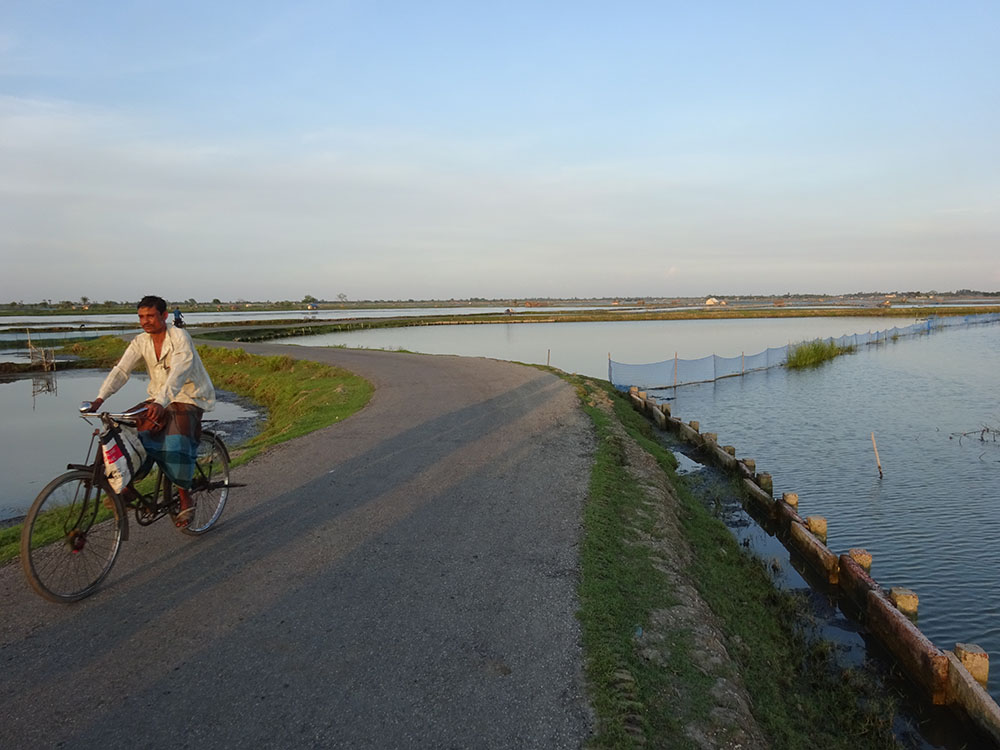
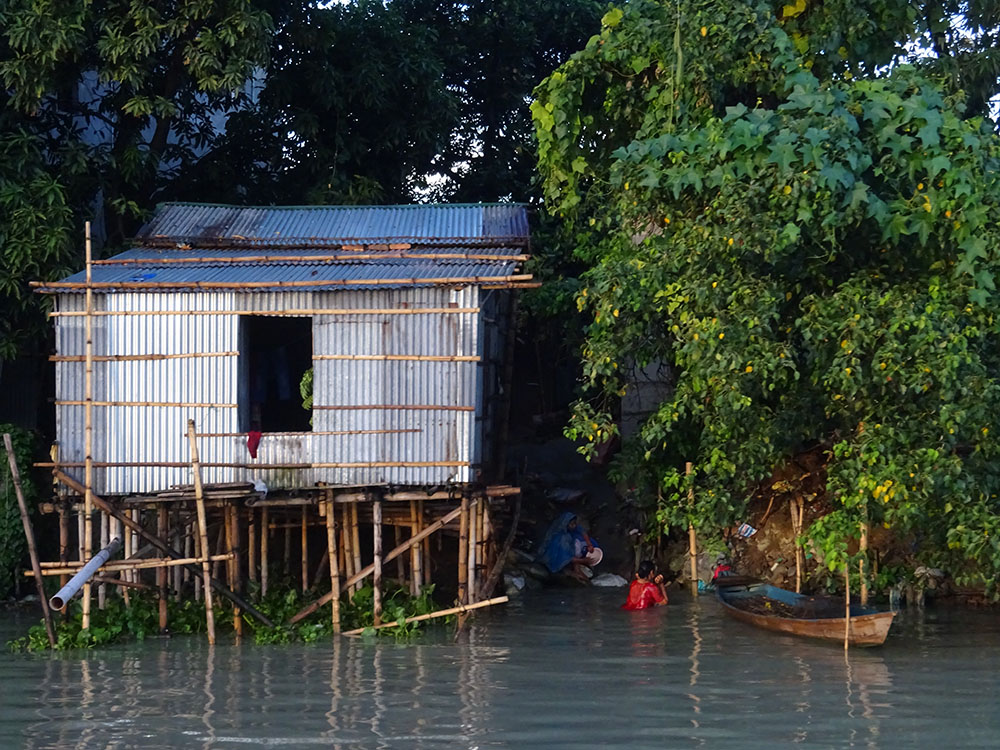
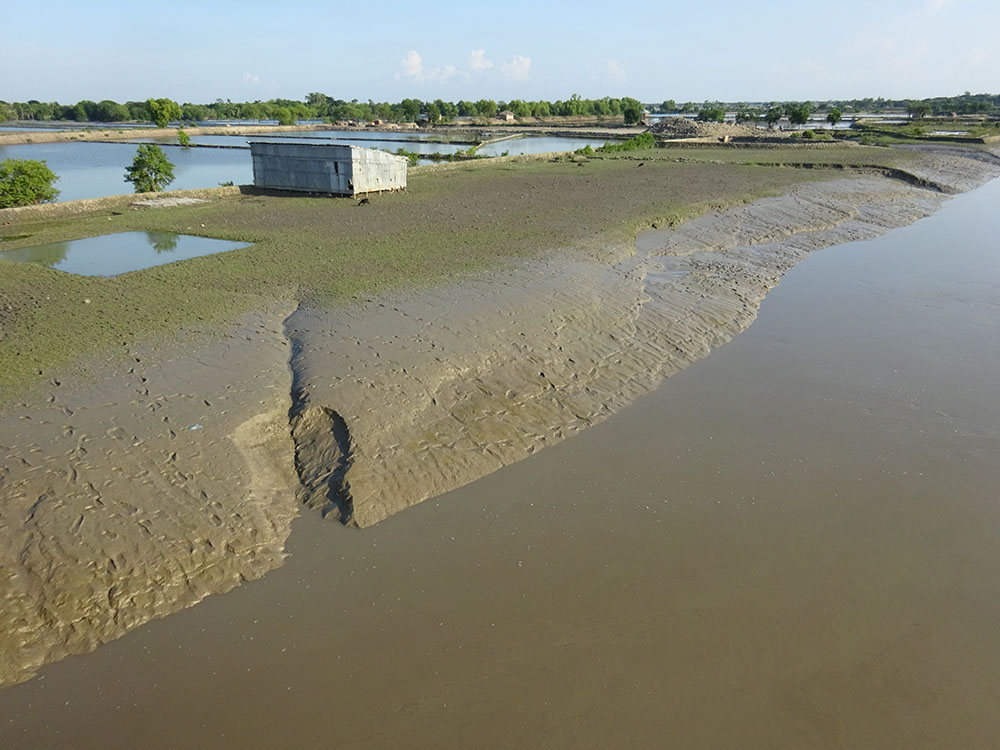
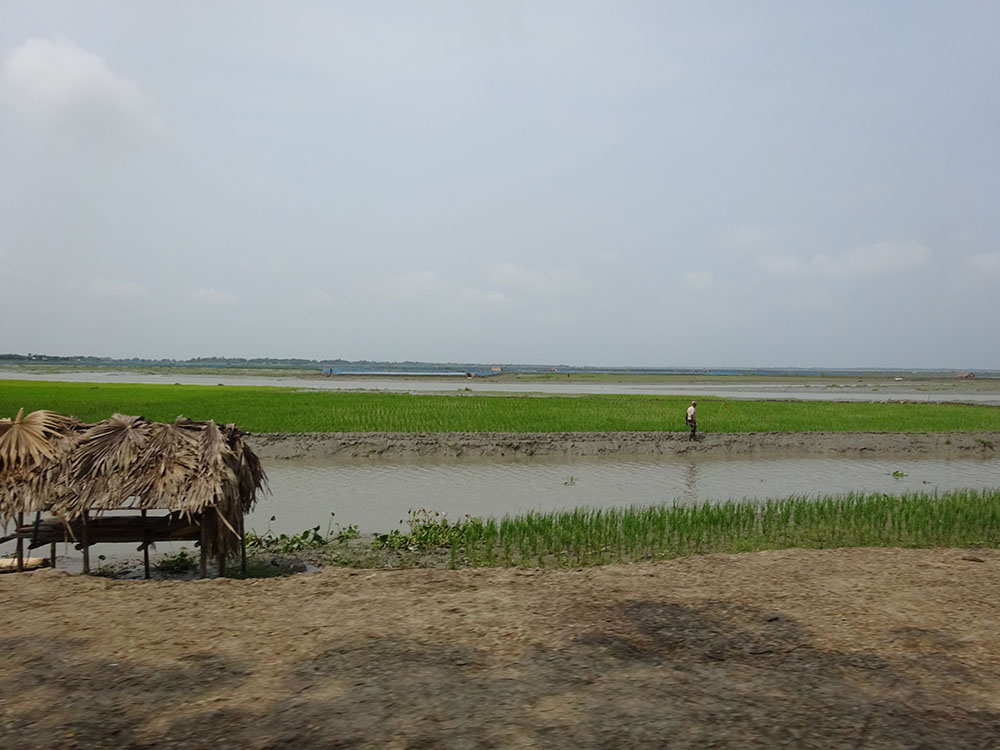
We are more than happy to share our knowledge of water management with other countries. After heavy floods in Bangladesh in the 1950s, the flood plains of the coastal area were converted into 139 polders with the help of Dutch expertise, 39 of which are located in the southwest. These polders kept the water outside of the dikes to protect the land from future floods. Unfortunately, the polders only helped for a short time. The large amounts of sediment (mud) that play an important role in the Bengali water system hadn't sufficiently been taken into account in the design of the polders. As a result, these sediments clogged the pumping stations and accumulated on the river bed. This led to a raise of the river bed beyond the land level of the polders.
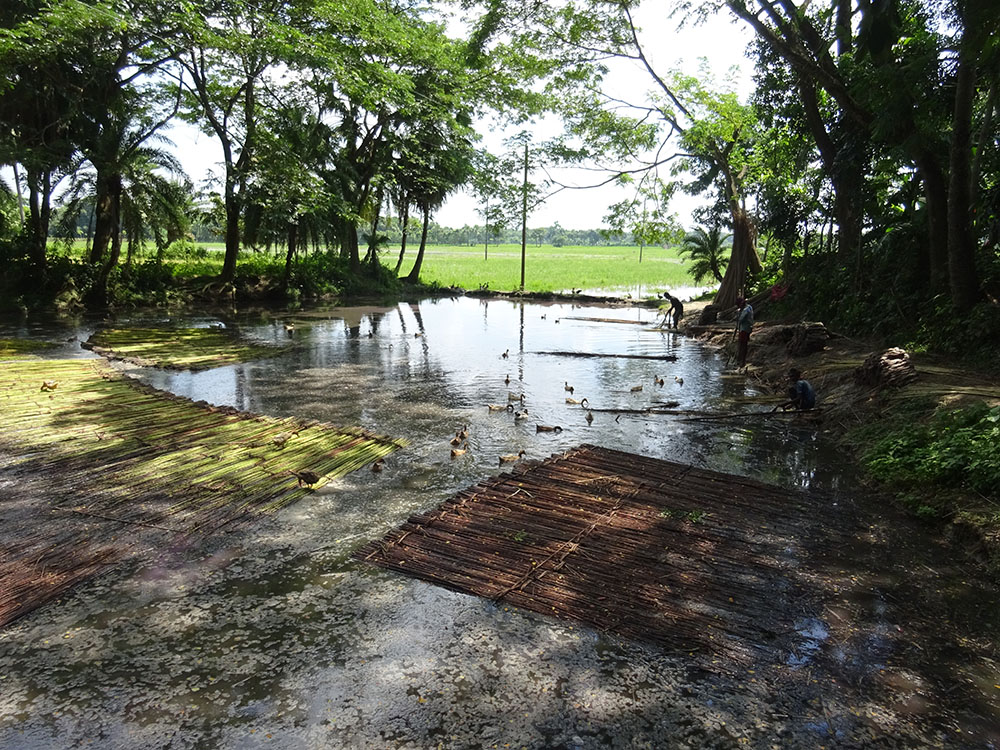
This could happen because the Dutch applied the technique of empoldering (creating polders), while they did not introduce the process of 'polderen' (the Dutch way of first talking to all stakeholders before making decisions) in Bangladesh. The inhabitants of the southwestern coastal area were not sufficiently involved in the design and implementation of the plan. Those local communities used to flood the plains in a controlled way with muddy flood water. This resulted in a new layer of fertile soil as well as a rise in land levels. Another beneficial side effect was that the sediment didn't accumulate in the rivers, so that the water could flow back into the ocean without any problems. Civil society organisations such as Uttaran have incorporated this local knowledge into a method that is now known as 'Tidal River Management'.
For the low-lying Bangladesh, today's climate adaptation is extremely urgent since the sea level is rising and weather conditions are becoming more and more extreme. Last year, the Bangladesh Delta Plan 2100 (BDP2100), which was partly made possible by the Netherlands, was approved. One positive aspect is that this plan has already selected seven of the 39 polders for Tidal River Management. This method is not just a technical solution, but – just like the Dutch polder system - it originates from the local social structures that have always been necessary to manage delta areas such as Bangladesh and the Netherlands.
Consequently, Bangladesh now has a great opportunity to actively involve civil society organisations and inhabitants in the execution of the new Delta Plan and also to restore the old social structures. In this way, they are able to adapt to climate change the most effectively. With this participatory polder model, Bangladesh and the Netherlands can serve as an example of how the Global Commission on Adaptation can act in drafting and executing its plans for climate adaptation.
For more information
Read more about this subject
-
 Blog / 25 november 2024
The Need for Civic Space in Global Policymaking
and Kyra Pohlan
In today’s interconnected world, international forums play a pivotal role in shaping policies and strategies that impact communities and the environment worldwide. These gatherings, whether they focus on climate change, water resources, or biodiversity, are critical venues where decisions are made that affect the lives of billions of people and species. However, for these decisions to be truly inclusive and effective, they must be informed by the voices of those most affected by climate change and environmental degradation.
-
 Environmentally Just Practice /
A Negotiated Approach for Inclusive Water Governance
A Negotiated Approach envisages the meaningful and long-term participation of communities in all aspects of managing the water and other natural resources on which their lives depend. It seeks to achieve healthy ecosystems and equitable sharing of benefits among all stakeholders within a river basin. This inclusive way of working is an essential precondition for the Transformative Practices that are promoted by Both ENDS and partners.
-
 News / 13 augustus 2021
Food sovereignty in the polders of Southwest Bangladesh
The situation in the southwest delta of Bangladesh is critical. Because of sea level rise, floods are increasing and the area is about to become uninhabitable, despite Dutch-style dikes and polders built in the previous century. Partner organisation Uttaran works with local communities on climate-friendly solutions that restore the living environment and give the inhabitants a say about their future and food production.
-
 News / 22 maart 2021
The importance of a gender perspective in Dutch water policies
An increasing number of stakeholders in the Dutch water sector are acknowledging the importance of an inclusive approach to climate adaptation. However, where our knowledge institutes and companies are involved in delta plans and master plans, as in Bangladesh and the Philippines, this approach is proving difficult to apply in practice. Taking local realities, vulnerabilities and inequalities – such as those between men and women – as a starting point is essential for good plans that give everyone the opportunity to adapt to climate change.
-
 External link / 19 juni 2020
Community-based governance for free-flowing tidal rivers (Annual Report 2019)
Tidal River Management (TRM) is based on age-old community practices. In 2019, Uttaran helped ensure that TRM was seen by policymakers as a solution to waterlogging in the delta of Bangladesh, and that the voices of women and youth were being taken into account.
-
 News / 4 juli 2019
Bangladesh: Involving communities for free rivers
Tidal rivers in the southwest coastal area of Bangladesh have been dying since flood plains were replaced by Dutch-style polders in the 70s. Rivers are silted up, and during monsoon season water gets trapped within embankments. Every year, this situation of waterlogging inflicts adverse consequences particularly on women, as they take care of the household in waterlogged conditions in the absence of men who travel to the city in search of temporary work. NGO Uttaran is advocating for a change in policy and practice.
-
 News / 27 november 2025
Communities and International Consortium Present Community-Led Plan for Nature-Based Adaptation to Sea-Level Rise in Coastal Bangladesh
Local communities in the southwestern coastal region of Bangladesh—together with an international consortium including Uttaran, CEGIS, and Both ENDS—have presented a community-led plan to confront climate change and accelerating sea-level rise through nature-based adaptation. The People’s Plan for Upscaling Ecosystem-Based Adaptation outlines a scalable strategy rooted in local ownership and generations of lived experience. At its centre is Community-Based Tidal River Management (CBTRM), a proven approach that reduces waterlogging, raises land elevation, and restores ecological balance by working with natural tidal and sediment dynamics.
-
 Blog / 31 maart 2025
International cooperation and solidarity are in the interest of both the Netherlands and Africa
Traditional development aid keeps Africa in a state of aid dependency, but development cooperation is essential to break this post-colonial dependency, argues Melvin van der Veen in response to an interview in NRC Handelsblad with the Cameroonian economist Célestin Monga. By breaking off this cooperation on the basis of equality, we are actually stifling the voices of African civil society organisations, indigenous communities, youth and women's movements and human rights defenders, and we are not solving global problems.
-
 Blog / 29 augustus 2024
Local action for resilient wetlands and riparian lands of the Athi river basin in Kenya
and Kyra Pohlan
Communities throughout the Athi river basin rely on healthy and resilient semi-aquatic ecosystems, such as riparian and wetland areas, for their well-being and livelihoods. These habitats have become ever more important for local communities in adapting to the effects of climate change, in particular the more frequent and more extreme periods of drought and flooding. By conserving and re-establishing riparian lands and wetlands, groups from the Athi River Community Network do not only protect their immediate environment but also contribute to the well-being of downstream areas.
-
Publication / 27 november 2025
-
Publication / 21 maart 2023
-
 News / 21 maart 2023
Agua es vida: Both ENDS and water governance
Water is literally life, the lifeblood of ecosystems, of nature, of humans. However, in many places the distribution and use of water is unjust and unsustainable. Water management is generally focused on short-term economic interests, on maximizing the profit of a well-connected few at the expense of people and nature. This dominant view of water and water management has its origins in the European industrial revolution, which became the global norm through colonialism and globalization. But according to Melvin van der Veen and Murtah Shannon, water experts at Both ENDS, this view will have to give way to equitable, sustainable and inclusive water management. Both ENDS cooperates with and supports communities and organisations worldwide who are working to this end.
-
 News / 21 maart 2025
Dutch Royal couple visits Thogoto Forest: a green oasis on the outskirts of Nairobi
This week, King Willem-Alexander and Queen Máxima visited Thogoto Forest as part of their state visit to Kenya. They were able to see the impact of the work of our partner MCDI in the area: a restored forest, clean water and farmers who can earn a living by selling their agro-ecological products.
-
 News / 19 augustus 2021
Violet Matiru: “Communities around colonial Ruiru I Dam still struggle”
After many years of advocating for strong environmental policies at international platforms such as the UN, Kenyan Violet Matiru asked herself: "How does all this lobbying trickle down to our communities? How does this help our mothers who are still struggling with fetching water and cooking on wood stoves?" This is when she and her colleagues founded MCDI Kenya (Millennium Community Development Initiatives) and started to work with local communities. We talked to her about the historical and current power imbalance in water governance and her efforts to improve water governance in the Athi River basin, that runs all the way from upstream of Nairobi, through the city, into the Indian Ocean.
-
 Dossier /
Inclusive ways to sustainable and healthy food for all
All around the world small-scale farmers are using sustainable and inclusive methods to produce food. Working together with nature and each other, they provide their families and communities with sufficient and healthy food. But their production methods are under pressure from large-scale agriculture and the globally dominant system of industrial food production. Together with our partners, Both ENDS is trying to turn the tide in favour of sustainable, local practices that are mostly known as 'agro-ecological' or 'nature-inclusive'. Why are we focusing on these methods? Agro-ecological practices are climate-proof and inclusive and increase the opportunities for communities around the world to produce their food sustainably.
-
Publication / 25 november 2024
-
 External link / 2 juli 2024
 -
 News / 22 maart 2022
World Water Day: just climate solutions already exist
These past weeks we have been joining the #WeWomenAreWater campaign to put the spotlights on just climate solutions of and for women, girls, trans, intersex and non-binary people around the world. The campaign started on International Women's Day (March 8th) and ends today, on World Water Day. Just climate solutions already exist but these initiatives are grossly underfunded, and the people implementing them are also those most impacted by climate change and climate-related water scarcity. Therefore, we would like to highlight, especially today on World Water Day, some of these solutions below. And we also have a special message from the colleagues at Both ENDS working on inclusive water governance.
-
 News / 26 januari 2022
Ondiri shines again during World Wetlands Day
Ondiri wetland in Kenya will host the official national World Wetlands Day
celebration on the 2nd of February. This news was received with much joy by the residents of Kikuyu Town and conservationists. For many years, Ondiri Wetland was
polluted and degraded, especially due to encroachment and greenhouse farming. But thanks to sustained and concerted efforts by the residents together with a broad range of governmental and non-governmental stakeholders, the conservation of this critical wetland is now being secured. Violet Matiru from Kenyan organisation Millennium Community Development Initiatives (MCDI), finds it a great honor that Ondiri was selected for the celebrations. "The cherry on the pie!" -
 News / 26 juli 2021
CSOs call upon Dutch government not to support destructive land reclamation in Manila Bay
Both ENDS, together with nine other parties has expressed their concern on the development of a new airport off the coast in Manila Bay, Philippines, where the Dutch company Royal Boskalis Westminster has been contracted for the land development. In a joint letter of concern, different organisations and stakeholders describe the alarming situation around this contested airport that will be built on newly reclaimed land.



