Both ENDS



Here you will find the latest news, blogs from our staff, the most recent publications and upcoming events. If you would like to stay informed of the latest news, subscribe to our newsletter or follow us on LinkedIn, Facebook, Instagram and BlueSky.

We congratulate Joan Carling, member of the permanent commission on indigenous peoples of the UN, for having received the Lifetime Achievement Award as 'Champion of the Earth' by the UN Environment! This is the UN's highest environmental honor, given to six of the world's most outstanding environmental change makers once a year.
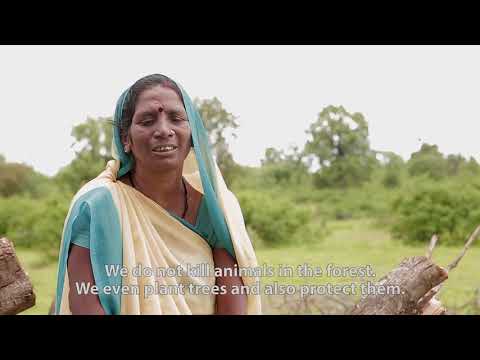
This short video takes you to Panna, India, where traditional adivasi women successfully oppose forced evictions. The three part series 'Reality of Mine' gives a voice to women affected by mining in India, Kenya and South Africa. With the support of international NGOs Both ENDS and ActionAid, they have begun to stand up for their rights.
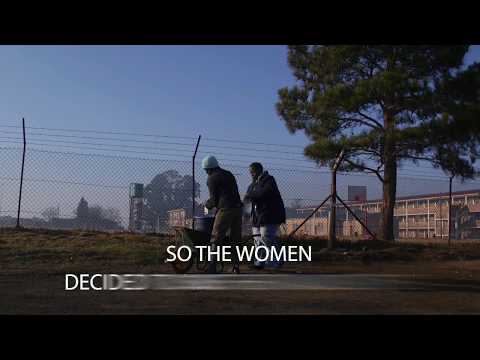
In this video we see Maria Mkhatswa, who is claiming the right of her people to have access to clean water, like they had years ago, when the coal mining industry had not yet polluted the whole area. The three part series 'Reality of Mine' gives a voice to women affected by mining in India, Kenya and South Africa. With the support of international NGOs Both ENDS and ActionAid, they have begun to stand up for their rights.
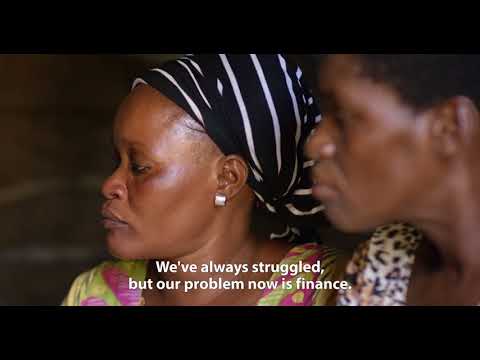
In this video, Trivinia Mwanga Mwamburi from Kenya takes you with in her fight to get the land back which was taken from her because of the expansion of large scale salt mines. The three part series 'Reality of Mine' gives a voice to women affected by mining in India, Kenya and South Africa. With the support of international NGOs Both ENDS and ActionAid, they have begun to stand up for their rights.

The Inter-American Development Bank (IDB) has taken a unique decision to withdraw from the construction of two controversial dams in Ixquisis, Guatemala. Both ENDS has supported our partner AIDA for many years in its fight against the dams. Tamara Mohr and Pieter Jansen explain why this decision is so exceptional.

What does feminist climate action look like and what does it lead to? Join us to hear from grassroots activists who will share their lived experiences and recommendations for equitable, just, and sustainable strategies to tackle the most pressing issue of our time. Global Greengrants Fund and the Global Alliance for Green and Gender Action (GAGGA) will formally launch our joint campaign commitment to support these frontline climate solutions alongside the UN Women Generation Equality Forum’s Feminist Action for Climate Justice Action Coalition. Register today to learn how to mobilize more and better support for feminist climate action.
Register here!

In the heart of Liberia, the Western Region Women Network Association (WERWONA) is scripting a story of resilience, advocacy, and transformation. This journey began in September 2022 when WERWONA, supported by Both ENDS's partner Sustainable Development Institute, embarked on a mission to empower women leaders and communities in Bomi, Grand Cape Mount, and Gbarpolu counties to reclaim their rights to land and natural resources. This shows how the partnership between Both ENDS and local organisations is driving positive change in Liberia.

Join us for the fourth session of this five-part series on women's rights and climate finance, aimed at building knowledge and power to ensure finance flows benefit local women's groups, respond to community needs and respect human rights. The webinar will be conducted in English with simultaneous translation in Spanish and French.

The Women Environmental Programme Burkina Faso (WEP BF or WEP) is leading the way in gender-just climate solutions, putting the power of advocacy directly into the hands of women farmers. “In Burkina Faso, women play a crucial role in food production and natural resource management, yet they continue to face systemic barriers to land ownership,” explains a WEP team member. “Despite legal provisions, deeply ingrained customary norms remain dominant, restricting women’s access to land as user rights only, which need to be mediated through male family members.” Without secure access to land, they face significant obstacles in sustaining their agricultural activities, improving local food security, and fully participating in their communities.

Across Mozambique, land represents more than just territory. It is the cornerstone of livelihoods, culture, and autonomy for many communities. When companies arrive, claiming large portions for mining, oil exploration or agribusiness, residents face significant challenges in asserting their rights. Mozambique’s Land Law (1997) grants communities user rights, ensuring they can occupy and use land for subsistence and cultural purposes.


