Both ENDS



Here you will find the latest news, blogs from our staff, the most recent publications and upcoming events. If you would like to stay informed of the latest news, subscribe to our newsletter or follow us on LinkedIn, Facebook, Instagram and BlueSky.

Today is International Women's Day. A day originating from women's strikes against poor working conditions in the textile industry, some 100 years ago. Since then, a lot has improved for women but, unfortunately, men and women obviously still don’t have equal rights. In 1949, Simone de Beauvoir already warned that ‘women’s rights will never be vested. You have to stay vigilant your whole life’. Recent developments such as the tightening of abortion laws in some countries confirm this view and show that even in the ‘free West’ women’s rights are still far from self-evident.
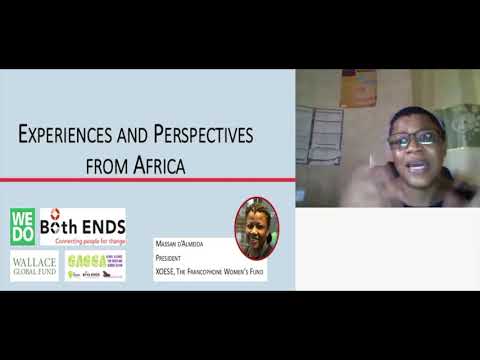
The fifth session of our five part series on women's rights and climate finance, Experiences and Perspectives of Women Engaging in Climate Finance, shared the insights of three activists who have been serving as GCF Monitors as part of the "Women Demand 'Gender-Just' Climate Finance" initiative. They spoke about their processes of learning about climate finance and connecting with others to monitor climate finance in their communities and regions, discussed the value they have found in this work, and answered questions from webinar participants.
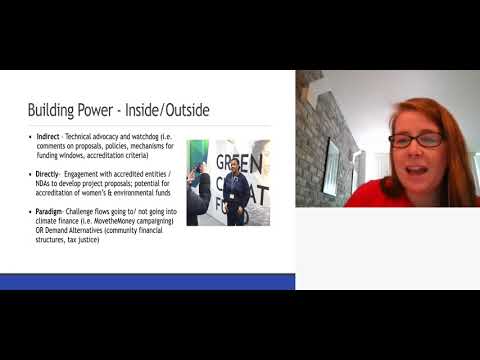
The fourth webinar of a five part series on women's rights and climate finance: Strategies for Organizing to Influence, Monitor, and Track Climate Finance (from Global to Local), focused on strategies to engage with various actors to both facilitate and advocate for the meaningful inclusion of the perspectives and experiences of women's groups, affected communities, and other civil society stakeholders in the design and implementation of projects and programs.

It was minus 20 degrees Celsius when 2.000 women gathered at the main square of Ulaanbaatar, Mongolia, to voice their distress about the terrible smog in the city caused by three large power plants. Soon after, the women were invited to speak about the problem of air pollution with the minister of environment.
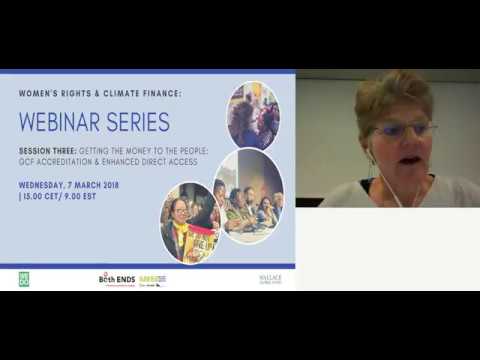
The third session of our five part series on women's rights and climate finance, Getting the Money to the People: GCF Accreditation and Enhanced Direct Action, focused on accessing the Green Climate Fund through working with stakeholders at the country level (engaging with the National Designated Authority), utilizing Enhanced Direct Access, and seeking accreditation.
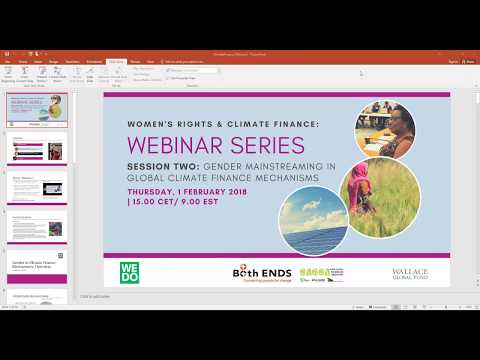
The second session of our five part series on women's rights and climate finance, Gender Mainstreaming in Climate Finance Mechanisms, provided an overview of how gender equality has been mainstreamed into global climate finance mechanisms, including a deep dive on gender considerations under the Green Climate Fund by Liane Schalatek of the Heinrich Boell Foundation - North America.
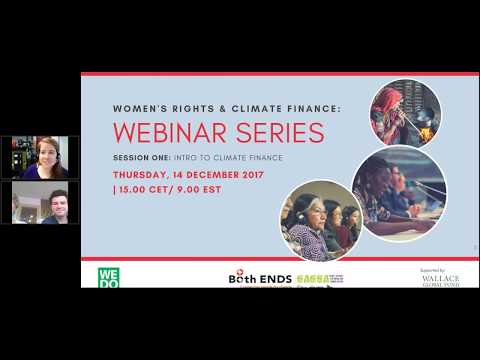
This Introduction to Climate Finance is the first of a five part series on women's rights and climate finance, aiming to build knowledge and power to ensure finance flows are benefiting local women's groups, responding to community needs and respecting human rights. This session will outline the climate finance landscape, as well as the key challenges and opportunities we hope to explore in this webinar series.

During the month of March, and as part of International Women's Day (March 8th) and World Water Day (March 22nd), the organizations that constitute GAGGA-Latin America, will lead a joint campaign called "We, women are water".

We are delighted that the Dutch Postcode Lottery has approved our proposal to support an extra project to the tune of 1,380,000 euros! The proposal, for an Autonomy and Resilience Fund (ARF), was submitted by the Global Alliance for Green and Gender Action (GAGGA), which comprises the Fondo Centroamericano de Mujeres (FCAM), Mama Cash and Both ENDS. With the ARF, GAGGA works with Small Grants Funds to help local women's groups become resilient in a changing world in which it is increasingly difficult for them to hold their heads above water. The award of this large sum of money means an enormous boost for many women's organisations, and this is badly needed at a time when economic, climate and health crises are constantly putting the resilience of women, their communities and their living environments around the world to the test!

The pilot of Dare to Trust, facilitated by NTFP-EP, was implemented in two grassroots women’s organisations in the Philippines and Cambodia. The Dare to Trust project provided them with the independence to utilize the resources they have and thus handed to them the agency for more grounded and better judgment. By giving more liberty to the communities we are moving them away from bureaucratic processes and power structures, and towards more empowered decision making capabilities.

Together with five women from the Platform Suace Pyvyvõhára, I travel to Mingã Pora in the east of Paraguay. Around 45 families from the indigenous Tekohá Suace community settled here in 2016. In Guaraní, Tekohá means 'the place where we are what we are'. They reside in tents - self-made out of waste materials - on a small strip of land with a soy field on one side and a nature reserve owned by the Itaipu company on the other.

