Both ENDS




What does feminist climate action look like and what does it lead to? Join us to hear from grassroots activists who will share their lived experiences and recommendations for equitable, just, and sustainable strategies to tackle the most pressing issue of our time. Global Greengrants Fund and the Global Alliance for Green and Gender Action (GAGGA) will formally launch our joint campaign commitment to support these frontline climate solutions alongside the UN Women Generation Equality Forum’s Feminist Action for Climate Justice Action Coalition. Register today to learn how to mobilize more and better support for feminist climate action.
Register here!

The Inter-American Development Bank (IDB) has taken a unique decision to withdraw from the construction of two controversial dams in Ixquisis, Guatemala. Both ENDS has supported our partner AIDA for many years in its fight against the dams. Tamara Mohr and Pieter Jansen explain why this decision is so exceptional.

Both ENDS is present at COP30 to advocate for genuine access to climate finance for locally led, gender-just climate solutions, and for the mechanisms that make these possible, including those supporting farmer-led restoration. The organisation also engages to highlight the crucial connection between climate negotiations and the trade and investment frameworks that shape them.
Below is an overview of the Both ENDS team at COP30 and a detailed look at the activities and side-events in which Both ENDS will participate.

Both ENDS is present at COP30 to advocate for genuine access to climate finance for locally led, gender-just climate solutions and the mechanisms that facilitate this, including those for farmer-led restoration. Furthermore, the organisation participates to ensure the crucial connection between the climate negotiations and the trade and investment frameworks that shape them.
Learn more about the Both ENDS team at COP30 below, and find all the activities and side-events in which Both ENDS will participate.

During the month of March, and as part of International Women's Day (March 8th) and World Water Day (March 22nd), the organizations that constitute GAGGA-Latin America, will lead a joint campaign called "We, women are water".

During the 24th Conference of the Parties (COP24) of the UNFCCC taking place in Katowice, Both ENDS partner Raju Pandit Chettri – director of Prakriti Resources Centre in Nepal - was one of the selected Southern leaders to meet with the Dutch Minister of Development Cooperation and Foreign Trade, Sigrid Kaag. We asked Raju about his expectations, messages, Kaag's responses and his experiences of the meeting.
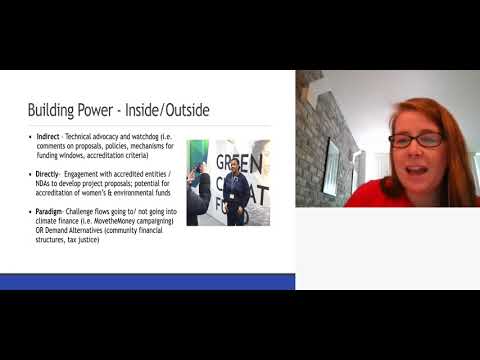
The fourth webinar of a five part series on women's rights and climate finance: Strategies for Organizing to Influence, Monitor, and Track Climate Finance (from Global to Local), focused on strategies to engage with various actors to both facilitate and advocate for the meaningful inclusion of the perspectives and experiences of women's groups, affected communities, and other civil society stakeholders in the design and implementation of projects and programs.
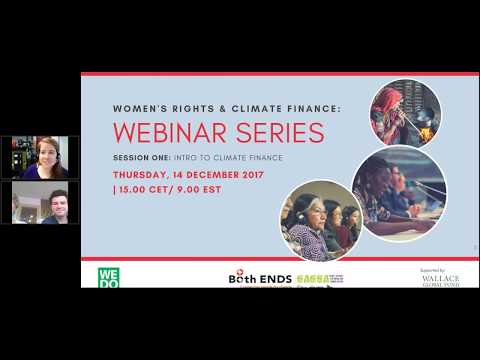
This Introduction to Climate Finance is the first of a five part series on women's rights and climate finance, aiming to build knowledge and power to ensure finance flows are benefiting local women's groups, responding to community needs and respecting human rights. This session will outline the climate finance landscape, as well as the key challenges and opportunities we hope to explore in this webinar series.

