Both ENDS




Even as climate change intensifies these challenging conditions, the Sahel need not become a desert. Unsustainable agricultural practices and overgrazing are among the main factors causing land degradation in the Sahel, which is threatening the lives and livelihoods of millions of people. Fortunately, organisations like CRESA in Niger have shown that with the right approach, desertification of the Sahel can be reversed.

GENEVA/UTRECHT, 12 May 2026 – A new report by the United Nations Environment Programme (UNEP), Sand and Sustainability: An Essential Resource for Nature and Development, warns that global demand for sand is exceeding ecological limits. Large-scale extraction of sand from marine and coastal ecosystems is leading to biodiversity loss, damage to coastal communities and increasing risks in an era of climate change. Dutch dredging companies play a prominent role in this as global market leaders in large-scale sand extraction and land reclamation. “Our analyses show that the dredging sector operates globally within a system in which ecological damage and the consequences for coastal communities are systematically underestimated, whilst transparency and effective oversight are often lacking,” says the Dutch environmental and human rights organisation Both ENDS, which contributed to the report.

Koussanar, in eastern Senegal, is a small town that is expanding rapidly, surrounded by villages still rooted in rural and nomadic life. The region is hot and dry, which is exacerbated by climate change. The soil in the region is also dry and often exhausted due to a combination of factors such as unsustainable agricultural practices, (peanut) monoculture, intensive agriculture, forest fires and overgrazing. Today, however, the region's farmers and nomadic pastoralists take a different approach. They are working towards a better future by committing to the restoration of degraded land using Farmer Managed Natural Regeneration (FMNR).
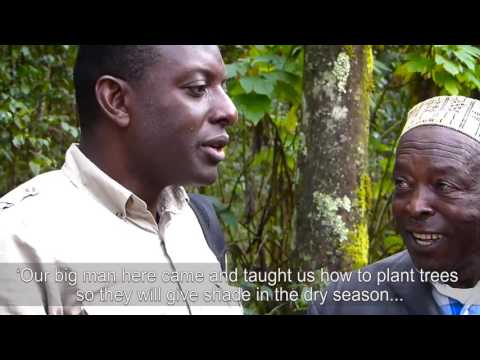
Rich Forests' is an initiative that promotes the restoration of degraded and eroded areas in the whole world into sustainable, productive ecosystems, using the so-called Analog Forestry method. One of the many advantages of this method is that it can help to combat climate change. This video paints a picture of how this works, who is involved and what results are to be expected in the short and in the long run.

and Kyra Pohlan
Communities throughout the Athi river basin rely on healthy and resilient semi-aquatic ecosystems, such as riparian and wetland areas, for their well-being and livelihoods. These habitats have become ever more important for local communities in adapting to the effects of climate change, in particular the more frequent and more extreme periods of drought and flooding. By conserving and re-establishing riparian lands and wetlands, groups from the Athi River Community Network do not only protect their immediate environment but also contribute to the well-being of downstream areas.

In times of ecosystem degradation, deforestation and climate change, rural communities often struggle to make a living in a healthy and autonomous way. One of the solutions to counter their problems is Analog Forestry, a sustainable practice promoted by many of Both ENDS's partners. We spoke to Carolina Sorzano Lopez*, Analog Forestry trainer from Colombia for the International Analog Forestry Network (IAFN), and Luz Marina Valle*, a local Analog Forestry promotora in her community of El Jocote in Northern Nicaragua, to explain to us the advantages of Analog Forestry.
A coalition of 13 Dutch organisations calls on investors like banks, pension funds and insurers to divest from TotalEnergies because of its EACOP project in Uganda and Tanzania. This new pipeline is causing human rights abuses, increased poverty, environmental pollution and climate change, and also TotalEnergies is using loopholes in the tax system to avoid taxes.
The letters has been send, among others, to the banks ABN AMRO, ING and Van Lanschot Kempen, pension funds ABP, BPL, PFZW, PMT and PNO media and the insurers Aegon, Allianz and Nationale Nederlanden. Together, the Dutch investors own shares and obligations worth more than 2.1 billion euros.


