


Press release: 66% of soy used in the Netherlands still unsustainable
The Netherlands has not reached the 100% target it set itself for the purchase of responsibly sourced soy, with only 34% of imports reaching the RTRS (Round Table on Sustainable Soy ) or an equivalent sustainability standard in 2015. The pork and poultry sectors are lagging behind with an uptake of less than 10% of responsibly sourced soy.
In December 2011 Dutch players in the soy value chain (representatives of the Dutch animal feed sector, supermarkets, the dairy, pork and poultry sectors and the Dutch Federation of Agriculture and Horticulture) signed a letter of intent to make the switch to 100% responsibly sourced (RTRS certified or equivalent) soy by 2015. The Dutch Soy Coalition* publishes a biennial Soy Barometer, which measures how these commitments are met. Figures released by the Soy Coalition today clearly show that only 34% of the soy used in the Netherlands in 2015 was responsibly sourced. That means over 66% came from unsustainable sources.
Not a leading example
In the letter of intent, Dutch players expressed the ambition to be a leading example in the world. “It’s now clear, however, that the Netherlands is not playing a pioneering role,” says Tamara Mohr of Both ENDS, Secretariat of the Soy Coalition. “Switzerland is doing a lot better**: in 2015 94% of the country’s imported soy was sustainably sourced. Swedish organisations are also living up to their commitment to 100% responsibly sourced soy***."
Positive developments
There were also a number of positive developments: the Dutch dairy sector did reach its 100% target, and supermarkets in the Netherlands are now demanding responsible soy in their purchasing agreements.
Rising demand for soy
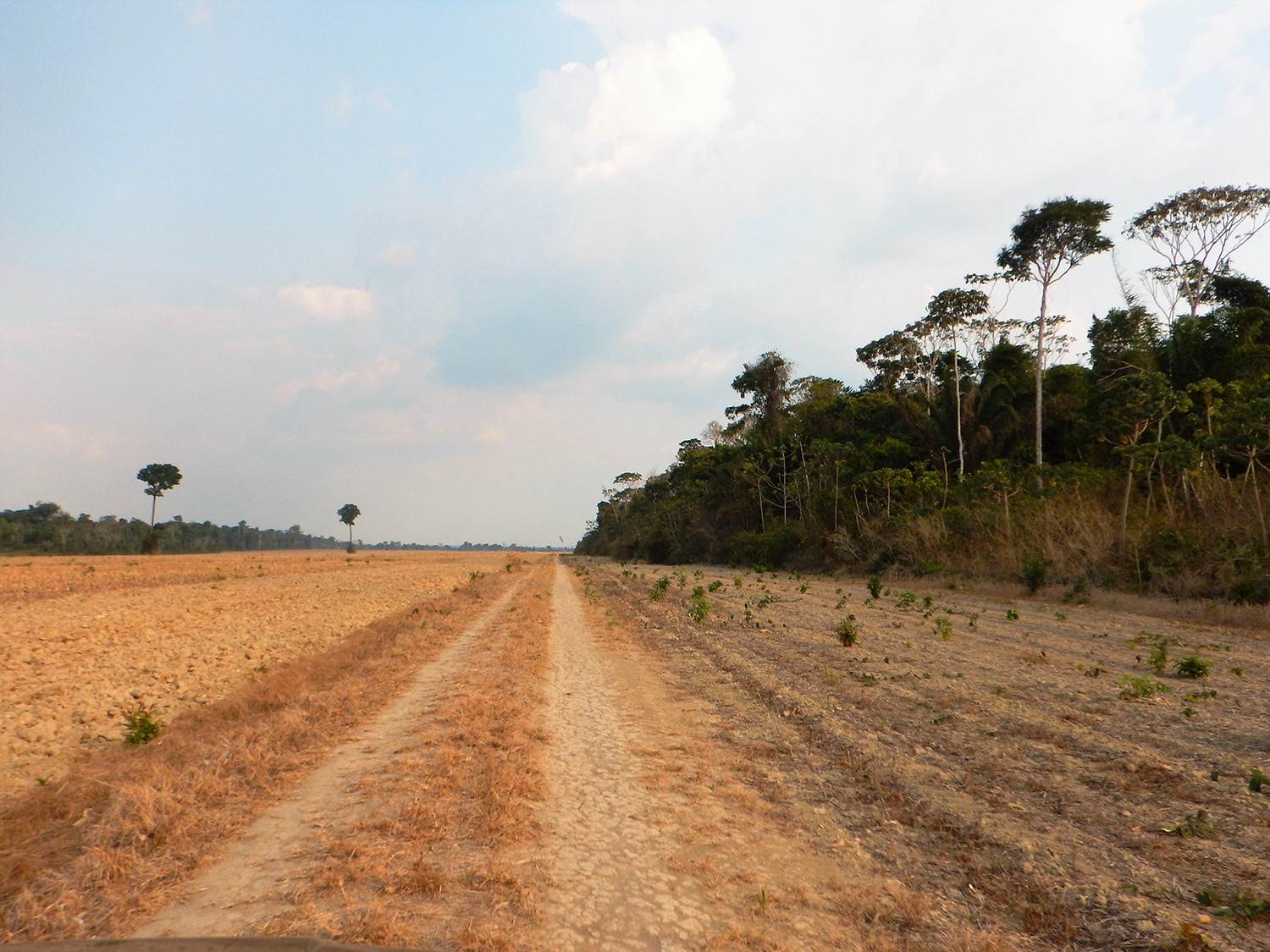
Over 319 million tonnes of soybeans are produced globally, and the demand continues to rise. In fact, soybean production has doubled in the last 20 years. More than half of it is produced in South America - especially in Brazil, Argentina and Paraguay. The Netherlands imports about three-quarters of its soy from South America, where soy production still goes hand-in-hand with alarming issues that require urgent attention, such as deforestation, land conflicts, environmental problems caused by pesticide use and increasing pressure on food security.
The Dutch Soy Coalition therefore urges all players in the soy value chain to take concrete steps that will pave the way from 34% to 100% responsibly sourced soy (at least RTRS or equivalent) in the short term, as expressed in the letter of intent. The whims of the market should never be used as an excuse.
*The Dutch Soy Coalition is joint initiative of a number of Dutch civil society organisations, including Both ENDS, IUCN NL, Milieudefensie (Friends of the Earth Netherlands), Stichting Natuur&Milieu (the Netherlands Society for Nature and Environment), Solidaridad, Wetlands International and World Wildlife Fund the Netherlands. We work with scientists, industry and civil society organisations in soy producing, -processing and -consuming countries to find ways to make soy cultivation fairer and better for the environment.
** https://www.sojanetzwerk.ch/fileadmin/user_upload/Downloads/Faktenblatt_Soja_en_web.pdf
*** In Sweden all 29 signatories kept to the accord: 100% responsibly sourced soy and animal product imports (own brand)– see:
http://soyscorecard.panda.org/files/WWF_Soy_Scorecard_2016.pdf p.43
Photo: Tim Boekhout van Solinge - Deforestation for soy continues the Amazon region
Read more about this subject
-
 Dossier /
Soy: trade in deforestation
The rising demand for soy is having negative consequences for people and the environment in South America. Both ENDS reminds Dutch actors in the soy industry of their responsibilities and is working with partners on fair and sustainable alternatives.
-
Publication / 3 July 2026
-
Publication / 18 June 2026
-
 Dossier /
Wetlands without Borders
With our Wetlands without Borders program, we work towards environmentally sustainable and socially responsible governance of the wetlands system of the La Plata Basin in South America.
-
 News / 23 September 2025
With the undemocratic splitting of the EU-Mercosur deal, Europe is missing the chance to lead on fair trade
Recently, many newspapers have written about Brussels’ rush to finalize the trade agreement between the EU and the South American Mercosur countries. According to the European Commission, national parliaments do not need to approve it because the trade part and the “political” part have been separated. This “splitting” means that the trade part can be approved as an EU-only decision by the European Council and the European Parliament, while national parliaments are sidelined and the political-cooperation part is postponed. Both ENDS and its partners are deeply concerned and are calling on the Dutch government to vote against this outdated agreement.
-
 News / 11 September 2025
EU-Mercosur: Small GDP Gain, Big Question Marks for Farmers and Democracy
A recent report by Wageningen Economic Research (WER) on the economic consequences of the trade agreement between the EU and Mercosur confirms what civil society organizations, policymakers, and trade unions have been signaling for years: this agreement does not offer a balanced perspective for farmers and the environment. Instead, it increases power inequalities and shifts burdens onto (small-scale) farmers. Moreover, the deal risks reinforcing unsustainable practices that complicate the climate transition and addressing environmental challenges in both the EU and Mercosur countries.
-
 News / 9 September 2025
Simplification Must Not Mean Weakening: Why the EUDR and other Environmental Legislation Must Stay Strong
Both ENDS warns that the current debate on “simplification” of EU environmental law must not become an excuse to weaken or postpone urgently needed safeguards. In earlier contributions to the drafting of the EU Deforestation Regulation (EUDR), Both ENDS relayed the voices of local and Indigenous forest-dependent peoples, who consistently urged the EU to take responsibility for the massive deforestation linked to European imports. They underlined how this deforestation destroys biodiversity, undermines climate stability, and erodes their rights, livelihoods and cultures.
-
 Blog / 17 July 2025
A disaster for farmers: here and there
The trade agreement with South America is harmful to farmers, the climate, and biodiversity, on both sides of the Atlantic. It’s time to take this deal off the table once and for all, argues Fernando Hernandez, Senior Policy Officer for Trade and Investment at Both ENDS.
-
 Environmentally Just Practice /
Agroecology
Agroecology is a diverse set of agricultural practices, a field of science and a social movement. It aims to transform food systems towards greater ecological sustainability, social justice, and resilience. Both ENDS and CSO-partners around the world support farmers and pastoralists practising agroecology, both on the ground and in gathering political and financial support.
-
 News / 19 December 2024
Trading Away the Future: How the EU-Mercosur deal fails people and the planet - and what needs to be done
On December 6, the visit of European Commission President Ursula von der Leyen to the Mercosur Summit sealed the agreement on the final text of the EU-Mercosur Association Agreement. Both ENDS condemns this damaging agreement for undermining human rights, the environment, and democracy in Europe, and in Mercosur countries. Should the agreement be ratified as it stands, it will have devastating consequences for the environment, indigenous communities, family farming and small-scale farmers on both sides of the Atlantic.
-
 Dossier /
Making pension funds more sustainable
Pension funds have a lot of influence because of their enormous assets. Both ENDS therefore wants pension funds such as the Dutch ABP to withdraw their investments from the fossil industry and to invest sustainably instead.
-
 News / 6 December 2024
South American Forest Fires Highlight Effects of Delaying EU Deforestation Law
On the 4th of December, the European Parliament voted in majority for a delay of implementation of the EU Deforestation Regulation (EUDR). Earlier, the European Commission and the European Council already endorsed this proposal for a delay with one year. Both ENDS and partners are worried about this decision, as there is no time to waste in our global fight against deforestation, biodiversity loss and climate change.
-
 News / 24 September 2024
Massive Wildfires Ravage South America
“The fires have reached proportions we have never experienced before.”
Large swathes of South America are currently draped in smoke. From Buenos Aires, to São Paulo to Asunción people struggle to breathe due to unprecedented fires raging on the continent, fuelled by extreme drought, the expansion of the agriculture frontier and rising temperatures linked to climate change.
-
Publication / 2 July 2024
-
 News / 19 June 2024
Recognition for PROBIOMA from the Chamber of Deputies of the Plurinational State of Bolivia
PROBIOMA have received recognition from the Chamber of Deputies of the Plurinational State of Bolivia. The presentation of this tribute took place at the Museum of Natural History Noel Kempff Mercado, in the framework of the Environment Day.
-
 Blog / 15 April 2024
The year of truth: EU Member States urged to combat deforestation
The EU is the world's largest "importer of deforestation," due to the huge volumes of unsustainably produced soy, timber, palm oil, and other raw materials that EU member states import. After many years of delay, the European Parliament and the European Council passed a law in December 2023 to address this problem: The EU Deforestation Regulation (EUDR). Both ENDS is part of a broad coalition of organizations that have been pushing for this European legislation. However, there is now a serious delay, and perhaps even postponement, of the law's implementation. Objections have been raised by a number of member states, who are sensitive to lobbying by certain business sectors and producer countries.
-
Publication / 21 March 2023
-
Publication / 9 March 2023
-
Letter / 18 October 2022
Letter to the EU to call for strong EU regulation on deforestation-free products
140+ organisations call on the European Ministers, Commissioners and members of the European Parliament to adopt a strong EU regulation on deforestation-free products. As "trilogue negotiations" on this law begin, we ask you to support a law that lives up to the promises of the European Green Deal and the Sustainable Development Goals and upholds the EU's commitments on climate, biodiversity and human rights.
-
 News / 18 March 2022
International Forests Day: the importance of forests for livelihoods and a healthy environment
Today is International Day of Forests. An ever more important day, as the amount of forest and forested area's on this globe is shrinking at a fast pace. One the main causes is our ever increasing demand for products such as soy and palm oil from area's that have been deforested for their cultivation. The current proposed EU-deforestation law to prevent this, is not strict enough and does not include the protection of other crucial natural areas such as grasslands, savannas and swamps, as well as the human rights of the millions of people living in these area's. During these past few weeks we therefore participated in the campaign #Together4Forests, calling on citizens to send a letter to their own responsible ministers. The campaign paid off: almost 54,000 letters were sent to European ministers across the European Union, demanding a strict forest law that guarantees the import of only deforestation-free products in Europe.
To celebrate this International Day of Forests, we would like to emphasise the great value of forests and other natural areas, directly or indirectly, for the livelihoods of at least 2 billion people. Below, we selected some examples that show how, throughout the world, local communities use many different ways to collect and produce food and other natural products in a sustainable way, while protecting and restoring the forests and forested area's they are so dependent upon.




