


New partnership with Netherlands Enterprise Agency for resilient food systems in Sahel
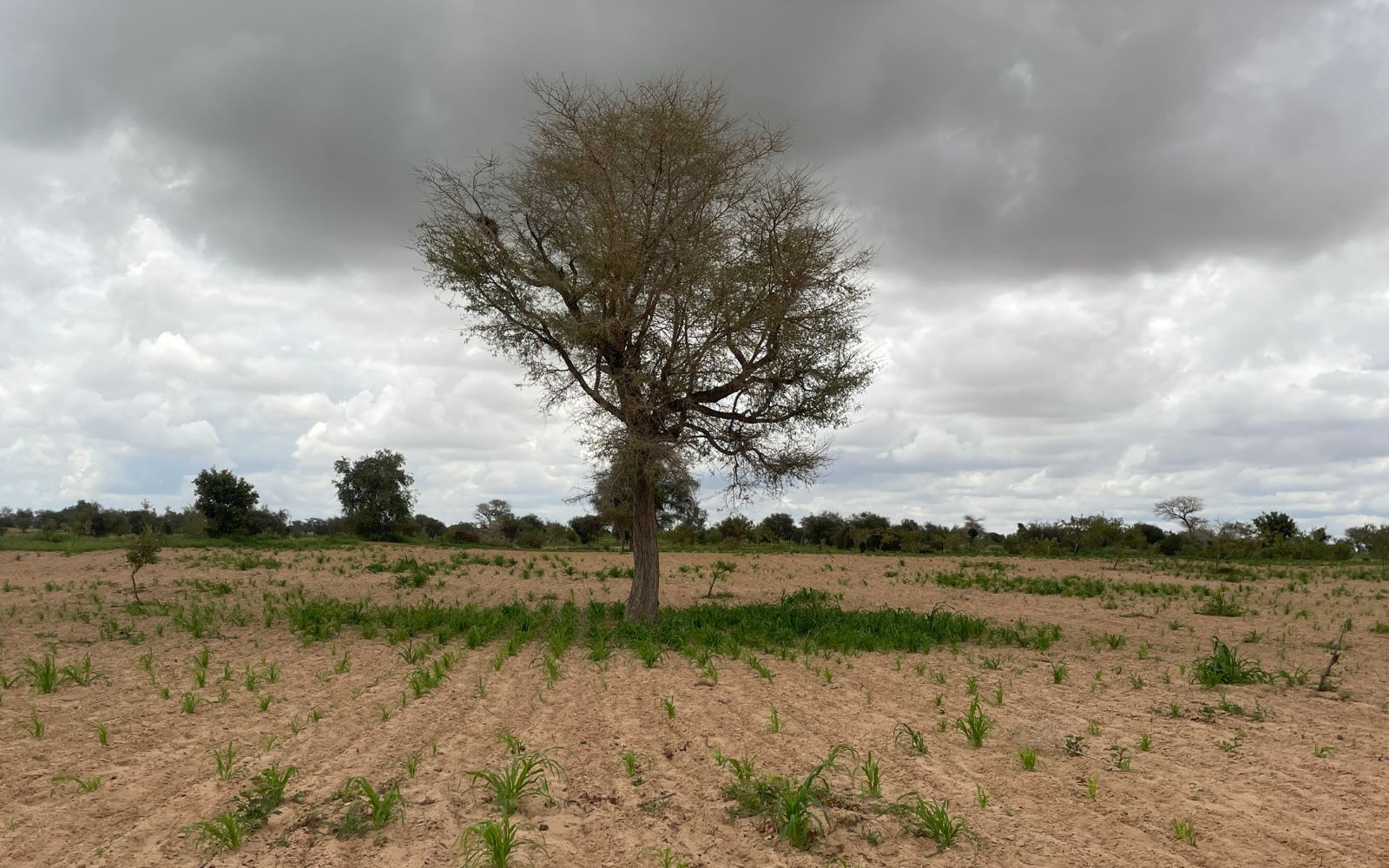
The situation in Africa's Sahel is the world's fastest-growing humanitarian crisis. Over 3 million people are fleeing violence. They are ravaged by hunger, disease and increasing drought caused by climate change. Both ENDS and its partners are successfully working on accelerating the resilience of local food systems and communities in the Sahel, based on ‘Farmer Managed Natural Regeneration’ (FMNR). The project, funded by DOB Ecology, will end in mid-2026, but has already been followed up thanks to a new collaboration with the Netherlands Enterprise Agency (RVO).
Both ENDS and its partners have years of experience with FMNR in the Sahel. This method has proven to be very successful in greening landscapes and increasing farmers' yields - and for as little as €50 per hectare. It is a cost-effective approach that has already regreened more than 120,000 hectares and trained more than 80,000 farmers in FMNR techniques.
Both ENDS is working with the same partners in the new project: SPONG (Burkina Faso), CRESA (Niger) and IED Afrique (Senegal). The consortium is well matched. "We look forward to the impact that can be realised within the RFO programme. With an additional focus on women and youth, and with a stronger emphasis on healthy nutrition and value chain development, this project offers a great opportunity to further accelerate and expand the progress made since 2018 in the region," said Janna Fleuren, project coordinator Africa - land use and management.
Richard Ouedraogo, ARFSA coordinator at SPONG-Burkina Faso, and involved in the coordination and implementation of the programme from the beginning, sees the great value of the projects in Burkina Faso: "Inevitably, the most important player in the protection of natural ecosystems in Africa remains the family farmer. One of their most pressing needs remains food security and nutrition. The Accelerating Resilient Food Systems in Africa (ARFSA) programme has a very precise plan to support these farmers in ensuring progress towards food and nutrition security based on the sustainable management of farms and multiplying income sources for women and youth, towards local communities less prone to environmental and social crises."
The new project is part of RVO's ARFSA programme and will run for three years.
For more information
Read more about this subject
-
 Environmentally Just Practice /
Farmer Managed Natural Regeneration
In various countries in the Sahel, vast tracts of degraded land have been restored by the local population by nurturing what spontaneously springs from the soil. They do this using a method called 'Farmer Managed Natural Regeneration (FMNR)'.
-
 Dossier /
Communities Regreen the Sahel
In various countries in the Sahel, vast tracts of land have been restored by the local population by nurturing what spontaneously springs from the soil and protecting the sprouts from cattle and hazards.
-
 Dossier /
Amplifying environmentally just practices
Because of the close relationship with their living environment, local communities often have the best ideas for the sustainable and equitable use and governance of land, water and forests. These environmentally just practices and processes successfully protect and restore ecosystems and address climate change. They are essential in the light of the multiple crises the world faces, but are in dire need of financial and policy support.
-
 News / 10 September 2026
Rutu Foundation receives UNESCO Literacy Prize for multilingual education
Both ENDS’ partner the Rutu Foundation for Intercultural Multilingual Education has been awarded the 2026 UNESCO King Sejong Literacy Prize for its language friendly school programme. This prestigious prize recognises the importance of multilingual education and the right of children to learn in an environment where their home languages are valued.
-
 News / 3 September 2026
Restoring Land, Restoring Hope: Both ENDS at UNCCD COP17 in Mongolia
From 17 to 28 August, governments gathered in Ulaanbaatar, Mongolia, for COP17 of the UN Convention to Combat Desertification (UNCCD). At stake was more than how the world responds to land degradation and drought. It was also a question of who gets to shape land restoration, whose knowledge counts, and where the money goes.
-
 News / 6 July 2026
Strengthening Women's Land Rights Across the Rio Conventions
From 29 June – 2 July 2026, Tamara Mohr, GAGGA coordinator at Both ENDS participated in the 4th convening of the Women's Land Rights Initiative (WLRI) in Nairobi, Kenya.Hosted by the Robert Bosch Stiftung, TMG Research and the Huairou Commission, the event brought together grassroots organisations, (inter)national NGOs, government institutions and donors from around the world.
-
Publication / 3 July 2026
-
 News / 2 July 2026
Land restoration can help mitigate and resolve conflict - but only if everyone has a seat at the table
Can restoring degraded land also help reduce conflict? According to experts from Niger, Ghana, the Netherlands and other regions, the answer is yes - but only when restoration is rooted in inclusive land governance, local ownership and social cohesion.
-
 Dossier /
Finance for agroecology
The lion's share of public budgets for climate, agriculture and development still goes to conventional agroindustrial projects that contribute to the current climate, food and biodiversity crises. Both ENDS and our partners are calling for a transition to agroecological practices that are people- and environment-friendly.
-
Publication / 18 June 2026
-
Publication / 12 May 2026
-
 News / 19 March 2026
Winners of the ILED ‘Women Are Educators Award’ announced
Our partner organisation ILED (Indigenous-led Education Network) announced the seven winners of the ILED ‘Women Are Educators Award’ this month. These are women who play extraordinary roles in passing on knowledge, whether in formal or informal educational settings.
-
 Dossier /
Global Alliance for Green and Gender Action (GAGGA)
GAGGA rallies the collective power of the women's rights and environmental justice movements to realize a world where women can and do access their rights to water, food security, and a clean, healthy and safe environment.
-
 News / 27 February 2026
Both ENDS strengthens the resilience of female environmental defenders worldwide thanks to multi-year contribution from the Postcode Lottery
In recent years, Both ENDS has received an additional contribution of €875,000 from the Postcode Lottery for the Autonomy & Resilience Fund (2022–2025), implemented in collaboration with the Global Alliance for Green and Gender Action (GAGGA). This support was essential because female environmental rights defenders around the world are increasingly facing climate change, repression and shrinking civil space. With this contribution, Both ENDS supports female activists and their communities with flexible, trust-based funding, enabling them to develop their own solutions to urgent environmental and climate problems.
-
 Dossier /
Seeking justice for the affected communities of Vale’s mining disasters in Mariana and Brumadinho
In 2015 and 2019, the Brazilian state of Minas Gerais experienced two severe mining tragedies in Mariana and Brumadinho, due to the same mining company: Vale. Since then, the affected communities have been seeking justice, via the criminal punishment of the responsible parties, and a fair compensation for the loss of their loved ones, their homes and their livelihoods. Both ENDS supports local CSOs by amplifying their quest for justice within an international audience and, more specifically, by raising awareness amongst Dutch investors in Vale about the high risks this company’s activities pose for people and the environment.
-
 Dossier /
Agua Zarca: indigenous fight against dam costs lives
Indigenous Hondurans are resisting the construction of the Agua Zarca hydrodam. Their fight has cost several lives, including that of Berta Cáceres. After considerable public pressure, Dutch development bank FMO withdrew from the project.
-
 Environmentally Just Practice /
A Negotiated Approach for Inclusive Water Governance
A Negotiated Approach envisages the meaningful and long-term participation of communities in all aspects of managing the water and other natural resources on which their lives depend. It seeks to achieve healthy ecosystems and equitable sharing of benefits among all stakeholders within a river basin. This inclusive way of working is an essential precondition for the Transformative Practices that are promoted by Both ENDS and partners.
-
 Dossier /
Wetlands without Borders
With our Wetlands without Borders program, we work towards environmentally sustainable and socially responsible governance of the wetlands system of the La Plata Basin in South America.
-
 Environmentally Just Practice /
Non-Timber Forest Products (NTFPs)
About one in every six people, particularly women, directly rely on forests for their lives and livelihoods, especially for food. This shows how important non-timber forest products (NTFPs) and forests are to ensure community resilience. Not only as a source of food, water and income, but also because of their cultural and spiritual meaning.
-
 News / 5 November 2025
Interview: Both ENDS at COP30 for Climate Justice and Systemic Change
Both ENDS is present at COP30 to advocate for genuine access to climate finance for locally led, gender-just climate solutions and the mechanisms that facilitate this, including those for farmer-led restoration. Furthermore, the organisation participates to ensure the crucial connection between the climate negotiations and the trade and investment frameworks that shape them.
Learn more about the Both ENDS team at COP30 below, and find all the activities and side-events in which Both ENDS will participate.



