


Celebrating the River Paraguay
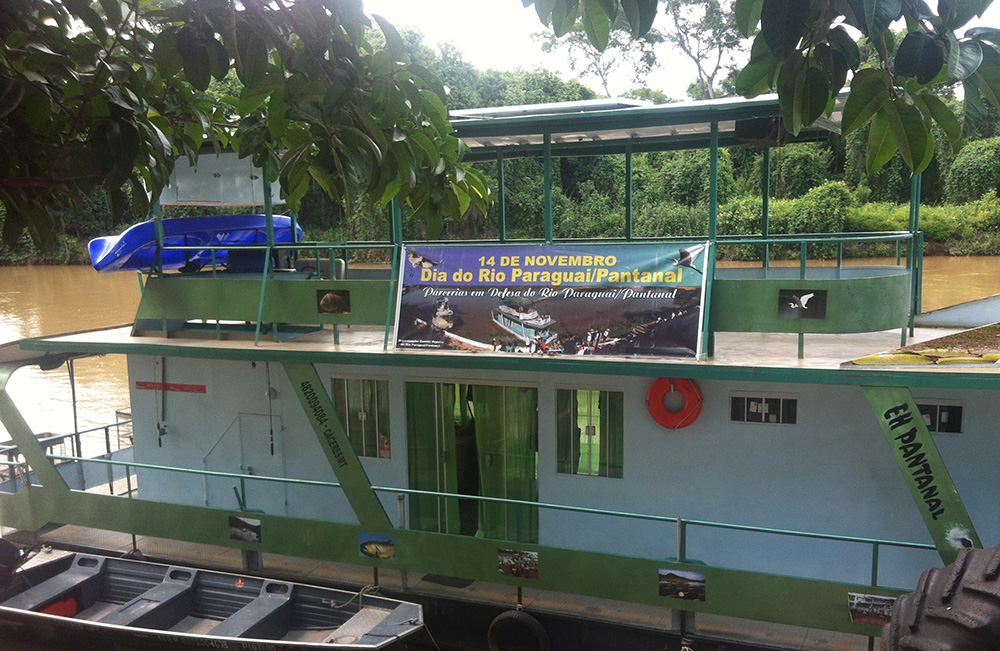
Each year on the 14th of November, in the Brazilian city of Cáceres the 'Day of the Paraguay River' (Dia do Rio Paraguai) is celebrated. This tradition started in the year 2000, when civil society mobilized for the first time and successfully campaigned against the construction of the Hidrovía Paraguay-Paraná. Since then, the date symbolizes the close relationship of the people with the river, its culture and the environment.
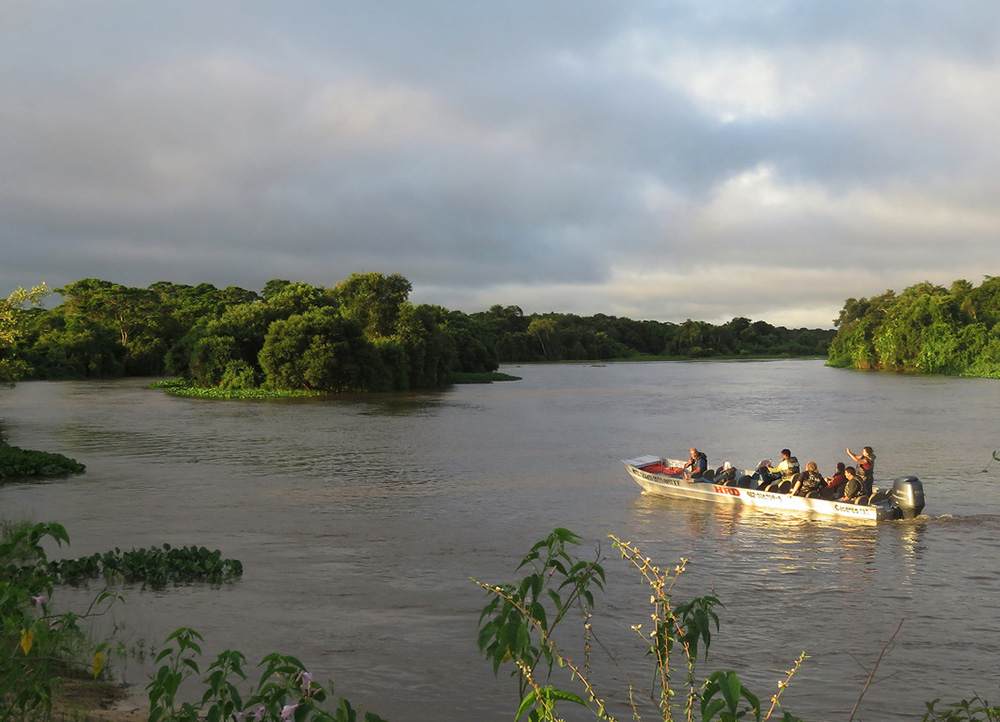
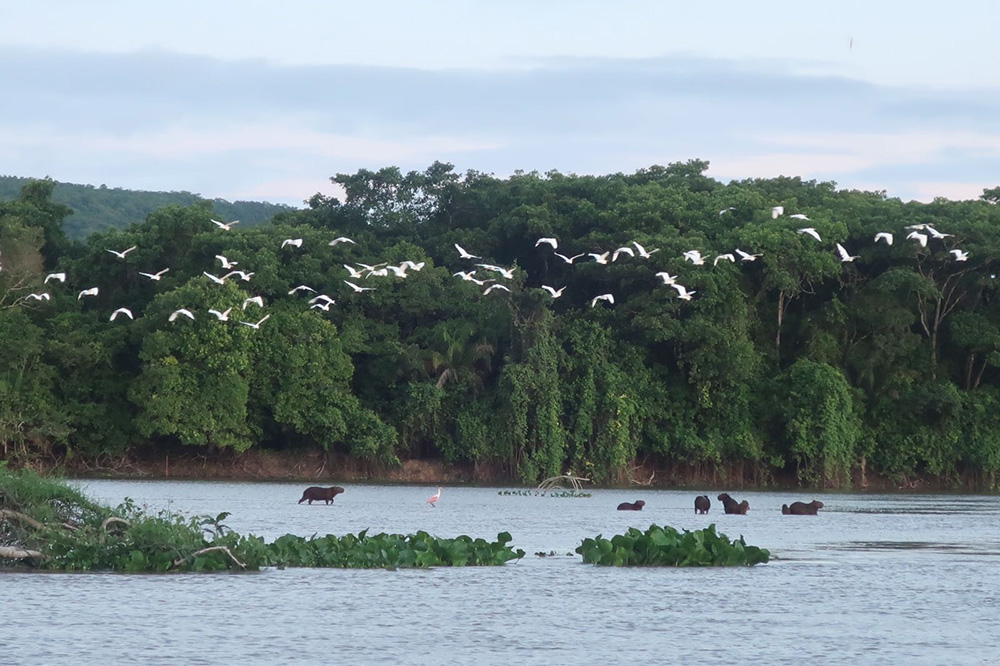
The wetlands system of the Paraguay and Paraná rivers constitutes the largest living freshwater wetland in the world. It is a supplier of water for human consumption and irrigation for agriculture, and provides freshwater and food for the millions of people living along its margins. It has a regulating role in water levels of the rivers of the system, and plays a crucial role in continental and global climate control and local adaptation strategies.
River defines identity of its people
On the 'Dia do Rio Paraguai' of 2018, civil society (CSOs, NGOs and members of local riverine and indigenous communities) from several countries along the Paraguay river (Bolivia, Brazil and Paraguay) came together, among them many partners of the Wetlands Without Borders programme. They use the day not only to raise awareness about the threats to the river, such as mining, large-scale agriculture, dams and canalization of the river, but also to stress the close relationship that the people living along its shore feel with the river.
The river is not only an ecosystem they depend on for their livelihoods; it also defines for a large part their culture and identity. Therefore, on the Dia do Rio Paraguai the river is being celebrated with songs, dances and rituals.
Development of sustainable alternatives
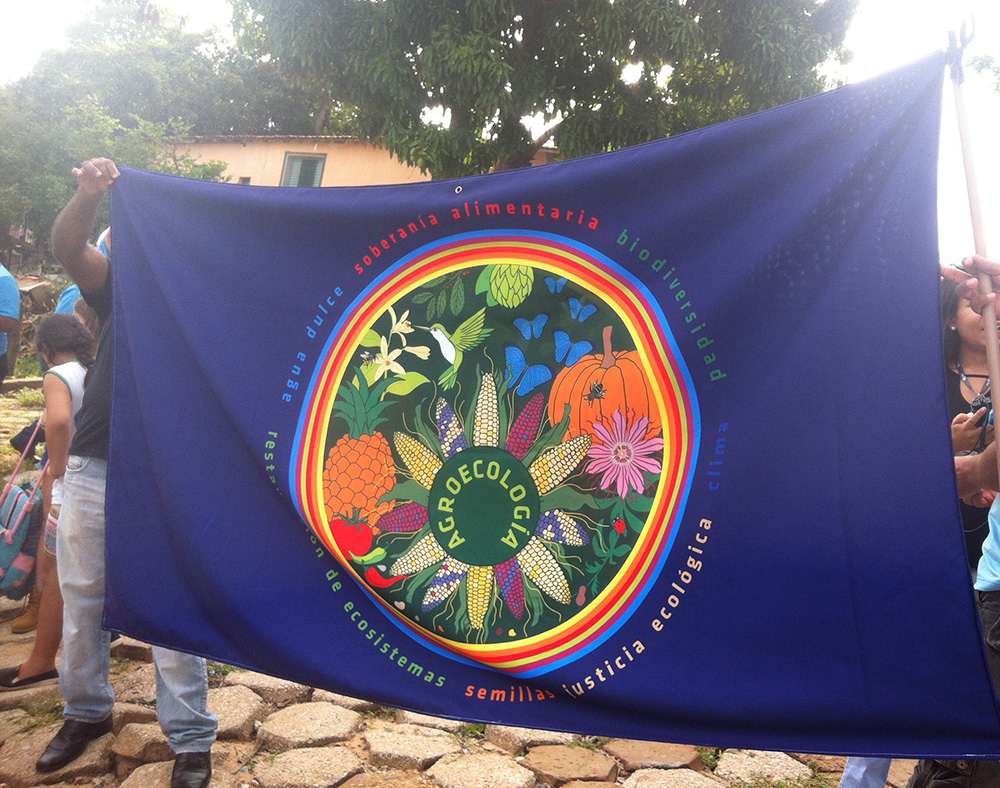
In the Wetlands without Borders programme, a large network of civil society organisations work together to develop sustainable economic activities, such as agroecology. These alternatives can provide livelihoods for the riverine communities, protect and strengthen the ecosystem of the Pantanal wetlands area and build resilience to the effects of climate change, in which wetlands play an important role.
Furthermore, the regional network of organisations is developing the concept of biocultural corridors. The idea of biocultural corridors proposes the restoration of waterbodies (small streams, rivers, lakes, springs) that flow towards the wetlands system of La Plata Basin and to the Alto Paraná River. The restored corridors, once implemented, will recover the connection between the ecosystem pockets and therefore restore and strengthen their biological and cultural functions.
The local partners used the Dia do Rio Paraguai to develop these sustainable alternatives further and present them to the communities taking part in the festivities of the day.
For more information
Read more about this subject
-
 Dossier /
Wetlands without Borders
With our Wetlands without Borders program, we work towards environmentally sustainable and socially responsible governance of the wetlands system of the La Plata Basin in South America.
-
 Dossier /
Communities Regreen the Sahel
In various countries in the Sahel, vast tracts of land have been restored by the local population by nurturing what spontaneously springs from the soil and protecting the sprouts from cattle and hazards.
-
Publication / 3 July 2026
-
Publication / 12 May 2026
-
Publication / 14 April 2026
-
 News / 24 March 2026
Statement: Invest in local leadership for tropical forest management and local economies
IUCN-NL, Both ENDS, and 16 other Dutch and international civil society organizations (CSOs), networks, and expert groups are calling on the Dutch government to invest more strongly in locally led forest management and forest-based economies. This should be done within the framework of Dutch international cooperation and its associated policy instruments.
-
 News / 27 February 2026
Both ENDS strengthens the resilience of female environmental defenders worldwide thanks to multi-year contribution from the Postcode Lottery
In recent years, Both ENDS has received an additional contribution of €875,000 from the Postcode Lottery for the Autonomy & Resilience Fund (2022–2025), implemented in collaboration with the Global Alliance for Green and Gender Action (GAGGA). This support was essential because female environmental rights defenders around the world are increasingly facing climate change, repression and shrinking civil space. With this contribution, Both ENDS supports female activists and their communities with flexible, trust-based funding, enabling them to develop their own solutions to urgent environmental and climate problems.
-
 Dossier /
Seeking justice for the affected communities of Vale’s mining disasters in Mariana and Brumadinho
In 2015 and 2019, the Brazilian state of Minas Gerais experienced two severe mining tragedies in Mariana and Brumadinho, due to the same mining company: Vale. Since then, the affected communities have been seeking justice, via the criminal punishment of the responsible parties, and a fair compensation for the loss of their loved ones, their homes and their livelihoods. Both ENDS supports local CSOs by amplifying their quest for justice within an international audience and, more specifically, by raising awareness amongst Dutch investors in Vale about the high risks this company’s activities pose for people and the environment.
-
 News / 2 February 2026
Seven years after Brumadinho: impunity allows Vale’s disasters to continue
Seven years ago, the dam owned by mining company Vale collapsed in Brumadinho, Brazil, killing 272 people and severely polluting the surrounding area. While the relatives of the victims commemorate them and fight for justice, the pollution continues.
-
Publication / 27 November 2025
-
 News / 27 November 2025
Communities and International Consortium Present Community-Led Plan for Nature-Based Adaptation to Sea-Level Rise in Coastal Bangladesh
Local communities in the southwestern coastal region of Bangladesh—together with an international consortium including Uttaran, CEGIS, and Both ENDS—have presented a community-led plan to confront climate change and accelerating sea-level rise through nature-based adaptation. The People’s Plan for Upscaling Ecosystem-Based Adaptation outlines a scalable strategy rooted in local ownership and generations of lived experience. At its centre is Community-Based Tidal River Management (CBTRM), a proven approach that reduces waterlogging, raises land elevation, and restores ecological balance by working with natural tidal and sediment dynamics.
-
 Blog / 25 November 2025
COP30 shows why dismantling ISDS is essential for real climate action
Standing in Belém during COP30, I felt the weight of the moment. We came to the Amazon hoping for decisive progress on phasing out fossil fuels, yet the final outcome fell far short of the ambition science and justice demand. The agreement brought welcome commitments on adaptation finance and global indicators, but it refused to confront the structural forces that make climate action so difficult.
-
 News / 5 November 2025
Interview: Both ENDS at COP30 for Climate Justice and Systemic Change
Both ENDS is present at COP30 to advocate for genuine access to climate finance for locally led, gender-just climate solutions and the mechanisms that facilitate this, including those for farmer-led restoration. Furthermore, the organisation participates to ensure the crucial connection between the climate negotiations and the trade and investment frameworks that shape them.
Learn more about the Both ENDS team at COP30 below, and find all the activities and side-events in which Both ENDS will participate.
-
 News / 5 November 2025
Overview of Both ENDS events at COP30 in Belem, Brazil
Both ENDS is present at COP30 to advocate for genuine access to climate finance for locally led, gender-just climate solutions, and for the mechanisms that make these possible, including those supporting farmer-led restoration. The organisation also engages to highlight the crucial connection between climate negotiations and the trade and investment frameworks that shape them.
Below is an overview of the Both ENDS team at COP30 and a detailed look at the activities and side-events in which Both ENDS will participate.
-
 News / 6 October 2025
From Entebbe to Accra: civil society is rewriting the rules of investment
By Fernando Hernández Espino and Bart-Jaap Verbeek
Almost a year after African civil society gathered in Uganda to adopt the Entebbe Declaration, the call to transform international investment governance continues to gain strength. From the 6th to the 9th of October, over 50 civil society organisations from across West Africa, including from Ghana, Senegal, Nigeria, Côte d’Ivoire, Cameroon, Gambia, Sierra Leone, as well as from Kenya and Latin America, are convening in Accra to deepen and operationalise the Declaration’s vision.
-
 Dossier /
Soy: trade in deforestation
The rising demand for soy is having negative consequences for people and the environment in South America. Both ENDS reminds Dutch actors in the soy industry of their responsibilities and is working with partners on fair and sustainable alternatives.
-
 Dossier /
Towards a socially and environmentally just energy transition
To address the climate crisis we need to urgently transition away from fossil fuels towards clean, renewable energy. However, this transition is not only about changing energy sources. It requires an inclusive and fair process that tackles systemic inequalities and demanding consumption patterns, prioritizes environmental and social justice, and which does not repeat mistakes from the past.
-
 News / 16 July 2025
Case Study: Fighting Environmental Transphobia and Social Fragmentation in Brazil
In the face of environmental transphobia, a form of discrimination where trans and gender-diverse communities are disproportionately impacted by environmental degradation,excluded from climate policies, and often met with stigma and exclusion by environmental justice movements, Grupo Orgulho, Liberdade e Dignidade (GOLD) has emerged as a bold and visionary force for change in Brazil. At the heart of this movement is Débora Sabará ,GOLD’s leader, a travesti activist who has fought tirelessly to place the perspectives andneeds of LGBTIQAPN+ (Lesbian, Gay, Bisexual, Trans, Intersex, Queer, Asexual, Pansexual, Nonbinary and other identities), Indigenous and Afro-Brazilian communities at the center of environmental justice conversations.
-
 Dossier /
Fair Green and Global Alliance (FGG)
Together with civil society organisations from all over the world, the Fair Green and Global (FGG) Alliance aims for socially just, inclusive and environmentally sustainable societies in the Netherlands and the Global South.
-
 Blog / 30 January 2025
Brumadinho’s painful “seas of mud”
By Carolina de Moura
Six years ago, Brumadinho tailings dam I, from the Paraopeba Complex, owned by mining company Vale, collapsed. January 25th, 2019, forever changed the lives of thousands. The scars remain open, and the quest for justice, remembrance, and prevention of future mining crimes endures despite all adversities. This was manslaughter coupled with socio-environmental devastation of proportions difficult to measure. These are irreparable losses and damages that could have been avoided if it wasn’t for the greed, negligence, and irresponsibility of decision-makers at Vale, the German certification firm Tüv Süd, and the state of Minas Gerais.




