


Both ENDS and partners demand Shell to clean up the Niger Delta before divesting
At the Annual General Meeting (AGM) of Shell in London, community leaders from the Niger Delta and international allies, including Both ENDS, are confronting Shell with a clear demand: Shell must take full responsibility for decades of pollution and human suffering in Nigeria’s Niger Delta before divesting from its on-shore oil operations.
Recently, Shell sold its Nigerian subsidiary, Shell Petroleum Development Company (SPDC) to the Renaissance Group. The deal lacks any commitment to clean up the vast oil pollution or compensate the hundreds of thousands of people affected by Shell’s operations over decades. In March 2025, 190 civil society organisations worldwide sounded the alarm about this in a joint letter sent to Shell’ Executives. The company has yet to respond.
Our questions at the AGM
As Shell didn’t respond to our letter, Emem Okon, director of Both ENDS’s partner organisation Kebetkache from the Niger Delta, will be present at Shell’s AGM together with two Both ENDS colleagues to ask our critical questions directly:
- What concrete actions will Shell take to address the severe public health crisis that communities face for generations, caused by their legacy pollution ?
- Shell’s annual report mentions a $2.5 billion loan to Renaissance for purchase of assets, not for pollution clean-up. Where are the funds for the Niger Delta’s recovery?
- What due diligence did Shell conduct to ensure Renaissance can meet Nigeria’s and international legal obligations for pollution remediation and asset decommissioning?
- Why should investors or affected communities trust that clean-up will happen, when there are no public commitments from Shell or Renaissance to do so?
The consequences of pollution in the Niger Delta
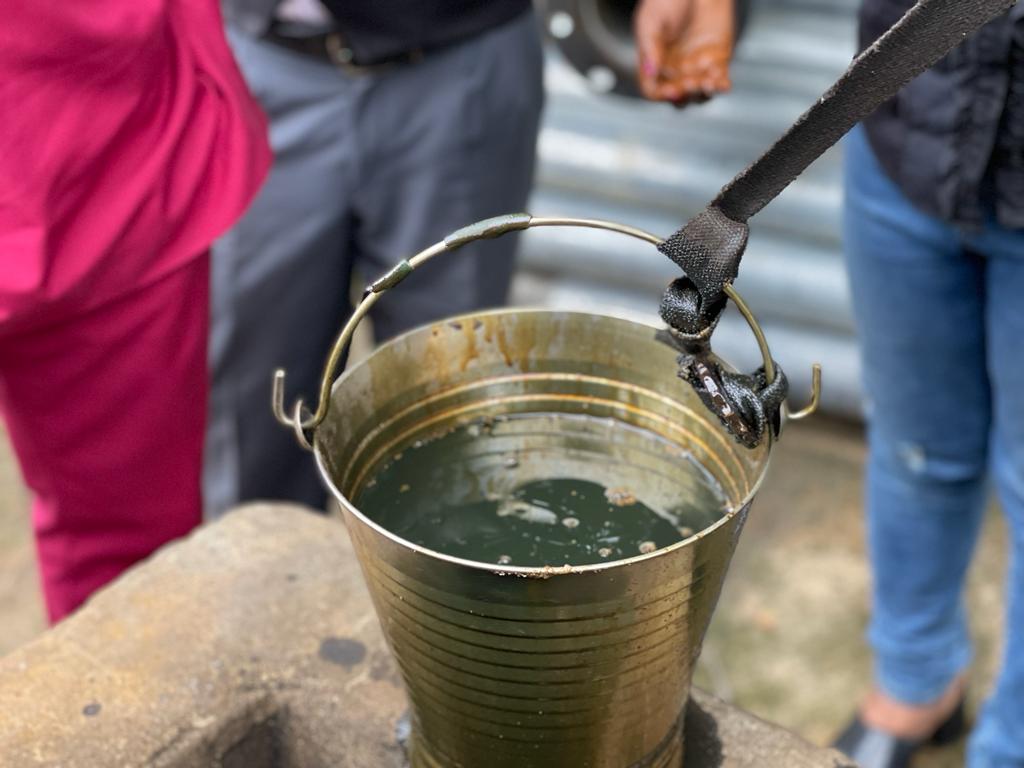
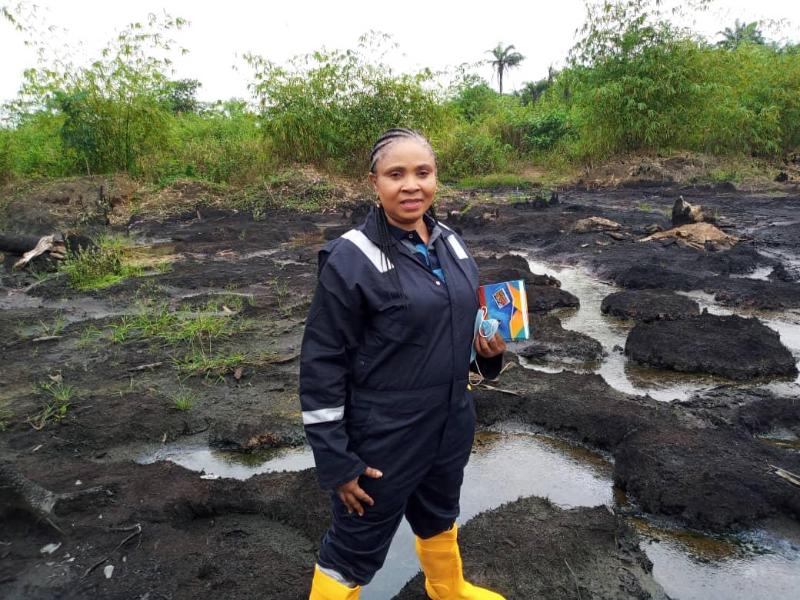
For over 70 years, communities in the Niger Delta have paid the price for Shell’s profits: breathing toxic air, farming oil-logged soil, and fishing in rivers choked with hydrocarbons. A recent four-year study by the Bayelsa State Oil and Environmental Commission revealed the staggering scale of damage: it will take at least $12 billion to begin repairing environmental and public health harms in Bayelsa State alone — just one of nine affected states in the Delta.
"When will Shell stop prioritising profit over public health?" asks Emem Okon. "Tests show hydrocarbon levels in women’s bloodstreams at more than 8,000 times the World Health Organization's limits. Women here suffer respiratory diseases, fertility problems, cancer, and sight loss. Shell cannot divest without clean-up and remediation!"
Responsible exit is part of a just energy transition
“A just energy transition is critical and it is about time Shell takes part in it,” says Ana Xambre Pereira, Advocacy Officer, Both ENDS . “Shell’s current exit is not a responsible divestment nor an energy transition, it’s an offloading of toxic assets and liabilities onto the local communities, while Shell continues its offshore fossil fuel operations and walks away with the profits. A just energy transition means enforcing clear standards for responsible divestment now, and investing into sustainable alternatives before more communities are sacrificed.”
Both ENDS stands in unwavering solidarity with Niger Delta communities. We call on investors, regulators and the global public to demand that Shell is held accountable. There can be no responsible divestment without clean-up, remediation, and justice.
For more information

Read more about this subject
-
 Dossier /
Towards a socially and environmentally just energy transition
To address the climate crisis we need to urgently transition away from fossil fuels towards clean, renewable energy. However, this transition is not only about changing energy sources. It requires an inclusive and fair process that tackles systemic inequalities and demanding consumption patterns, prioritizes environmental and social justice, and which does not repeat mistakes from the past.
-
 Dossier /
Communities Regreen the Sahel
In various countries in the Sahel, vast tracts of land have been restored by the local population by nurturing what spontaneously springs from the soil and protecting the sprouts from cattle and hazards.
-
Publication / 3 July 2026
-
 Dossier /
Gas in Mozambique
In 2011 one of the world’s largest gas reserves was found in the coastal province of Cabo Delgado, in the north of Mozambique. A total of 35 billion dollars has been invested to extract the gas. Dozens of multinationals and financiers are involved in these rapid developments. It is very difficult for the people living in Cabo Delgado to exert influence on the plans and activities, while they experience the negative consequences. With the arrival of these companies, they are losing their land.
-
Publication / 18 June 2026
-
Publication / 12 May 2026
-
 News / 14 April 2026
New report: Phasing out ISDS in the Netherlands: a roadmap
Today, Both ENDS and SOMO are publishing the report Phasing out ISDS in the Netherlands: a roadmap. In the report, we highlight the Netherlands’ role in the ISDS system and offer practical guidance on phasing out ISDS.
-
Publication / 14 April 2026
-
 News / 26 March 2026
New project: Climate Accountability in EU Trade
Through its new project “Climate Accountability in EU Trade: Testing the SEP and DAGs for Climate-Linked FTA Enforcement” Both ENDS, with support from the European Climate Foundation, is exploring how the European complaints mechanism (SEP) and Domestic Advisory Groups (DAGs) can be more effectively used to advance climate accountability. The project runs for 13 months, until end of 2026.
-
 News / 2 February 2026
Response to the D66-VVD-CDA coalition agreement
Coalition: Repair the damage and dare to go further
At Both ENDS, we see a number of cautious steps in the right direction in this coalition agreement. There is a slight emphasis on green issues, renewed attention to women's rights, recognition of the importance of civil society, and discussion of trade agreements with a focus on mutual interests. However, without structural change in how we trade, invest, and cooperate, fine words remain empty shells.
-
 Dossier /
Seeking justice for the affected communities of Vale’s mining disasters in Mariana and Brumadinho
In 2015 and 2019, the Brazilian state of Minas Gerais experienced two severe mining tragedies in Mariana and Brumadinho, due to the same mining company: Vale. Since then, the affected communities have been seeking justice, via the criminal punishment of the responsible parties, and a fair compensation for the loss of their loved ones, their homes and their livelihoods. Both ENDS supports local CSOs by amplifying their quest for justice within an international audience and, more specifically, by raising awareness amongst Dutch investors in Vale about the high risks this company’s activities pose for people and the environment.
-
 News / 22 January 2026
Shell files new arbitration against the Netherlands over Groningen gas field closure
Shell is suing the Netherlands in yet another attempt to evade its responsibility for decades of gas extraction in Groningen. For years, gas production has triggered earthquakes, damaged over a hundred thousand homes, and left residents living in prolonged insecurity, still waiting for repairs, reinforcement, and justice.
-
 Blog / 11 December 2025
Reflections on working on Dutch finance for Mozambique LNG
Last Tuesday, I received a short text message with big news: the minister had just announced that the financing policy for the Mozambique LNG project was stopped. It was a decision that I – along with so many others – have fought for for years. Only now, more than a week later, it is slowly sinking in that we have really won. The years of perseverance, frustration, discussions and investigations have finally led to this result. It still feels a bit surreal.
-
 Dossier /
Export Credit Agencies: Who pays the price?
Both ENDS calls on the government only to provide export credit insurance to sustainable projects that cause no social and/or environmental damage in the countries where they take place.
-
 Blog / 25 November 2025
COP30 shows why dismantling ISDS is essential for real climate action
Standing in Belém during COP30, I felt the weight of the moment. We came to the Amazon hoping for decisive progress on phasing out fossil fuels, yet the final outcome fell far short of the ambition science and justice demand. The agreement brought welcome commitments on adaptation finance and global indicators, but it refused to confront the structural forces that make climate action so difficult.
-
 News / 5 November 2025
Another ISDS claim hits the Netherlands: Petrogas sues over solidarity contribution and royalty regulations
SOMO and Both ENDS strongly condemn the newly revealed investor-state dispute settlement (ISDS) case filed by Petrogas, an Omani oil and gas company operating two shallow-water gas fields in the Dutch North Sea, against the Netherlands under the Netherlands-Oman bilateral investment treaty (BIT).
-
 News / 23 October 2025
TotalEnergies financiers beware: EACOP is eating up money, nature and livelihoods
A new analysis shows that the developers of the East African Crude Oil Pipeline, led by France’s TotalEnergies, are being forced to self-finance the project almost entirely. The analysis, part of a new Finance Risk Updatefrom a coalition of African and International civil society organisations, shows that the companies have abandoned plans to raise 60% of the project’s growing costs from bank loans, and are now on the hook for almost 90% of the costs themselves.
-
 News / 14 October 2025
Communities regreening the Sahel: strengthening resilience from the ground up
How can communities in the Sahel strengthen their food systems in the face of climate change and other shocks? Through the ARFSA Programme, Both ENDS and its partners SPONG (Burkina Faso), CRESA/INRAN (Niger) and IED Afrique (Senegal) are working together to show that locally led landscape restoration works. -
 News / 9 October 2025
Both ENDS launches new strategy: “Connecting people for an environmentally just world”
With great pride, Both ENDS launches today it’s new strategy for the coming 5 years: “Connecting people for an environmentally just world”. This strategy was developed in close collaboration with our partner network, which has always been, and still is, the foundation of our work. Together, we strive for an environmentally just world in which people and ecosystems thrive and all people can live a life of dignity.
-
Publication / 9 October 2025




