


The European Investment Bank should withdraw from gas investments
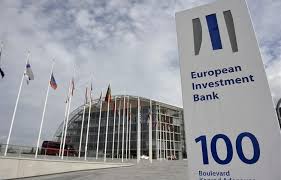
The European Investment Bank EIB should get rid of its gas-investments, and the Netherlands can take the lead in this. The Netherlands appears to be relying less and less on gas in its energy policy, and also seems to focus on gas-free investments at the EIB. Now it is important to maintain this position and also convince the other EU countries.
The countries of the European Union will soon be taking a decision on the EIB's energy policy. Banks often see the creation of money by providing credit as a politically neutral instrument to serve and support the economy, and therefore it would normally not be a logical step for the EIB itself to be at the center of a political debate on energy policy. But the bank has an important role to play in the European solutions to the climate crisis. The EIB's energy strategy does in fact matter in achieving the climate targets agreed upon internationally in Paris.
Gas is fossil too
After years of political and public pressure, the EIB has already largely stopped investing in coal and oil, and that is an important step. But from 2013 onwards, the EIB still invested EUR 14.2 billion in gas projects. The majority of this money was allocated to the construction of pipelines. Gas is often seen as a renewable energy source, while it is by no means. Although burning gas produces fewer emissions than burning coal, the EU will certainly not achieve its climate goals within the agreed time if it keeps focusing on gas.
For the climate it is crucial that the use of gas as an energy source stops completely and as soon as possible and therefore Both ENDS believes that the EIB should no longer invest in gas projects. Even EIB's Vice President Andrew McDowell recently told Radio Luxembourg that the story of gas as a "clean transition energy source" needs further consideration.
The Netherlands must convince other countries
This is the first time that someone from the Bank - which was financing a gas pipeline just two years ago to bring gas from Azerbaijan to the EU – dares to make such a statement. Based on the talks that are being held this month by the European countries within the EIB about the Bank's new energy strategy, the Netherlands seems to be taking this position too. Our country could urge other EU-countries to take the same position, although the question is how.
The European Investment Bank is a European institution, but the individual countries are shareholders. Until now, the countries are rather divided among themselves about the use of fossil energy as an energy source and about the period within which this should be phased out. Some countries want to keep access to EIB financing for gas and a country like Poland is not even ready to phase out coal extraction and use.
The most virtuous boy in the classroom
The position of the Netherlands is, however, rather surprising because in a recent past our country made eager use of EIB money to become the 'gas roundabout' of Europe, to enable trade and storage of foreign gas. For example, the EIB has invested in the LNG terminal on Rotterdam's Maasvlakte and in the Gasunie distribution network. This fact may make it more difficult for the Netherlands to convince other countries that the EIB should stop investing in gas, because it could seem opportunistic. After all, the Netherlands already has what it wanted, and would now suddenly pretend to be the most virtuous boy in the classroom.
From an environmental point of view, it is of course good to support the Netherlands in its position that the bank should no longer invest in gas, regardless of the underlying motives. In this process, it is important to interact diplomatically with other countries and to work together with other progressive countries such as Sweden.
European Commission has a role to play
In addition, the new European Commission might play a key role. The Commission itself is on the Bank's board and works with a list of possible energy projects to be subsidized, helping Europe to be sustainable. The Commission therefore has the power to exclude gas projects from this list. It can also exclude gas projects for EU guarantees on EIB loans and monitor EIB compliance with the Paris agreement.
The European Parliament also has a role to play, because the investments that the EIB makes outside Europe fall under the EU's foreign policy, in which the European Parliament has a say. In that role, the European Parliament can also address and question the European Commission about EIB investments.
Decision making within the EIB is a public matter
Yet decision-making could be even more democratic. Topics such as the EIB's energy and climate strategy have been closed behind closed doors, while it concerns public money for projects that are directly related to European policy. It would therefore be logical to make these negotiations transparent and to move them to the democratic domain of the European Parliament.
For more information
Read more about this subject
-
 Dossier /
Advocating for responsible policies of development banks
Development banks should comply with strict environmental and human rights rules to ensure that their projects benefit and do not harm the poorest groups. Both ENDS monitors the banks to make sure they do.
-
 Dossier /
Trade agreements
International trade agreements often have far-reaching consequences not only for the economy of a country, but also for people and the environment. It is primarily the most vulnerable groups who suffer most from these agreements.
-
 Dossier /
International trade and investment with respect for people and planet
The network of international trade and investment treaties is large and complex. The Netherlands alone has signed more than 70 bilateral investment treaties (BITs) and is party to the trade and investment agreements concluded by the EU, like the EU-Mercosur and EU-Indonesia trade deals.
-
 News / 15 October 2026
ISDS infringement complaint filed with the European Commission
The Netherlands and Portugal join four other EU countries facing such a complaint.
-
 Press release / 15 October 2026
Dutch and Portuguese organisations file EU complaint over investment treaties that let companies and sanctioned Russian oligarchs sue EU countries for compensation
The Netherlands and Portugal join four other EU countries facing such a complaint, as the Global Days of Action against Investor-State Dispute Settlement (ISDS) begin.
-
 News / 29 September 2026
Summary - Both ENDS complaint under the EU-New Zealand trade agreement
On 29 September 2026, Both ENDS lodged the first complaint on climate grounds with the European Commission's Single Entry Point. It asks the Commission to examine whether Aotearoa New Zealand has broken two promises both sides made in the EU-New Zealand Free Trade Agreement: not to weaken or set aside environmental laws in order to encourage trade or investment, and to effectively implement the Paris Agreement.
-
Publication / 29 September 2026
-
Publication / 29 September 2026
-
 News / 29 September 2026
Q&A: New Zealand's climate rollback and the EU trade agreement
On 29 September 2026 / 30 September in Aotearoa New Zealand, Both ENDS lodged a complaint with the European Commission under the EU-New Zealand Free Trade Agreement. These are the questions we are asked most often, and our answers. The complaint summary, the case explainer and the key public sources are linked at the end of this page.
-
 News / 29 September 2026
What happens now? A timeline of the SEP Case
What happens now? On 29 September 2026 / 30 September in Aotearoa New Zealand, Both ENDS lodged a formal complaint with the European Commission. It is the first complaint to the EU's Single Entry Point on environmental and climate grounds. It asks the Commission to hold New Zealand to two promises it made in its trade agreement with the EU: not to weaken environmental protection to encourage trade or investment, and not to undermine the Paris Agreement on climate change.
-
 Press release / 29 September 2026
New Zealand faces its first climate complaint under EU trade rules
UTRECHT / WELLINGTON, 29 September 2026 /30 September in Aotearoa New Zealand
Both ENDS, a Dutch environmental justice organisation, has lodged a formal complaint with the European Commission arguing that New Zealand has broken the climate promises it made in its free trade agreement with the European Union. It is the first complaint on environmental and climate grounds under the Commission's Single Entry Point, the mechanism that lets civil society ask the EU to enforce the sustainability commitments in its trade agreements.
-
 News / 3 September 2026
Restoring Land, Restoring Hope: Both ENDS at UNCCD COP17 in Mongolia
From 17 to 28 August, governments gathered in Ulaanbaatar, Mongolia, for COP17 of the UN Convention to Combat Desertification (UNCCD). At stake was more than how the world responds to land degradation and drought. It was also a question of who gets to shape land restoration, whose knowledge counts, and where the money goes.
-
 News / 6 July 2026
Strengthening Women's Land Rights Across the Rio Conventions
From 29 June – 2 July 2026, Tamara Mohr, GAGGA coordinator at Both ENDS participated in the 4th convening of the Women's Land Rights Initiative (WLRI) in Nairobi, Kenya.Hosted by the Robert Bosch Stiftung, TMG Research and the Huairou Commission, the event brought together grassroots organisations, (inter)national NGOs, government institutions and donors from around the world.
-
Publication / 3 July 2026
-
 Dossier /
Gas in Mozambique
In 2011 one of the world’s largest gas reserves was found in the coastal province of Cabo Delgado, in the north of Mozambique. A total of 35 billion dollars has been invested to extract the gas. Dozens of multinationals and financiers are involved in these rapid developments. It is very difficult for the people living in Cabo Delgado to exert influence on the plans and activities, while they experience the negative consequences. With the arrival of these companies, they are losing their land.
-
 Dossier /
Finance for agroecology
The lion's share of public budgets for climate, agriculture and development still goes to conventional agroindustrial projects that contribute to the current climate, food and biodiversity crises. Both ENDS and our partners are calling for a transition to agroecological practices that are people- and environment-friendly.
-
Publication / 18 June 2026
-
Publication / 12 May 2026
-
 Press release / 12 May 2026
UN report warns of a growing sand crisis - The Dutch dredging sector plays a key role in global sand extraction
GENEVA/UTRECHT, 12 May 2026 – A new report by the United Nations Environment Programme (UNEP), Sand and Sustainability: An Essential Resource for Nature and Development, warns that global demand for sand is exceeding ecological limits. Large-scale extraction of sand from marine and coastal ecosystems is leading to biodiversity loss, damage to coastal communities and increasing risks in an era of climate change. Dutch dredging companies play a prominent role in this as global market leaders in large-scale sand extraction and land reclamation. “Our analyses show that the dredging sector operates globally within a system in which ecological damage and the consequences for coastal communities are systematically underestimated, whilst transparency and effective oversight are often lacking,” says the Dutch environmental and human rights organisation Both ENDS, which contributed to the report.
-
 News / 14 April 2026
New report: Phasing out ISDS in the Netherlands: a roadmap
Today, Both ENDS and SOMO are publishing the report Phasing out ISDS in the Netherlands: a roadmap. In the report, we highlight the Netherlands’ role in the ISDS system and offer practical guidance on phasing out ISDS.




