Friday May 28: international day at the Wake for the Climate
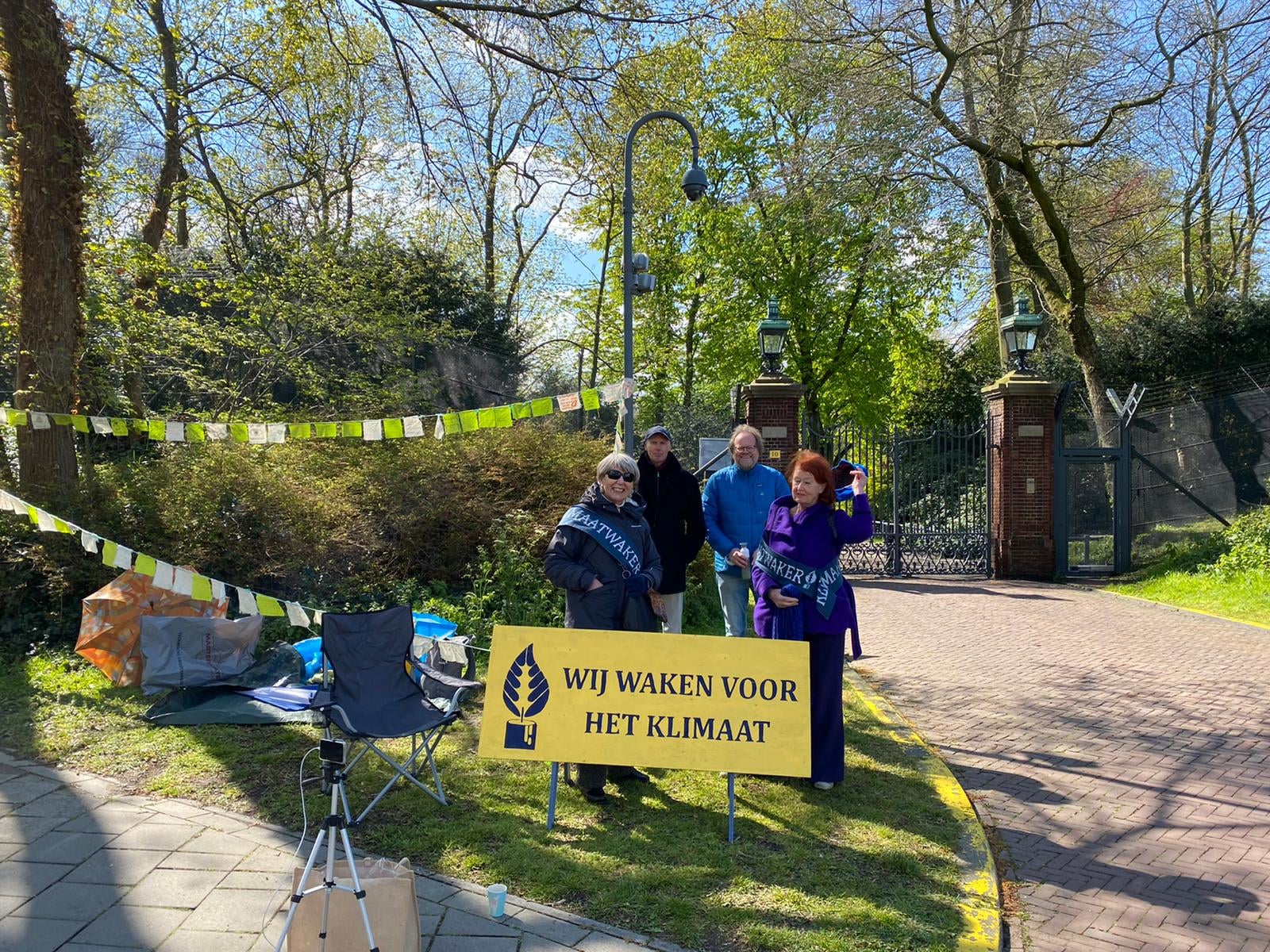
During the formation of a new Dutch government after the general elections in March, a group of concerned citizens is holding a wake in front of the Prime Minister's residence to remind the political leaders of the climate crisis. On Friday May 28, they will pay attention to the international aspect, initiated by Cordaid, Oxfam Novib, Care, ActionAid, WECF, Hivos and Tearfund. Both ENDS is happy to support the initiative.
After all, the climate crisis has an international character. Climate change does not stop at the Dutch borders. And it are the people in many regions in Asia, Africa and Latin America who already face the most severe consequences of global warming, while contributing to it the least.
Message by Both ENDS's partners
Many of our partners around the world hear the testimonies from the communities they work with on how climate change already affects their daily life. Sara Crespo Suarez of our Bolivian partner Probioma explains how the effects are already being felt in her country: "In Bolivia, climate change has severely changed the agricultural calendar. Water sources have decreased considerably in recent years and rising temperatures have increased the incidence of agricultural pests."
Ana di Pangracio, working for FARN (Argentina) tells us about climate threats to large wetlands, while these same wetlands are crucial in mitigating global climate change: "The loss and degradation of wetlands in a climate change scenario that causes more often and heavier rains is a recipe for disaster. Communities are affected by severe floods that alter their daily lives, livelihoods and property."
Jahin Shams Sakkhar of UTTARAN (Bangladesh) tells us about the threat climate change is for his country: "Bangladesh is one of the most climate vulnerable countries in the world. Sea level rise is perhaps the biggest threat to the coastal people. It might force around 20 million people from the affected area to migrate away."
The Netherlands must take its responsibility in the fight against climate change
The Netherlands, being one of the biggest polluters, should therefore take a leading role with an ambitious and fair climate policy. Not only out of self-interest, being a country below sealevel, but also because of interntaional climate justice.
If we really want to contribute to curbing climate change, Dutch companies and governmental bodies will have to operate more climate neutrally not only in our own country but also in all countries where they are active. If we want to make the transition to sustainable energy sources, we should not only look at ways of reducing our dependency on gas in the Netherlands and making greater use of solar power and wind, but we especially need to stop investing in fossil activities abroad.
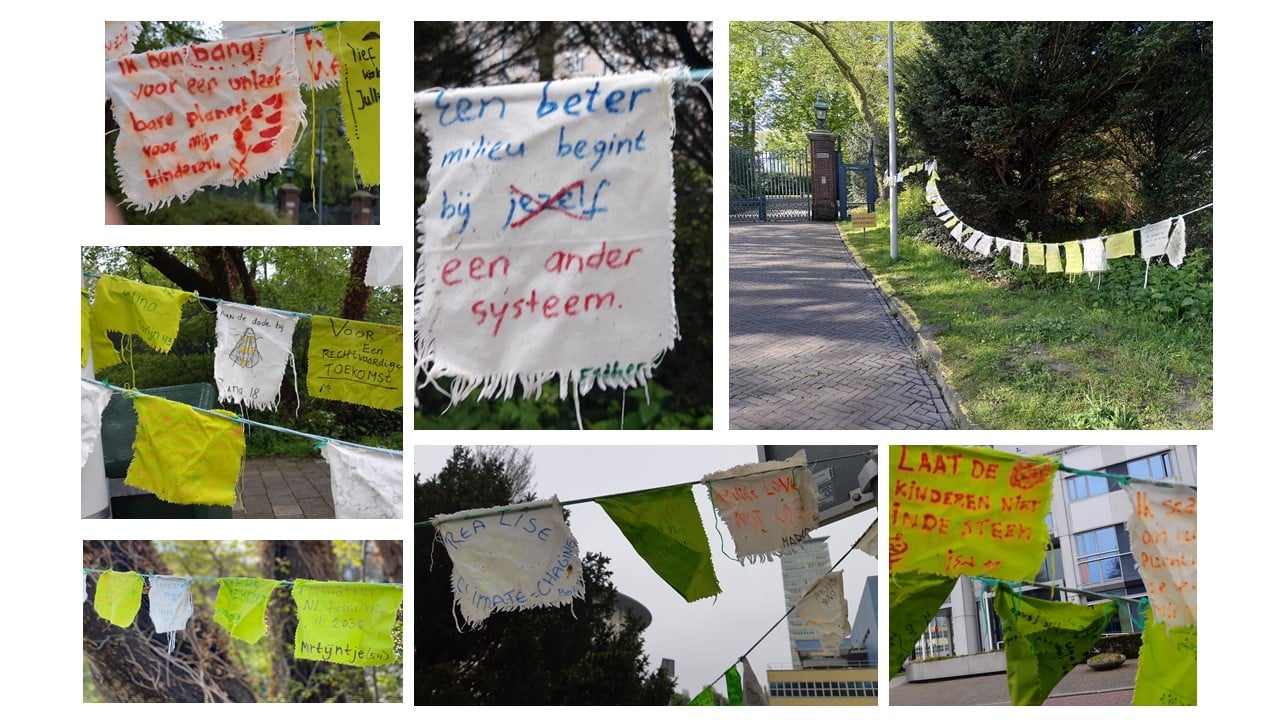
It is now up the political parties who are talking about forming a new government to prioritize a strong climate policy for the Netherlands and abroad. We will remind them of this tomorrow during the international wake for the climate. The messages from our partners will then also be added to the flag line.
Read more about this subject
-
 News / 6 November 2026
Both ENDS and partners head to COP31 in Antalya, Türkiye
On Monday 9 November, world leaders, negotiators and civil society meet in Antalya, Türkiye for COP31, the UN climate conference that runs until 20 November. Both ENDS and our partners will be there, pushing for two things: climate finance that actually reaches women-led and community-based organisations, and an end to economic rules that block the move away from fossil fuels.
-
 Dossier /
Green Climate Fund: calling for local access to climate finance
Local organisations and groups must be given access to climate finance from the Green Climate Fund. They know exactly what is happening in their local context and what is required for climate adaptation.
-
 Blog / 6 November 2026
As the Green Climate Fund turns its hopes to the private sector, it must not forget the communities most in need
By Daan RobbenOver the past few months, I made two trips that capture both the work we do at Both ENDS and what is at stake in today’s debate on climate finance. While large international funds are struggling to deliver on locally led climate action, initiatives Both ENDS is part of, such as the PaPes programme in Senegal and the GAGGA alliance, are showing how it can be done. With the evidence of the funding mechanisms that work, we advocate at international spaces for change.
-
 Dossier /
Finance for agroecology
The lion's share of public budgets for climate, agriculture and development still goes to conventional agroindustrial projects that contribute to the current climate, food and biodiversity crises. Both ENDS and our partners are calling for a transition to agroecological practices that are people- and environment-friendly.
-
 Environmentally Just Practice /
Agroecology
Agroecology is a diverse set of agricultural practices, a field of science and a social movement. It aims to transform food systems towards greater ecological sustainability, social justice, and resilience. Both ENDS and CSO-partners around the world support farmers and pastoralists practising agroecology, both on the ground and in gathering political and financial support.
-
Letter / 3 November 2026
Objection to the proposed FMO financing of Eni Natural Energies Congo SAU
Together with JA! Justica Ambiental and ReCommon Italy, Both ENDS wrote a letter to FMO’s investment team urging them to reject a financing of up to USD 150 million in the IFC-led facility for Eni Natural Energies S.p.A. and its subsidiaries in Angola, the Republic of the Congo and Mozambique.
-
 News / 27 October 2026
Both ENDS at COP31: Locally led climate finance and ending investment rules that block climate action
At COP31, Both ENDS advocates for climate finance that reaches women-led and community-based organisations at the forefront of climate action, while challenging the economic rules that obstruct the transition away from fossil fuels. Together with partners in the Global Alliance for Green and Gender Action (GAGGA) and the PAPeS programme, we push for locally led adaptation, gender-just climate action and greater accountability for governments and companies.
We asked our colleagues Daan Robben and Fernando Hernandez why they are going to COP31, what messages they want to bring to negotiators, and what a positive outcome would look like.
-
 Dossier /
The JWH Initiative: supporting young environmental leaders
The JWH Initiative aims to stimulate leadership of young people in environmental organisations by giving small grants to individuals to expand their knowledge, experience and training.
-
 Dossier /
Trade agreements
International trade agreements often have far-reaching consequences not only for the economy of a country, but also for people and the environment. It is primarily the most vulnerable groups who suffer most from these agreements.
-
 Dossier /
International trade and investment with respect for people and planet
The network of international trade and investment treaties is large and complex. The Netherlands alone has signed more than 70 bilateral investment treaties (BITs) and is party to the trade and investment agreements concluded by the EU, like the EU-Mercosur and EU-Indonesia trade deals.
-
 Dossier /
Rights for People, Rules for Corporations – Stop ISDS!
Indigenous communities in Paraguay saw their attempts to regain their ancestral lands thwarted by German investors. In Indonesia, US-based mining companies succeeded to roll back new laws that were meant to boost the country’s economic development and protect its forests. This is the level of impact that investment treaties can have on social, environmental and economic development and rights. Why? Because of the ‘Investor-to-State Dispute Settlement’ clauses that are included in many such treaties.
-
 News / 29 September 2026
Summary - Both ENDS complaint under the EU-New Zealand trade agreement
On 29 September 2026, Both ENDS lodged the first complaint on climate grounds with the European Commission's Single Entry Point. It asks the Commission to examine whether Aotearoa New Zealand has broken two promises both sides made in the EU-New Zealand Free Trade Agreement: not to weaken or set aside environmental laws in order to encourage trade or investment, and to effectively implement the Paris Agreement.
-
Publication / 29 September 2026
-
Publication / 29 September 2026
-
 News / 29 September 2026
Q&A: New Zealand's climate rollback and the EU trade agreement
On 29 September 2026 / 30 September in Aotearoa New Zealand, Both ENDS lodged a complaint with the European Commission under the EU-New Zealand Free Trade Agreement. These are the questions we are asked most often, and our answers. The complaint summary, the case explainer and the key public sources are linked at the end of this page.
-
 News / 29 September 2026
What happens now? A timeline of the SEP Case
What happens now? On 29 September 2026 / 30 September in Aotearoa New Zealand, Both ENDS lodged a formal complaint with the European Commission. It is the first complaint to the EU's Single Entry Point on environmental and climate grounds. It asks the Commission to hold New Zealand to two promises it made in its trade agreement with the EU: not to weaken environmental protection to encourage trade or investment, and not to undermine the Paris Agreement on climate change.
-
 Press release / 29 September 2026
New Zealand faces its first climate complaint under EU trade rules
UTRECHT / WELLINGTON, 29 September 2026 /30 September in Aotearoa New Zealand
Both ENDS, a Dutch environmental justice organisation, has lodged a formal complaint with the European Commission arguing that New Zealand has broken the climate promises it made in its free trade agreement with the European Union. It is the first complaint on environmental and climate grounds under the Commission's Single Entry Point, the mechanism that lets civil society ask the EU to enforce the sustainability commitments in its trade agreements.
-
 News / 3 September 2026
Restoring Land, Restoring Hope: Both ENDS at UNCCD COP17 in Mongolia
From 17 to 28 August, governments gathered in Ulaanbaatar, Mongolia, for COP17 of the UN Convention to Combat Desertification (UNCCD). At stake was more than how the world responds to land degradation and drought. It was also a question of who gets to shape land restoration, whose knowledge counts, and where the money goes.
-
 News / 6 July 2026
Strengthening Women's Land Rights Across the Rio Conventions
From 29 June – 2 July 2026, Tamara Mohr, GAGGA coordinator at Both ENDS participated in the 4th convening of the Women's Land Rights Initiative (WLRI) in Nairobi, Kenya.Hosted by the Robert Bosch Stiftung, TMG Research and the Huairou Commission, the event brought together grassroots organisations, (inter)national NGOs, government institutions and donors from around the world.
-
Publication / 3 July 2026