


Complaint to development banks about the Nachtigal dam in Cameroon
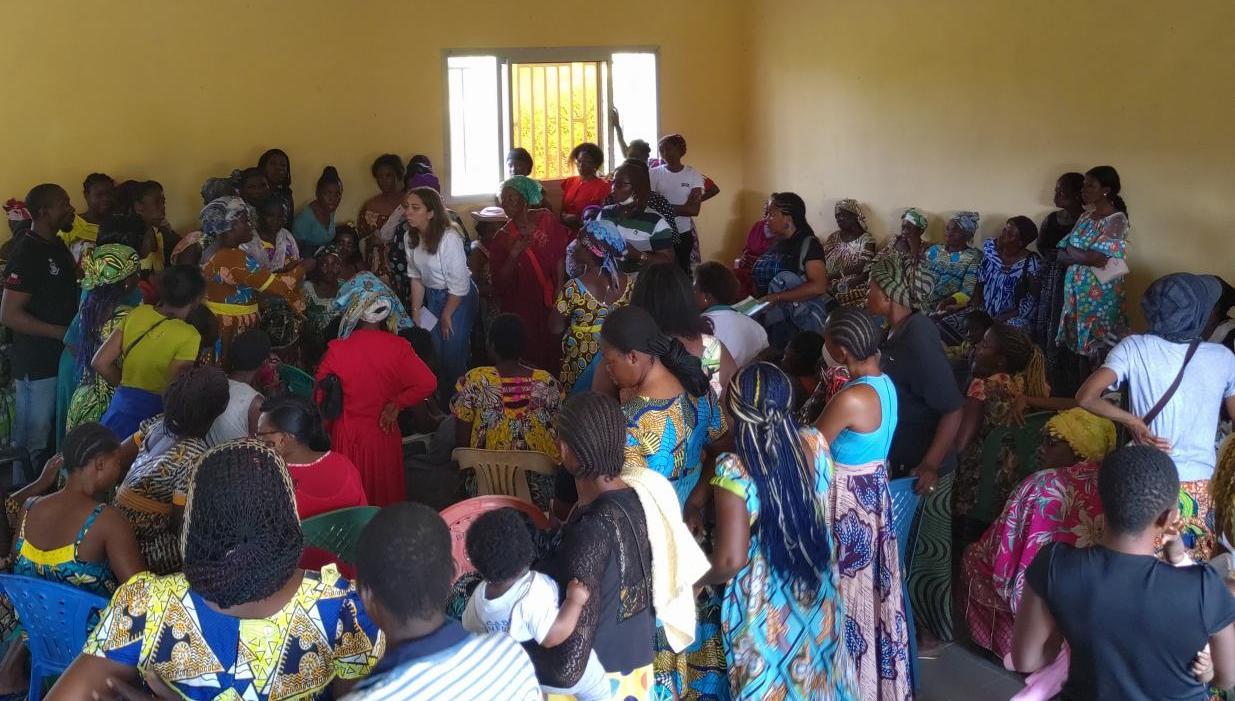
Both ENDS partner IFI Synergy has filed a complaint to the World Bank on behalf of local inhabitants about the Nachtigal dam in Cameroon. The dam is causing considerable problems for local communities and local people feel that the compensation they receive is inadequate. They also feel that they were insufficiently informed and consulted before construction of the dam started.
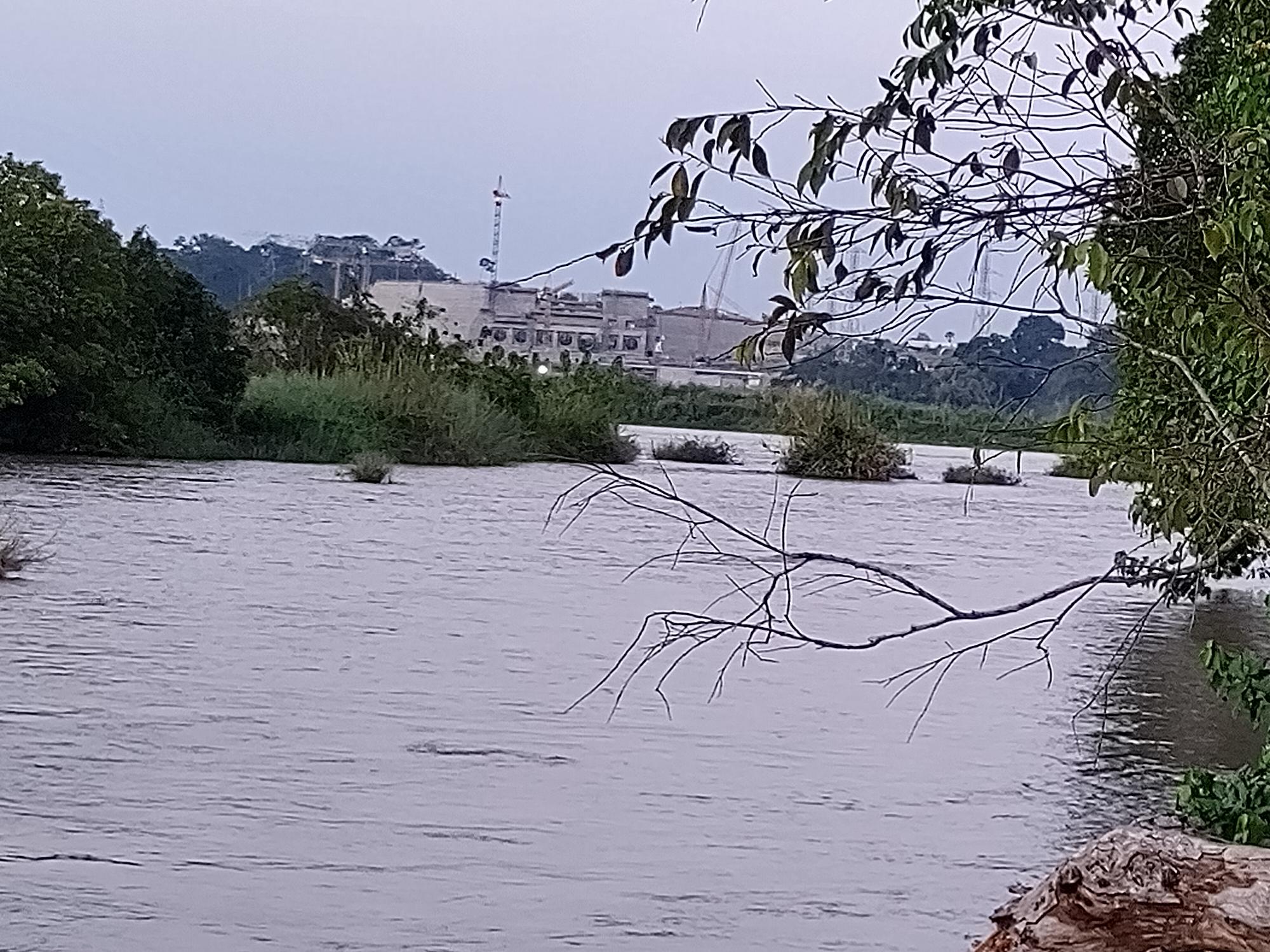
The Nachtigal dam, the biggest in central Africa, is being built in the Sanaga, Cameroon's largest river. The project is being funded by loans from international financial institutions like the World Bank, the European Investment Bank (EIB), the African Development Bank (AfDB) and the Dutch entrepreneurial development bank FMO. Construction began in 2018 and will be completed in 2023.
Energy from hydroelectric power: not clean and not fair
Although hydroelectric power is cleaner than fossil energy, large dams often have considerable social and environmental impacts in the local area. This is also true in the case of the Nachtigal dam. Firstly, the dam makes use of the reservoir of the nearby Lom Pangar dam, which dates from 2017 and which regulates the water level in the Sanaga. A large area of rainforest was cut down for this reservoir. Much organic sediment has collected on its bed and dead wood still floats on its surface, causing the reservoir to emit large quantities of methane, a powerful greenhouse gas. This shows that dams are by no means climate neutral.
For the Nachtigal dam itself, several hundred hectares of forest were cut down. This forest supplied food and income for local residents and was a source of food for fish and other life in and alongside the river. Artisanal sand miners, fishermen and fishmongers have seen their incomes fall since the arrival of the dam. The promise of employment generated by the construction of the dam was not fulfilled, because cheap labour was used from other areas within Cameroon and abroad. The large influx of men also led to a greater risk of sexual violence against women. In addition, the inhabitants of local villages report that the number of mosquitoes has increased since the forest was cut down and diseases such as malaria and onchocerciasis (river blindness) are more prevalent.
Complaint to financial institutions
Our Cameroonian partner IFI Synergy has consequently filed a complaint on behalf of the inhabitants of the villages of Nachtigal, Mebassa, Olembe, Ndji and Ndokoa to the accountability mechanism of the International Finance Corporation (IFC) of the World Bank Group, to the World Bank's Inspection Panel, and to the AfDB's Compliance Review and Mediation Unit (BCRM). The complaint is co-signed by the chiefs of a number of local villages, each with their own ethnicity, and by representatives of traditional sandmen, fishermen and fishmongers.
The complaint refers to the failure to honour promises and agreements relating to compensation, the re-training of affected vocational groups, employment and the prevention of disease. In addition, there were no publicly announced consultation meetings before construction of the dam started, and the census held to determine who was eligible for compensation was not performed correctly.
Both ENDS supported IFI Synergy in preparing this complaint by sharing our knowledge of the social and environmental policies of the International Financial Institutions and bringing them into contact with the complaints mechanisms at the various IFIs.
Improved living conditions
IFI Synergy, an alliance of organisations that previously protested against the construction of the Lom Pangar dam, is now working on improving the economic position and living conditions of the people living in the area around the Nachtigal dam. They want their safety and health to be better protected, and the planting of new forests to compensate for CO2 emissions and improve the living environment.
They are doing this in tense political circumstances. The company constructing the dam is using soldiers to deny local people access to the project area and the river. And people have experienced intimidation at consultation meetings and while the current complaints procedures are being taking place.
IFI Synergy and the local residents hope that their complaint will ultimately lead to the investors in the dam taking their social responsibility and pursuing their own social and environmental policies in the implementation of this and other projects.
For more information

Read more about this subject
-
 Dossier /
Advocating for responsible policies of development banks
Development banks should comply with strict environmental and human rights rules to ensure that their projects benefit and do not harm the poorest groups. Both ENDS monitors the banks to make sure they do.
-
 Dossier /
Large-scale infrastructure
Large-scale infrastructural projects have detrimental effects on local people and the environment, while their benefits are felt elsewhere. Both ENDS is working to ensure that local people have a greater say in decision-making and is investigating the way these projects are funded.
-
Letter / 14 July 2026
Statement on CAO Cambodia Microfinance Case
The independent complaints mechanism of the International Finance Corporation (IFC) and the World Bank Group found that the IFC violated its own Environmental and Social Sustainability Framework by investing in six banks providing microfinance in Cambodia.
-
Publication / 3 July 2026
-
 Dossier /
Gas in Mozambique
In 2011 one of the world’s largest gas reserves was found in the coastal province of Cabo Delgado, in the north of Mozambique. A total of 35 billion dollars has been invested to extract the gas. Dozens of multinationals and financiers are involved in these rapid developments. It is very difficult for the people living in Cabo Delgado to exert influence on the plans and activities, while they experience the negative consequences. With the arrival of these companies, they are losing their land.
-
 Dossier /
Finance for agroecology
The lion's share of public budgets for climate, agriculture and development still goes to conventional agroindustrial projects that contribute to the current climate, food and biodiversity crises. Both ENDS and our partners are calling for a transition to agroecological practices that are people- and environment-friendly.
-
Publication / 18 June 2026
-
Publication / 12 May 2026
-
Publication / 10 April 2026
-
 News / 10 April 2026
Both ENDS: strengthened FMO complaints mechanism is a step forward, but major gaps remain
Both ENDS welcomes the strengthened Independent Complaints Mechanism (ICM) of development finance institutions FMO, DEG and Proparco as an important step forward in accountability. Working directly with communities affected by development projects, we see daily how essential it is that people can access justice when they are harmed in the name of development. For many communities, this mechanism is one of the few avenues through which harm can be formally recognised and addressed in relation to these development banks.
-
 Dossier /
Agua Zarca: indigenous fight against dam costs lives
Indigenous Hondurans are resisting the construction of the Agua Zarca hydrodam. Their fight has cost several lives, including that of Berta Cáceres. After considerable public pressure, Dutch development bank FMO withdrew from the project.
-
 Press release / 13 January 2026
Investigation: FMO failed to exercise adequate control over project linked to the murder of Berta Cáceres
TEGUCIGALPA/UTRECHT, January 12, 2026 – The murder of indigenous environmental activist Berta Cáceres, which took place almost 10 years ago in Honduras, appears to be the result of an organized criminal operation, in which funds from the Dutch Development Bank FMO were misappropriated to finance illegal activities. This is the conclusion of the investigation report published today by the independent commission set up by the Inter-American Commission on Human Rights, the Honduran state, and the relatives of Berta Cáceres.
For years, FMO was a major financier of the Agua Zarca project. Berta Cáceres, an indigenous leader, fought against this controversial dam and was murdered for that reason in March 2016.
-
 Dossier /
Indigenous communities threatened by Barro Blanco dam in Panama
The Barro Blanco dam project in Panama, which has Dutch financial support, is causing indigenous lands to disappear under water. Both ENDS is working to protect the rights of indigenous communities living near the dam.
-
 Blog / 1 December 2025
The Long Road to Justice for the Ngäbe of Kiad
In October 2025 I travelled to Kiad, the Indigenous Ngäbe community that led the struggle against the FMO-financed Barro Blanco dam, for one last time. I went there to say my goodbyes, both personally and on behalf of Both ENDS, and to catch a first glimpse on how a community program financed by FMO and DEG – the result of a dialogue process that took several years – is giving a new impulse to the dam-affected communities. But how did we get here?
-
 Dossier /
Wetlands without Borders
With our Wetlands without Borders program, we work towards environmentally sustainable and socially responsible governance of the wetlands system of the La Plata Basin in South America.
-
 News / 27 October 2025
New Step in FMO’s Complaint Policy – Civil Society Organizations Call for Further Strengthening
The updated complaint mechanism of the development banks FMO, DEG, and Proparco marks an important step forward. Organizations that participated in the consultation acknowledge the efforts to improve the mechanism. At the same time, they emphasize that much still needs to be done to make the policy truly effective, transparent, and independent.
-
Publication / 9 October 2025
-
 News / 17 July 2025
Both ENDS Calls on AIIB to Halt Forced Evictions in Mandalika
Together with Indonesian CSOs Both ENDS is calling on the Asian Infrastructure Investment Bank (AIIB) to intervene and direct its client, the Indonesia Tourism Development Corporation (ITDC), and its borrower, the Government of Indonesia, to immediately halt this week's ongoing forced evictions in Tanjung Aan Beach and surrounding areas in Mandalika, Lombok.
-
 Dossier /
Fair Green and Global Alliance (FGG)
Together with civil society organisations from all over the world, the Fair Green and Global (FGG) Alliance aims for socially just, inclusive and environmentally sustainable societies in the Netherlands and the Global South.
-
Publication / 1 July 2025




